
Unlocking Native Power: Haxe's Seamless Integration with C and HashLink
Dive deep into how Haxe bridges the gap between high-level code and low-level C APIs and bytecode via HashLink.
Haxe stands out as a powerful open-source toolkit, featuring a high-level, strictly-typed language paired with a versatile cross-compiler. This unique combination allows developers to write code once and deploy it across numerous platforms. A key strength lies in its ability to integrate deeply with C, both directly through its C++ target and indirectly via the high-performance HashLink virtual machine. Let's explore the mechanisms enabling C API interaction and byte-level integration within the Haxe ecosystem.
Essential Insights
- Dual Integration Paths: Haxe offers distinct routes for C integration: direct compilation to C++ (via
hxcpp) allowing C API usage, and compilation to HashLink (bytecode or C source), which provides its own C API for VM interaction and native bindings. - HashLink Flexibility: HashLink acts as a high-performance VM for Haxe bytecode (
.hlfiles) and can also compile Haxe code directly to C source (HashLink/C), offering choices between JIT execution and native compilation with C interop. - Bridging Mechanisms: Tools and language features like
externdeclarations, thehaxe-c-bridgelibrary, and the@:hlNativemacro facilitate seamless communication between Haxe code and native C functions or libraries.
Haxe's Direct Connection with C/C++
Leveraging the C++ Target (hxcpp)
One of the primary ways Haxe interacts with C is through its C++ compilation target, known as hxcpp. When you compile Haxe code using the hxcpp target, it generates corresponding C++ code. This generated code can then be compiled using standard C++ compilers (like GCC, Clang, or MSVC) into native executables or libraries.
Calling C Libraries from Haxe
Haxe makes it straightforward to utilize existing C libraries. This is typically done using extern declarations. An extern in Haxe defines the signature of a function, class, or variable that exists externally, often in a native library. By providing these declarations, you can call C functions directly from your Haxe code as if they were native Haxe functions.
- Header Inclusion: Metadata like
@:includecan be used to specify C/C++ header files needed for the external functions. - Linking: Build files or metadata (
@:buildXml) manage the linking process, ensuring the final executable includes the necessary C libraries. - Examples: Practical applications include creating Haxe wrappers for C libraries like ncurses (for terminal UI) or linenoise (for command-line editing).
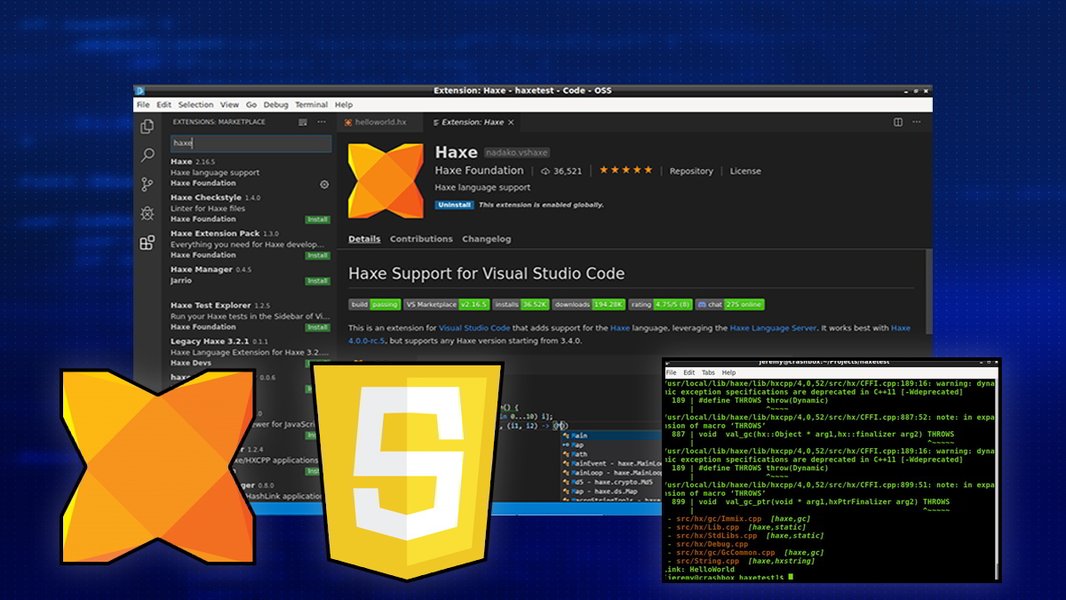
Haxe allows integration with various targets, including C++.
Exposing Haxe Code to C
Conversely, you might want to call Haxe functions from a C/C++ application. Haxe provides mechanisms to expose a C-compatible API from a Haxe library compiled with hxcpp.
- Manual Wrapping: Developers can manually write C++ wrapper functions around Haxe code. Using metadata like
@:nativeGencan produce cleaner C++ output, making this easier. However, careful management of Haxe's garbage collector (GC) and threading is required when calling Haxe from external C code. Metadata like@:noStackcan help optimize calls. - Automated Bridge (
haxe-c-bridge): Thehaxe-c-bridgehaxelib library offers a more automated approach. By using the@:build(HaxeCBridge.expose())macro on a Haxe class, this tool automatically generates a C header file (.h) declaring C functions that correspond to the public static methods of the Haxe class. This simplifies the process of creating Haxe libraries callable from C.
Building such libraries often involves specific compiler flags like -D dll_link or -D static_link to produce dynamic or static libraries, respectively.
Introducing HashLink: The High-Performance VM for Haxe
Optimized Execution and Native Integration
HashLink is a relatively newer addition to the Haxe ecosystem, designed primarily as a high-performance virtual machine (VM) for executing Haxe code. Developed initially by the creators of popular Haxe-based games like Northgard and Dune: Spice Wars (Shiro Games), it offers significant speed advantages and efficient native integration capabilities.
Compilation Modes
Haxe (version 3.4 and newer) can target HashLink in two main ways:
- HashLink Bytecode (
.hl): The Haxe compiler produces a platform-independent bytecode file (with a.hlextension). This bytecode is then executed by the HashLink VM, which includes a Just-In-Time (JIT) compiler for enhanced performance. This mode offers very fast compilation times, ideal for rapid development cycles. - HashLink/C (
.c): Alternatively, the Haxe compiler can generate C source code specifically designed to run using the HashLink runtime libraries. This generated C code can then be compiled using a standard C compiler (like GCC, Clang, or Visual Studio) into a native executable. This mode allows for ahead-of-time compilation and potentially deeper integration with existing C/C++ codebases.
To use either mode, you typically need the HashLink binaries installed and, for the HashLink/C target, the hashlink haxelib library.
HashLink's C API and Byte-Level Integration
Interacting with the VM and Native Code
HashLink itself is largely implemented in C and exposes a comprehensive C API. This API is the cornerstone of its integration capabilities, allowing deep interaction between the Haxe code running on the VM and native C code.
The HashLink C API
The C API enables C programs to:
- Embed the HashLink VM.
- Load and execute
.hlbytecode files. - Call Haxe functions defined within the bytecode.
- Create, access, and manipulate Haxe objects, strings (using UCS2 encoding internally), arrays, and bytes from C.
- Manage memory within the HashLink runtime.
- Convert data types between C and HashLink representations.
- Implement callbacks, allowing Haxe code to call C functions.
Byte-Level Operations and Native Bindings
HashLink's design facilitates fine-grained interaction, often referred to as byte-level integration:
- Low-Level Types: HashLink bytecode operates on optimized low-level types (like
ui8,ui16,f32,f64) for registers and function parameters, providing a close-to-the-metal feel. - Direct Memory Access: The C API allows working with raw memory buffers, often represented as
hl.Byteson the Haxe side, enabling efficient data transfer between Haxe and C. - Binding C Structures: It's possible to bind C structures (
structs) for use within Haxe code running on HashLink, allowing direct manipulation of C data layouts. - Native Implementation (
@:hlNative): Haxe provides the@:hlNative("mylibrary")metadata tag. When used on anexternclass or function, it tells the HashLink compiler that the implementation resides in an external C library (e.g.,mylibrary.cor a linked library). This allows developers to write performance-critical parts in C and seamlessly call them from Haxe. The C function must adhere to the HashLink C API conventions for parameters and return types.
Integration via HashLink/C
The HashLink/C compilation mode further streamlines C integration. Since the output is C code that inherently uses the HashLink runtime, adding custom C code or linking against C libraries becomes very natural. You can directly call C functions from the generated code and use the @:hlNative mechanism to bridge back to Haxe externs implemented in your C files.
Bytecode Analysis
For those needing to delve into the specifics of the generated bytecode, tools exist within the ecosystem:
hlbc/dashlink: These are HashLink bytecode disassemblers and analyzers. They allow developers to inspect the low-level instructions generated by the Haxe compiler, which can be useful for debugging, optimization, or understanding the VM's internals, particularly relevant for game modding communities working with games built on HashLink (like Northgard, Wartales).
Visualizing Integration Approaches
Comparing hxcpp and HashLink/C
The following chart provides a comparative overview of using the direct C++ target (hxcpp) versus the HashLink/C target for C integration, based on common development considerations. Scores are relative estimates (1=Lower, 5=Higher).
This radar chart illustrates that while both hxcpp and HashLink/C offer strong performance and C integration, HashLink often provides a smoother experience regarding GC integration, development speed (due to the option of fast bytecode compilation), and potentially easier binding mechanisms (@:hlNative), whereas hxcpp might offer slightly lower runtime overhead in some scenarios but requires more manual effort for GC and threading when exposing APIs to C.
Integration Pathways Mindmap
Understanding the Relationships
This mindmap visually outlines the core components and integration methods discussed, showing how Haxe connects with C directly and through HashLink.
@:nativeGen"] id1a3b["haxe-c-bridge
(Automated Headers)"] id1a3c["GC/Thread Considerations"] id2["HashLink Integration"] id2a["HashLink VM"] id2b["Compilation Targets"] id2b1["HashLink Bytecode (.hl)"] id2b1a["Executed by HL VM (JIT)"] id2b1b["Fast Compilation"] id2b2["HashLink/C (.c)"] id2b2a["Compile Haxe to C Source"] id2b2b["Native Compilation"] id2b2c["Uses HL Runtime Libs"] id2c["HashLink C API"] id2c1["Embed VM in C"] id2c2["Manipulate HL Objects from C"] id2c3["Load/Run Bytecode from C"] id2d["Byte-Level & Native Binding"] id2d1["Low-Level Types"] id2d2["hl.Bytes (Memory Access)"] id2d3["Bind C Structs"] id2d4["@:hlNative Macro"] id2d4a["Link Haxe extern to C impl."] id2e["Tools"] id2e1["hlbc / dashlink
(Bytecode Analysis)"]
The mindmap illustrates the two primary paths: direct C++ compilation via hxcpp and the HashLink route involving its VM, bytecode, C API, and the specialized HashLink/C compilation mode. Both paths enable deep integration with C, but offer different trade-offs and workflows.
Comparing Integration Approaches: A Table Summary
hxcpp vs. HashLink
The table below summarizes key differences between using the native C++ target (hxcpp) and the HashLink target (specifically HashLink/C) for C integration.
| Feature | hxcpp C/C++ Integration | HashLink C Integration (via HL/C or C API) |
|---|---|---|
| Primary Output | Native C++ code, compiled to binary/library | HashLink bytecode (.hl) or C source code (.c) using HL runtime |
| Execution Model | Direct native execution | VM execution (JIT for .hl) or native execution (for .c target) |
| Calling C from Haxe | Via extern declarations, requires linking C libraries |
Via extern + @:hlNative for C implementations, or direct calls in HL/C mode |
| Calling Haxe from C | Manual C++ wrappers or haxe-c-bridge (requires careful GC/thread management) |
Via HashLink C API (invoke functions in loaded bytecode or HL/C module) |
| GC Handling (Interop) | Requires manual setup/management when calling Haxe from external C threads | Handled more automatically by the HashLink VM and its C API |
| Byte-Level Access | Possible via C++ pointers/memory manipulation within generated code | Facilitated via hl.Bytes and HashLink C API for memory buffers |
| Binding C Structs | Possible via externs and C++ mechanisms | Supported via HashLink C API and potential Haxe abstractions |
| Development Cycle | Longer C++ compile times | Very fast (HL bytecode) or moderate (HL/C compilation) |
| Typical Use Cases | Standalone native applications, libraries needing minimal runtime, embedding Haxe logic | Performance-critical applications, games, embedding C in Haxe, plugins, rapid development |
This table highlights the different strengths and approaches. hxcpp provides a direct path to native C++ code, while HashLink offers a VM-based approach (with a native C compilation option) that often simplifies C integration aspects like GC handling and native bindings through its dedicated C API and @:hlNative feature.
Video Insight: Compiling HashLink/C
From Haxe Code to Native Executable
The HashLink/C target allows compiling Haxe code into intermediate C code, which can then be compiled into a native executable using standard C compilers. This process leverages the HashLink runtime but results in a standalone application. The following video provides a practical look into this compilation process, demonstrating how Haxe code targeting HashLink/C is turned into an executable file.
Understanding this workflow is key to appreciating how HashLink facilitates native deployment and integration with C tooling, bridging Haxe's high-level features with low-level C compilation.
Frequently Asked Questions (FAQ)
What is the main difference between hxcpp C integration and HashLink C integration?
The main difference lies in the intermediate step and runtime. hxcpp compiles Haxe directly to C++ code, which is then compiled natively. Integration involves standard C++ FFI (Foreign Function Interface) techniques, managing GC interactions manually when calling Haxe from C. HashLink integration typically involves compiling to HashLink bytecode (.hl) executed by the HashLink VM, or to C code (HashLink/C) that uses the HashLink runtime. HashLink provides a specific C API to interact with the VM/runtime and Haxe objects, often simplifying native bindings (@:hlNative) and GC management during interop.
What does "byte-level integration" mean in the context of HashLink?
Byte-level integration refers to interacting with the compiled Haxe code at a level close to the machine or VM instructions. In HashLink, this means:
- Working with the HashLink bytecode (`.hl` files) representation of Haxe code.
- Using the HashLink C API to manipulate low-level HashLink data types (like raw bytes, strings, numbers) from C code.
- Directly binding C functions (`@:hlNative`) that operate on these low-level representations.
- Potentially analyzing or manipulating the `.hl` bytecode itself using tools like `hlbc`.
It allows for fine-grained control and performance optimization by interfacing directly with the VM's data structures and execution mechanisms via C.
When should I choose HashLink over hxcpp for C integration?
Consider HashLink (especially HashLink/C) over hxcpp when:
- You prioritize faster development iteration (HashLink bytecode compilation is very fast).
- You need easier integration with C libraries, leveraging the `@:hlNative` macro and HashLink's C API.
- You prefer the VM to handle GC interactions more automatically during C interop.
- You are developing applications like games where HashLink's performance and features are well-suited.
- You want the option to ship bytecode (`.hl`) or a compiled native executable (HL/C).
Choose hxcpp when you need to generate standard C++ code, require minimal runtime dependencies (though hxcpp has its own runtime), or are integrating Haxe into an existing C++ build system where direct C++ output is preferred.
Can I use both hxcpp and HashLink in the same project?
It's generally uncommon and complex to use both `hxcpp` and `HashLink` targets simultaneously for the *same piece* of Haxe code within a single final application runtime. They represent different compilation strategies and runtimes. However, you could potentially have separate modules or libraries within a larger system, where one part is built with `hxcpp` and another with `HashLink`, interacting through standard OS-level mechanisms like inter-process communication (IPC) or network calls if necessary, or potentially via a shared C library they both link against (though managing shared state would require care). For a single integrated Haxe codebase, you typically choose one primary native target (`hxcpp` or `HashLink`).
Recommended Reading
- Explore practical examples of using the @:hlNative macro for binding C code in Haxe/HashLink projects.
- Investigate performance benchmarks comparing Haxe code compiled with hxcpp versus HashLink.
- Learn about the specifics of managing garbage collection and threads when embedding Haxe libraries (compiled with hxcpp) into C/C++ applications.
- Discover how the haxe-c-bridge library simplifies exposing Haxe functionality to C applications.
References
Last updated April 30, 2025