
Comprehensive Analysis of Heat Transfer Mechanisms
Exploring Double Glazing, Insulation, Refrigeration, and More
Key Highlights
- Double Glazing Efficiency: It minimizes conduction, convection, and radiation through multiple layers and insulating gases.
- Polystyrene vs. Air in Cavity Walls: Polystyrene foam offers consistent density, moisture resistance, and practical installation benefits over air.
- Heat Transfer Applications: Principles underlying refrigerators, radiators, and even a cooling cup of tea yield insights across diverse systems.
In-Depth Explanation of Heat Transfer and Related Topics
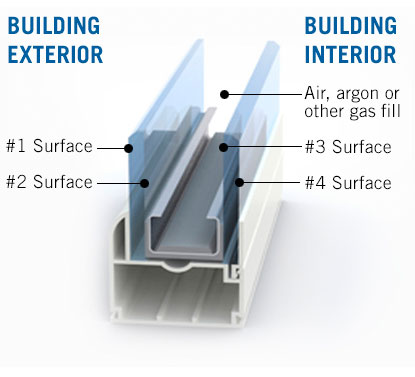
9. How Double Glazing Reduces Heat Loss from a Window
Double glazing is a widely used architectural solution to enhance energy efficiency in buildings. The system employs two panes of glass that are separated by a narrow gap. This gap is often filled with air or an insulating gas, such as argon. The overall design helps to reduce heat transfer through the following mechanisms:
Conduction
The principal method by which heat is conducted is through direct contact from the warmer side to the colder side of the window. In double glazing, the presence of two layers means that heat must travel through two panes of glass. Since glass is a relatively good conductor, using two layers creates an additional barrier. Moreover, the air or insulating gas contained in the gap has a much lower thermal conductivity than the glass itself, thereby impeding the conductive flow of heat.
Convection
Normally, in a single pane window, air movement or convection can lead to significant heat loss. However, the gap in double glazing is so narrow that it prevents the formation of convection currents. The restricted movement of the air or gas minimizes heat loss that might otherwise occur via convection.
Radiation
Many double-glazed windows are equipped with a Low-E (low-emissivity) coating. This coating reflects infrared radiation back into the room. Thus, rather than allowing radiation from the interior to pass through the glass and be lost outside, a substantial amount of it is reflected back, maintaining warmth inside the building.
Altogether, these mechanisms work in tandem to significantly reduce heat loss from the window – by up to 54% to 64% in many cases – thereby enhancing energy efficiency and comfort in indoor environments.
10. The Use of Polystyrene Foam in Cavity Walls Over Air
While air is commonly recognized as a good insulator because of its low thermal conductivity, there are several pragmatic reasons why polystyrene foam (often in the form of beads or expanded polystyrene) is preferred for insulating cavity walls. Here’s why:
Uniformity and Stability
Air as an insulator can be effective under perfect static conditions; however, in a real-world cavity wall, air can move and create convection currents which, in turn, reduce its insulating properties. Polystyrene foam fills the entire cavity uniformly without allowing for air circulation. This stability ensures that the insulation remains consistent over time, preventing the formation of thermal bridges and areas prone to heat loss.
Moisture Resistance
Moisture remains a significant concern in building construction. Air in the cavity can transport moisture which may condense and cause structural issues including damp and decay. In contrast, polystyrene foam is inherently moisture resistant. It repels water absorption, crucially reducing the risks associated with dampness and maintaining the insulation’s effectiveness.
Durability and Ease of Installation
Polystyrene beads are not only effective but also durable. They retain their insulating properties over long periods without significant settling or degradation. Moreover, these beads can be easily blown into the cavity spaces, ensuring complete coverage and filling gaps even in irregular spaces – a practicality that free-standing air naturally lacks.
Hence, although air is conceptually an excellent insulator, the controlled and reliable performance of polystyrene foam makes it a superior choice for cavity wall insulation in modern building practices.
11. Placement of the Freezing Compartment in Fridge/Freezers
The design of refrigerators and freezers typically positions the freezing compartment at the top. This configuration is primarily dictated by the natural laws of convection. Here’s how it works:
Convection Principles
Under normal conditions, cold air is denser than warm air, causing it to settle at lower levels. However, in the design of many fridge/freezers, the cold air is generated within the upper compartment (the freezer). While one might expect this cold air to sink and accumulate at the bottom, the intentional design channels this natural movement so that the cooling effect flows downward into the refrigerator compartment below. This design not only utilizes the convection currents but also promotes an even distribution of cool air, ensuring an energy-efficient operation.
Efficient Cooling Cycle
Moreover, refrigerators are engineered such that the evaporator coils—the source of the cold—are typically located in or near the freezer compartment. Placing the freezer on top allows the cooling effect to cascade naturally, aiding the overall energy efficiency of the appliance and maintaining consistent temperatures both in the freezer and the refrigerator section.
12. Heat Distribution Through an Ordinary House Radiator
House radiators are a common method used in domestic heating, and they primarily function by utilizing convection as the key mechanism to warm a room.
Convection Mechanism
A radiator heats the air in its immediate vicinity. As this air heats up, it becomes less dense and begins to rise. Cooler air then flows in to replace the rising warm air. This cycle of warm air ascending and cooler air descending creates a convection current that circulates heat throughout the room.
Secondary Radiation
While convection is the dominant mechanism, radiators also emit a portion of the heat through radiation. This means that apart from warming the air, the radiator also directly warms nearby objects and surfaces in a room by emitting infrared energy. However, the contribution from radiation is typically secondary compared to the robust effect of convection currents.
13. Heat Loss Mechanisms for a Hot Cup of Tea
A hot cup of tea left on a table cools down due to several concurrent processes. Each mechanism plays a distinct role in transferring heat away from the tea:
Conduction
Conduction is the process of heat transfer through direct contact. When the cup of tea makes contact with the table, heat transfers from the warmer cup to the cooler surface of the table. The efficiency of this process depends on the material properties of both the cup and the table, such as their thermal conductivities.
Convection
Convection occurs as the air in contact with the cup warms up, becomes less dense, and rises. The rising warm air is replaced by cooler air from the surroundings. This continuous cycle helps distribute the heat away from the surface of the tea, accelerating the cooling process.
Radiation
Radiation is the transfer of energy through electromagnetic waves. The surface of a hot cup of tea emits infrared radiation. Although radiation does not require a medium to transfer heat, its effect becomes significant, especially if the environment is cooler than the tea.
Evaporation
As the tea cools, water molecules at the surface gain enough kinetic energy to escape into the air as vapor. This phase transition from liquid to gas carries away latent heat, which contributes to the overall cooling of the tea.
14. Impact on Cooling Rate When Tea is Poured into a Bowl
When tea is poured from a cup into a bowl made of the same material, the rate of cooling is influenced predominantly by the change in geometry of the container, which alters the heat transfer surfaces.
Increased Surface Area
Pouring tea into a bowl often increases the exposed surface area compared to a cup. With a larger surface area, more tea is in direct contact with the ambient air. This situation enhances all three primary modes of heat loss: conduction (to contact surfaces), convection (increased interaction with surrounding air), and radiation (more area emitting infrared energy).
Enhanced Evaporation
A larger surface area also means a higher rate of evaporation. With more liquid exposed, evaporative cooling becomes more pronounced, further accelerating the overall cooling process.
Consequently, while the intrinsic properties of the material remain the same, the increased surface area of the bowl compared to the cup generally results in a faster rate of heat loss.
15. Effects of Losing the Earth’s Atmosphere
The Earth’s atmosphere plays a pivotal role in regulating temperature by acting as a blanket that traps heat through the greenhouse effect. The removal of this atmosphere would lead to dramatic temperature shifts, particularly when comparing day and night cycles.
Warmer by Day and Colder by Night
Without an atmosphere, the Earth would face unmediated exposure to solar radiation during the day. The full brunt of the sun’s energy would be absorbed by the surface, causing higher temperatures during daylight hours. However, at night, in the absence of an atmosphere to trap and radiate residual heat back to the surface, the temperature would drop precipitously. As a result, the days would become excessively warm and the nights extremely cold. This scenario aligns with option (b): "become warmer by day and colder by night."
16. Impact of Doubling the Distance from the Sun on Received Heat Radiation
The intensity of solar radiation received on Earth is governed by the inverse square law. This law states that the intensity of radiation diminishes with the square of the distance from the source. In mathematical terms, if the distance from the Sun increases by a factor of \(d\), the intensity of the received radiation decreases by a factor of \( \dfrac{1}{d^2} \).
Application to Doubling the Distance
If the Earth were to be twice as far from the Sun as it is now, the amount of heat radiation received would drop to one-quarter of its current value. This drastic reduction in solar energy would lead to a much colder global climate, with far less energy available to maintain current temperatures.
The Transfer of Heat Energy – Outline Answers
Heat is transferred primarily through four key mechanisms, each of which plays a vital role in a variety of everyday and technical applications:
| Mechanism | Description |
|---|---|
| Conduction | Direct transfer of heat through materials, from high-temperature regions to low-temperature regions, primarily through particle collisions. |
| Convection | The movement of fluid (liquid or gas) that carries heat away by creating currents; warmer fluid rises while cooler fluid sinks. |
| Radiation | Transfer of heat through electromagnetic waves, which does not require any medium; objects emit infrared energy based on their temperature. |
| Evaporation | A process by which heat is carried away when a liquid converts into vapor, taking latent heat with it and causing the liquid to cool down. |
This table succinctly outlines the four primary mechanisms of heat transfer. Each method is critical in various physical phenomena, ranging from everyday occurrences like a steaming cup of tea cooling to the sophisticated mechanisms used in building insulation and climate regulation.
Conclusion
The topics discussed herein illustrate a comprehensive analysis of heat transfer mechanisms in both household and environmental contexts. Double glazing effectively reduces heat loss by combining layers of glass, an insulating gap (filled with air or gas), and reflective coatings, significant for enhancing energy efficiency within buildings. In the realm of insulation, polystyrene foam is favored over air due to its uniform density, moisture resistance, and ease of installation, which ensures reliable thermal performance over time. Additionally, the design of fridge/freezers capitalizes on natural convection principles by placing the freezer compartment at the top, thereby promoting a consistent and efficient cooling process.
Similarly, other everyday examples, such as the cooling of a hot cup of tea, demonstrate the multifaceted ways that conduction, convection, radiation, and evaporation contribute to heat loss. When the tea is transferred into a bowl with a larger surface area, the rate of cooling accelerates due to enhanced convection, radiation, and evaporative effects. On a broader scale, the atmosphere plays a critical role in balancing Earth’s temperature. Its absence would lead to extreme diurnal temperature variations, with scorching days and freezing nights. Finally, the inverse square law’s application to solar radiation reminds us that even small increases in distance from the sun can result in significant decreases in the energy received, profoundly affecting climatic conditions.
This multidisciplinary discussion not only clarifies the fundamental physics behind these everyday phenomena but also underscores the efficiency and necessity of employing appropriate materials and designs in energy management and environmental sustainability.
References
- Double Glazing Heat Loss - Double Glazing Network
- What is Double Glazing and How Does it Work? - Fensterglazing
- How Does Double Glazing Reduce Heat Loss - Glideline
- How Does Double Glazing Reduce Heat Loss - Windows Guru
- How Does Double Glazing Reduce Heat Loss - The Advanced Group
-
The Science Behind Double Glazing – How Does It Work? - Salisbury Glass
- Cavity Wall Insulation Advice - CSE
Recommended Queries
Last updated February 24, 2025