
Unlocking the Secrets of Heat: A Comprehensive Guide to Its Measurement and Properties
Journey into the world of thermal energy, exploring how we quantify heat, from basic principles to advanced measurement techniques.
Highlights: Key Insights into Heat Quantities
- Fundamental Understanding: Heat is defined as energy in transit, flowing from warmer to cooler objects due to temperature differences. This is distinct from temperature, which measures the average kinetic energy of particles within a substance.
- The Core Calculation: The amount of heat (\(Q\)) transferred during a temperature change (without a phase change) is primarily determined by the equation \(Q = mc\Delta T\), where \(m\) is mass, \(c\) is specific heat capacity, and \(\Delta T\) is the temperature change.
- Essential Measurement Techniques: Calorimetry, encompassing various methods like the method of mixtures and electrical heating, serves as the foundational experimental approach for quantifying heat exchange and determining the thermal properties of materials.
Deconstructing Heat: Fundamental Concepts
Understanding heat quantities begins with a clear definition of heat itself. Heat is not something an object "contains" in a static sense; rather, it is energy that is transferred from one system or body to another as a result of a temperature difference. This energy flow always occurs spontaneously from a region of higher temperature to a region of lower temperature until thermal equilibrium is achieved, meaning both reach the same temperature.
Distinguishing Heat from Temperature
While often used interchangeably in everyday language, heat and temperature are distinct physical concepts:
- Temperature is a measure of the average kinetic energy of the atoms or molecules within a substance. It indicates the "hotness" or "coldness" of an object and is typically measured in Celsius (°C), Fahrenheit (°F), or Kelvin (K).
- Heat, as mentioned, is the transfer of thermal energy. The amount of heat transferred depends on the temperature difference, the amount of substance, and the type of substance. For instance, a large swimming pool at 30°C contains much more thermal energy and can transfer more heat than a small cup of boiling water at 100°C, despite the cup having a higher temperature.
Historically, the understanding of heat evolved significantly. Early scientists like Antoine Lavoisier and Pierre-Simon Laplace in the 18th century used "ice calorimeters" to measure heat released during chemical reactions, laying groundwork for the field of calorimetry.
Units for Measuring Heat Energy
Since heat is a form of energy, it is measured in energy units. The primary units include:
- Joule (J): The standard SI (International System of Units) unit for energy, including heat. One joule is the energy transferred when a force of one newton moves an object one meter. Approximately 4.184 joules of heat are required to raise the temperature of one gram of water by one degree Celsius.
- Calorie (cal): Traditionally defined as the amount of heat needed to raise the temperature of 1 gram of water by 1°C (specifically, from 14.5°C to 15.5°C at standard atmospheric pressure). Note that 1 calorie = 4.184 Joules.
- Kilocalorie (kcal): Equal to 1000 calories. This unit is often used in the context of food energy (where it's sometimes written as "Calorie" with a capital C).
- British Thermal Unit (BTU): An imperial unit, defined as the amount of heat required to raise the temperature of one pound of water by one degree Fahrenheit. It is still used in some engineering applications, particularly in the United States.
The Central Equation: Quantifying Heat Transfer
When a substance undergoes a temperature change without changing its phase (e.g., solid to liquid), the amount of heat (\(Q\)) absorbed or released can be calculated using a fundamental formula:
\[ Q = m \cdot c \cdot \Delta T \]Breaking Down the Formula
- \( Q \): Represents the quantity of heat transferred, measured in Joules (J) or calories (cal).
- \( m \): Denotes the mass of the substance, typically in grams (g) or kilograms (kg).
- \( c \): Stands for the specific heat capacity of the substance. This is an intrinsic property of the material, indicating how much heat is needed to raise the temperature of a unit mass of that substance by one degree. Common units are J/g·°C or J/kg·K.
- \( \Delta T \): Represents the change in temperature, calculated as the final temperature minus the initial temperature (\(T_{final} - T_{initial}\)). It can be expressed in Celsius (°C) or Kelvin (K), as a change of 1°C is equivalent to a change of 1K.
The Meaning Behind the Sign of Q
The algebraic sign of \(Q\) provides crucial information about the direction of heat flow:
- If \( Q > 0 \) (positive), it means the system or substance has absorbed heat energy from its surroundings. This results in an increase in temperature (\(\Delta T > 0\)).
- If \( Q < 0 \) (negative), it signifies that the system or substance has released heat energy to its surroundings. This leads to a decrease in temperature (\(\Delta T < 0\)).
Essential Thermal Properties of Matter
Several key properties describe how substances respond to heat. These are crucial for calculations and understanding thermal behavior.
Heat Capacity (C)
Heat capacity (often denoted as \(C\)) is the amount of heat required to raise the temperature of an entire object or a given quantity of a substance by one degree Celsius (or one Kelvin). It is an extensive property, meaning it depends on the amount (mass) of the substance. For example, a large block of iron will have a greater heat capacity than a small iron nail, even though they are made of the same material. The units for heat capacity are typically Joules per degree Celsius (J/°C) or Joules per Kelvin (J/K). The relationship is given by:
\[ Q = C \cdot \Delta T \]Specific Heat Capacity (c)
Specific heat capacity (denoted as \(c\)) is an intensive property, meaning it is characteristic of the substance itself, irrespective of the amount. It is defined as the amount of heat required to raise the temperature of one unit mass (e.g., 1 gram or 1 kilogram) of a substance by one degree Celsius (or one Kelvin). This is the 'c' in the equation \(Q = mc\Delta T\).
Different materials have vastly different specific heat capacities. Water, for example, has a very high specific heat capacity compared to many other common substances.
Examples of Specific Heat Capacities:
- Water (liquid, H2O(l)): 4.184 J/g·°C (or 4200 J/kg·K)
- Copper (solid, Cu(s)): 0.382 J/g·°C
- Iron (solid, Fe(s)): 0.446 J/g·°C
- Carbon Dioxide (gas, CO2(g)): 0.843 J/g·°C
Water's high specific heat capacity means it can absorb or release large amounts of heat with only a small change in its own temperature. This property is vital for moderating climates near large bodies of water and for many biological and industrial processes.
Molar Heat Capacity (Cm)
Molar heat capacity is similar to specific heat capacity but is defined as the amount of heat needed to raise the temperature of one mole of a substance by one degree Celsius (or one Kelvin). Its units are typically Joules per mole per degree Celsius (J/mol·°C) or Joules per mole per Kelvin (J/mol·K). For gases, molar heat capacity is often specified at constant pressure (\(c_p\)) or constant volume (\(c_v\)). The equation involving molar heat capacity at constant pressure is:
\[ Q = n \cdot c_p \cdot \Delta T \]where \(n\) is the number of moles.
Latent Heat (L)
Latent heat is the heat energy absorbed or released by a substance during a phase change (e.g., melting, freezing, boiling, condensation) that occurs at a constant temperature. Unlike specific heat, which relates to temperature changes, latent heat relates to changes in the internal potential energy of the substance as its particles rearrange into a new phase.
The amount of heat involved in a phase change is given by:
\[ Q = m \cdot L \]where \(m\) is the mass of the substance and \(L\) is the specific latent heat for that particular phase transition.
Types of Latent Heat:
- Latent Heat of Fusion (\(L_f\)): The heat absorbed when a substance melts (solid to liquid) or released when it freezes (liquid to solid) at its melting/freezing point. For water, \(L_f\) is approximately 334 J/g.
- Latent Heat of Vaporization (\(L_v\)): The heat absorbed when a substance vaporizes (liquid to gas) or released when it condenses (gas to liquid) at its boiling point. For water, \(L_v\) is approximately 2260 J/g.
Visualizing Key Thermal Properties
To better understand the distinctions between these thermal properties, the following radar chart compares Specific Heat Capacity, Heat Capacity, and Latent Heat across several key characteristics. The scores are conceptual (1=low, 10=high) to illustrate their relative differences:
- Dependence on Amount: How much the property value depends on the quantity of substance.
- Role in Temp. Change: The property's direct involvement when temperature changes (no phase change).
- Role in Phase Change: The property's direct involvement during a change of state (e.g., melting, boiling).
- Material Specificity: How strongly the property is tied to the type of material.
- Measurement Complexity: A general sense of the experimental difficulty in determining the property.
This chart visually emphasizes that Specific Heat Capacity and Latent Heat are intensive, material-specific properties primarily involved in temperature change and phase change respectively, while Heat Capacity is an extensive property related to the temperature change of a whole object.
Measuring Heat: Techniques and Instruments
The science of measuring heat quantities is known as calorimetry. It involves using a device called a calorimeter to isolate a system and measure the heat absorbed or released during a physical or chemical process. Accurate heat measurement is fundamental to understanding thermodynamics, material properties, and energy transformations.
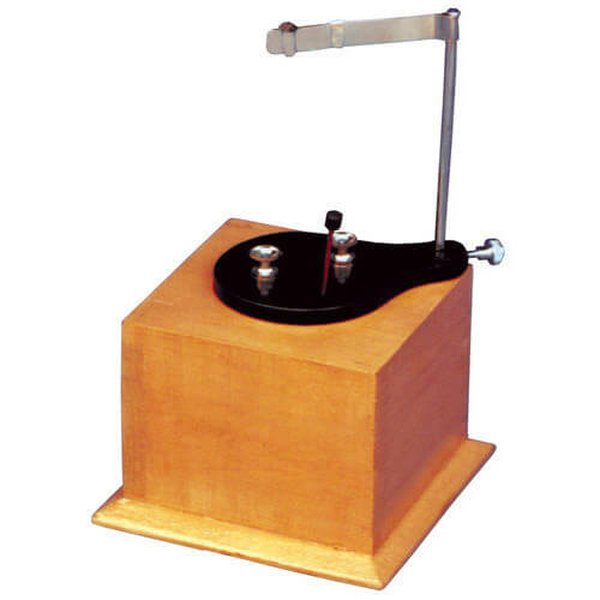
A Joule's Calorimeter, an instrument designed for measuring heat changes, often using electrical heating.
Key Calorimetric Methods
Method of Mixtures
This traditional technique involves mixing two substances (often a known mass of a material with a known mass of water) at different initial temperatures within an insulated calorimeter. By measuring the initial temperatures and the final equilibrium temperature of the mixture, and applying the principle of conservation of energy (heat lost by hotter substance = heat gained by colder substance), the specific heat capacity of one of the substances can be determined if the other is known. \[ m_1 c_1 (T_{hot} - T_{final}) = m_2 c_2 (T_{final} - T_{cold}) + C_{cal} (T_{final} - T_{cold}) \] (The term \(C_{cal}\) accounts for the heat capacity of the calorimeter itself).
Electrical Methods
In this approach, a known amount of electrical energy is supplied to a substance using an electric heater. The electrical energy supplied (\(E = P \cdot t = I \cdot V \cdot t\), where \(I\) is current, \(V\) is voltage, and \(t\) is time) is assumed to be entirely converted into heat absorbed by the substance. By measuring the mass of the substance and the resulting temperature change, its specific heat capacity can be calculated: \[ I \cdot V \cdot t = m \cdot c \cdot \Delta T + \text{heat losses} \] Careful insulation is critical to minimize heat losses to the surroundings.
Differential Scanning Calorimetry (DSC)
DSC is a more advanced thermal analysis technique. It measures the difference in the amount of heat required to increase the temperature of a sample and a reference material as a function of temperature. Both are subjected to a controlled temperature program. DSC can precisely determine specific heat capacities, temperatures of phase transitions (like melting or glass transitions), and heats of reaction. Standards like DIN 51007 or ASTM methods are often followed for calibration and accurate measurements.
Essential Instruments for Heat Measurement
- Calorimeters: Devices designed to thermally isolate a system to measure heat exchange. They range from simple "coffee-cup" calorimeters used in introductory labs to sophisticated bomb calorimeters for measuring heats of combustion, and DSC instruments.
- Thermometers: Crucial for measuring temperature changes accurately. Various types exist, including liquid-in-glass thermometers, thermocouples, resistance temperature detectors (RTDs), and thermistors.
- Thermographs (Infrared Cameras): These instruments detect infrared radiation emitted by objects and create images (thermograms) that show surface temperature distributions, visualizing heat patterns.
Connecting the Concepts: A Mindmap of Heat Quantities
The relationships between the various concepts surrounding heat quantities can be complex. This mindmap provides a visual overview, linking definitions, units, key properties, and measurement approaches to form a cohesive picture of the topic.
Energy in transit due to
temperature difference.
Distinct from temperature."] id2["Units of Measurement"] id2_1["Joule (J) - SI Unit"] id2_2["Calorie (cal)"] id2_3["Kilocalorie (kcal)"] id2_4["British Thermal Unit (BTU)"] id3["Core Calculation: Q = mcΔT"] id3_1["Q: Heat Transferred"] id3_2["m: Mass"] id3_3["c: Specific Heat Capacity"] id3_4["ΔT: Temperature Change"] id3_5["Significance of Q
Q > 0: System gains heat
Q < 0: System loses heat"] id4["Key Thermal Properties"] id4_1["Heat Capacity (C)
Extensive property
Q = CΔT"] id4_2["Specific Heat Capacity (c)
Intensive, material-specific"] id4_3["Molar Heat Capacity (Cm)
Per mole of substance"] id4_4["Latent Heat (L)
Heat for phase change
Q = mL"] id4_4_1["Fusion (Lf)"] id4_4_2["Vaporization (Lv)"] id5["Measuring Heat: Calorimetry"] id5_1["Method of Mixtures"] id5_2["Electrical Methods"] id5_3["Differential Scanning
Calorimetry (DSC)"] id6["Instruments"] id6_1["Calorimeters"] id6_2["Thermometers"] id6_3["Thermographs"] id7["Important Considerations"] id7_1["Insulation & Heat Loss"] id7_2["Accurate Temp. Measurement"] id7_3["Instrument Calibration"] id7_4["Heat Transfer Mechanisms
(Conduction, Convection, Radiation)"]
This mindmap illustrates how foundational definitions and units lead to understanding core formulas and thermal properties, which are then experimentally determined using various calorimetric methods and instruments, all while considering factors crucial for accurate measurement.
Video Deep Dive: Heat, Specific Heat & Heat Capacity
For a clearer understanding of the fundamental differences and relationships between heat, temperature, specific heat, and heat capacity, the following video provides an excellent explanation. It covers the basic definitions, units, and how these concepts are applied in physics.
This video helps to solidify the distinctions often confused in everyday language, providing a robust foundation for more complex topics in thermodynamics and heat transfer.
Critical Factors in Accurate Heat Measurement
Achieving precise and reliable measurements of heat quantities requires careful attention to several factors:
- Insulation: Minimizing unwanted heat exchange between the calorimeter system and its surroundings is paramount. This is typically achieved through good insulation, vacuum flasks, or by accounting for heat losses mathematically.
- Thermal Equilibrium: Ensuring that the temperature-measuring device (e.g., thermometer) has reached thermal equilibrium with the substance being measured is crucial for accurate temperature readings.
- Rapid Measurements: Especially at high temperatures, making measurements quickly can reduce errors due to heat exchange with the environment, as the influence of such unwanted exchange is often proportional to time.
- Calibration: Regular calibration of thermometers, calorimeters, and power supplies (for electrical methods) against known standards is essential for maintaining accuracy and reproducibility.
- Homogeneity and Sample Preparation: The sample being measured should be homogeneous, and its preparation (e.g., mass, placement in the calorimeter) must be consistent.
- Understanding Heat Transfer Mechanisms: Heat can be transferred via conduction (through direct contact), convection (through fluid movement), and radiation (through electromagnetic waves). The design of a calorimetry experiment must account for or minimize these modes of transfer where they are not part of the process being studied.
Summary Table: Key Heat Quantities at a Glance
The following table summarizes the main quantities discussed, their symbols, common units, and brief descriptions, providing a quick reference:
| Quantity | Symbol(s) | Common Units | Description |
|---|---|---|---|
| Heat (Quantity of) | \(Q\) | Joule (J), Calorie (cal), BTU | Energy transferred due to a temperature difference. |
| Mass | \(m\) | Kilogram (kg), Gram (g) | The amount of substance. |
| Temperature Change | \(\Delta T\) | Celsius (°C), Kelvin (K) | The difference between final and initial temperatures (\(T_{final} - T_{initial}\)). |
| Heat Capacity | \(C\) | J/°C, J/K | Amount of heat needed to raise an entire object's temperature by 1 degree. (Extensive property) |
| Specific Heat Capacity | \(c\) | J/g·°C, J/kg·K, cal/g·°C | Amount of heat needed to raise 1 unit mass of a substance by 1 degree. (Intensive property) |
| Molar Heat Capacity | \(C_m\), \(c_p\), \(c_v\) | J/mol·°C, J/mol·K | Amount of heat needed to raise 1 mole of a substance by 1 degree. |
| Latent Heat | \(L\) (e.g., \(L_f\), \(L_v\)) | J/g, J/kg, J/mol, cal/g | Heat absorbed or released during a phase change at constant temperature, per unit mass or mole. |
Frequently Asked Questions (FAQ)
What is the fundamental difference between heat and temperature? ▾
Temperature is a measure of the average kinetic energy of the particles in a substance, indicating its degree of "hotness" or "coldness." Heat, on the other hand, is the transfer of thermal energy between objects or systems due to a temperature difference. An object possesses internal energy and has a temperature, but it doesn't "possess" heat; heat is energy in transit.
Why is water's specific heat capacity considered high, and what is its significance? ▾
Water's specific heat capacity (approx. 4.184 J/g·°C) is high compared to many common substances like metals (e.g., copper at 0.385 J/g·°C). This means water requires a relatively large amount of heat to change its temperature. Its significance is vast: it helps moderate Earth's climate (large bodies of water resist rapid temperature changes), it's crucial for temperature regulation in living organisms, and it makes water an excellent coolant in industrial applications.
What is a calorimeter, and what is it primarily used for? ▾
A calorimeter is an insulated device used to measure the quantity of heat absorbed or released during a chemical or physical process. It is designed to minimize heat exchange with the surroundings. Primary uses include determining the specific heat capacity of substances, measuring the heat of chemical reactions (enthalpy changes), and finding the heat involved in phase transitions (latent heats).
How does latent heat differ from the heat involved in changing temperature (sensible heat)? ▾
Sensible heat is the heat exchanged by a body or thermodynamic system that results in a change of temperature (which can be "sensed"). It's calculated using \(Q = mc\Delta T\). Latent heat, conversely, is the energy absorbed or released during a phase change (e.g., melting, boiling) at a constant temperature. This energy is used to change the potential energy and arrangement of molecules, not their average kinetic energy (temperature).
What are the most common units for measuring heat, and how are they related? ▾
The SI unit for heat (and all forms of energy) is the Joule (J). Another common unit is the calorie (cal), defined as the heat needed to raise 1 gram of water by 1°C. They are related by the conversion: 1 calorie ≈ 4.184 Joules. The kilocalorie (kcal or Calorie, with a capital C) is 1000 calories and is often used for food energy. The British Thermal Unit (BTU) is also used in some regions.
Recommended Further Exploration
To deepen your understanding of heat quantities and related topics, consider exploring these areas:
- Explore the applications of calorimetry in studying chemical reaction energetics.
- How does specific heat capacity influence global climate patterns and local weather phenomena?
- What are the different types of phase transitions beyond melting and boiling, and their associated latent heats?
- Investigate the historical development of thermodynamics and the concept of heat as energy.
References
 asbatlibrary.s3.eu-central-1.amazonaws.com
 physicsnoteonline.blogspot.com
 wedophysics.blogspot.com
Last updated May 16, 2025