
High-Grade Bladder Cancer: Understanding an Aggressive Diagnosis
A comprehensive look at the nature, diagnosis, treatment, and outlook for high-grade bladder cancer, an urgent urological concern.
High-grade bladder cancer represents a significant challenge in oncology, characterized by cancer cells that appear very abnormal under a microscope and exhibit aggressive behavior. This form of bladder cancer tends to grow quickly, has a higher likelihood of invading deeper bladder tissues, and is more prone to spreading to other parts of the body (metastasis) or recurring after treatment compared to its low-grade counterpart. Understanding the nuances of high-grade bladder cancer is crucial for patients and their families to navigate the complexities of diagnosis and treatment.
Key Insights into High-Grade Bladder Cancer
- Aggressive Nature: High-grade bladder cancer cells are poorly differentiated, meaning they look very different from normal bladder cells and tend to grow and spread rapidly.
- Higher Risk Profile: Patients with high-grade tumors face an increased risk of cancer recurrence and progression to more advanced stages, including muscle-invasive disease.
- Intensive Treatment Required: Treatment strategies are often more aggressive and may involve a combination of surgery, intravesical therapy (drugs delivered directly into the bladder), systemic chemotherapy, and immunotherapy.
Delving Deeper: Characteristics of High-Grade Bladder Cancer
The "grade" of bladder cancer describes how the cancer cells look compared to normal cells. High-grade cancer cells are significantly abnormal in appearance and organization. This cellular disarray is linked to more aggressive biological behavior.
Cellular Appearance and Behavior
Under microscopic examination, high-grade bladder cancer cells show marked pleomorphism (variation in size and shape) and often have prominent, irregular nuclei. They lack the organization of normal urothelial cells (the cells lining the bladder). This "poor differentiation" signifies a more aggressive tumor type. These tumors are more likely to invade the lamina propria (the connective tissue layer beneath the bladder lining) and the muscularis propria (the bladder muscle wall). Invasion into the muscle layer is a critical factor that worsens prognosis and necessitates more intensive treatments.
Carcinoma in Situ (CIS)
A specific type of high-grade non-muscle-invasive bladder cancer is Carcinoma in Situ (CIS). CIS is a flat, velvety, reddish tumor that appears on the tissue lining the inside of the bladder. It is always classified as high-grade and is considered aggressive. CIS significantly increases the risk of recurrence and progression to muscle-invasive cancer if not treated effectively. Its presence often influences the choice and intensity of treatment.
Comparing High-Grade vs. Low-Grade Bladder Cancer
The distinction between high-grade and low-grade bladder cancer is fundamental for prognosis and treatment planning. The radar chart below illustrates key differences based on typical characteristics:
This chart visually underscores that high-grade bladder cancer (represented in red) generally scores higher across all adverse characteristics, indicating a more serious condition requiring robust management compared to low-grade bladder cancer (represented in blue).
Understanding the Landscape of High-Grade Bladder Cancer
Navigating a diagnosis of high-grade bladder cancer involves understanding its various facets, from its fundamental characteristics to treatment pathways and prognosis. The mindmap below provides a structured overview of these interconnected elements.
This mindmap illustrates the complexity of high-grade bladder cancer, highlighting the critical areas of concern and management from initial detection through to long-term care.
Symptoms and Diagnosis
Recognizing the Signs
The most common symptom of bladder cancer, including high-grade types, is hematuria, or blood in the urine. This can make the urine appear pink, red, or cola-colored. Even microscopic amounts of blood, not visible to the naked eye, can be detected in a urine test. Other symptoms may include:
- Frequent urination
- Pain or burning sensation during urination (dysuria)
- Feeling an urgent need to urinate, even when the bladder isn't full
- Difficulty urinating or a weak urine stream
- Lower back pain on one side (less common)
It's important to note that these symptoms can also be caused by non-cancerous conditions like urinary tract infections or kidney stones. However, their presence warrants medical evaluation.
Diagnostic Pathway
Diagnosing high-grade bladder cancer involves several steps:
- Medical History and Physical Exam: The doctor will discuss symptoms and risk factors.
- Urine Tests: Urinalysis can detect blood or other abnormal substances. Urine cytology looks for cancer cells in the urine.
- Cystoscopy: A thin tube with a light and camera (cystoscope) is inserted into the bladder through the urethra. This allows the doctor to visually inspect the bladder lining for abnormalities. Biopsies (small tissue samples) can be taken from suspicious areas.
- Transurethral Resection of Bladder Tumor (TURBT): If a tumor is found, TURBT is performed. This procedure serves both diagnostic and therapeutic purposes. The surgeon removes the tumor and some surrounding tissue, which is then examined by a pathologist to determine the cancer type, grade (including whether it's high-grade), and stage (how far it has spread). A second TURBT may sometimes be performed to ensure all cancer has been removed and to accurately assess the depth of invasion, especially for high-grade tumors.
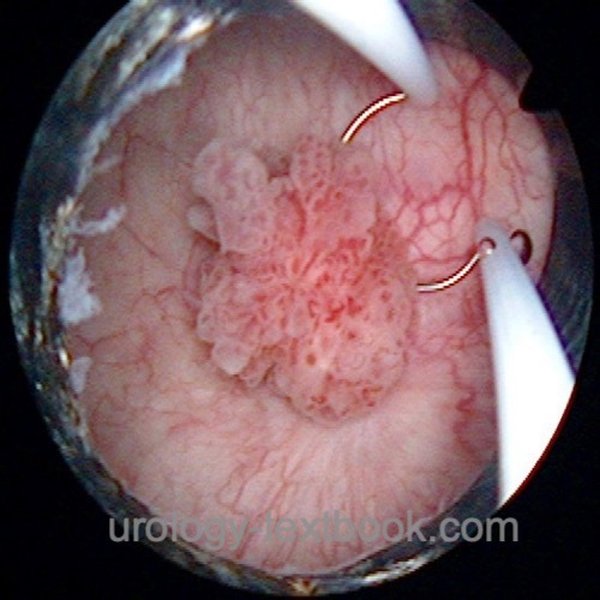
Visual representation of a TURBT procedure, crucial for diagnosing and initially treating bladder tumors.
- Imaging Studies: If high-grade or invasive cancer is suspected or confirmed, imaging tests like CT scans, MRIs, or bone scans may be used to determine if the cancer has spread beyond the bladder.
Treatment Strategies for High-Grade Bladder Cancer
Treatment for high-grade bladder cancer is tailored to the individual, considering the cancer's stage, the patient's overall health, and personal preferences. A multidisciplinary team approach, involving urologists, oncologists, and radiation oncologists, is common.
Non-Muscle-Invasive High-Grade Bladder Cancer (NMIBC)
For high-grade tumors that have not invaded the bladder muscle (e.g., high-grade Ta, T1, CIS), the primary goals are to eradicate the tumor and prevent recurrence and progression.
Surgical Intervention: TURBT
As mentioned, TURBT is the initial treatment. For high-grade NMIBC, a repeat TURBT within a few weeks is often recommended to ensure complete tumor removal and accurate staging.
Intravesical Therapy
Following TURBT, intravesical therapy is standard for high-grade NMIBC. This involves instilling medication directly into the bladder via a catheter.
- Bacillus Calmette-Guérin (BCG): This is an immunotherapy agent and the most common intravesical treatment for high-grade NMIBC. BCG stimulates the body's immune system to attack cancer cells. It is typically given in an induction course (once a week for six weeks) followed by maintenance therapy for one to three years to reduce the risk of recurrence and progression.
- Intravesical Chemotherapy: Drugs like mitomycin C or gemcitabine can be used, sometimes if BCG is not suitable or has failed. In some cases, chemotherapy may be combined with localized heating of the bladder wall (hyperthermia) to enhance its effectiveness.
- Newer Intravesical Immunotherapies: For patients whose cancer does not respond to BCG (BCG-unresponsive NMIBC), newer options like nadofaragene firadenovec-vncg (Adstiladrin) or nogapendekin alfa inbakicept-pmln (Anktiva) combined with BCG may be considered.
This video from BEAT Bladder Cancer Australia Inc. provides an overview of BCG treatment for high-grade, non-muscle invasive bladder cancer, a cornerstone therapy for this condition.
Muscle-Invasive High-Grade Bladder Cancer (MIBC) and Advanced Disease
If high-grade cancer has invaded the bladder muscle or spread further, more aggressive treatments are necessary.
Radical Cystectomy
This involves surgical removal of the entire bladder, nearby lymph nodes, and often parts of adjacent organs (e.g., prostate in men, uterus/ovaries in women). After cystectomy, a urinary diversion is created to allow urine to exit the body (e.g., an ileal conduit with an external bag, or a neobladder created from intestinal tissue).
Systemic Chemotherapy
- Neoadjuvant Chemotherapy: Given before radical cystectomy to shrink the tumor and kill any micrometastases. This is often recommended for MIBC.
- Adjuvant Chemotherapy: Given after radical cystectomy if there's a high risk of recurrence.
- For advanced or metastatic bladder cancer, chemotherapy is a primary treatment to control the disease and alleviate symptoms.
Radiation Therapy
Radiation can be an option, often combined with chemotherapy (chemoradiation), as part of a bladder-preserving approach for selected patients with MIBC who wish to avoid or cannot undergo cystectomy. It can also be used for palliative care to relieve symptoms in advanced cancer.
Systemic Immunotherapy
Immune checkpoint inhibitors (e.g., pembrolizumab, avelumab, nivolumab) have become important treatments for advanced or metastatic bladder cancer, particularly if chemotherapy is not effective or after it has been used. They can also be used as maintenance therapy in some situations.
Targeted Therapy
For some bladder cancers with specific genetic mutations (e.g., FGFR alterations), targeted drugs like erdafitinib may be an option if other treatments have failed.
Clinical Trials
Participation in clinical trials is often encouraged, offering access to novel treatments and combinations. Significant advancements in bladder cancer therapy are emerging from ongoing research.
Summary of Treatment Approaches by Scenario
The following table provides a simplified overview of common treatment strategies for high-grade bladder cancer based on its general classification:
| Cancer Scenario | Primary Surgical Approach | Key Adjuvant/Additional Therapies | Common Systemic Options (if applicable) |
|---|---|---|---|
| High-Grade Non-Muscle Invasive (Ta, T1, CIS) | TURBT (often repeated) | Intravesical BCG (standard), Intravesical Chemotherapy, Newer Intravesical Agents (for BCG-unresponsive) | Not typically primary, unless progression |
| High-Grade Muscle-Invasive (T2-T4, N0, M0) | Radical Cystectomy with urinary diversion | Neoadjuvant Systemic Chemotherapy (common before surgery), Adjuvant Systemic Chemotherapy (if high risk post-surgery) | Cisplatin-based chemotherapy combinations |
| Locally Advanced/Metastatic High-Grade | Surgery may be palliative or not feasible | Radiation Therapy (for local control/palliation) | Systemic Chemotherapy, Systemic Immunotherapy (Checkpoint Inhibitors), Targeted Therapy (if specific mutations present) |
This table is a general guide; specific treatment plans are highly individualized.
Prognosis and Follow-Up Care
Understanding the Outlook
High-grade bladder cancer generally carries a more serious prognosis than low-grade cancer due to its aggressive nature and higher likelihood of recurrence and progression. However, the outlook varies significantly depending on several factors:
- Stage at diagnosis: Early detection and treatment of non-muscle-invasive high-grade cancer offer a better prognosis than muscle-invasive or metastatic disease. For example, the 5-year survival rate for carcinoma in situ (Stage 0is) is about 98%. For Stage II (muscle-invasive but confined to bladder), it's around 63%. If the cancer has spread to nearby organs (Stage III), the 5-year survival rate is approximately 46%. These rates are estimates and can vary.
- Tumor characteristics: The exact T stage (e.g., T1 vs. Ta), presence of CIS, number and size of tumors.
- Response to initial treatment: How well the cancer responds to therapies like BCG or neoadjuvant chemotherapy significantly impacts outcomes.
- Patient's overall health: Coexisting medical conditions can affect treatment options and tolerance.
The American Cancer Society projected nearly 85,000 new bladder cancer cases and around 17,000 deaths in the US for 2025, underscoring the disease's impact. The overall 5-year survival rate for all stages combined is about 78%, but this figure masks wide variations based on stage and grade.
The Importance of Vigilant Follow-Up
Due to the high risk of recurrence, patients with high-grade bladder cancer require lifelong, vigilant surveillance. Follow-up schedules are personalized but typically involve:
-
Regular Cystoscopies: For NMIBC, cystoscopy is usually performed every 3-6 months for the first few years, then less frequently if no recurrence.
-
Urine Cytology: Often done in conjunction with cystoscopy.
-
Imaging Studies: CT scans or MRIs of the urinary tract may be done periodically, especially for those with higher-risk NMIBC or after treatment for MIBC.
Close monitoring helps detect any recurrence early, when it is most treatable. Palliative therapy, focused on symptom relief and quality of life, is also an important aspect of care at all stages, especially for advanced disease.
Frequently Asked Questions (FAQ)
What makes high-grade bladder cancer different from low-grade?
Is Carcinoma in Situ (CIS) always high-grade?
What is BCG therapy, and why is it used for high-grade bladder cancer?
If I have high-grade bladder cancer, will I need to have my bladder removed?
What is the prognosis for high-grade bladder cancer?
Conclusion
High-grade bladder cancer is a complex and aggressive disease that demands prompt diagnosis and a comprehensive, often intensive, treatment plan. While it presents significant challenges, ongoing research and advancements in therapies, including intravesical agents, systemic chemotherapy, immunotherapy, and targeted treatments, continue to improve the outlook for patients. Close collaboration with a multidisciplinary oncology team and diligent follow-up care are paramount in managing this condition effectively and maximizing quality of life.
Recommended Further Exploration
References
Last updated May 21, 2025