
Unraveling Key Historical & Socioeconomic Concepts: From Industrial Policy to Civil Rights
A comprehensive guide to pivotal terms shaping global history and societal structures.
Key Insights at a Glance
- The Calico Acts were monumental British protectionist laws, strategically enacted to safeguard domestic textile industries from the formidable competition of Indian cotton, thereby inadvertently catalyzing the British Industrial Revolution.
- Cottage industries represent a decentralized, home-based production model, embodying craftsmanship and niche manufacturing, which contrasted sharply with the mass production of the burgeoning factory system.
- Globalization is a multifaceted process of global interconnectedness, driving economic growth and cultural exchange while simultaneously presenting significant challenges such as economic inequality and market volatility.
Decoding Historical and Socioeconomic Terms
Understanding the intricate tapestry of global history and socioeconomic development requires a clear grasp of foundational terms. This detailed guide synthesizes definitions for 21 key concepts, offering a comprehensive overview of their historical context, economic implications, and societal impact. From the protectionist policies that shaped early industrialization to the profound societal shifts of the American Reconstruction era, each term provides a crucial lens through which to view the evolution of human societies and economies.
The Dawn of Industrial Change: Calico Acts and Cottage Industries
The Calico Acts: A Turning Point in Textile History
The Calico Acts were a series of highly significant legislative measures passed by the Parliament of England and later Great Britain in 1700 and 1721. Their primary objective was economic protectionism. These acts were designed to ban the import and later the sale of most cotton textiles, particularly printed calicoes, which were predominantly sourced from India, China, and Persia. The immense popularity and affordability of these imported cottons posed a severe threat to Britain's established domestic wool and silk industries.
The initial act in 1700 prohibited the import of dyed or printed calicoes for domestic use, requiring them to be re-exported. The subsequent 1721 act was even stricter, banning the sale of most cottons, whether imported or domestically produced, with only raw cotton and thread exempted. These acts were a direct response to the economic pressures exerted by the English East India Company's introduction of inexpensive Indian calico and chintz, which led to a decline in local textile sales.
While initially harming British consumers by raising prices and reducing textile variety, the Calico Acts are historically recognized as a critical precursor to the British Industrial Revolution. Their eventual repeal in 1774 was a pivotal moment, spurring substantial investment in mechanized cotton spinning and production. This legislative shift forced the British cotton industry to innovate, leading to the adoption of transformative technologies like the Spinning Mule, ultimately enabling Britain to surpass India as the world's leading textile manufacturer in the 19th century.

Example of a calico fabric pattern, historically subject to strict import restrictions.
Cottage Industry: The Backbone of Pre-Industrial Production
A cottage industry represents a system of production where goods and services are predominantly manufactured at home or in small, often informal, workshops. This mode of production is characterized by its small scale, typically involving individuals, family units, or small teams, rather than large-scale factories. It often relies on manual labor and simple tools, embodying a decentralized approach to manufacturing.
Historically, this system, also known as the "putting-out system," involved merchants distributing raw materials to households, where artisans would craft goods before returning the finished products for sale. Before the advent of factory-based industrialization, particularly in the textile sector, cottage industries were a vital source of income and employment for families and communities. They are known for their focus on craftsmanship, unique products, and personalized attention to detail, contrasting sharply with the mass production ethos that emerged with the Industrial Revolution.
Even today, cottage industries thrive in niche markets, producing artisanal goods such as handcrafted fabrics, gourmet food items, jewelry, and art. They typically require minimal investment and few employees, lacking the scalability of mass production. In developing nations, cottage industries continue to play a crucial role by providing rural employment, diversifying local economies, and preserving traditional skills and expertise. The rise of mobile technology has further enabled these small businesses to manage orders, supply chains, and product distribution more efficiently.
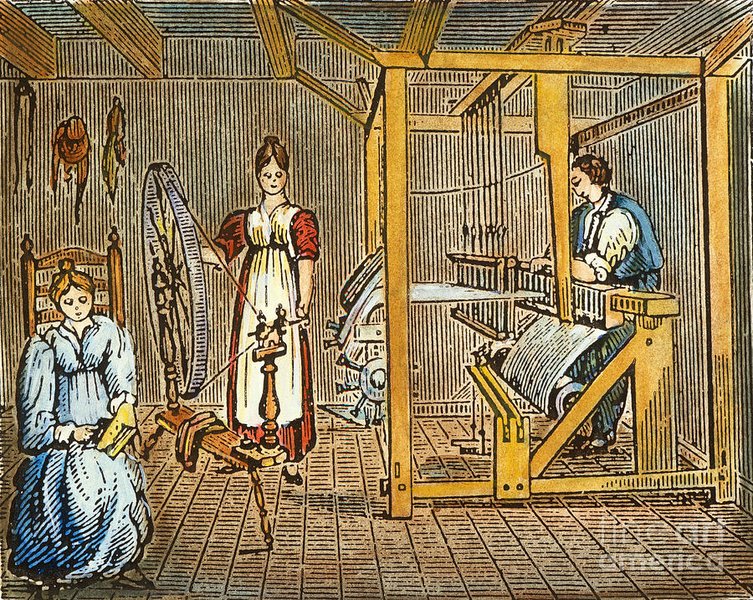
Depiction of a traditional textile cottage industry, illustrating home-based production.
The Interconnected World: Understanding Globalization
Globalization: The Fabric of Modern Interdependence
Globalization is a comprehensive process signifying the increasing interconnectedness and interdependence of the world's economies, cultures, and populations. It is driven by the accelerated movement and exchange of human beings, goods, services, capital, technologies, and cultural practices across international borders. This phenomenon effectively makes the world feel "smaller," facilitating easier access to diverse cultures, new technologies, and global markets.
The impact of globalization on economic development is multifaceted. On the positive side, it has spurred increased trade and investment, opened new markets, enhanced efficiency and productivity, facilitated the spread of new technologies and knowledge, and fostered greater competition. These factors have contributed to higher living standards in many developing countries and played a role in global poverty reduction by enabling rapid economic growth in previously impoverished regions. The transfer of knowledge and technology, particularly through participation in global supply chains involving multinational corporations, has intensified, boosting innovation capacity and income convergence in emerging economies. International trade, a cornerstone of globalization, has been instrumental in promoting economic growth and creating job opportunities.
However, globalization also presents significant challenges. Critics argue that it can lead to disproportionate growth both between and within nations, exacerbating economic inequalities. An economic downturn in one country can trigger a domino effect on its trade partners, as evidenced by the 2008 financial crisis. It can negatively impact local and emerging economies, as well as individual workers, particularly in developed countries where competition from lower-cost markets can lead to job outsourcing and weakened labor unions. Some economists suggest that the globalization of finance has made the world economy more volatile and susceptible to crises. Furthermore, marginalized groups may be excluded from globalization-induced opportunities due to deficiencies in productive assets, weak infrastructure, inadequate education, and poor health, potentially trapping them in poverty. The standardization and rationalization often associated with globalization may not always yield expected growth outcomes and can sometimes even impede rather than foster development.
This radar chart illustrates the perceived impacts and characteristics of globalization across various dimensions, reflecting a balanced view of its benefits and challenges. Key attributes like economic growth and cultural exchange are balanced against potential downsides such as inequality and market volatility, offering a comprehensive snapshot of its complex nature.
The Economic & Social Implications of Globalization
The following table summarizes the key benefits and challenges associated with globalization, providing a structured view of its complex impact on economies and societies worldwide.
| Aspect of Globalization | Key Benefits | Key Challenges |
|---|---|---|
| Economic Development | Increased trade, investment, market access, higher GDP, poverty reduction, efficiency gains, spread of technology. | Disproportionate growth, increased economic volatility, job outsourcing, weakened labor unions, potential for financial crises. |
| Societal & Cultural Impact | Cultural exchange, access to diverse goods and ideas, improved living standards in developing nations. | Cultural homogenization, exclusion of marginalized groups, potential for social unrest due to inequality. |
| Environmental Impact | Potential for global cooperation on environmental issues, transfer of green technologies. | Increased carbon emissions from trade, resource depletion, challenges in enforcing global environmental standards. |
| Political Interdependence | Enhanced diplomatic ties, shared challenges requiring international cooperation (e.g., pandemics). | Erosion of national sovereignty, increased political complexity, challenges in global governance. |
Understanding Political and Economic Systems
Beyond the acts and processes, a grasp of prevailing political and economic philosophies is crucial for comprehending historical developments and current global dynamics. These systems define how power is structured, wealth is distributed, and societies are governed.
Liberalism: Championing Individual Freedoms
Liberalism is a political and economic philosophy rooted in the advocacy of individual freedoms, emphasizing constitutional government, the rule of law, and civil rights. At its core, liberalism champions free markets, democratic governance, and limited government intervention in personal and economic matters. Classical liberalism focuses on economic freedom and minimal state involvement, while modern liberalism often supports social welfare policies to address inequalities and ensure broader access to opportunities.
Capitalism: The Engine of Profit and Private Ownership
Capitalism is an economic system defined by the private ownership of the means of production, competitive free markets, and the fundamental motive of profit. In a capitalist system, individuals or corporations invest capital (money or assets) into businesses with the aim of generating profits, which are then distributed based on market outcomes. This system is often praised for encouraging innovation, efficiency, and economic growth, but it can also lead to significant disparities in wealth and economic power.
Bourgeoisie and Proletariat: The Class Divide in Capitalism
Within Marxist theory, society is often divided into distinct classes based on their relationship to the means of production:
- The Bourgeoisie refers to the social class that owns the means of production and capital. This class typically includes the owners of businesses, factories, and land, who profit from the labor of others.
- The Proletariat comprises the working-class people who do not own the means of production and must sell their labor to the bourgeoisie to survive. According to Marxist thought, the proletariat is exploited by the bourgeoisie, and their labor is the primary source of capital accumulation.
Socialism: Collective Ownership and Equality
Socialism is an economic and political system where the means of production are owned and regulated collectively by the community or the state. Its core principles emphasize economic equality, social welfare, and the redistribution of wealth with the goal of reducing social class distinctions. Various forms of socialism exist, ranging from democratic socialism, which combines political democracy with social ownership, to more centralized forms.
Nationalism and Imperialism: Shaping Global Power Dynamics
These terms describe ideologies and practices that have historically driven conflicts, formations of states, and international relations.
Nationalists: Advocates for National Identity
Nationalists are individuals or groups who prioritize the interests, culture, or identity of their nation, often advocating for national independence, sovereignty, and unity. Nationalism can manifest in various forms, from inclusive movements for self-determination to exclusive ideologies that assert dominance over other groups or nations.
Extraterritoriality: Exempt from Local Law
Extraterritoriality describes the state of being exempt from the jurisdiction of local law. This exemption is often granted through diplomatic agreements or colonial treaties, meaning foreign nationals or entities are subject to their own country’s laws rather than those of the host country. A notable historical context for extraterritoriality was its application to Western powers in 19th-century China.
Deindustrialization: The Decline of Manufacturing
Deindustrialization refers to the decline of industrial activity within a specific region or economy. This process is typically characterized by the closure of factories, a reduction in manufacturing jobs, and a broader economic shift towards a service-oriented economy. It can be triggered by various factors, including globalization, automation, and economic restructuring, often leading to economic dislocation and social challenges in affected communities.
Sepoys: Indian Soldiers in Colonial Service
Sepoys were Indian soldiers employed by European companies or colonial powers, most notably the British East India Company, particularly during the 18th and 19th centuries in colonial India. They played crucial roles in British military campaigns but also famously participated in the Indian Rebellion of 1857, a significant uprising partly sparked by cultural and religious insensitivities by the British.
This video delves into the historical context of England's textile industry and the protests against Indian textiles, providing insight into the motivations behind the Calico Acts and their broader implications for global trade and industrial development.
Militarism: Glorification of Military Power
Militarism is a policy or belief that emphasizes the importance of maintaining a strong military capability and a readiness to use it aggressively to defend or promote national interests. This ideology often involves the glorification of military power and values within society, influencing national policy and public sentiment.
Post-Civil War America: Reconstruction and Civil Rights
The period following the American Civil War was a transformative era, marked by efforts to rebuild the nation and redefine citizenship and civil rights.
Sectionalism: Divided Loyalties
Sectionalism refers to a strong loyalty, support, or identification with a particular region or section of a country, often leading to conflicts or divisions within the nation rather than to the country as a whole. Historically, in the United States, sectionalism was a major factor contributing to tensions between the North, South, and West over issues like slavery and tariffs, ultimately culminating in the Civil War.
The Reconstruction Amendments: Defining Freedom and Citizenship
Following the Civil War, three pivotal amendments were added to the U.S. Constitution, collectively known as the Reconstruction Amendments:
- The 13th Amendment (ratified 1865) formally abolished slavery and involuntary servitude in the United States, except as a punishment for a crime. It legally freed all enslaved people.
- The 14th Amendment (ratified 1868) granted citizenship to all persons born or naturalized in the U.S., including former slaves, and guaranteed equal protection under the law and due process. This amendment laid a crucial legal foundation for civil rights.
- The 15th Amendment (ratified 1870) prohibited governments from denying the right to vote based on race, color, or previous condition of servitude, effectively granting African American men the right to vote.
Reconstruction: Rebuilding a Nation
Reconstruction was the tumultuous period after the U.S. Civil War (1865–1877) during which the federal government initiated efforts to rebuild the Southern states, integrate formerly enslaved people into society, and establish civil rights for newly freed individuals. This era involved significant constitutional amendments, federal laws, and political conflicts with Southern states regarding their re-entry into the Union and the rights of African Americans.
Ku Klux Klan: A Legacy of Terror
The Ku Klux Klan (KKK) is a white supremacist hate group that emerged in the U.S. South during the Reconstruction era. It is notorious for its use of terror, violence, and intimidation to oppress African Americans and other minorities, actively opposing civil rights efforts and advocating for white racial superiority.
Segregation: Institutionalized Separation
Segregation refers to the enforced separation of different racial or ethnic groups in daily life. This separation was institutionalized in various aspects, including schools, housing, transportation, and public facilities. In the U.S., segregation laws (known as Jim Crow laws) systematically enforced racial discrimination, primarily against African Americans, until the Civil Rights Movement brought about their dismantling.
Displaced: Forced to Leave Home
The term displaced refers to individuals who have been forced to leave their homes or homelands. This displacement can be due to various severe circumstances, including armed conflict, persecution, natural disasters, or profound economic hardship. Displaced persons can be internally displaced within their own country or may cross international borders, becoming refugees or migrants.
British Protectionism"] id3["Cottage Industry
Home-Based Production"] id4["Globalization
Global Interconnectedness"] id5["Economic Growth Benefits"] id6["Inequality Challenges"] id7["Capitalism
Private Ownership, Profit"] id8["Socialism
Collective Ownership, Equality"] id9["Social & Political Structures"] id10["Liberalism
Individual Freedoms, Democracy"] id11["Bourgeoisie
Owners of Production"] id12["Proletariat
Wage Earners"] id13["Nationalists
Nation's Interests First"] id14["Militarism
Strong Military Policy"] id15["Extraterritoriality
Exemption from Local Law"] id16["Deindustrialization
Decline in Manufacturing"] id17["American Civil War & Aftermath"] id18["Sectionalism
Regional Loyalty"] id19["13th Amendment
Abolition of Slavery"] id20["14th Amendment
Citizenship, Equal Protection"] id21["15th Amendment
Voting Rights (Race)"] id22["Reconstruction
Post-War Rebuilding"] id23["Ku Klux Klan
White Supremacy Group"] id24["Segregation
Enforced Racial Separation"] id25["Displaced
Forced Migration"] id26["Sepoys
Indian Soldiers for Colonizers"]
This mindmap illustrates the interconnectedness of the 21 defined terms, categorizing them into broader themes such as economic systems, social structures, and the post-American Civil War era. It provides a visual overview of how these concepts relate to one another and contribute to a comprehensive understanding of historical and socioeconomic developments.
Frequently Asked Questions (FAQ)
What was the primary goal of the Calico Acts?
How do "Bourgeoisie" and "Proletariat" relate to Capitalism?
What are the main positive impacts of Globalization?
What was the significance of the 13th, 14th, and 15th Amendments?
Conclusion
The terms explored in this response offer a crucial vocabulary for understanding the complex forces that have shaped, and continue to shape, our world. From the economic protectionism of the Calico Acts that inadvertently spurred the Industrial Revolution, to the intricate dynamics of globalization connecting economies and cultures, and the profound societal transformations during American Reconstruction, each concept provides a vital lens. Grasping these definitions allows for a deeper appreciation of historical trajectories, the evolution of political and economic thought, and the enduring challenges and opportunities in the modern era.
Recommended Searches
- Explore the long-term impact of the Industrial Revolution on global trade dynamics.
- Delve into a comparative analysis of capitalism and socialism, examining their strengths and weaknesses.
- Investigate the ongoing challenges and evolving opportunities in the era of modern globalization.
- Examine the lasting legacy of the Reconstruction era on civil rights in the United States.