
Mastering the Agility Course: Strategies for Enhanced Handler Performance
Unlocking Your Full Potential as a Canine Agility Handler
Dog agility is a thrilling sport that celebrates the incredible athleticism, teamwork, and precision shared between a dog and its handler. It's a dynamic challenge where dogs navigate a pre-set obstacle course within a time limit, relying on their handler's cues and guidance. As an active canine agility handler, your goal is to enhance your performance, streamline your handling, and conquer the complexities of competitive courses. This guide offers comprehensive strategies to help you overcome common challenges, such as interfering with your dog before jumps and memorizing intricate course patterns, ultimately leading to more successful and fluid runs.
Key Takeaways for Agility Excellence
- Strategic Course Memorization: Move beyond rote memorization by focusing on patterns, sections, and the overall flow of the course, utilizing tools like drawing maps and mental walkthroughs.
- Refining Handling Techniques: Address issues like interfering with your dog before jumps by analyzing your movement, position, and timing, and practicing specific handling elements like crosses and sends.
- Holistic Preparation: Success in agility competitions extends beyond the course, encompassing physical fitness for both handler and dog, mental preparedness, and understanding trial etiquette.
Demystifying Dog Agility Competitions
Dog agility competitions are exhilarating events that showcase the strong bond and precise communication between a dog and its handler. Courses typically consist of 14-20 obstacles, which can include jumps, tunnels, weave poles, seesaws, and pause tables. The dog must complete these obstacles in a specific order, guided solely by the handler's voice, movement, and body signals. Speed and accuracy are paramount, with penalties incurred for faults like knocking down bars or exceeding the standard course time.
Competitions range from entry-level Agility Course Tests (ACT) to highly advanced Master Class events, catering to various skill levels and offering opportunities for all breeds, including mixed breeds, to participate and excel. Organizations like the American Kennel Club (AKC) and the United States Dog Agility Association (USDAA) regulate these events, providing structured environments for competition and continuous learning.
The Essence of Teamwork in Agility
Agility is fundamentally a team sport. Your dog, despite its incredible athleticism and intelligence, relies entirely on your direction to navigate the course correctly. This partnership requires a deep understanding of your dog's natural behavior, a clear system of communication, and the ability to adapt your handling in real-time. The bond forged through agility training is one of its most rewarding aspects, enhancing communication and trust between you and your canine partner.
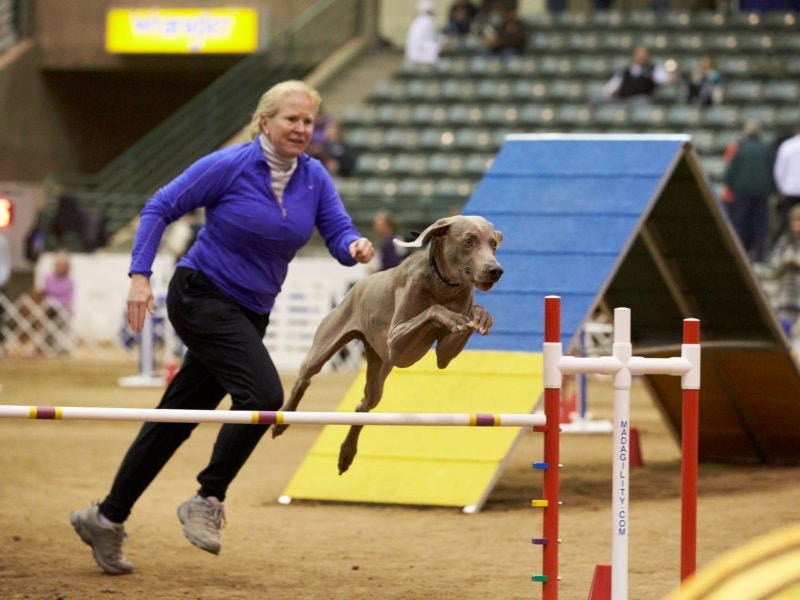
A handler guiding their dog over a jump in an agility competition.
Strategies for Course Memorization
Memorizing complex agility courses is a significant challenge for many handlers, especially as courses become more intricate. Instead of trying to remember each obstacle individually, focus on understanding the course's flow and identifying key patterns. Here are several effective methods to improve your course memorization:
Study the Course Map Diligently
Before your walkthrough, obtain the course map and study it thoroughly. Look for overarching patterns like large loops, small loops, or specific sequences that lead to turns. Breaking the course into smaller, manageable "exercises" or sections between major obstacles (like the dog walk, weave poles, or A-frame) can make it less daunting to memorize. Visualize the dog's path and your handler's path simultaneously. Some handlers even draw the dog's path on the map to solidify their understanding.
Perform Mental Walkthroughs and Visualization
Even before physically walking the course, conduct mental walkthroughs. Visualize yourself and your dog navigating the course perfectly, focusing on your footwork, hand signals, and verbal cues at each obstacle. Continue to visualize the run after the physical walkthrough and even just before your actual run. This mental rehearsal can significantly improve recall and confidence.
The "back-chaining" method can be particularly effective: try memorizing the last few obstacles, then the last six, then the last nine, and so on. This approach builds confidence as you become more familiar with the end of the course, which you'll encounter first in a back-chained mental run.
Verbalize Your Plan and Practice in the Air
Talk through your course plan, either to yourself or a friend, describing every movement, cue, and obstacle. This verbalization reinforces the sequence in your mind. Additionally, "drawing" the course in the air with your hands, especially when the field is empty, can help to ingrain the pattern kinesthetically.
Recreate and Drill Sections at Home
If possible, set up simplified versions of challenging sections of the course at home using makeshift obstacles like plastic cups or cones. Practice the sequence of movements and cues. This allows you to drill specific parts of the course repeatedly, translating mental plans into muscle memory.
Refining Your Handling Techniques
The issue of "getting in the way before jumps" suggests a need to refine your handling mechanics, specifically your movement, position, and timing in relation to your dog. Effective handling ensures your dog understands the desired path without interference, allowing for fluid and fast runs.
Understanding Handler Mechanics
Your body language, footwork, and arm movements are your primary communication tools in agility. The "7 handling elements" emphasize factors like your movement, position relative to the dog and obstacles, and connection through eye contact. Mastering these elements is crucial for guiding your dog effectively and avoiding common pitfalls like impeding their path.
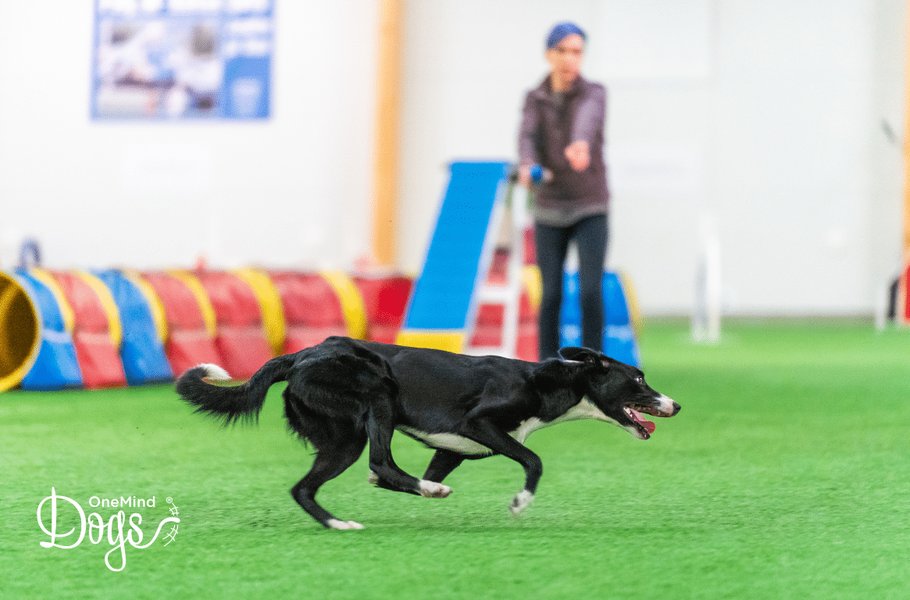
Visual representation of the seven handling elements in dog agility.
Addressing Interference Before Jumps
If you're getting in your dog's way before jumps, it often boils down to timing and positioning. Consider these points:
- Lead-Outs: For many jumps, especially at the start of a sequence, a proper lead-out can set your dog up for success. This involves getting into position ahead of your dog, allowing them to drive to the jump without you being directly in front of them.
- Commitment and Release: Teach your dog a strong "commitment" to the obstacle. This means they should be focused on and committed to taking the jump even as you move to set up for the next obstacle. Use clear release cues to signal when they should take the obstacle.
- Handler Path vs. Dog's Line: Understand that your path is often different from your dog's ideal line. You need to position yourself to direct your dog to the correct side of the jump and then move laterally away as they take it, preparing for the next obstacle. Practice stepping in one direction while looking in another to guide your dog without blocking them.
- Crosses (Front, Rear, Blind): Different crosses are used to change your dog's side or direction. A common reason for interference is an improperly timed or executed cross.
- Front Cross: Executed when you are ahead of your dog, turning into them. Proper timing ensures you don't cut off their path to the jump.
- Rear Cross: Executed behind your dog, used to switch their side when you are behind them.
- Blind Cross: A more advanced technique where you turn your back to the dog briefly to change sides. This requires excellent commitment from your dog.
Improving Distance Handling
Developing distance handling skills can mitigate issues of interference, as it allows you to direct your dog from a greater distance. This requires strong foundation skills, including commitment to obstacles and the ability for your dog to work independently for short bursts. Reward your dog on the desired line after they complete an obstacle to build value for working away from you.
Practice with a "Human Dog"
A unique and effective practice method is to have a friend act as your "human dog." This allows you to physically walk through your handling techniques and see if your movements and cues make sense from the dog's perspective. Switch roles to understand what your handling looks like to your dog.
To further illustrate the multifaceted aspects of handler performance, let's look at a radar chart comparing different handler attributes. This chart is based on opinionated analyses of common challenges and strengths, providing a visual guide to areas of potential improvement.
The radar chart above provides a visual representation of key handler attributes. Your "Current Handler Performance" might show lower scores in areas like 'Handler Position' and 'Timing of Cues,' reflecting the issue of getting in your dog's way before jumps. 'Course Memorization' would also likely be lower. The 'Target Performance (Ideal)' illustrates where you aspire to be across all these crucial aspects. This visual tool can help you identify specific areas for focused training and improvement.
Preparing for Agility Competitions
Beyond technical skills, preparing for competitions involves several practical and mental considerations. Familiarizing yourself with the event's flow and rules, maintaining your dog's physical fitness, and managing your own competition nerves are vital for a successful trial.
Pre-Competition Checklist
Before you step into the ring, ensure you've covered these essential aspects:
| Category | Preparation Details | Relevance for Performance |
|---|---|---|
| Rules & Etiquette | Familiarize yourself with the specific rules of the organization (e.g., AKC, USDAA) and trial etiquette (e.g., cleaning up after your dog, being supportive of other competitors). Ensure your dog's vaccinations are current. | Avoids disqualifications, promotes a positive environment, and reduces handler stress. |
| Physical Fitness | Both you and your dog need to be physically fit. Incorporate strength, endurance, and flexibility exercises into your routine. Consult your veterinarian for your dog's specific conditioning needs. | Enhances speed, prevents injuries, and allows for sustained performance through multiple runs. |
| Mental Preparedness | Manage competition nerves through relaxation techniques and positive visualization. Remember it's a team sport; your dog looks to you for guidance and reassurance. Stay upbeat even if things don't go perfectly. | Maintains focus, improves handler-dog communication, and promotes a positive trialing experience. |
| Trial Logistics | Check in, get your dog measured if required, and find your ring. Know the call times for your runs. Consider attending a "fun match" or practice trial beforehand. | Reduces stress on the day, allows for smooth transitions between events, and familiarizes you with the competition environment. |
| Warm-up & Cool-down | Implement a proper warm-up routine for your dog before their run and a cool-down afterward. This prevents injury and prepares them mentally and physically. | Optimizes performance and ensures the long-term health and well-being of your canine athlete. |
Leveraging Foundational Skills
Consistent reinforcement of foundational skills is paramount. This includes a solid start-line stay, responsive recalls, and obstacle discrimination. These basics are the building blocks upon which complex sequences and handling techniques are layered.
To further enhance your understanding of preparing for an agility competition, here's a relevant video:
This video provides essential tips for preparing for your first dog agility competition, covering various aspects from rules to mental preparation.
This video from OneMind Dogs offers practical advice on what to expect and how to prepare for your first agility competition, reinforcing many of the points discussed in this guide. It's a valuable resource for anyone looking to enter the competitive agility world or improve their trial experience.
Continuous Improvement and Mindset
Agility is a journey of continuous learning and improvement. Embrace the challenges as opportunities to strengthen your bond with your dog and refine your skills. Remember that every run, successful or not, provides valuable feedback.
The Power of Positive Reinforcement
Maintain a positive and encouraging attitude, especially during training and competition. Your dog feeds off your energy. A good marker and reward system are crucial for effective training, ensuring your dog understands when they've performed correctly and building their confidence.
Seeking Expert Guidance
Consider enrolling in advanced classes or attending seminars with experienced agility trainers. Professional trainers can offer personalized feedback on your handling, help you identify specific areas for improvement, and introduce you to new techniques tailored to your dog's style and your challenges.
Conclusion
Improving your agility handling and course memorization is an ongoing process that combines strategic thinking, physical practice, and a strong partnership with your dog. By focusing on breaking down complex courses into manageable patterns, refining your handler mechanics to avoid interference before jumps, and embracing a holistic approach to competition preparation, you can significantly enhance your performance. Remember, agility is a celebration of teamwork and the unique bond you share with your canine companion. Stay positive, keep learning, and enjoy every moment on the course!
Recommended Further Exploration
- Explore advanced dog agility handling techniques and their applications.
- Discover mental preparation strategies for dog agility handlers to overcome competition nerves.
- Learn about specific exercises to improve your dog's distance handling skills.
- Understand the comprehensive benefits of agility training for both dogs and their handlers.
References
 dpfleadingagility.wordpress.com
What are the benefits of dog agility for my dog and me?
Can mixed-breed dogs participate in agility competitions?
How long does it take to get ready for a dog agility competition?
What should I do if I get lost on the course during a competition?
Are there specific exercises to improve my dog's focus during agility?
Last updated May 21, 2025