
Unlocking Precision: How to Supercharge LLM Accuracy for Network Traffic Analysis
Discover proven strategies to refine Large Language Models, ensuring they deliver highly accurate insights from complex network data.
Large Language Models (LLMs) are rapidly transforming the landscape of network traffic analysis, offering unprecedented capabilities to decipher complex patterns, detect anomalies, and enhance security. However, achieving high accuracy in this specialized and dynamic domain requires more than out-of-the-box LLM implementations. It demands a multifaceted approach, focusing on data quality, model customization, and continuous refinement. By employing targeted strategies, organizations can significantly boost the reliability and precision of LLMs in interpreting the nuances of network communications.
Key Strategies for Enhanced Accuracy
- Focus on High-Quality, Domain-Specific Data: The foundation of an accurate LLM is the data it's trained on. Utilizing comprehensive, diverse, and meticulously labeled datasets specific to network traffic, including various protocols, attack signatures, and normal operational patterns, is paramount.
- Implement Advanced Fine-Tuning Techniques: General-purpose LLMs need adaptation. Employing supervised fine-tuning with network-specific tasks and instruction-tuned datasets allows the model to learn the intricacies and specialized language of network analysis.
- Leverage Retrieval-Augmented Generation (RAG): Enhance LLM responses by connecting them to external, up-to-date knowledge bases containing network protocols, threat intelligence feeds, and historical traffic data. RAG grounds the LLM's analysis in factual, current information, reducing errors and "hallucinations."
Deep Dive: Optimizing LLMs for Network Traffic Analysis
Improving the accuracy of LLMs in network traffic analysis is a continuous process that involves several interconnected strategies. These methods aim to tailor the general capabilities of LLMs to the specific, often complex, demands of understanding network behavior.
1. Data-Centric Approaches: The Cornerstone of Accuracy
The adage "garbage in, garbage out" is especially true for LLMs. The quality, relevance, and structure of training data are fundamental to achieving high accuracy in network traffic analysis.
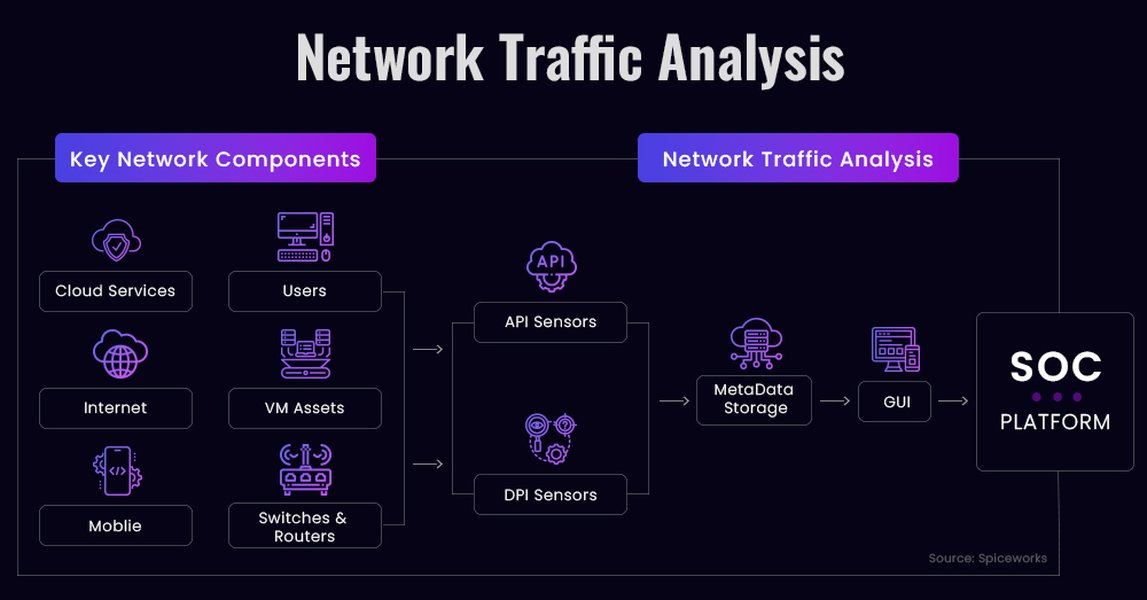
Visualizing the flow of network traffic analysis.
Cultivating High-Quality Datasets
Ensure that training data includes diverse and relevant network traffic patterns. This involves collecting comprehensive datasets that cover a wide range of scenarios, including normal traffic, various types of cyber-attacks (DDoS, malware, intrusion attempts), and encrypted traffic. Publicly available datasets, such as those used by the TrafficLLM project, can be a starting point, but often need to be supplemented with organization-specific data.
Domain-Specific and Instruction-Tuned Data
LLMs benefit significantly from data that directly reflects the target domain. This includes:
- Packet Logs and Flow Data: Detailed records of network communications.
- Labeled Attack Datasets: Examples of malicious traffic clearly identified.
- Encrypted Traffic Samples: To train models to identify patterns even within encrypted flows.
- Instruction Datasets: These datasets contain examples of specific network analysis tasks paired with human-generated instructions and desired outputs. This helps the LLM understand *how* to perform certain analyses, such as "classify this traffic flow" or "identify anomalies in this log snippet."
Data Validation and Bias Mitigation
Implement rigorous testing and validation processes to ensure data accuracy and freedom from noise or errors. It's also crucial to address potential biases in training data, which can lead to inaccurate or skewed LLM outputs. Regular updates to the training data help mitigate model drift and dataset bias, ensuring the LLM remains effective as network environments and threat landscapes evolve.
2. Model Adaptation: Fine-Tuning for Precision
Pre-trained LLMs, while powerful, are generalists. To excel at network traffic analysis, they require specific adaptation through fine-tuning.
Supervised and Dual-Stage Fine-Tuning
Supervised Fine-Tuning (SFT) involves training the LLM on labeled datasets directly relevant to network traffic analysis. This helps the model learn specific patterns, protocol behaviors, and anomalies characteristic of network data.
Dual-Stage Fine-Tuning, as demonstrated by frameworks like TrafficLLM, offers a more robust approach. This typically involves:
- General tuning with large-scale raw traffic data to familiarize the LLM with the broad characteristics of network communications.
- Task-specific fine-tuning using expert-labeled instructions and domain-specific datasets to refine the LLM's ability to perform targeted analysis tasks.
Hyperparameter Optimization
Optimizing model parameters (e.g., learning rate, batch size) during the fine-tuning process is crucial for achieving peak performance on network traffic analysis tasks. This often involves experimentation and iterative adjustments.
3. Enhancing Contextual Understanding with RAG
Retrieval-Augmented Generation (RAG) significantly improves LLM accuracy by providing access to external, up-to-date information during the generation process.
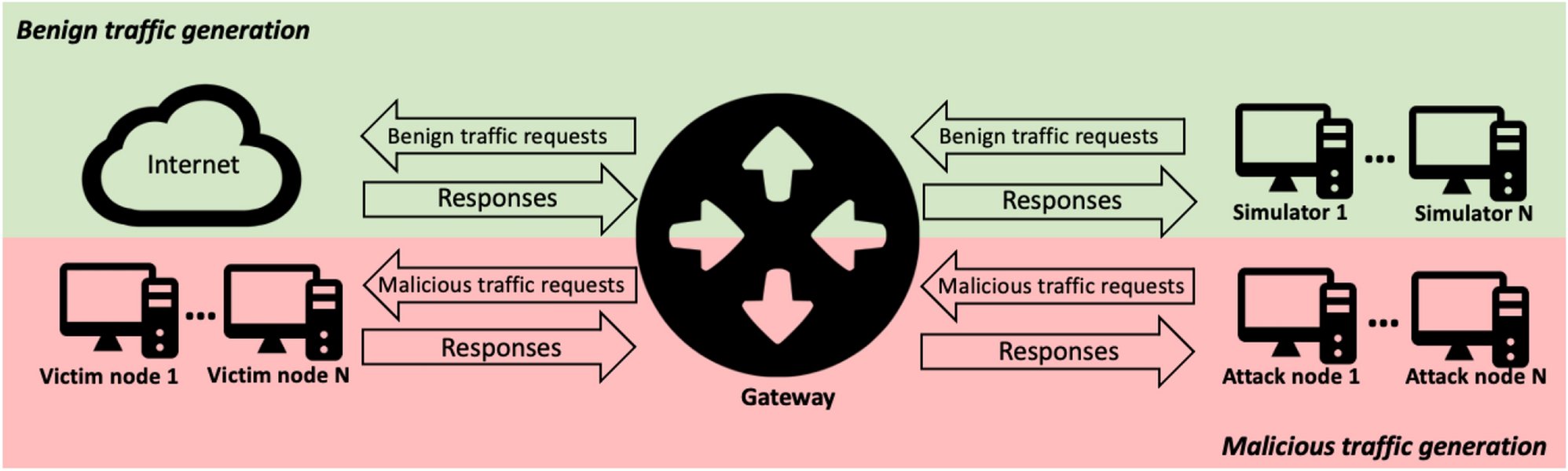
Representation of network flow data used in analysis.
For network traffic analysis, RAG systems can connect the LLM to:
- Databases of known network protocols and their specifications.
- Real-time threat intelligence feeds.
- Historical network telemetry data from the specific environment.
- Documentation on network configurations and device behaviors.
This video discusses how to build reliable RAG applications, a key technique for boosting LLM accuracy by connecting them to real-time data sources, which is highly relevant for dynamic network traffic analysis.
4. Strategic Prompt Engineering and Input Representation
The way queries are posed to an LLM (prompt engineering) and how network data is presented to it can drastically affect output accuracy.
Crafting Effective Prompts
Well-designed prompts clearly define the task and guide the LLM. Key aspects include:
- Clarity and Specificity: Vague prompts lead to vague answers. Clearly state the analytical goal.
- Role Definition: Assigning a role to the LLM (e.g., "You are a network security analyst. Identify potential threats in the following log...") can prime it for the task.
- Delimiters and Repetition: Using delimiters (like triple quotes) to separate instructions from data, and sometimes repeating key instructions, can improve focus.
- Chain-of-Thought (CoT) Prompting: Encouraging the LLM to "think step-by-step" by providing examples of reasoning processes can lead to more accurate and explainable outputs for complex analyses.
Multi-Modal Input Representation
Network traffic data isn't just text. It includes numerical statistics, byte sequences, and relational information. Converting multi-modal traffic flow data into structured textual prompts that incorporate task settings, domain knowledge, and even representations of non-textual data (e.g., describing flow statistics in natural language) can help LLMs discern latent relationships. This allows the LLM to leverage its natural language processing strengths on diverse data types.
Visualizing Strategy Effectiveness: A Comparative Radar Chart
To better understand the trade-offs and impacts of different strategies for improving LLM accuracy in network traffic analysis, the radar chart below visualizes key methods across several dimensions. These dimensions include 'Impact on Accuracy', 'Implementation Complexity', 'Data Dependency', 'Computational Cost', and 'Adaptability to New Threats'. Higher values generally indicate a greater degree or requirement for that dimension (e.g., higher 'Impact on Accuracy' is better; higher 'Implementation Complexity' means more effort).
This chart illustrates that while strategies like focusing on 'Data Quality' and 'Fine-Tuning' have a very high impact on accuracy, they also come with significant data dependency and computational costs. 'Prompt Engineering' is less complex and costly but may have a comparatively lower direct impact on accuracy if not combined with other methods. 'RAG' offers good adaptability and accuracy improvement with moderate complexity. 'Hybrid Models' can be highly effective but are often the most complex to implement.
Advanced Methodologies for Robust Analysis
Beyond foundational techniques, advanced approaches can further enhance LLM accuracy and capabilities in network traffic analysis.
Hybrid Models and Ensemble Learning
Combining LLMs with other AI models, such as Graph Neural Networks (GNNs), can create powerful hybrid systems. GNNs excel at analyzing graph-structured data, which is inherent in network topologies and communication patterns. An LLM can handle textual data (logs, alerts) and provide high-level reasoning, while a GNN can analyze traffic flow relationships. Ensemble learning, where multiple models contribute to a final decision, can also improve robustness and accuracy.
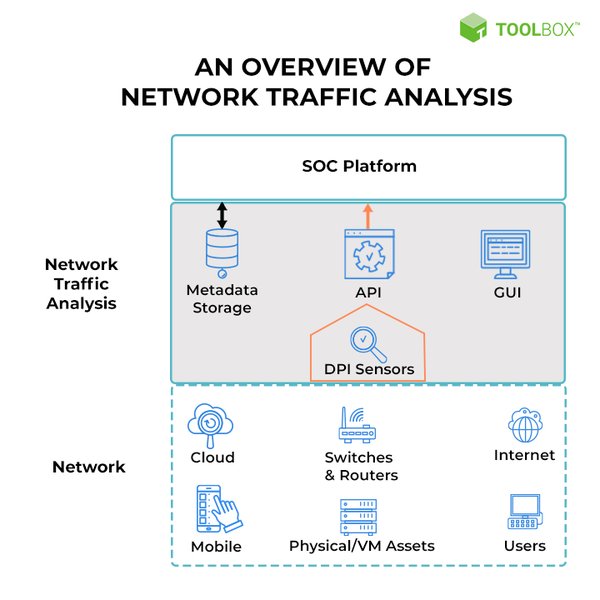
Network diagrams represent complex interconnections ideal for hybrid model analysis.
Continuous Evaluation, Monitoring, and Updates
Network environments are dynamic, with new applications, devices, and threats emerging constantly. Therefore, LLM accuracy is not a one-time achievement but an ongoing effort.
Performance Monitoring and Metrics
Regularly monitor the LLM's performance using metrics relevant to network traffic analysis, such as:
- Accuracy, Precision, Recall, F1-Score: For classification tasks (e.g., identifying malicious vs. benign traffic).
- Perplexity and Relevance: To assess the quality of generated textual analyses.
- False Positive and False Negative Rates: Crucial for security applications.
Iterative Refinement and Human-in-the-Loop
Implement a feedback loop where network experts review and correct LLM outputs. This human-in-the-loop (HITL) approach provides valuable data for further fine-tuning and helps identify areas where the model struggles. Techniques like Reflexion, where the model learns from past errors, can also be employed.
Regular Model Updates
Periodically update the LLM with new data and retrain or fine-tune it to maintain accuracy and adapt to evolving network patterns and threats. This includes updating the external knowledge bases used by RAG systems.
Mindmap: Interconnected Strategies for LLM Accuracy in Network Traffic Analysis
The following mindmap illustrates the interconnected nature of the various strategies discussed for enhancing the accuracy of Large Language Models in the domain of network traffic analysis. Each branch represents a core area of focus, with sub-branches detailing specific techniques and considerations.
Network Traffic Analysis"] id1["Data-Centric Strategies"] id1_1["High-Quality Datasets"] id1_2["Domain-Specific Data
(Logs, Packets, Flows)"] id1_3["Instruction-Tuned Datasets"] id1_4["Data Diversity & Up-to-Dateness"] id1_5["Bias Mitigation & Validation"] id2["Model Adaptation & Fine-Tuning"] id2_1["Supervised Fine-Tuning (SFT)"] id2_2["Dual-Stage Fine-Tuning"] id2_3["Hyperparameter Optimization"] id3["Retrieval-Augmented Generation (RAG)"] id3_1["External Knowledge Integration
(Protocols, Threat Intel)"] id3_2["Real-time Data Access"] id3_3["Grounding & Fact Verification"] id4["Prompt Engineering & Input Representation"] id4_1["Clear & Specific Prompts"] id4_2["Role Definition & Context Setting"] id4_3["Multi-modal Input Conversion"] id4_4["Chain-of-Thought (CoT) Prompting"] id5["Advanced Methodologies"] id5_1["Hybrid Models (e.g., LLM + GNNs)"] id5_2["Ensemble Learning Techniques"] id5_3["Automated Reasoning (DEPS, Reflexion)"] id6["Continuous Improvement & Evaluation"] id6_1["Performance Monitoring & Metrics
(Accuracy, F1, Perplexity)"] id6_2["Iterative Refinement"] id6_3["Human-in-the-Loop (HITL) Feedback"] id6_4["Regular Model Updates & Retraining"] id6_5["Addressing Hallucinations"]
This mindmap highlights that a holistic approach, addressing data, model, context, interaction, advanced techniques, and ongoing maintenance, is essential for maximizing LLM accuracy in the challenging field of network traffic analysis.
Summary Table of Techniques
The table below provides a concise summary of key techniques discussed, their descriptions, and their primary benefits for improving LLM accuracy in network traffic analysis.
| Technique | Description | Key Benefit for Network Traffic Analysis |
|---|---|---|
| Domain-Specific Fine-Tuning | Adapting pre-trained LLMs using datasets specific to network traffic (logs, packet data, threat signatures, flow data). | Enhances understanding of network-specific terminology, protocols, and malicious/anomalous patterns. |
| Instruction Tuning | Fine-tuning with datasets containing examples of network analysis tasks paired with desired outputs and human instructions. | Improves the LLM's ability to follow specific commands and perform targeted analytical tasks accurately. |
| Retrieval-Augmented Generation (RAG) | Integrating LLMs with external, up-to-date knowledge bases or real-time network data retrieval systems. | Provides current and factual context, reducing hallucinations and improving the relevance of analyses. |
| High-Quality Data Curation | Using diverse, representative, accurately labeled, and validated network traffic datasets for training and fine-tuning. | Reduces model bias, improves generalization to unseen data, and forms a strong foundation for accuracy. |
| Advanced Prompt Engineering | Crafting clear, specific, context-rich, and structured prompts, possibly including role-playing or chain-of-thought examples. | Guides the LLM to provide more focused, accurate, and relevant output for complex queries. |
| Multi-Modal Data Integration | Developing methods to represent and feed diverse network data types (e.g., flow statistics, packet headers, textual logs) to the LLM. | Offers a more holistic view for analysis by enabling the LLM to process and correlate different forms of information. |
| Hybrid Architectures | Combining LLMs with other AI models (e.g., Graph Neural Networks, traditional machine learning classifiers) specialized in certain data types or tasks. | Leverages the strengths of different models for more comprehensive and accurate analysis of complex network scenarios. |
| Continuous Evaluation & Updates | Regularly monitoring performance metrics, incorporating human feedback, and retraining/updating the model with new data. | Maintains accuracy and relevance in highly dynamic network environments and against evolving threats. |
Frequently Asked Questions (FAQ)
What is "fine-tuning" in the context of LLMs for network traffic analysis?
Fine-tuning is the process of taking a pre-trained LLM (which has learned general language patterns from vast amounts of text) and further training it on a smaller, domain-specific dataset. In network traffic analysis, this means training the LLM on data like network logs, packet captures, security alerts, and known attack patterns. This adaptation helps the LLM learn the specific vocabulary, syntax, patterns, and nuances relevant to network communications and security, thereby improving its accuracy and performance on tasks like anomaly detection, traffic classification, and threat identification.
Why is domain-specific data so important for LLM accuracy in this field?
Network traffic analysis involves highly specialized data that is very different from general text. It includes protocol-specific headers, IP addresses, port numbers, byte sequences, and unique patterns associated with various applications and potential threats. General-purpose LLMs, trained on books and websites, lack inherent understanding of these concepts. Domain-specific data provides the necessary examples for the LLM to learn these specialized patterns, understand network jargon, differentiate normal from anomalous behavior, and ultimately make more accurate classifications and predictions relevant to network operations and security.
How does Retrieval-Augmented Generation (RAG) help improve LLM performance?
RAG enhances LLM performance by giving it access to external, up-to-date information sources at the time of query. Instead of relying solely on its static, pre-trained knowledge, an LLM with RAG can retrieve relevant information from a specified knowledge base (e.g., a database of network configurations, recent threat intelligence, or specific protocol documentation) before generating a response. For network traffic analysis, this means the LLM can base its analysis on the latest information specific to the network environment or emerging threats, leading to more accurate, contextually relevant, and factually grounded insights, while also reducing the likelihood of generating outdated or incorrect information ("hallucinations").
What are "hallucinations" in LLMs, and how can they be minimized in network analysis?
LLM "hallucinations" refer to instances where the model generates text that is factually incorrect, nonsensical, or not grounded in the provided input data, despite sounding plausible. In network analysis, this could mean inventing non-existent threats, misinterpreting log data, or providing incorrect explanations for network events. Hallucinations can be minimized by:
- High-Quality, Domain-Specific Training Data: Better data reduces ambiguity.
- Retrieval-Augmented Generation (RAG): Grounding responses in factual, retrieved data.
- Fine-Tuning: Aligning the model more closely with factual knowledge in the domain.
- Prompt Engineering: Clearer, more constrained prompts can guide the model.
- Fact-Checking Mechanisms: Implementing post-processing steps to verify LLM outputs against known facts.
- Temperature Setting: Lowering the "temperature" parameter during generation makes outputs more deterministic and less "creative."
Can LLMs adapt to new and evolving network threats?
Yes, LLMs can be adapted to new and evolving network threats, but it's not an automatic process for most standard deployments. Adaptation typically requires:
- Continuous Data Updates: Feeding the LLM with new threat intelligence, examples of new attack vectors, and updated logs reflecting current network behavior.
- Regular Retraining/Fine-Tuning: Periodically fine-tuning the model on these new datasets helps it learn to recognize and analyze emerging threats.
- RAG with Up-to-Date Knowledge Bases: If using RAG, ensuring the external knowledge sources are constantly updated with the latest threat information allows the LLM to access this knowledge in real-time.
- Monitoring and Feedback Loops: Actively monitoring the LLM's performance against new threats and using expert feedback to correct errors helps in its ongoing adaptation.
Recommended Further Exploration
- What are the best practices for creating domain-specific datasets for LLM training in cybersecurity?
- How can Retrieval-Augmented Generation be implemented effectively for real-time network anomaly detection?
- What are the ethical considerations when using LLMs for network traffic surveillance and analysis?
- Explore case studies of successful LLM deployments in enterprise network security operations.
References
 aws.amazon.com
Last updated May 12, 2025