
Beyond Borders: Unpacking the Cascading Perils of an India-Pakistan Conflict
A deep dive into the multifaceted consequences, from immediate humanitarian crises to long-term global instability, in light of recent escalations.
The prospect of a full-scale war between India and Pakistan, two nuclear-armed neighbors, is a deeply concerning scenario with far-reaching implications. Recent events in May 2025 have again highlighted the fragility of peace in the region, prompting a closer examination of what such a conflict would entail. This analysis synthesizes information on potential military, humanitarian, economic, social, political, and environmental outcomes.
Key Highlights: The Stark Realities
- Unprecedented Human Cost: A conflict risks massive casualties, large-scale displacement, and, in the event of nuclear escalation, tens of millions of immediate deaths and a long-term humanitarian catastrophe.
- Devastating Economic Shockwaves: Both nations would face crippling economic damage exceeding billions of dollars, with severe disruptions to regional and global trade, investment, and supply chains.
- Global Geopolitical Instability: Beyond South Asia, a war could trigger broader international security crises, impact global markets, strain international relations, and potentially lead to wider interventions.
The Tinderbox: Recent Escalations and Historical Precedents
Tensions between India and Pakistan have remained high, punctuated by periodic crises. The early months of 2025 witnessed a significant escalation, adding a new chapter to their complex history.
The 2025 Standoff: A New Low
The situation intensified dramatically following a terrorist attack in Pahalgam, Jammu and Kashmir, on April 22, 2025, which resulted in the tragic loss of 27 lives. India attributed this heinous act to terrorists operating from Pakistan. In response, on May 7, 2025, India launched "Operation Sindoor," conducting missile strikes against nine alleged terrorist sites within Pakistan and Pakistan-administered Kashmir. This operation was described by India as a direct response to the April massacre and notably marked the first instance since the 1971 war where all three branches of the Indian military acted in concert against targets in Pakistan. Pakistan, in turn, claimed to have shot down five Indian Air Force jets and reported civilian casualties from the Indian strikes, vowing retaliation. These events underscore the volatile nature of the relationship and the potential for rapid escalation.
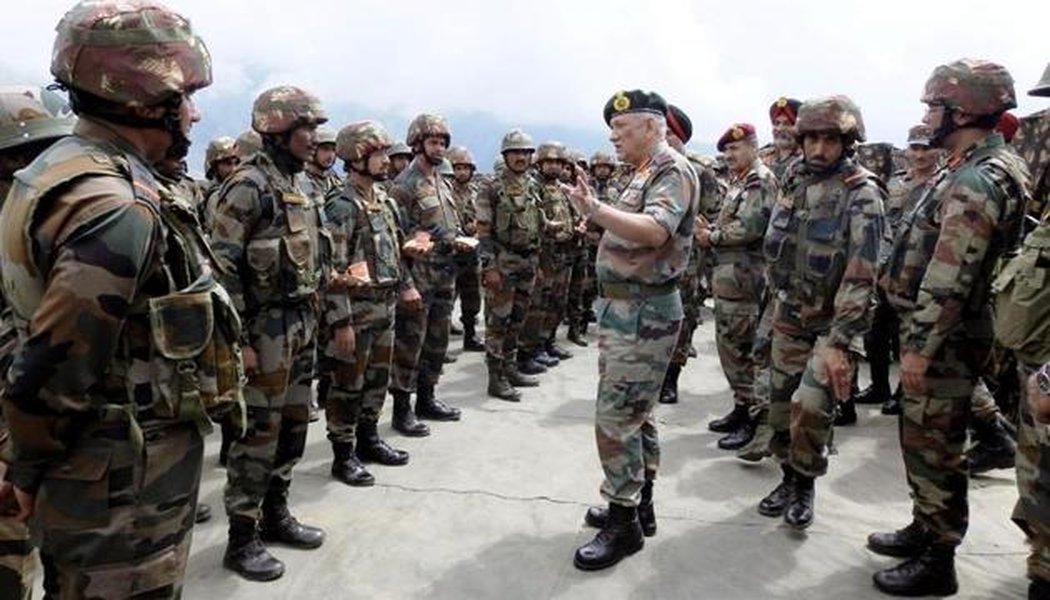
Indian military presence along the sensitive border regions highlights the constant state of readiness and tension.
A History Marred by Conflict
The relationship between India and Pakistan has been fraught since the partition of British India in 1947. They have fought several major wars, notably in 1965 and 1971, the latter leading to the formation of Bangladesh. The 1999 Kargil War brought the two nations perilously close to a nuclear exchange. These historical conflicts, alongside recurrent border skirmishes and cross-border aerial strikes, form a grim backdrop to the current tensions, illustrating a pattern of "managed hostility" that always carries the risk of spiraling out of control.
Summary of Key Conflicts and Escalations
The historical and recent interactions between India and Pakistan highlight a persistent pattern of conflict and tension. The table below summarizes some of the critical junctures:
| Event/Conflict | Year(s) | Key Developments | Significance/Outcome |
|---|---|---|---|
| First Kashmir War | 1947-1948 | Conflict over the princely state of Jammu and Kashmir following partition. | UN-brokered ceasefire; Line of Control established. |
| Indo-Pakistani War of 1965 | 1965 | Large-scale military conflict primarily over Kashmir. | Stalemate; Tashkent Declaration; UN-brokered ceasefire. |
| Indo-Pakistani War of 1971 | 1971 | Conflict linked to the Bangladesh Liberation War. | Decisive Indian victory; Creation of Bangladesh from East Pakistan. |
| Kargil War | 1999 | Limited conflict in the Kargil district of Kashmir; both nations possessed nuclear capabilities. | Indian victory; International pressure for Pakistani withdrawal; heightened nuclear fears. |
| 2025 Standoff | 2025 | Pahalgam terrorist attack; Indian "Operation Sindoor" missile strikes; Pakistani counter-claims. | Significant escalation; first joint Indian tri-service action against Pakistan since 1971; heightened risk of wider conflict. |
The Devastating Domino Effect: Multifaceted Consequences
A full-scale war between India and Pakistan would unleash a cascade of devastating consequences across multiple domains, impacting not only the subcontinent but the entire world.
Immediate Military and Humanitarian Catastrophe
A conventional war would likely involve large standing armies engaging in intense combat across the Line of Control (LoC) in Kashmir and potentially along the international border. Civilian populations, especially in border regions, would be severely affected, leading to high casualties and mass displacement, potentially creating a refugee crisis of immense proportions.
The Nuclear Nightmare
The most terrifying dimension is the nuclear capability of both nations. U.S. intelligence reports dating back to the 1980s and 90s highlighted a strong possibility of nuclear weapon use in a full-blown conflict. Studies project that even a "limited" nuclear exchange could lead to tens of millions of immediate fatalities from blasts, radiation, and firestorms. The long-term environmental impact, often termed "nuclear winter," could see soot and smoke from burning cities block sunlight, causing a significant drop in global temperatures, leading to widespread crop failures and famine on a global scale. Attacks on nuclear facilities, such as Pakistan's Karachi Nuclear Power Plant, could also result in catastrophic radioactive releases.
Crippling Economic Repercussions
The economic fallout would be disastrous. Estimates suggest that a prolonged conflict could inflict direct and indirect damages exceeding $17 billion. India, despite its significantly larger economy (more than 10 times the size of Pakistan's), would face severe disruptions due to increased military expenditure, damage to critical infrastructure (dams, communication networks, transport routes, industrial zones), and lost productivity. Pakistan's already strained economy would face an existential threat. Cross-border trade, already impacted by tensions, would cease entirely. Regional infrastructure projects, including those linked to China's Belt and Road Initiative, could be derailed, destabilizing the economies of Central and South Asia and sending ripple effects through global supply chains and financial markets.
Social Disruption and Political Instability
War would undoubtedly fuel intense nationalism in both countries, potentially leading to crackdowns on dissent, human rights abuses, and greater political instability. Communal tensions within India and Pakistan could be inflamed, further fracturing societies. Both nations face internal challenges – India with income inequality and Pakistan with the military's historical influence often justified by the Kashmir issue. A war would exacerbate these domestic problems significantly.
Regional Destabilization and Global Impact
A conflict would gravely undermine the security and stability of South Asia, potentially drawing in other regional and global powers, either diplomatically or, in a worst-case scenario, militarily. International concerns about nuclear proliferation, terrorism, and large-scale refugee flows would escalate, impacting global peace and security. Trade routes in the Indian Ocean and energy supplies from the Gulf region could be disrupted, delivering a shock to the global economy. The war could also undermine international nuclear non-proliferation efforts, potentially triggering a new arms race.
Visualizing the Scale of Potential Impacts
The following chart provides a qualitative assessment of the potential severity across various impact dimensions in the event of a full-scale India-Pakistan war, particularly one involving nuclear escalation. The scores (out of 10, with 10 being most severe) are illustrative, based on expert analyses, reflecting the catastrophic nature of such a conflict.
This chart underscores how interconnected and severe the consequences would be, with the risk of nuclear escalation amplifying all other impacts to catastrophic levels.
The Web of Consequences: A Mindmap View
An India-Pakistan war would trigger a complex web of interconnected consequences. The mindmap below illustrates these cascading effects, showing how military actions can lead to humanitarian crises, economic collapse, political instability, and broader global repercussions.
This mindmap visually represents how initial military actions could spiral into a multifaceted crisis affecting nearly every aspect of life in the region and beyond.
Pathways to De-escalation: A Glimmer of Hope?
Despite the grim possibilities, mechanisms for de-escalation, though imperfect, do exist. Historically, third-party actors, including the United States, Russia, and China, have played roles in urging restraint and facilitating communication during crises. International diplomatic pressure often mounts to prevent conflicts from spiraling out of control. However, a significant concern is the reported lack of robust bilateral crisis communication and escalation control mechanisms directly between India and Pakistan, leading to reliance on these third parties. Encouraging backchannel talks and implementing confidence-building measures related to border management, ceasefire enforcement, and counter-terrorism cooperation are seen as critical steps to avert full-scale war.
Perspectives on the Conflict and its Ramifications
The video below offers further insights into the potential consequences of an India-Pakistan war, discussing the complex dynamics and the high stakes involved for both nations and the international community.
This discussion explores the multifaceted consequences of a potential war between India and Pakistan.
Frequently Asked Questions (FAQ)
What are the primary triggers for recent escalations between India and Pakistan?
Recent escalations, such as those in May 2025, were primarily triggered by terrorist attacks, like the one in Pahalgam, which India attributed to Pakistan-based groups. India's subsequent military responses, such as "Operation Sindoor," and Pakistan's counter-actions, then escalated the situation further. Cross-border terrorism and disputes over Kashmir remain core flashpoints.
How likely is the use of nuclear weapons in an India-Pakistan war?
While both countries maintain a stance of nuclear deterrence and no-first-use (India) or credible minimum deterrence (Pakistan, which does not have a no-first-use policy against India), the risk of nuclear escalation in a full-scale conventional war is significant. If one side perceives conventional defeat as imminent, the temptation to use tactical or strategic nuclear weapons could become very high. Analysts consider this the most dangerous aspect of any India-Pakistan conflict.
What would be the global economic impact of such a war?
A war would severely disrupt regional trade and could impact global supply chains, particularly for goods transiting through South Asia or the Indian Ocean. Energy supplies from the Gulf could be affected. Financial markets would likely react negatively to the instability. If nuclear weapons are used, the "nuclear winter" scenario would cause global crop failures, leading to massive food shortages and a worldwide economic depression.
What role do international powers play in preventing or de-escalating conflicts?
Major powers like the United States, China, and Russia, as well as international bodies like the UN, typically exert diplomatic pressure on both India and Pakistan to de-escalate during crises. They may offer mediation or facilitate communication. However, the effectiveness of these interventions can vary, and the primary responsibility for maintaining peace rests with India and Pakistan themselves.
Recommended Further Queries
- What are the specific nuclear doctrines of India and Pakistan and how do they influence escalation risks?
- How has the Kashmir dispute evolved since 1947 and what are the current prospects for resolution?
- What international treaties or agreements govern military conduct between India and Pakistan, particularly concerning nuclear weapons and border skirmishes?
- Analyze the long-term socio-economic impacts on civilian populations in past India-Pakistan conflicts.
References
Last updated May 8, 2025