
Future Trends in India's Space Sector
Exploring the rapid evolution and innovations driving India's space ambitions
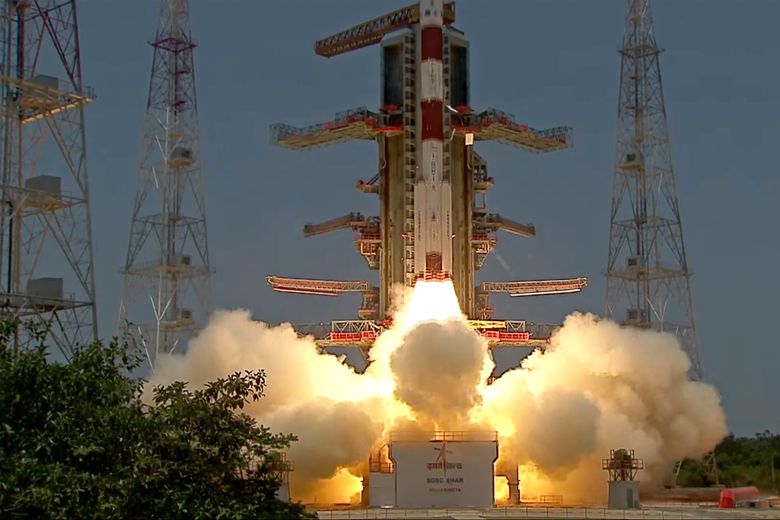
Key Highlights
- Rapid Economic Expansion: Forecasted growth to a multibillion-dollar industry.
- Government & Private Synergy: Robust policy support paired with increasing private participation.
- Innovative Technologies: Advancements in reusable launch vehicles, satellite systems, and beyond.
Overview
India's space sector is undergoing a transformative phase driven by significant economic, technological, and policy advancements. The Indian government, in tandem with a burgeoning private sector, is positioning the country to become a major player in the global space economy. With ambitious goals set for the coming years, the future trends in India's space sector reveal both immediate technological innovations and long-term strategic initiatives that promise to reshape the landscape.
Key Trends & Developments
Economic Expansion and Market Growth
India’s space economy is on track for remarkable growth, with estimates suggesting a leap from approximately USD 8.4 billion in 2024 to as high as USD 44 billion by 2033. This predicted increase reflects not only a strong domestic market but also India's ambition to capture approximately 8% of the global space market. Economic growth is anticipated to be bolstered by:
Funding and Investment Trends
The strategic allocation of budgetary resources such as those in the Union Budget 2025-26 marks a significant step toward bridging existing infrastructural and technological gaps. Government initiatives, such as the Indian Space Policy 2023 and dedicated funds to support space startups, are fueling both research and private sector investment. This inflection point is fostering an ecosystem that supports innovation, infrastructure development, and increasing export opportunities in space technology.
Government Support and Policy Initiatives
The framework for India's space ambitions has significantly benefited from robust government support. The Indian government has implemented several policy reforms aimed at creating a more conducive environment for both public and private players. Key initiatives include:
- Regulatory Reforms: Recent changes in policies have streamlined licensing procedures and allocated funds to boost innovation within the sector.
- Strategic Missions: Ambitious missions like Gaganyaan for human spaceflight, Aditya-L1 for solar study, and varied orbital missions underscore the country’s commitment to space exploration.
- International Collaboration: Partnerships with global agencies such as NASA and the European Space Agency facilitate knowledge exchange and co-development of space technologies.
Private Sector Participation and Innovation
One of the most dynamic shifts in the sector is the surge in private sector involvement. With over 400 private enterprises now participating in space-related endeavors, compared to just a few years ago, India's space industry is experiencing a paradigm shift. This influx of private players is leading to:
Startups and Technology Incubators
Innovation is flourishing, spurred by startups that are pioneering advancements in satellite manufacturing, launch vehicle development, and novel space-based applications such as high-speed internet connectivity in rural areas through small satellite constellations. Initiatives like seed funding schemes and collaboration platforms are playing a crucial role in stimulating an entrepreneurial mindset within this high-tech domain.
Revolutionary Technological Advancements
Technological progress stands at the heart of India's space evolution. Several innovations are earmarked to redefine cost, efficiency, and capabilities in space travel and observation:
Reusable Launch Vehicles
One major focus is the development of reusable launch vehicles, which are expected to significantly reduce the cost per launch. This innovation will not only streamline repeated access to orbit but will also position India competitively amidst rising global challenges.
Satellite and Constellation Technology
The next wave in satellite technology includes designing a constellation of small satellites. These systems are being developed for enhanced communication services, especially for rural and remote areas, thus leveraging space assets to bolster terrestrial connectivity. This trend is coupled with advancements in satellite imaging, remote sensing, and real-time data analytics that have a wide range of applications from weather forecasting to disaster management.
Advanced Propulsion and Energy Systems
In addition to reusable systems, India is investing in cutting-edge propulsion technologies including nuclear propulsion and advanced ion engines. These systems will allow for faster transit, greater payload capacities, and extended mission profiles, thereby expanding the horizon for both manned and unmanned missions. Research in space-based solar power, where energy collected in space is beamed to Earth, also signals a forward-thinking approach to sustainable space utilization.
Ambitious Mission Profiles and Strategic Exploration
The roadmap for India's space sector is dotted with an array of high-profile missions that aim to not only consolidate its technological prowess but also expand its exploratory frontiers. Some of the notable initiatives include:
- Human Spaceflight: The Gaganyaan mission represents a suspended dream turned into reality with plans for sending an Indian astronaut into space, marking a significant milestone.
- Lunar and Planetary Exploration: Missions like Chandrayaan-3 and plans for Martian or even other planetary missions illustrate an expanding ambition in deep space exploration.
- Space Tourism and Commercial Ventures: Global trends in space tourism are inspiring Indian stakeholders to explore this market, potentially opening new revenue streams and partnerships.
Trends in a Consolidated Table
| Trend | Description | Key Initiatives |
|---|---|---|
| Economic Expansion | Rapid growth in the space economy from billions to tens of billions USD, capturing a significant share of the global market. | Union Budget Allocations, Market Forecasts |
| Government Support and Policy | Active policy reforms and funding, such as the Indian Space Policy 2023, encouraging private and public collaboration. | Regulatory Framework, Strategic Missions (Gaganyaan, Aditya-L1) |
| Private Sector Innovation | Increase in participation from startups and established corporations enhancing technological innovation and market dynamics. | Startup Incubators, Seed Funding, Private Partnerships |
| Technological Advancements | Breakthroughs in reusable launch vehicles, small satellite constellations, and advanced propulsion systems. | Reusable Vehicle Projects, Advanced Ion Engines, Space-based Solar Power |
| Exploratory Missions | Ambitious missions including human spaceflight, lunar landings, and interplanetary exploration to broaden space exploration horizons. | Gaganyaan, Chandrayaan-3, Future Mars Missions |
Additional Insights and Strategic Outlook
Space Situational Awareness and Defense Applications
Recognizing the strategic importance of space, India is also focusing on enhancing its capabilities in space situational awareness. These systems are crucial for tracking and monitoring satellites and space debris, thereby ensuring national security and safeguarding valuable space assets. The integration of defense applications with space technology represents an investment in both national security and advanced research.
Manufacturing and Export Opportunities
With plans to develop dedicated space manufacturing hubs and clusters, particularly in regions near launch sites such as Kerala and Tamil Nadu, India is gearing up to become a prominent exporter of space technologies. Hosting collaborative networks between public research institutions, private corporations, and startups, the manufacturing sector is expected to significantly boost exports, targeting figures as high as USD 11 billion by the early 2030s.
Global Collaborations and Commercial Ventures
Beyond domestic endeavors, India's space sector is increasingly engaging in international collaborations. These partnerships enhance technical expertise, share risks associated with high-cost missions, and accelerate the development and deployment of new technologies. This global cooperation is also instrumental in keeping India abreast of the latest advancements in space propulsion, satellite systems, and space-based services.
References
-
Space Economy India - PW Only IAS
- India's Space Sector Transformations - Financial Express
- Indian Space Sector Insights - Invest India
- Quantum Leap in India's Space Economy - The Week
- Union Minister's Vision - NewsBytes
Recommended Related Queries
Last updated March 21, 2025