
The Evolution of EdTech in India
Exploring growth, technological integration, and challenges in India’s EdTech ecosystem
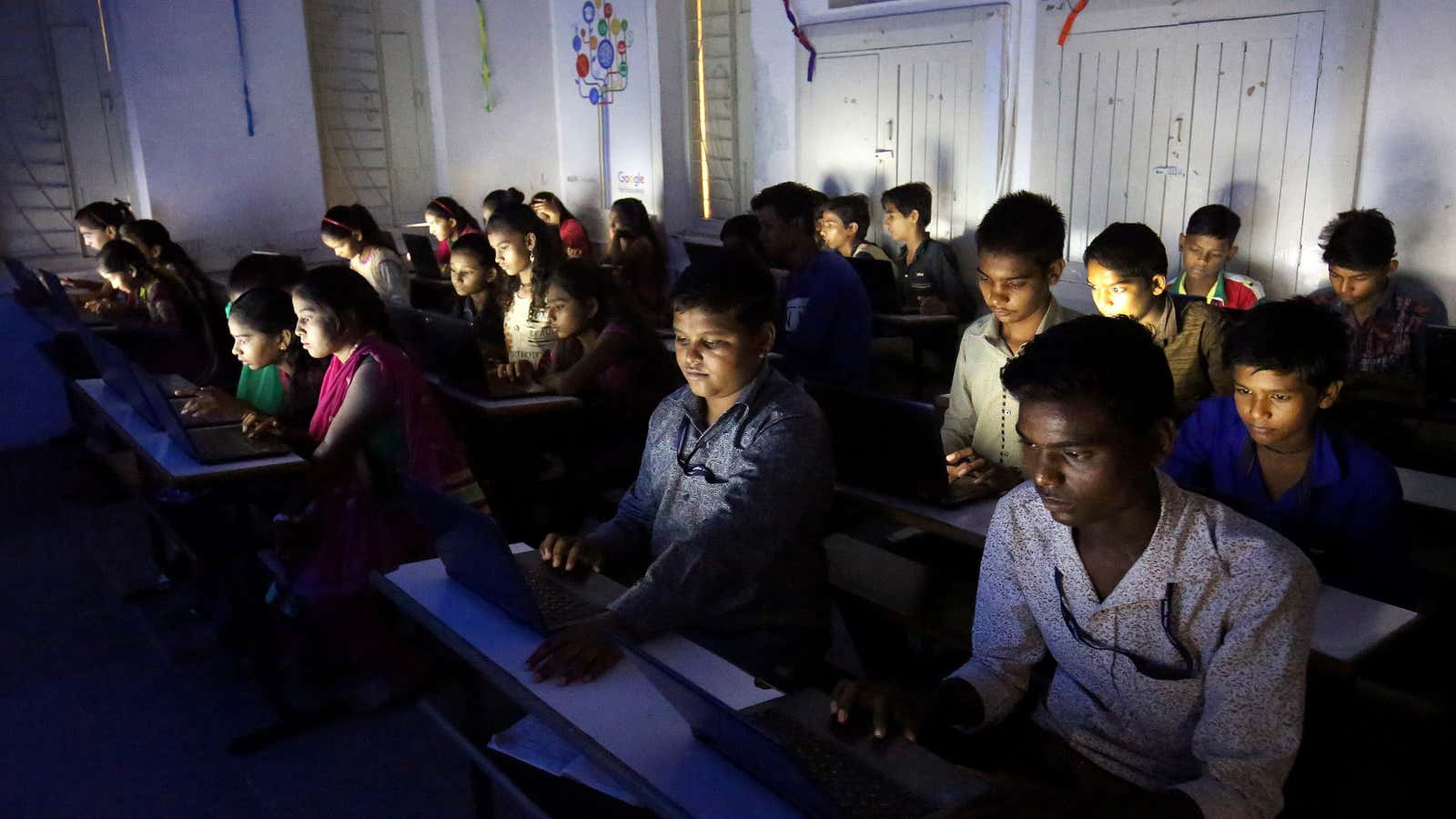
Highlights
- Market Expansion: Significant growth trajectory from traditional education to advanced digital learning.
- Technology Integration: Extensive use of AI, VR, AR, and adaptive learning models.
- Government and Investment Support: Role of public initiatives and substantial investments fueling the market.
Comprehensive Overview of the Indian EdTech Sector
The education technology (EdTech) sector in India has witnessed a remarkable transformation over the past decade. It has evolved from a niche segment into a major pillar of the overall education market. Driven by various factors including demographic shifts, technological advances, and proactive government initiatives, the industry is now at a pivotal stage of expansion and innovation. This comprehensive review outlines the market dynamics, technological integration, leading players, challenges, and future prospects of EdTech in India.
Market Dynamics and Growth Projections
India's EdTech market is experiencing a robust growth curve largely due to the country's vast young population, which comprises millions of children and young adults eager for quality education. With over 580 million individuals in the 5–24 age category, India presents an exceptional opportunity for growth in digital learning platforms. The current valuation of the EdTech market is estimated to be around $7.5 billion and is projected to surge to as much as $29 billion by 2030. This significant increase is primarily attributed to:
Demographics and Demand
India’s demographic profile is one of its strongest assets, with a large base of young learners. The K-12 segment, in particular, has seen rapid digital adoption as parents and educators increasingly recognize the benefits of interactive and personalized learning. Additionally, the higher education and upskilling segments are also growing, ensuring that learners at various stages of life have access to quality educational content.
Funding and Investment Landscape
The influx of venture capital and other forms of investments has been a critical enabler for the rapid expansion of the EdTech sector in India. Between startup funding rounds and government initiatives, the industry has enjoyed substantial capital injection that has not only fueled innovation but also allowed companies to scale their operations. Numerous EdTech startups have attracted multimillion-dollar investments, demonstrating the market's vast potential and investor confidence.
Government Initiatives and Policy Support
Proactive government policies have been instrumental in shaping India’s EdTech landscape. Initiatives such as DIKSHA and PM eVIDYA strive to improve digital infrastructure and expand the reach of digital learning, particularly in rural and underserved areas. Such efforts have been crucial in democratizing education, ensuring that quality content is accessible even to those traditionally left behind by conventional education systems.
These supportive measures are complemented by the dynamic nature of the private sector, where both established companies and agile startups continue to innovate and broaden the scope of educational delivery. This symbiosis between government policies and market forces underpins the overall growth trajectory of EdTech in India.
Technological Innovations and Trends
At the core of the Indian EdTech revolution lies the integration of advanced technologies into educational processes. The emergence of digital tools has fundamentally transformed how education is delivered and consumed. Here, we delve into some of the most significant technological trends influencing the EdTech sector in India:
Artificial Intelligence and Adaptive Learning
Artificial Intelligence (AI) is playing a pivotal role in personalizing educational content and optimizing learning outcomes. AI-driven platforms are capable of analyzing individual student performance and tailoring lessons to address unique learning needs. Through adaptive learning algorithms, students receive a customized curriculum that highlights areas of strength while providing additional support for weaker subjects. This not only enhances learner engagement but also leads to improved academic outcomes.
Virtual Reality, Augmented Reality, and Immersive Technologies
Virtual Reality (VR) and Augmented Reality (AR) are making significant inroads in the EdTech space by providing immersive learning experiences that go beyond traditional textbook methods. These technologies enable interactive simulations and real-life scenario modelling, making complex subjects like science, engineering, and history more accessible and engaging. With AR tools, students can virtually interact with content that was earlier considered abstract or difficult to grasp, thus bridging the gap between theoretical knowledge and practical application.
Online Tutoring and Hybrid Learning Models
The rise of online tutoring platforms has revolutionized the tutoring and coaching niche within the education sector. Platforms such as Vedantu and Unacademy offer live classes with experienced educators, often incorporating interactive whiteboards, video conferencing, and real-time Q&A sessions. This model not only facilitates a more engaging learning experience but also allows educators to reach a wider audience irrespective of geographical constraints.
Additionally, the integration of hybrid learning models—a blend of online and offline educational methods—has become increasingly prevalent. These models leverage the convenience of digital platforms while maintaining the critical personal touch of traditional classroom learning. The adaptability and flexibility of such an approach have proven particularly beneficial during periods of disruption, such as the COVID-19 pandemic, and continue to drive EdTech innovations.
Overview of Leading EdTech Companies
India's EdTech business landscape is dominated by a blend of established giants and agile startups, each contributing in unique ways to the sector's success. The following table encapsulates some of the key players and their core strengths:
| Company | Focus Area | Key Strengths |
|---|---|---|
| BYJU'S | Interactive K-12 Learning | Personalized tutoring, innovative digital content |
| Unacademy | Exam Preparation & Live Classes | Robust live classroom experience, extensive course offerings |
| Vedantu | Online Tutoring & Adaptive Learning | Real-time interaction, adaptive learning paths |
| upGrad | Higher Education & Upskilling | Industry partnerships, focused skill development courses |
| Simplilearn | Professional Certification | Industry-recognized certifications, digital transformation courses |
These companies have utilized innovative approaches and diversified offerings to address both traditional academic needs and emerging trends in professional upskilling. They exemplify the competitive and innovative spirit that continues to drive the Indian EdTech sector forward.
Challenges in the EdTech Landscape
While the growth prospects are bright, the EdTech sector in India is not without its challenges. Several key issues continue to persist, including:
Infrastructure and Accessibility
Despite rapid urban digitalization, infrastructure deficiencies remain a hurdle in rural parts of India. Limited access to high-speed internet, inadequate digital devices, and unreliable power supply hamper the full realization of EdTech benefits in underprivileged regions. This digital divide can lead to inequitable access to quality educational resources, a challenge that both the government and private sector are actively trying to address through various initiatives.
High Costs and Funding Fluctuations
The exorbitant costs associated with state-of-the-art devices, data connectivity, and subscription fees can restrict access to digital learning tools. Additionally, fluctuations in funding—while present overall—are often hit hardest by market downturns or high-profile corporate challenges, such as the collapse of a prominent unicorn that once dominated parts of the sector. Such incidents have led to temporary setbacks, though the broader industry remains resilient.
Low Completion Rates and User Engagement
One of the notable challenges for EdTech platforms is maintaining consistent user engagement. Despite high signup rates, many online courses suffer from low completion rates. This phenomenon is partly due to the lack of personalized support in some platforms and the inherent discipline required for self-directed learning. Companies are now investing in improved user interfaces, interactive content, and additional mentor support to counteract this trend and boost course completion statistics.
Regulatory and Market Competition
The rapid expansion of the EdTech sector has also attracted an ever-increasing number of players, leading to intense competition. Regulatory ambiguities and evolving standards pose additional operational challenges for startups and established companies alike. Balancing innovation with regulatory compliance remains a dynamic area for policymakers and industry stakeholders.
Future Prospects and Innovations
Looking ahead, the Indian EdTech landscape appears destined for continued expansion and evolution. Several trends and future directions stand out:
Emerging Technologies and Learning Models
The integration of advanced technologies—such as AI, VR, and AR—will further enhance personalized and immersive learning experiences. Future innovations are expected to include more sophisticated adaptive learning systems that not only cater to academic subjects but also extend to vocational training and lifelong skill development. As these technologies evolve, the gap between traditional education and digital learning will continue to narrow.
Strengthened Public-Private Partnerships
Public-private partnerships (PPPs) have the potential to accelerate the scaling of EdTech in India. With the government’s commitment to expanding digital infrastructure and bridging the education divide, collaborations with private innovators are likely to yield significant advancements. Such partnerships can promote localized content, technology-driven pedagogy, and capacity-building initiatives, thereby enhancing overall educational quality.
Resilience and Market Adaptation
Even in the face of market fluctuations and past challenges, the resilience of Indian EdTech companies is noteworthy. Many startups are rapidly adapting by revising business models, exploring hybrid learning frameworks, and diversifying their course offerings to cater to broader market segments. These strategic adaptations are expected to fortify the market, ensuring sustainable growth over the long term.
With widespread acceptance of online learning and continuous investment in digital infrastructure, India’s EdTech sector is positioned not only to revolutionize traditional education but also to establish new paradigms for digital learning worldwide. As the industry matures, further convergence between technology and pedagogy will likely open new avenues for learner engagement and educational access across various socio-economic strata.
Additional Insights and Data
To consolidate the vast amount of data and insights into India’s EdTech sector, consider the following detailed breakdown:
Comparative Growth Metrics and Investment Trends
The Indian EdTech market's growth trajectory has been underpinned by diverse investment channels. From robust venture capital involvement to significant government funding schemes, the flow of capital has allowed both technology-driven startups and established companies to scale operations rapidly. Here is a detailed table outlining various growth metrics:
| Aspect | Current Value / Trend | Projection / Insight |
|---|---|---|
| Market Valuation (2020) | \$7.5 billion | Surge towards \$29 billion by 2030 |
| Investments in Startups | Hundreds of startups raise significant funds | Robust funding with over \$462 million raised in one week at peak periods |
| User Base (K-12 segment) | Massive demographic of young learners | Anticipated exponential growth with improved digital penetration |
| Technology Integration | AI, VR, AR, adaptive learning models | Increased use of immersive and personalized learning techniques |
| Government Initiatives | Programs such as DIKSHA and PM eVIDYA | Enhanced digital infrastructure targeting rural and underserved areas |
This data highlights not only the economic potential of the industry but also the layered approach taken to bridge educational gaps across regions in India.
Innovative Business Models and Future Opportunities
Beyond conventional methods, Indian EdTech companies are exploring new business models that emphasize subscription-based access, freemium educational apps, and comprehensive digital ecosystems. These models have proven effective in reducing upfront costs for learners while generating recurring revenue streams for companies. With continuous curriculum updates, stronger mentorship frameworks, and strategic diversification into skill-based education, the future of the EdTech sector in India promises enhanced learning outcomes and sustainable market growth.
The adoption of cutting-edge technologies alongside robust data analytics is shaping highly adaptive learning environments. These environments use real-time feedback to continuously adjust course content, thereby optimizing both the learning path and engagement levels of each student. As the market matures, these innovations are envisioned to catalyze an educational revolution that is both inclusive and highly efficient.
References
- How to Set Up an Edtech Startup in India in 2025 - LinkedIn
- India's Edtech Market Set to Reach $29 Billion by 2030 - Economic Times
-
Indian EdTech Overview - IBEF
- Indian EdTech Startups Rise Again After Byju's Storm - Tice News
- Vedantu IPO Plans and EdTech Outlook - LiveMint
Recommended Queries for Further Exploration
Last updated March 17, 2025