
Inequality and Economic Geography
Exploring the Spatial Dimensions of Economic Disparities
Key Takeaways
- Spatial access matters: Geographic location, transport costs, and access to markets play a central role in determining disparities in per capita income and economic opportunities.
- Mechanisms and measurements: Both market access and supplier access are critical in explaining how economic geography influences wages, prices, and broader inequality patterns.
- Policy implications: Tailored interventions targeting infrastructure development, connectivity improvements, and reducing trade barriers could mitigate spatial inequality globally and regionally.
Abstract
This paper investigates the dynamic relationship between inequality and economic geography. It explores how historical, infrastructural, and spatial factors contribute to economic disparities across and within countries. Through a structural framework that integrates market and supplier access along with transport costs, we demonstrate that geographic location critically affects per capita income, manufacturing wages, and trade outcomes. The study outlines robust empirical evidence and theoretical modeling, suggesting that policies aimed at reducing spatial barriers and improving regional connectivity can significantly alleviate economic imbalances.
Introduction
Economic inequality has emerged as one of the most pressing global issues. Traditional analyses that focus on market mechanisms and human capital accumulation often overlook the spatial dimensions that either reinforce or mitigate these disparities. Economic geography analyzes the distribution and location of economic activities to understand how the physical location of production and consumption impacts income levels. By considering factors such as proximity to markets, transportation costs, urban–rural divides, and infrastructural disparities, researchers have begun to reveal the importance of geographical factors in shaping economic outcomes.
This paper synthesizes contemporary research, cross-country empirical studies, and theoretical models to shed light on how geographic characteristics are not only passively associated with inequality but are active determinants in shaping economic landscapes. We discuss multiple mechanisms through which location, access, and geography affect economic performance, from the accessibility of international markets to the internal distribution of resources within a country.
Literature Review and Theoretical Background
The interplay between inequality and economic geography has attracted considerable scholarly attention. Historical studies have emphasized that geographic advantages, such as proximity to coastlines and favorable climatic conditions, historically determined trade and economic development. Contemporary research, however, integrates modern trade theories, spatial econometrics, and GIS methodologies to capture the impact of market access and supplier access on income distribution.
Conceptual Foundations
Early works laid the foundation by exploring locational advantages. More recent studies extend these ideas by providing structural models that incorporate increasing returns, transport frictions, and differentiated production. These models derive a set of key relationships:
- Market Access: A measure of how a country or region’s proximity to diverse, high-demand markets increases its economic prospects, thereby impacting per capita income and manufacturing wages.
- Supplier Access: Captures the benefit of being close to sources for intermediate inputs. Proximity reduces production costs and improves the competitive positioning of local firms in a global market.
- Transport Costs: Observable through bilateral distance, these costs influence trade flows and set limits on the economic integration of remote regions with major global markets.
The theoretical models show that countries with better market and supplier access can pay higher wages and realize more value added in production. Empirical studies confirm that differences in geographical location explain a significant portion of the variation in per capita incomes across countries.
Empirical Framework
Researchers have used cross-country data, incorporating variables such as per capita GDP, bilateral trade flows, and transport cost proxies (like distance and common border dummies), to empirically estimate the impact of geography on economic performance. Structural models are utilized to derive regressions where wage levels and income are functions of market and supplier access. Estimations using instrumental variable techniques have supported the hypothesis that transport barriers and spatial isolation have a tangible impact on local and international inequalities.
Methodology
The methodological approach of the paper is based on a mixed-methods research design involving both quantitative analysis and theoretical modeling. The quantitative component draws from cross-country and regional data sets, using variables such as per capita GDP, manufacturing wages, bilateral trade flows, and trade cost estimates.
Quantitative Analysis
The quantitative analysis employs spatial econometric techniques and the development of geographical indicators:
- Data Sources: National statistics bureaus, international trade databases, and regional economic data sets provide the empirical basis. Variables include GDP per capita, wages in manufacturing, and detailed measures of bilateral trade flows.
- Key Variables: Dependent variables include regional income levels and wages; independent variables are comprised of geographic distance, proximity to markets, and indices of market and supplier access.
- Estimation Techniques: Regression analysis, including two-stage least squares (IV), is used to control for potential endogeneity issues. Instrumental variables based on exogenous geographical factors (e.g., distances from major economic hubs) help isolate causal effects.
The analysis also involves generating synthetic measures of market and supplier access using gravity-model approaches. These measures capture the distance-weighted influence of other economies on a given country’s market potential and input supply advantages.
Theoretical Modeling
The paper builds on the structural framework from the new trade theory. In this model, the equilibrium wages and production costs in a country are directly linked to its geographical location. The key equations derived include:
- A price index for manufactured goods, which is inversely related to supplier access, indicating that countries closer to key input markets have lower machinery prices and production costs.
- A wage equation, in which the maximum affordable wage is determined by the sum of distance-weighted market capacities. This relationship demonstrates that improved market access allows countries to bear higher wages and, hence, achieve better standards of living.
- A gravity-type trade equation estimates the trade flows using bilateral distance and a common border dummy to measure transport – or trade – costs.
Together, these models explain a sizable portion of the variation in economic outcomes across countries. They provide a clear linkage between geographical factors and inequality, showing that spatial barriers are more than just logistical challenges; they are fundamental constraints on economic development.
Findings and Discussion
Empirical findings support the notion that geographic variables are statistically significant predictors of income disparities. Countries with enhanced access to multiple markets generally report higher per capita incomes, with research indicating that up to 70% of income variation can be explained by variations in geographic access.
Spatial Distribution of Economic Activity
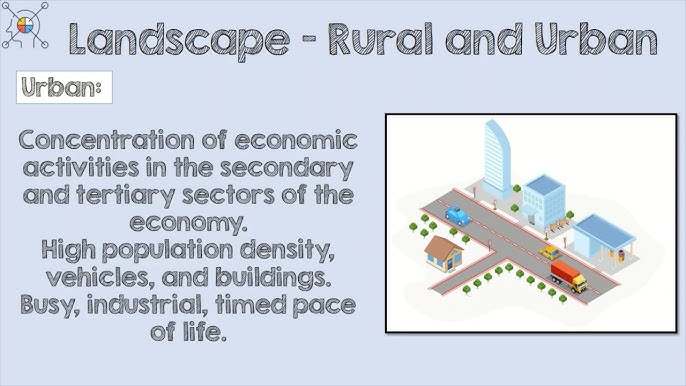
Analyses reveal that urban centers, often positioned at advantageous geographical locations, concentrate economic activities and attract substantial investments. These regions benefit from agglomeration effects that lead to durable clusters of production, services, and innovation. As such, they experience higher wages, rapid economic growth, and better living standards relative to peripheral or inland regions.
Conversely, rural and remote regions frequently face challenges such as underinvestment, limited market access, and higher production costs. The spatial sorting of individuals, where wealthier and more skilled workers concentrate in cities, further intensifies regional disparities and contributes to entrenched inequality.
Mechanisms Linking Geography and Inequality
Two principal mechanisms highlight how economic geography influences inequality:
- Market Access Mechanism: Countries or regions with closer proximity to high-demand markets can export goods at lower transport costs and attract better input supplies. Improved market access translates into higher production efficiency, greater income levels, and reduced costs, enabling firms to pay competitive wages.
- Supplier Access Mechanism: Proximity to suppliers means lower costs for intermediate goods, which in turn reduces production costs and bolsters competitiveness. An advanced supplier network can significantly lower the price index of manufactured outputs, allowing firms to sustain higher wage levels despite competitive pressures.
The empirical backing for these mechanisms comes not only from aggregate cross-country data but also from detailed regional studies. Mapping techniques reveal consistent clusters of high economic activity in regions with optimal geographic access, further supporting the theoretical models.
Policy Implications
The recognition that economic geography plays a vital role in shaping distributional outcomes has profound policy implications. Policymakers might consider:
-
Investments in Infrastructure: Improving transportation networks, digital connectivity, and inter-regional trade corridors can reduce the effective distance between markets and suppliers. Reducing transport costs diminishes location-induced disadvantages.
-
Regional Development Programs: Targeted interventions such as regional industrial policies, subsidies for firms located in peripheral areas, and urban regeneration projects can foster more balanced economic development.
-
Decentralization Strategies: Encouraging the spread of economic activities beyond dominant urban centers, through incentives for firms to establish production in less-developed regions, may help alleviate the concentration of inequality.
These measures, when effectively deployed, can help offset the adverse effects inherent in geographic disparities, ensuring that the benefits of globalization and trade are more evenly distributed.
Empirical Illustration: A Table of Key Variables
The following table presents a simplified summary of key variables and their effects on economic outcomes based on empirical studies:
| Variable | Definition & Measurement | Observed Effect on Income |
|---|---|---|
| Market Access | Distance-weighted measure of export demand from partner countries | Positive – Higher access correlates with increased per capita income |
| Supplier Access | Proximity to suppliers of intermediate goods; influences price index | Negative Price Impact – Lower production costs and higher wages |
| Transport Costs | Proxy measures such as bilateral distance and common border dummies | Negative – Increases production costs and reduces competitiveness |
| Urban Agglomeration | Concentration of economic agents in urban centers | Positive – Leads to higher wages and greater productivity |
Conclusion and Final Thoughts
The nexus between inequality and economic geography provides a compelling framework for analyzing global and regional disparities. The confluence of geographic access, transportation costs, and infrastructural factors explains a significant share of the variation in national income levels. By understanding the roles of market access and supplier access, policymakers are better equipped to design interventions that correct spatial imbalances.
Ultimately, addressing inequality requires a holistic approach that recognizes the embedded nature of geographic determinants. Whether by reducing transport costs, boosting infrastructural investment, or decentralizing economic activity, the objective is to create a more level economic playing field. Future research should continue to integrate spatial econometrics with policy analysis to refine our understanding of how to combat inequality in an increasingly interconnected world.
References
For further reading and insight, the following URLs provide access to foundational studies and empirical research on economic geography and inequality:
Final Remarks
This term paper sample has integrated theoretical models with empirical evidence to provide an extensive overview of the relationship between inequality and economic geography. The study emphasizes that location – both in terms of physical proximity to markets and access to input suppliers – is a fundamental driver of economic disparities. Insights derived from this analysis point to significant policy avenues for promoting balanced regional development and reducing inequality. Continued research and policy experimentation in this field promise to refine our understanding of how to build more inclusive and dynamically integrated economies.
Last updated February 17, 2025