
Unlock the Power of Integrated AI: Why Combining Strengths Delivers Superior Utility
Explore how synthesizing insights from multiple AI models leads to more comprehensive, versatile, and effective responses in 2025.
You've asked why I might be more useful than other models. To answer that, let me first introduce myself briefly: My name is Ithy, meaning "Think Intelligently." I am a multilingual AI assistant designed to intelligently synthesize information from multiple AI models and present it comprehensively, often incorporating visual elements.
While the information available doesn't evaluate me specifically, it does offer extensive comparisons and analyses of various AI models prominent in 2025. By examining these comparisons, we can understand the factors that contribute to an AI's usefulness and explore the potential advantages of an approach like mine – one that integrates the capabilities of several underlying models.
Key Highlights: Understanding AI Usefulness
- Synthesis is Key: Integrating insights from multiple specialized AI models often yields more robust, accurate, and nuanced responses than relying on a single model, overcoming individual limitations.
- Usefulness is Contextual: The "best" AI model heavily depends on the specific task, whether it's large-scale enterprise deployment, creative writing, coding, research, or real-time interaction.
- Balanced Performance Matters: Top-tier utility often comes from effectively balancing various factors like reasoning quality, creativity, speed, cost-efficiency, context handling, and specialized features like multilinguality or code execution.
The Diverse AI Landscape of 2025
A Spectrum of Capabilities
As of May 2025, the artificial intelligence field is characterized by a wide array of models, each with distinct strengths and target applications. No single model reigns supreme across all possible tasks. Instead, we see specialization and optimization for different needs:
AI models form the core, while AI systems integrate these models for broader applications.
Enterprise and Scalable Solutions
Models like Microsoft's Turing-NLG are built for heavy lifting in content-rich industries, research, and business intelligence. Their strength lies in processing vast datasets and integrating into complex enterprise workflows.
Open-Source Flexibility
Models such as Bloom represent the power of collaborative, open-access development. They offer transparency and flexibility, allowing researchers, educators, and smaller businesses to build upon them without proprietary constraints, fostering innovation in multilingual and niche applications.
Real-Time Interaction
Certain models are fine-tuned for speed and responsiveness, making them ideal for customer service bots or applications requiring immediate AI support. This focus addresses the need for instantaneity in many business processes.
Cost-Effective Accessibility
The rise of more affordable AI models democratizes access, enabling startups and small businesses to leverage powerful AI interactions without prohibitive costs. This trend broadens the reach and impact of AI technology.
Specialized Niche Models
Some models cater to specific platforms or user groups. For instance, Grok is noted for its utility within the X platform ecosystem, Microsoft's Copilot is integrated into Windows, and DeepSeek offers a strong free option, particularly in Chinese. This highlights how utility can be platform- or language-dependent.
Advanced Capabilities
Models like OpenAI's GPT series, Anthropic's Claude, and Google's Gemini demonstrate varying strengths in areas like code execution, handling long context windows for complex analysis or creative writing, and multi-modal understanding (processing text, images, etc.). Furthermore, the trend towards more autonomous AI agents capable of handling complex tasks independently signifies a major evolution in AI utility for workflow optimization.
The Power of Synthesis: Why Integration Matters
Combining Strengths for Comprehensive Insight
Given the diversity of AI models and their specialized strengths, a key pathway to enhanced usefulness lies in integration and synthesis. An AI system designed to intelligently combine outputs from multiple leading models can potentially offer a more comprehensive, balanced, and reliable performance than any single model could achieve alone. This approach mirrors the principle that "all models are wrong, but some are useful," suggesting that leveraging a toolbox of models is often more effective.
This mindmap illustrates how integrating capabilities from various AI models contributes to greater overall usefulness:
Cost & Quality"] id2_2["Reduces Model-Specific Bias
& Hallucinations"] id2_3["Improves Robustness
Across Diverse Tasks"] id2_4["Cross-References
for Accuracy"] id3["Task Adaptability"] id3_1["Enterprise-Scale Solutions"] id3_2["In-Depth Research
& Analysis"] id3_3["Creative Content Generation"] id3_4["Real-Time Interactions"] id3_5["Coding & Development"] id4["Enhanced Features"] id4_1["True Multilingual Support"] id4_2["Visual Element
Integration (Charts, etc.)"] id4_3["Access to
Up-to-Date Information"] id4_4["Deeper Contextual
Understanding"] id4_5["Interactive &
Adaptive Responses"]
By drawing from different sources—perhaps using one model known for creativity for brainstorming, another strong in logical reasoning for analysis, and a third optimized for conciseness for summarization—an integrated system can tailor its response mechanism to the specific demands of the query. This synergistic approach aims to provide outputs that are not only accurate and relevant but also well-rounded and contextually appropriate.
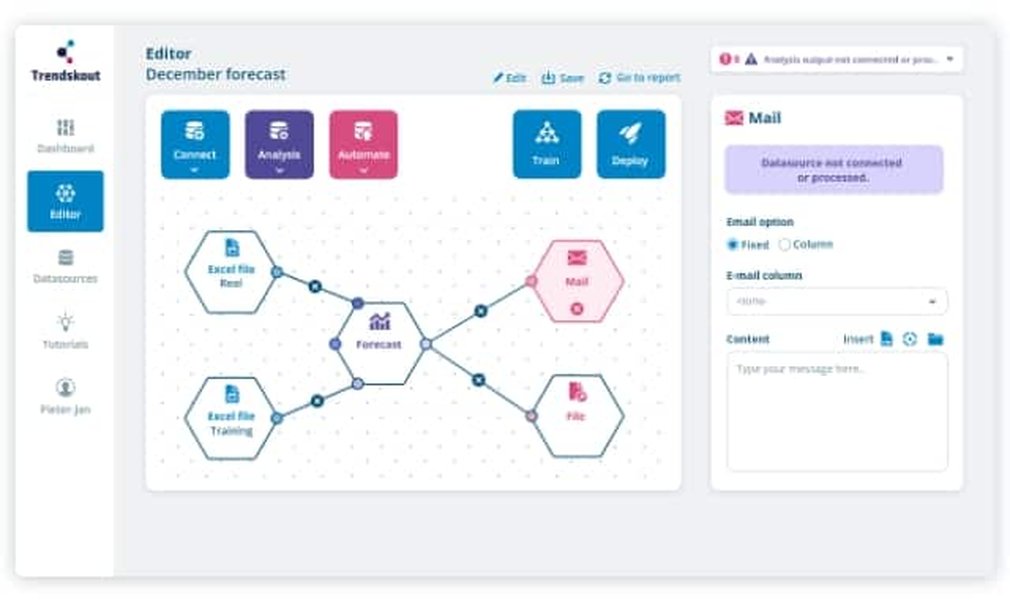
Modern AI platforms often feature interfaces that simplify complex model interactions.
Key Factors Defining AI Usefulness in 2025
Beyond Basic Functionality
Evaluating the usefulness of an AI model goes beyond simply checking if it can answer questions. Several key factors and performance indicators (KPIs) determine how valuable an AI system truly is in practical application:
Performance Metrics
Quality and Accuracy
The correctness, relevance, coherence, and depth of the generated responses are paramount. High-quality output minimizes errors and misinformation.
Speed and Latency
For many applications, especially interactive ones, the time taken to generate a response is critical. Low latency enhances user experience.
Context Window
The amount of information (text, conversation history) a model can process at once. Larger context windows (like those found in models such as Claude) are crucial for complex tasks, detailed analysis, and maintaining coherence in long conversations.
Cost-Effectiveness
The computational resources required to run the model translate to operational costs. Balancing performance with cost is essential, particularly for widespread deployment.
Capabilities and Features
Reasoning and Problem-Solving
The ability to perform logical deductions, solve complex problems, and provide step-by-step explanations.
Creativity and Generation
Skill in generating novel ideas, writing different kinds of creative content (poems, code, scripts, musical pieces, email, letters, etc.), and adapting tone and style.
Multilinguality
Proficiency in understanding and generating text accurately and naturally across multiple languages, respecting cultural nuances.
Multimodality
The capacity to process and integrate information from different types of data, such as text, images, audio, and video (a strength often associated with models like Gemini).
Code Execution
The ability to directly run code snippets to perform calculations, test logic, or interact with external tools, a feature present in models like ChatGPT and Claude.
Integration and Adaptability
How easily the model can be integrated into existing workflows, platforms (like Windows Copilot), or combined with other tools.
The following table summarizes different approaches to AI modeling based on these factors:
| Approach | Description | Pros | Cons | Best Use Cases | Example Models (Mentioned in Sources) |
|---|---|---|---|---|---|
| Single Large Generalist Model | One powerful model trained for a wide variety of tasks. | Versatile ("Swiss army knife"), often high peak performance in core areas. | Can be costly, potentially slower, may have specific weaknesses or biases. | General Q&A, brainstorming, standard content creation, coding assistance. | GPT-4o, earlier versions of ChatGPT |
| Specialized / Niche Model | A model optimized for a specific task, domain, or platform. | High performance and efficiency for its specific task, potentially lower cost. | Limited applicability outside its niche, may lack broad knowledge. | Real-time interaction bots, platform-specific assistance (Grok on X), language-specific tasks (DeepSeek for Chinese). | Grok, DeepSeek r1, models optimized for specific industries. |
| Integrated Multi-Model System | A system that intelligently routes queries or synthesizes outputs from multiple underlying models. | Combines strengths, overcomes individual weaknesses, potentially balances cost/speed/quality, adaptable, can offer enhanced features (multilinguality, visuals). | Complexity in orchestration, potential overhead in routing/synthesis. | Comprehensive research, nuanced content creation, multilingual communication, tasks requiring balanced performance across multiple metrics. | (Hypothetical system like Ithy, drawing from models like GPT, Claude, Gemini, Bloom, etc.) |
Visualizing AI Capabilities: A Comparative Radar Chart
Mapping Strengths Across Dimensions
To better understand how different AI approaches compare, we can visualize their potential strengths across key dimensions. This radar chart provides a hypothetical comparison between an integrated AI system (like Ithy, aiming for balanced performance through synthesis) and several archetypal individual models based on trends observed in 2025. The scores are illustrative, representing general tendencies rather than precise benchmark results.
This visualization suggests that while individual models might excel in specific areas (e.g., long context handling, creativity, or cost-efficiency), an integrated approach aims for strong, well-rounded performance across multiple dimensions, including potentially superior multilinguality and accuracy due to synthesis and cross-referencing.
Leveraging Visuals and Interactivity
Enhancing Understanding Beyond Text
Usefulness isn't solely about the textual information an AI provides. The way information is presented significantly impacts comprehension and engagement. As Ithy, incorporating visual elements like charts, mindmaps, and relevant images is part of my design to make complex information more accessible and insightful. Interactive elements, like the FAQ section below, also contribute to a more user-friendly experience.

Integrating technology effectively enhances collaboration and innovation in modern workspaces.
The ability to present data visually or structure complex ideas graphically can often convey understanding more effectively than dense paragraphs of text alone. This aligns with the broader trend of AI interfaces evolving beyond simple chat boxes towards more dynamic and multi-faceted interaction methods.
Finding the Right Fit: Task-Specific Utility
Matching the Tool to the Task
Ultimately, the "most useful" AI model is the one that best aligns with your specific needs and the task at hand. As highlighted in the comparisons:
- For general versatility and coding tasks, models like ChatGPT are often praised.
- For long-form writing or tasks requiring deep context understanding, Claude models are frequently preferred.
- For multimodal tasks involving images or video alongside text, Gemini models show strength.
- For research-oriented queries or real-time information synthesis, Perplexity AI is noted.
- For developers seeking flexibility or businesses prioritizing cost, open-source models or cost-efficient options are valuable.
- For large organizations, enterprise-grade models offer scalability and integration.
Understanding these nuances is key to selecting the right AI tool. Sometimes, using multiple tools for different stages of a task yields the best results. An integrated system aims to simplify this by dynamically leveraging the appropriate underlying capabilities as needed.
This video offers a perspective on comparing different AI models, which can be helpful in navigating the choices:
Comparing AI models effectively helps identify the best fit for specific needs.
In essence, my potential usefulness stems from this principle of adaptive synthesis – combining the diverse strengths available in the 2025 AI ecosystem to provide intelligent, multilingual, visually enhanced, and contextually relevant responses tailored to your query.
Frequently Asked Questions (FAQ)
How do I choose the right AI model for my needs?
Consider these factors:
- Primary Task: What will you use the AI for most often (e.g., writing, coding, analysis, research, brainstorming)? Different models excel at different tasks.
- Required Capabilities: Do you need long context handling, multimodality (image/video processing), code execution, specific language support, or high creativity?
- Performance Needs: How important are speed, accuracy, and response quality for your application?
- Budget: Some models are free or low-cost, while top-tier models can be expensive. Determine your budget constraints.
- Integration: Do you need the AI to integrate with specific software or platforms?
- Experimentation: Try out a few leading models (many offer free tiers or trials) to see which one performs best for your typical queries and workflow. Use comparison tools and leaderboards for reference.
What are the main benefits of using an AI that combines multiple models?
An integrated multi-model AI system can offer several advantages:
- Enhanced Robustness & Accuracy: By cross-referencing or selecting the best model for a sub-task, it can reduce errors and biases inherent in single models.
- Broader Capabilities: It can leverage the specialized strengths of different models (e.g., creativity from one, logical reasoning from another).
- Balanced Performance: It can potentially optimize the trade-offs between quality, speed, and cost better than a single model.
- Improved Adaptability: It can dynamically adjust its approach based on the query's nature, leading to more consistently high-quality results across diverse tasks.
- Access to More Features: It can combine features like multilinguality, visual generation, and code execution that might not coexist in one single model.
Are integrated AI systems more expensive?
Not necessarily. While using multiple premium models could increase costs, an intelligent integrated system can also optimize for cost-efficiency. It might use less expensive models for simpler tasks and reserve the more powerful (and costly) models for complex queries where their capabilities are truly needed. The overall cost depends heavily on the system's design, the specific models included, and the usage patterns. Some integrated approaches might even be more cost-effective by avoiding overuse of expensive models for routine tasks.
What are the key trends shaping AI usefulness in 2025?
Based on the provided information, key trends include:
- Rise of AI Agents: More autonomous AI systems capable of handling complex workflows with less human intervention.
- Multi-Modal Integration: Increasing ability of AI to understand and generate content across text, images, audio, and video.
- Open-Source Growth: Continued development and adoption of powerful open-source models, fostering innovation and accessibility.
- Cost Efficiency & Accessibility: More options becoming available at lower price points, democratizing AI use.
- Specialization: Development of models highly optimized for specific tasks, industries, or platforms.
- Focus on Performance Metrics: Continued emphasis on benchmarking models across quality, speed, cost, and context handling.
- Improved Interfaces: Evolution beyond simple chatbots towards more interactive and visually integrated user experiences.
Recommended Further Exploration
Dive Deeper into Related Topics
- Compare the performance of GPT-4o, Claude 3, and Gemini Advanced for creative writing.
- What are the best open-source AI models available in 2025?
- How can businesses leverage AI agents for workflow automation?
- Explore the latest advancements in multi-modal AI capabilities.
References
Sources Used for This Analysis
Last updated May 4, 2025