
Unveiling the Advanced Features of Modern Inventory Management Systems
How automation and real-time data processing are revolutionizing inventory control through notifications and predictive analytics
Key Features of Intelligent Inventory Systems
- Real-time data processing enables immediate inventory visibility and instant decision-making capabilities
- Automated notification systems alert managers to critical inventory events and prevent stockouts
- Predictive analytics leverages historical data and machine learning to forecast future demand with increasing accuracy
While I don't have direct access to the specific study "Intelligent Inventory Management System based on Automation and real-time Data Processing (2021)," I can provide insight into the typical features of such systems based on industry standards and technological trends. Modern intelligent inventory management systems that focus on automation and real-time processing typically incorporate both notification systems and predictive analytics as core functionalities.
Understanding Notification Systems in Inventory Management
Automated notifications are a fundamental component of intelligent inventory management systems. These systems alert managers and staff about critical inventory events without requiring constant manual monitoring.
Types of Inventory Notifications
Threshold-Based Alerts
These notifications are triggered when inventory levels cross predefined thresholds. For example, when stock drops below the reorder point, the system automatically generates an alert to prevent stockouts. This feature is particularly valuable for just-in-time inventory management, where maintaining optimal stock levels is crucial.
Time-Based Notifications
Time-based notifications remind inventory managers about scheduled activities such as cycle counts, inventory audits, or maintenance checks. These notifications ensure that regular inventory management tasks aren't overlooked amid daily operations.
Exception Alerts
These alerts notify managers about unusual patterns or discrepancies in inventory data, such as unexpected stock movements, potential shrinkage, or data entry errors. Exception alerts help identify issues before they escalate into significant problems.
Supply Chain Notifications
These alerts provide updates on supplier-related events that might affect inventory, such as delayed shipments, price changes, or supplier performance issues. Supply chain notifications enable proactive management of potential disruptions.
| Notification Type | Primary Function | Benefits | Implementation Complexity |
|---|---|---|---|
| Threshold-Based Alerts | Prevent stockouts and overstock situations | Reduced inventory costs, improved customer satisfaction | Medium |
| Time-Based Notifications | Ensure timely completion of inventory tasks | Improved inventory accuracy, better compliance | Low |
| Exception Alerts | Identify anomalies and potential issues | Reduced shrinkage, improved data integrity | High |
| Supply Chain Notifications | Monitor supplier performance and deliveries | Improved supply chain resilience, better planning | High |
| Demand Spike Alerts | Identify sudden changes in product demand | Quicker response to market changes, optimized stock levels | Very High |
Predictive Analytics in Modern Inventory Systems
Predictive analytics represents one of the most transformative technologies in inventory management. By analyzing historical data, market trends, and other variables, these systems can forecast future demand with remarkable accuracy, helping businesses make data-driven decisions.
Core Predictive Analytics Capabilities
Demand Forecasting
This capability analyzes historical sales data, seasonal patterns, market trends, and other variables to predict future product demand. Accurate demand forecasting helps businesses maintain optimal inventory levels, reducing both stockouts and excess inventory.
Inventory Optimization
Predictive analytics determines the optimal inventory levels for each product based on predicted demand, lead times, carrying costs, and service level targets. This optimization balances the risk of stockouts against the cost of holding excess inventory.
Supply Chain Risk Analysis
These systems analyze supplier performance data, geopolitical events, and market conditions to identify potential supply chain disruptions before they occur. This analysis enables businesses to develop contingency plans and maintain resilient supply chains.
Price Optimization
By analyzing price elasticity, competitor pricing, and market conditions, predictive analytics can recommend optimal pricing strategies that maximize both revenue and inventory turnover.
The radar chart above illustrates the comparative advantages of different types of inventory management systems, highlighting how systems that combine both notifications and predictive analytics offer superior performance across multiple dimensions.
Integration of Automation with Real-time Data Processing
The convergence of automation and real-time data processing creates a powerful foundation for intelligent inventory management. These technologies enable systems to not only collect and analyze data instantaneously but also to take immediate action based on that analysis.
Key Technological Components
Internet of Things (IoT) Sensors
IoT devices such as RFID tags, smart shelves, and connected scanners provide continuous, real-time data about inventory location, quantity, and condition. This data feeds into the system's analytics engines, enabling more accurate predictions and timely notifications.
Machine Learning Algorithms
Machine learning models analyze historical inventory data to identify patterns and trends that might not be apparent to human analysts. These algorithms improve over time as they process more data, resulting in increasingly accurate predictions.
Cloud Computing
Cloud platforms provide the computing power and storage capacity needed to process vast amounts of inventory data in real time. Cloud-based systems also facilitate collaboration across different locations and departments, improving inventory visibility throughout the organization.
APIs and Integration Frameworks
Application Programming Interfaces (APIs) enable intelligent inventory systems to connect with other business systems, such as ERP, CRM, and e-commerce platforms. This integration ensures that inventory data flows seamlessly throughout the organization, supporting better decision-making.
Understanding the Mindmap of Intelligent Inventory Management
The following mindmap illustrates the interconnected components of modern intelligent inventory management systems, highlighting how notifications and predictive analytics fit into the broader ecosystem:
Management System"] Real-time Data Processing Data Collection IoT Sensors Barcode Scanning RFID Technology Data Storage Cloud Databases Data Lakes Data Analysis Business Intelligence Dashboard Visualization Automation Features Reordering Automatic Purchase Orders Vendor Integration Warehouse Operations Robotic Picking Systems Conveyor Automation Documentation Digital Records Paperless Workflows Notification Systems Threshold Alerts Stock Level Warnings Reorder Point Notifications Exception Notifications Inventory Discrepancies Unusual Activity Alerts Delivery Updates Shipment Status Delivery ETA Alerts Predictive Analytics Demand Forecasting Seasonal Analysis Trend Identification Risk Assessment Stockout Prediction Overstock Risk Analysis Optimization Models Inventory Level Optimization Order Quantity Optimization
Business Benefits of Intelligent Inventory Systems
Implementing an intelligent inventory management system with both notifications and predictive analytics capabilities delivers numerous business benefits that extend beyond simple inventory control.
Quantifiable Advantages
Reduced Carrying Costs
By maintaining optimal inventory levels based on predictive analytics, businesses can reduce carrying costs by up to 25-30%. These cost savings come from reduced warehouse space, lower insurance costs, and decreased risk of obsolescence.
Improved Order Fulfillment Rates
Automated notifications help prevent stockouts, while predictive analytics ensure that the right products are available at the right time. Together, these features can improve order fulfillment rates by 10-15%, enhancing customer satisfaction and loyalty.
Enhanced Supply Chain Resilience
Predictive analytics can identify potential supply chain disruptions before they occur, allowing businesses to develop contingency plans. This foresight can reduce the impact of supply chain disruptions by up to 40%, ensuring business continuity even in challenging conditions.
Data-Driven Decision Making
Real-time data processing and advanced analytics provide managers with accurate, up-to-date information about inventory status and trends. This information supports better decision-making throughout the organization, from purchasing to production to sales.
This video provides an in-depth explanation of real-time data analytics and its applications in various business contexts, including inventory management. It highlights how companies like Walmart use real-time analytics to track inventory levels across thousands of stores, demonstrating the practical benefits of these technologies.
Implementation Considerations
While intelligent inventory management systems offer significant benefits, implementing these systems requires careful planning and consideration of several key factors.
Data Quality and Integration
The effectiveness of both notifications and predictive analytics depends heavily on data quality. Organizations must ensure that their inventory data is accurate, complete, and up-to-date. This often requires integrating data from multiple sources, such as point-of-sale systems, warehouse management systems, and supplier portals.
Technology Infrastructure
Implementing an intelligent inventory management system may require upgrading existing technology infrastructure, such as networks, servers, and storage systems. Organizations should assess their current infrastructure and identify any gaps that need to be addressed before implementation.
Change Management
The adoption of new inventory management technologies often requires changes to existing processes and workflows. Organizations should develop a comprehensive change management plan that includes training, communication, and support to ensure successful adoption.
Phased Implementation
Rather than attempting to implement all features at once, organizations may benefit from a phased approach that starts with basic functionality and gradually adds more advanced features. This approach reduces risk and allows users to become familiar with the system before additional complexity is introduced.
Visual Examples of Intelligent Inventory Dashboards
Modern intelligent inventory management systems typically feature comprehensive dashboards that provide visual representations of inventory data, predictive analytics, and notification systems. These dashboards enable managers to quickly assess inventory status and identify potential issues.
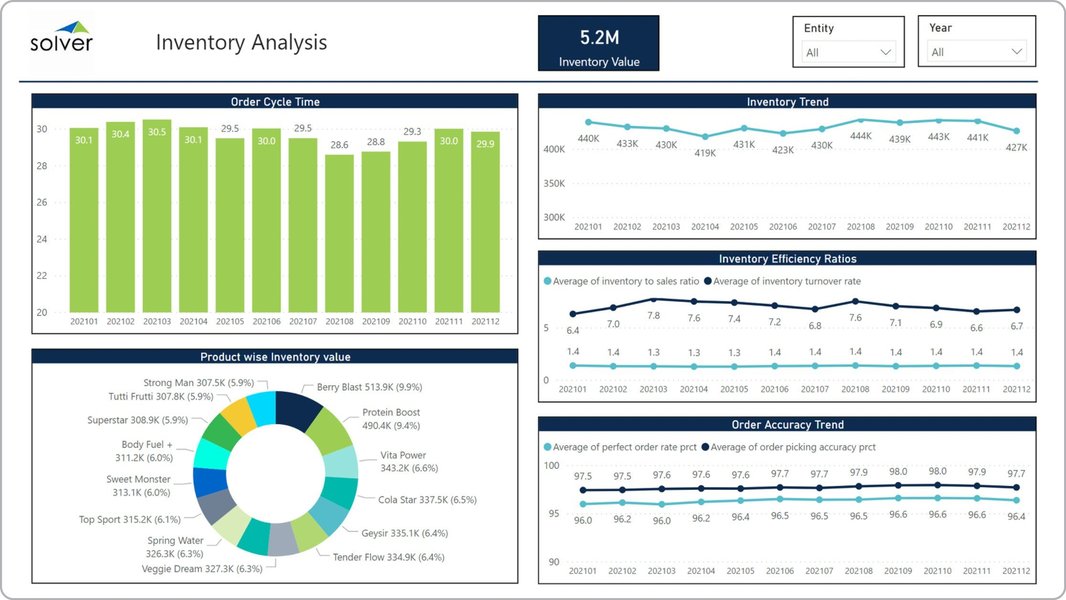
Example of an inventory analysis dashboard showing key metrics and trend analysis
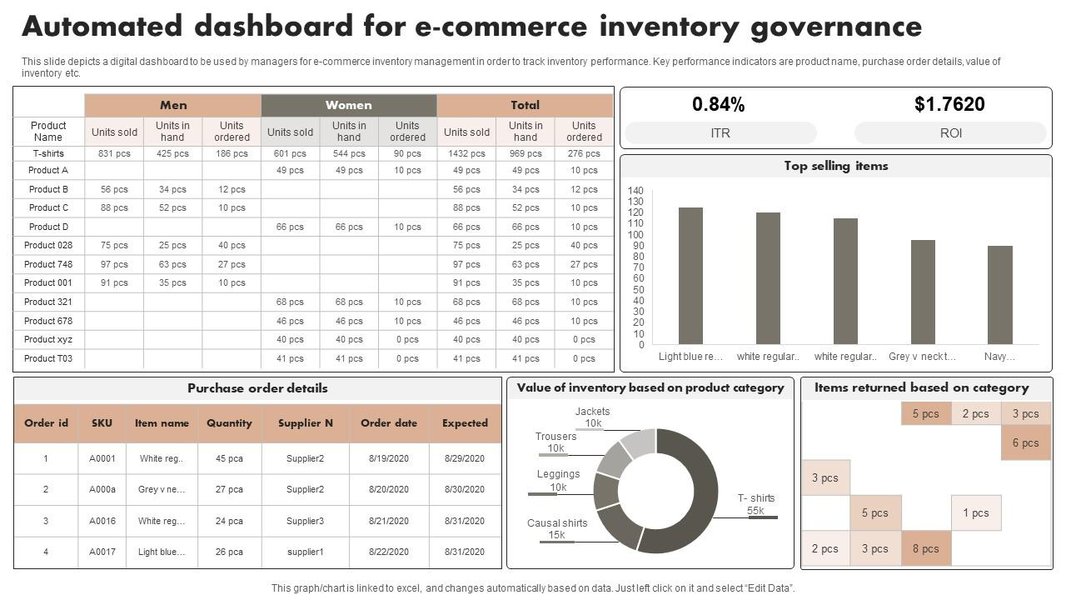
Automated dashboard for e-commerce inventory governance showing real-time metrics
Frequently Asked Questions
References
- Supply Chain Predictive Analytics - Extensiv
- Mastering Inventory Management with Predictive Analytics - It's All Goods Inc
- Predictive Analytics in Supply Chain - Throughput World
- Transforming Supply Chains with Predictive Analytics - GEP
- Predictive Inventory Management - Pecan AI
- Real-Time Inventory Management Data - Logiwa
- Intelligent Inventory Management: Leveraging AI and IoT - Vastuta
- Automated Inventory Management System - LEAFIO AI
Recommended Searches
Last updated April 5, 2025