
Exploring the Concept of "Des Valeurs Inter"
A Comprehensive Look at Intermediate Values Across Contexts
Key Insights
- Mathematical Theorem: The Intermediate Value Theorem (IVT) guarantees that for any continuous function on a closed interval, every value between its endpoints is achieved at least once.
- Philosophical and Sociological Dimensions: The phrase may also evoke concepts of values shared among people or intermediate stances in debates about truth and morality.
- Historical and Practical Applications: From the theorem of Bolzano to the method of dichotomy, these ideas have had a significant impact on numerical methods and analytical rigor.
Understanding the Mathematical Perspective
The Intermediate Value Theorem
One of the most central ideas when discussing "des valeurs inter" in mathematics is the Intermediate Value Theorem (IVT). The theorem states that if a function \( f \) is continuous on a closed interval \([a, b]\) and if \( k \) is any number between \( f(a) \) and \( f(b) \), then there exists at least one point \( c \) in the interval \([a, b]\) such that:
\( f(c) = k \)
Theoretical Background
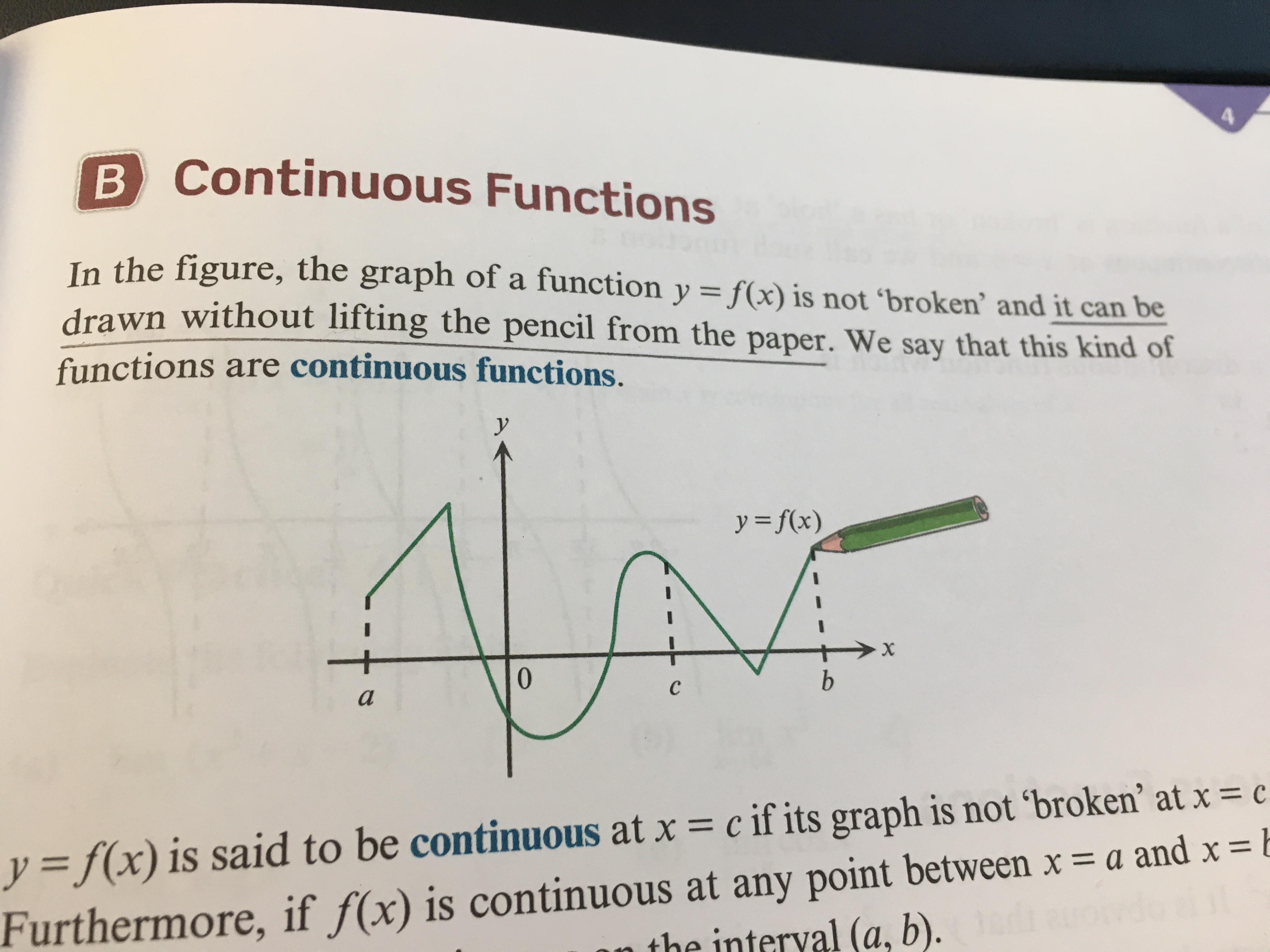
The hypothesis of continuity is crucial. What this means is that the function \( f \) does not have any abrupt jumps or breaks within the interval considered. As one moves from \( a \) to \( b \), the function’s values change gradually. This property ensures that every value between \( f(a) \) and \( f(b) \) is indeed encountered.
A common application of the theorem is to show that any continuous function that takes on values of opposite signs at the endpoints of an interval must have a root somewhere in that interval. This special case is sometimes referred to as the theorem of Bolzano. It is particularly useful when solving equations, as it provides an assurance that a solution exists even if it cannot be explicitly calculated immediately.
Historical Context and Generalizations
The discovery of the Intermediate Value Theorem is often credited to the work of Bernhard Bolzano in the early 19th century. Over time, the theorem has been refined and generalized. For example, the Darboux property extends the concept to derivatives, asserting that every derivative—despite potentially being discontinuous—must also have the property that it takes on every intermediate value. Additionally, the theorem of Poincaré-Miranda offers a multidimensional extension, applying similar principles to functions in higher-dimensional spaces.
Practical Applications
The IVT is often employed in numerical methods such as the bisection (or dichotomy) method, which is designed to find roots of equations by repeatedly narrowing down the interval where the root lies. Using the dichotomy method, one starts with an interval where the function changes sign and continuously divides the interval until the approximate location of the root is pinpointed.
A Table Summarizing the Mathematical Aspects
| Aspect | Description |
|---|---|
| Continuity | The function must be continuous on a closed interval \([a, b]\). |
| Intermediate Value Property | If \( k \) is between \( f(a) \) and \( f(b) \), then \( \exists c \in [a, b] \) such that \( f(c) = k \). |
| Application: Root Finding | Utilized in the bisection method to find solutions to equations where the function changes sign. |
| Historical Reference | Based on insights from Bernhard Bolzano and later generalized in various mathematical fields. |
Broader Interpretations: Values in Social and Philosophical Contexts
Shared Human Values
Beyond mathematics, the term "des valeurs inter" can evoke ideas tied to human values—those principles that guide behavior and often serve as a bond among various communities. These values, sometimes referred to as "valeurs intermédiaires," can act as ethical or moral bridges between different social groups. For example, basic human values like empathy, respect, and fairness are often seen as intermediate values shared across diverse cultures and societies.
Conceptual Overlap Between Mathematical and Social Values
While at first glance the mathematical Intermediate Value Theorem and shared human values may seem entirely unrelated, they share a conceptual similarity. In mathematics, continuity guarantees that between any two values all intermediate values will be achieved. In a societal context, the term can symbolize the continuous spectrum of ethical or cultural ideals that form a common foundation. Like the gradual change of a continuous function, shared values evolve in a way that smooths out extreme differences, fostering understanding and cooperation.
Philosophical Reflections on Intermediacy
Philosophically, "intermediacy" can also refer to the idea that truth or morality often resides between extremes. This perspective posits that many issues in life are not best understood in binary terms but rather along a continuum where several intermediate states exist that are just as significant. Such an understanding can promote a more nuanced view of debates and encourage dialogue by recognizing that extremisms on either side might overlook the complexity of the issues at hand.
In this light, intermediate values become a metaphor for seeking balance and representing a middle ground between polar opposites. This balanced approach can often yield more sustainable and ethical solutions in a diverse society.
Detailed Examples and Applications
Example 1: Root Finding in Calculus
Consider a function \( f(x) \) that is continuous on the interval \([1, 4]\) with \( f(1) = -2 \) and \( f(4) = 3 \). According to the Intermediate Value Theorem, for the value \( k = 0 \) (which lies between \(-2\) and \(3\)), there exists at least one \( c \) in the interval \([1, 4]\) such that \( f(c) = 0 \). This ensures that the equation \( f(x) = 0 \) has at least one solution in this interval.
Implications for Numerical Methods
The certainty provided by the theorem allows mathematicians and scientists to design robust numerical methods for approximating function roots. The bisection method, for example, starts by verifying a sign change over an interval. Then by successively halving the interval and testing the midpoint, the method narrows down the location of the root, converging to a solution with an arbitrarily high degree of accuracy.
Example 2: Bridging Value Systems in Society
In the social sciences, recognizing shared intermediate values can help bridge gaps between different cultural or ideological groups. Suppose two communities hold fundamentally different viewpoints about governance or social structure. By identifying core, shared principles—such as the importance of fairness or respect for human dignity—mediators and policymakers can build frameworks that incorporate these common values. This common ground often paves the way for more collaborative and inclusive policies.
Role in Conflict Resolution
In many cases, focusing on intermediate shared values helps de-escalate conflicts and enables constructive dialogues. Rather than emphasizing extreme differences, stakeholders are encouraged to explore the spectrum of beliefs and focus on commonalities—much like how continuity in a function guarantees a smooth, predictable transition between values.
Integrative Perspectives: Bridging Mathematics, Sociology, and Philosophy
Connecting Disparate Ideas
While the Intermediate Value Theorem is a cornerstone of mathematical analysis, its conceptual essence resonates in other fields. In arithmetic narratives, it provides a rigorous method for confirming the existence of solutions. In social studies, the idea of continuously distributed intermediate values symbolizes the bridging of perceptual extremes. Moreover, philosophical reflections on intermediacy challenge binary thinking by suggesting that reality often unfolds along a gradient rather than within two isolated extremes.
Unified Vision Through Intermediacy
Whether one is exploring a physical phenomenon or a societal issue, the concept of intermediacy promotes the idea that change is gradual and that extremes often give way to nuanced middle grounds. This unified vision encourages interdisciplinary thought—where techniques and insights from mathematical analysis may inspire methods for conflict resolution, and ethical discussions may borrow conceptual frameworks from analysis.
A Comparative Table: Mathematical and Social Values
| Dimension | Mathematical Perspective | Social/Philosophical Perspective |
|---|---|---|
| Core Principle | Continuity ensures all values between endpoints are achieved. | Shared values provide a common foundation bridging diverse views. |
| Application | Finding roots in equations using methods like the bisection method. | Establishing common ground in societal debates and conflict resolution. |
| Theoretical Basis | Relies on the properties of continuous functions. | Built on shared human experiences and ethical commonalities. |
| Historical Impact | Developed by mathematicians like Bolzano and extended by Cauchy. | Evolved through cultural interactions that emphasize common ethical and moral values. |
References
- Théorème des valeurs intermédiaires - Wikipédia
- Théorème des valeurs intermédiaires - StudySmarter
- Théorème des valeurs intermédiaires - Cours Maths Terminale
- Théorème des valeurs intermédiaires - myMaxicours
-
Définitions du Préfixe "inter-" - Larousse
Recommended Related Queries
Last updated March 19, 2025