
Unlocking "It Eats Pizza" in Japanese: A Comprehensive Romaji Guide
Navigate the nuances of Japanese language for the phrase "It eats pizza" with detailed romaji translations, grammar insights, and cultural context.
Key Insights into Saying "It Eats Pizza" in Japanese Romaji
- Primary Translation: The most common and polite way to say "It eats pizza" in Japanese Romaji is "Sore wa piza o tabemasu."
- Context is King: Japanese is a highly contextual language, and subjects like "it" are often omitted if clear from the conversation. Thus, "Piza o tabemasu" can often suffice.
- Formality Matters: The verb "to eat" (食べる - taberu) has different forms. "Tabemasu" is the polite form, while "taberu" is the casual form used among close friends or family.
Understanding how to say "It eats pizza" in Japanese Romaji involves more than a simple word-for-word translation. Japanese grammar, particularly its use of particles and its subject-dropping nature, requires a deeper look to ensure accurate and natural communication. This guide will provide a comprehensive breakdown, exploring polite and casual forms, the role of particles, and relevant cultural contexts surrounding pizza in Japan.
The Core Translation: "Sore wa piza o tabemasu"
The most direct and polite translation for "It eats pizza" in Japanese Romaji is "Sore wa piza o tabemasu." This phrase clearly conveys the meaning while adhering to standard Japanese sentence structure and politeness levels. Let's break down each component to understand its function.
Dissecting the Components
Sore (それ): The Impersonal "It"
The term "sore" (それ) is used to refer to "it" or "that thing" when speaking of an inanimate object, an animal, or a general concept, but not typically a person. Unlike English, where "it" is a very common and often necessary pronoun, Japanese frequently omits subjects, including "it," when the context makes the subject clear. However, when explicit mention is required, "sore" is the appropriate choice for a neutral "it."
Wa (は): The Topic Particle
The particle "wa" (は) marks the preceding word or phrase as the topic of the sentence. In "Sore wa piza o tabemasu," "sore" is established as the topic. This particle is crucial for indicating what the sentence is about, providing a framework for the listener to understand the subject of discussion. It's often written as 'ha' but pronounced 'wa' when used as a particle.
Piza (ピザ): The Loanword for Pizza
The word "pizza" in Japanese is a direct loanword from English, written in Katakana as ピザ. In Romaji, it is "piza." This is a common practice in Japanese for words of foreign origin, especially for foods. There are no significant variations in its pronunciation or usage in standard contexts.
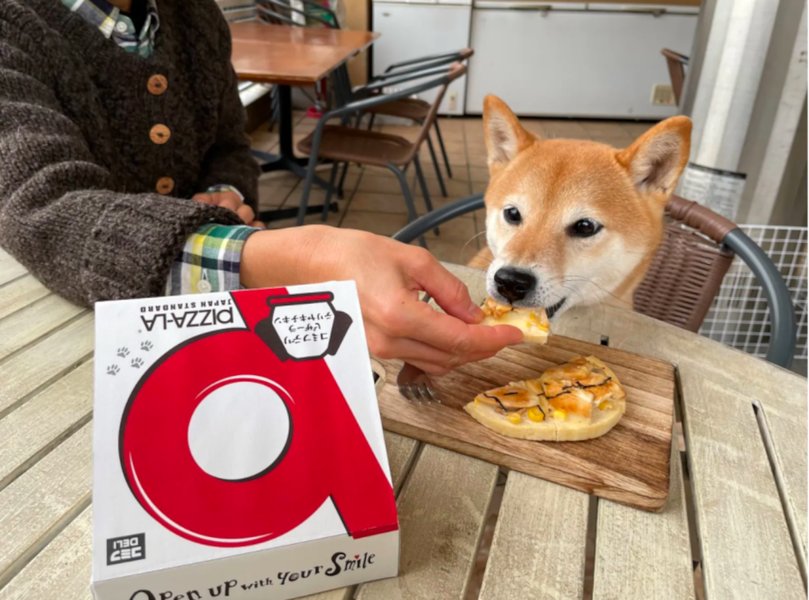
Japanese pizza often features unique toppings reflecting local culinary tastes.
O (を): The Direct Object Particle
The particle "o" (を) is the direct object marker. It indicates that "pizza" is the direct object of the verb "tabemasu" (to eat), meaning "pizza" is what is being eaten. This particle is essential for clarifying the relationship between the verb and its object in a Japanese sentence.
Tabemasu (食べます): The Polite Verb for "Eats"
The verb "to eat" is 食べる (taberu) in its plain, dictionary form. "Tabemasu" (食べます) is the polite present/future tense form of this verb. It is used in formal situations, when speaking to someone you don't know well, to elders, or in general polite discourse. Its use reflects respect and formality in Japanese communication.
Navigating Formality and Contextual Omission
Japanese thrives on context, often leading to the omission of subjects or even entire phrases when the meaning is obvious. This characteristic is vital when translating "It eats pizza."
When "It" Can Be Omitted
In many casual conversations or when the subject "it" is clearly understood from previous discussion, mentioning "sore wa" becomes redundant. For instance, if you are discussing a pet or a specific robot that is known to eat pizza, simply saying "Piza o tabemasu" (It eats pizza) or "Piza o taberu" (Eats pizza - casual) would be perfectly natural and understood by a native speaker. The listener's prior knowledge fills in the implied subject.
Variations in Formality
The choice between "tabemasu" and "taberu" depends heavily on the level of formality required:
- Polite Form: "Sore wa piza o tabemasu." This is suitable for general use, when speaking to someone you respect, or in written communication.
- Casual Form: "Sore wa piza o taberu." This form drops the polite "-masu" ending and is used in informal settings, such as among friends, family members, or when referring to pets.
Example Phrases and Related Concepts
Understanding "It eats pizza" also benefits from knowing how similar phrases are constructed:
- "She eats pizza:" 彼女はピザを食べます (Kanojo wa piza o tabemasu.) - This demonstrates the similar structure when using a female pronoun "kanojo" (she).
- "I am eating pizza:" 私はピザを食べています (Watashi wa piza o tabete imasu.) - This shows the continuous form of "to eat" (tabete iru) with the subject "watashi" (I).
- "I want to eat pizza:" ピザが食べたい (Piza ga tabetai.) - This uses the "-tai" form to express desire.
- "Let's eat pizza:" ピザを食べよう (Piza o tabeyou.) - This uses the volitional form to suggest an action.
Japanese Language Proficiency Assessment for "It Eats Pizza"
To illustrate the varying complexities and nuances involved in accurately translating and using the phrase "It eats pizza" in Japanese, let's consider different dimensions of linguistic proficiency. The radar chart below provides an opinionated assessment of how well one might grasp and apply these concepts based on various criteria, from grammatical accuracy to cultural appropriateness and fluency.
This radar chart illustrates how different levels of Japanese proficiency might influence one's ability to accurately and appropriately use the phrase "It eats pizza." A beginner might struggle with contextual omissions and politeness levels, while an advanced speaker will naturally navigate these nuances, demonstrating high grammatical accuracy, appropriate context usage, fluent pronunciation, a strong vocabulary, and correct application of politeness levels.
The Cultural Context of Pizza in Japan
Pizza, while an Italian invention, has become incredibly popular in Japan, with Tokyo even hosting many renowned pizzerias. Japanese versions often adapt to local tastes, featuring unique toppings not commonly found in Western countries, such as corn, mayonnaise, or teriyaki chicken. This cultural integration means that phrases involving "pizza" are commonly understood and used.

A Japanese pizza with unique toppings, showcasing the blend of foreign and local culinary influences.
Understanding Eating Phrases in Japanese
Below is a table summarizing key vocabulary and grammatical elements related to eating in Japanese, essential for constructing varied sentences around the verb "taberu."
| Japanese (Romaji) | Kanji/Katakana | English Meaning | Grammatical Role/Notes |
|---|---|---|---|
| Piza | ピザ | Pizza | Loanword (Katakana), direct object |
| Taberu | 食べる | To eat (plain form) | Verb (dictionary form), casual |
| Tabemasu | 食べます | To eat (polite form) | Verb (polite present/future) |
| Wa | は | Topic particle | Marks the topic of the sentence |
| O | を | Direct object particle | Marks the direct object of a verb |
| Sore | それ | It / That thing | Impersonal pronoun, often omitted |
| Kanojo | 彼女 | She | Personal pronoun (female) |
| Kare | 彼 | He | Personal pronoun (male) |
| Watashi | 私 | I | Personal pronoun (first person) |
| Tabetai | 食べたい | Want to eat | Desire form of the verb |
| Tabeyou | 食べよう | Let's eat | Volitional form of the verb |
| Tabete imasu | 食べています | Is eating (continuous form) | Present progressive form of the verb |
This table highlights how different components combine to form complete and grammatically correct sentences in Japanese, especially when discussing eating activities.
Visualizing Key Concepts in "It Eats Pizza"
To further reinforce the understanding of the grammatical structure and contextual elements involved in saying "It eats pizza" in Japanese, the following mindmap provides a visual representation of the interconnected concepts. This diagram helps illustrate how different parts of the sentence and their variations relate to each other, emphasizing the core phrase and its derivations.
Understanding Pronunciation: "Pizza in Japanese"
Learning how to correctly pronounce Japanese words is just as important as understanding their grammar. The video below, "Pizza in Japanese," helps illustrate the pronunciation of "piza" and provides a practical example of the word in a Japanese context. While the video specifically focuses on "pizza" itself, it offers valuable insight into how Japanese sounds are formed, especially for loanwords.
This video explains how to say "Pizza" in Japanese, which is a key component of the phrase "It eats pizza."
The video above helps to clarify the pronunciation of the loanword "piza" (ピザ), which is crucial for verbal communication. Understanding how Japanese adapts foreign sounds into its phonological system, particularly with Katakana, enhances overall fluency when speaking phrases like "It eats pizza." The video also touches on other loanwords, providing a broader understanding of how such words are integrated into the Japanese language.
Frequently Asked Questions (FAQ)
What is the most polite way to say "It eats pizza" in Japanese?
Can "It" be omitted in "It eats pizza" in Japanese?
What are the particles "wa" and "o" used for in the sentence?
Is "pizza" a native Japanese word?
How does formality change the verb "to eat"?
Conclusion
Saying "It eats pizza" in Japanese Romaji primarily translates to "Sore wa piza o tabemasu," emphasizing both grammatical correctness and politeness. However, the beauty and complexity of Japanese lie in its contextual nature, allowing for the common omission of the subject "it" when implied. Understanding the roles of particles like "wa" and "o," distinguishing between polite ("tabemasu") and casual ("taberu") verb forms, and appreciating the cultural integration of loanwords like "piza" are all essential for fluent and accurate communication. Mastery of these elements will enable effective expression, whether in formal settings or casual conversations with friends, ensuring your message is not only understood but also culturally appropriate.
Recommended Further Exploration
- How do Japanese particles "wa" and "o" function in different sentence structures?
- What are the essential rules for Japanese verb conjugation in polite and plain forms?
- Which common loanwords are used in Japanese food vocabulary and how are they pronounced?
- In what contexts is subject omission common in Japanese, and how does it affect comprehension?