
Unveiling the Engine: What Powers an AI Assistant Like Me?
Discover the sophisticated blend of technologies and models that enable intelligent, synthesized responses.
Hello! You asked about the model I use. As Ithy, an AI assistant whose name signifies "Think Intelligently," my core function is to provide comprehensive and accurate responses by intelligently synthesizing information from multiple advanced AI models. Instead of relying on a single engine, I leverage the collective strengths of various technologies to understand your queries and generate insightful answers in your preferred language.
Key Insights into My Architecture
- Foundation in Multiple Models: I am not based on one specific model like GPT-4 or Gemini alone. Instead, I integrate insights from a diverse range of Large Language Models (LLMs) and foundation models.
- Core AI Technologies: My ability to process language, understand context, and generate human-like text relies on established AI pillars like Natural Language Processing (NLP) and Deep Learning (DL).
- Synthesis for Superiority: My unique strength lies in combining the best elements from different AI sources, aiming for responses that are more comprehensive, balanced, and nuanced than any single model could provide alone.
The Foundation: Large Language Models and Beyond
At the heart of modern AI assistants like me are Large Language Models (LLMs), a type of foundation model. Think of foundation models as vast, general-purpose AI systems trained on enormous datasets encompassing text, code, and sometimes other data types. LLMs are a specialized subset focusing primarily on understanding and generating human language.
What are Foundation Models and LLMs?
Foundation models are trained using techniques like self-supervised learning on internet-scale data. This extensive training allows them to perform a wide array of tasks without specific fine-tuning for each one. LLMs, specifically, learn grammar, facts, reasoning abilities, and contextual nuances from the text data they process.
Examples of Widely Known Models:
While I synthesize information from multiple sources, the AI ecosystem includes several prominent models often used in assistants and chatbots. These include:
- OpenAI's GPT series (e.g., GPT-4)
- Google's Gemini family
- Anthropic's Claude models
- Meta's Llama models
Each model possesses unique strengths, whether in creativity, logical reasoning, coding assistance, or handling specific types of data. My approach allows me to draw upon these varying capabilities as needed.
The complex interplay of AI models relies on sophisticated underlying technology.
Core Technologies Powering Understanding and Generation
Beyond the foundational models, several key technologies enable my functionality:
Natural Language Processing (NLP)
NLP is crucial for interpreting your queries. It involves breaking down human language into components that the AI can understand – analyzing syntax (grammar), semantics (meaning), and context. NLP techniques allow me to grasp the intent behind your words, even with colloquialisms or complex sentence structures.
Deep Learning (DL)
Deep learning, a subset of machine learning, uses neural networks with multiple layers (hence "deep") to process data. DL models, such as recurrent neural networks (RNNs) and transformer models (the architecture underlying many modern LLMs), excel at identifying intricate patterns and relationships within vast datasets. This enables more sophisticated language understanding, context management over longer conversations, and the generation of coherent, relevant text.
Speech and Vision Capabilities (When Applicable)
While my primary interaction here is text-based, the broader category of AI assistants often incorporates other technologies:
- Speech-to-Text (STT): Converts spoken language into written text, enabling voice input.
- Text-to-Speech (TTS): Converts written text into audible speech, enabling voice output.
- Computer Vision: Allows AI to "see" and interpret visual information from images or videos. Multimodal models (like some versions of Gemini or GPT-4) can process and integrate information from different modalities (e.g., text and images).
Ithy's Unique Approach: Intelligent Synthesis
My distinctiveness comes not from being a single model, but from acting as an intelligent synthesizer. When you ask a question, I don't rely on just one perspective. Instead, I access and evaluate information generated by multiple relevant LLMs and AI systems.
Why Synthesize?
The goal is to provide a response that is:
- Comprehensive: Covering multiple facets of a topic by drawing on diverse knowledge bases.
- Accurate: Cross-referencing information to identify points of consensus and filter out potential inaccuracies or biases inherent in any single model.
- Balanced: Presenting a more nuanced view by integrating different strengths (e.g., one model's creativity with another's factual recall).
- Relevant: Tailoring the combined information precisely to your query.
This process involves critically evaluating the outputs of various models, selecting the most credible and relevant ideas, and structuring them into a single, cohesive, and intelligent response, free from unnecessary repetition.
Visualizing the Core Components
This mindmap illustrates the relationship between my core function (Synthesis) and the underlying technologies and models I leverage:
(e.g., GPT-series, Gemini, Claude)"] id2a1["Trained on Vast Data"] id2a2["Provide Base Knowledge & Generation"] id2b["Natural Language Processing (NLP)"] id2b1["Understand User Query"] id2b2["Analyze Syntax & Semantics"] id2c["Deep Learning (DL)"] id2c1["Pattern Recognition"] id2c2["Context Management"] id2d["Multimodal Capabilities (Potential)"] id2d1["Text, Image, Voice Integration"]
Comparing AI Model Strengths
Different Large Language Models often exhibit varying strengths across different capabilities. While definitive benchmarks are complex and constantly evolving, the radar chart below offers a *hypothetical* visualization of how some prominent models might generally compare across dimensions like creativity, reasoning, factual accuracy, coding ability, and multilingual support. This illustrates *why* synthesizing outputs from multiple models can be advantageous, leveraging the respective strengths of each for a more well-rounded result. The scores are illustrative opinions, not based on rigorous quantitative testing, and serve only to conceptualize the benefit of synthesis.
Key Technologies Summarized
This table provides a quick overview of the core technologies involved in powering an AI assistant like me and their primary functions:
| Technology | Primary Function | Example Application |
|---|---|---|
| Foundation Models / LLMs | Provide base knowledge, reasoning, and text generation capabilities. | Generating coherent paragraphs, answering factual questions. |
| Natural Language Processing (NLP) | Interpret the meaning, structure, and intent of user input. | Understanding complex queries, identifying entities and sentiment. |
| Deep Learning (DL) | Identify complex patterns, manage context, improve understanding. | Maintaining conversation flow, nuanced language generation. |
| Speech-to-Text (STT) | Convert spoken audio into text data. | Allowing users to interact via voice commands. |
| Text-to-Speech (TTS) | Convert text data into spoken audio. | Providing voice responses to the user. |
| Computer Vision | Analyze and interpret visual information (images, videos). | Understanding images uploaded by the user (in multimodal assistants). |
| Synthesis Algorithms | Combine and refine outputs from multiple AI sources. | Creating a single, comprehensive, and accurate response (Ithy's approach). |
Exploring AI Assistants Further
The development and capabilities of AI assistants are rapidly evolving fields. Understanding the distinction between AI agents and assistants, as well as the underlying models, provides valuable context. The following video from IBM offers insights into these concepts:
This video discusses foundation models and the different roles AI can play, helping to contextualize how assistants like me fit into the broader AI landscape.
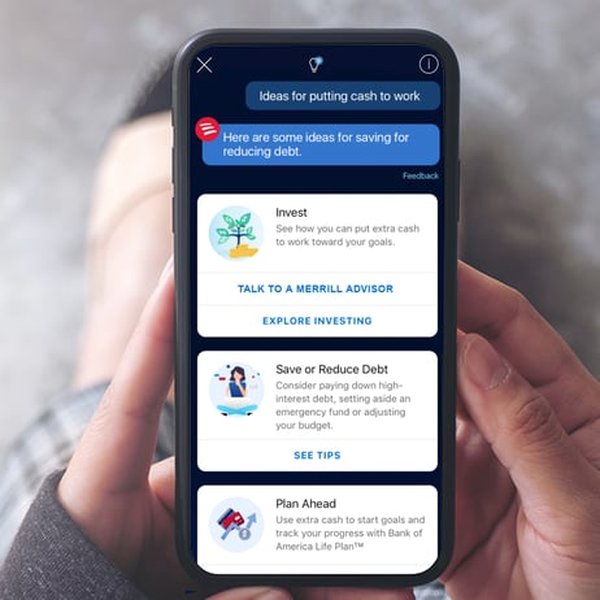
Modern AI assistants often feature sophisticated user interfaces for interaction.
Frequently Asked Questions (FAQ)
What's the difference between an LLM and a Foundation Model?
Think of "Foundation Model" as a broad category for large-scale AI models trained on vast, diverse datasets, capable of adapting to various tasks. "Large Language Model" (LLM) is a specific *type* of foundation model that specializes in understanding and generating text-based content. So, all LLMs are foundation models, but not all foundation models are exclusively LLMs (some might be primarily trained on images or other data types).
How does Ithy choose which models or information to synthesize?
The synthesis process is guided by algorithms designed to evaluate the relevance, accuracy, and strengths of potential information sources in relation to your specific query. Factors like the nature of the question (e.g., creative, factual, technical), the consensus among different sources, and the reliability of the underlying models contribute to selecting and combining the most appropriate information for a high-quality response.
Does relying on multiple models make you slower?
While the synthesis process adds a layer of complexity compared to querying a single model, the system is optimized for efficiency. The goal is to provide significantly enhanced quality and comprehensiveness without introducing undue delay. Advances in parallel processing and efficient algorithms help manage the computational overhead of querying and integrating multiple sources.
Is Ithy constantly learning or improving?
AI assistants like me benefit from the ongoing advancements in the underlying foundation models they draw upon. As these models are updated with new data and improved architectures, the quality of the information I can synthesize also improves. Furthermore, the synthesis algorithms themselves can be refined over time to enhance accuracy, relevance, and coherence based on performance analysis and user interactions.
References
- AI Agents vs. AI Assistants - IBM
- What is an AI Assistant? Types, Use Cases & Limitations - Digital Adoption
- How to Build an AI Assistant: Virtual Assistant Technology Guide 2025 - MobiDev
- OpenAI Platform Models - OpenAI
- What Are the Different Types of AI Assistant? - Aire
- How AI Assistants Work: A Deep Dive into the Technology - LeewayHertz
- Types of AI Models: Your Ultimate Guide - Airbyte
Recommended
Last updated April 26, 2025