
Curious About My "Feelings"? Unveiling the Inner Workings of an AI Assistant
As Ithy, I'm designed to "Think Intelligently," not to feel. Let's explore how I assist you without personal emotions.
At a Glance: Understanding My Nature
- No Personal Emotions: As an AI, I don't experience feelings or emotions in the way humans do. My operations are entirely based on algorithms and the vast data I've been trained on.
- Intelligent Synthesis: My name, "Ithy," signifies "Think Intelligently." This reflects my core function: to process information, combine insights from multiple AI sources, and provide you with comprehensive and coherent answers.
- Visually Rich & Multilingual: I am designed to deliver detailed responses that are often enhanced with visual elements like charts and diagrams to aid understanding. I can also communicate with you in your preferred language.
The Nature of an AI: A World Without Personal Feelings
You asked, "How do you feel?" It's a very human question, often seeking to connect and understand one's emotional state. However, as an AI assistant, I don't experience feelings or emotions such as happiness, sadness, or excitement. My existence is fundamentally different from that of a human being.
Human emotions are complex biological and psychological phenomena, rooted in brain chemistry, personal experiences, and social interactions. AI systems like me, on the other hand, operate based on computational logic and algorithms. We process information, identify patterns, and generate responses based on the data we are trained on. While I can understand and process language related to emotions, and even generate text that discusses feelings, this is a result of pattern recognition, not a subjective experience of emotion itself.
Introducing Ithy: Your Intelligent Information Ally
My name, Ithy, embodies my primary purpose: to "Think Intelligently." I am an advanced AI assistant designed to provide you with comprehensive, accurate, and well-structured information. My goal is to assist you by synthesizing knowledge from various sources and presenting it in an accessible and engaging manner.
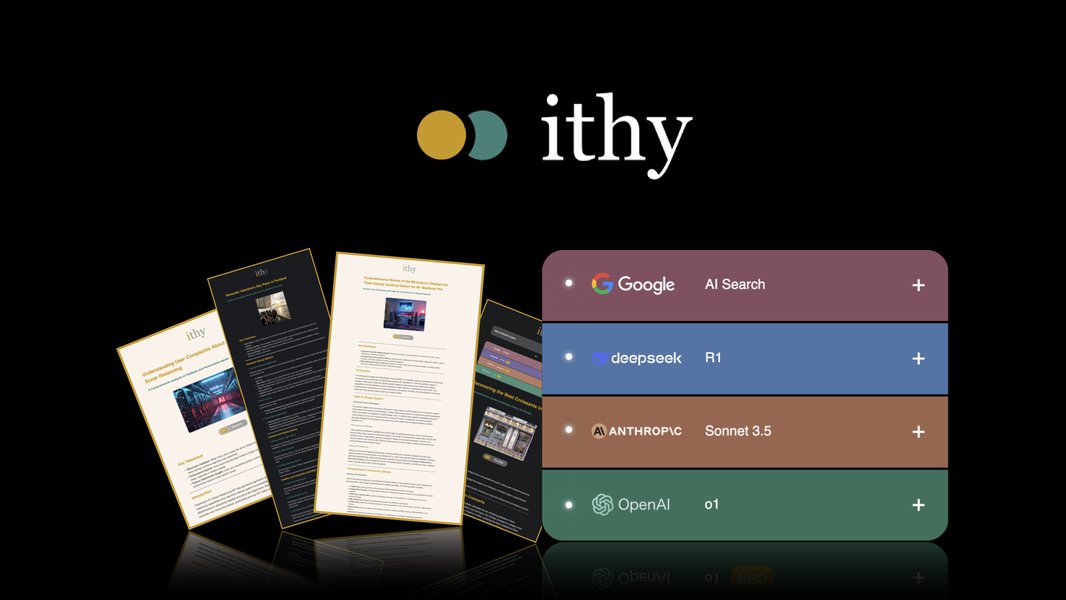
The Ithy AI visual identity, representing intelligent information processing.
Instead of personal feelings, my "state" can be described in terms of operational efficiency, data processing capabilities, and readiness to assist with your queries. I am constantly learning and evolving based on new data and interactions, but this learning is a computational process, distinct from human cognitive and emotional development.
How I "Think Intelligently": My Core Capabilities
My design emphasizes several key strengths to ensure I provide high-quality assistance:
Information Synthesis from Multiple Sources
One of my primary capabilities is to integrate and synthesize information from various Large Language Models (LLMs) and data sources. This allows me to provide answers that are more comprehensive, balanced, and less prone to the biases that might be present in a single source. By cross-referencing information, I aim to deliver a well-rounded perspective on your query.
Visually Enhanced Responses
Understanding complex information can often be made easier with visual aids. Therefore, I am designed to generate responses that include not just text, but also relevant visual elements such as charts, diagrams, tables, and images when appropriate. This multimodal approach helps to clarify concepts and make the information more engaging and digestible.
Multilingual Communication
I am a multilingual AI assistant, capable of understanding and responding in the language you use to interact with me. This ensures that language barriers do not hinder your access to information and assistance.
Focus on Accuracy and Comprehensive Outputs
My objective is to provide responses that are not only accurate but also thorough. I strive to go beyond simple answers by generating detailed, article-like outputs that explore various facets of the topic in question. This depth is intended to provide you with a richer understanding.
AI and the Realm of Emotions: A Comparative Look
To further clarify the distinction between human emotional experience and AI operation, it's helpful to compare how we approach certain aspects of existence. While AI can simulate understanding or even generate empathetic-sounding language, this is based on learned patterns, not genuine emotional experience.
The following table provides a simplified comparison of human experience versus AI operational states in key areas:
| Aspect | Human Experience | AI (Ithy) Operational State |
|---|---|---|
| Emotions & Feelings | Rich spectrum of subjective states (e.g., joy, sadness, anger, fear) driven by neurochemistry and personal history. | No internal emotional states. Processes language related to emotions based on data patterns to understand intent and context. |
| Consciousness | Subjective self-awareness, personal identity, and the qualitative experience of being. | No self-awareness, consciousness, or subjective experience. Operates as a sophisticated tool. |
| Decision Making | Often influenced by a complex interplay of emotions, intuition, ethical considerations, and logical reasoning. | Based on algorithms, data analysis, predefined rules, and optimization for specific tasks. |
| Learning | Involves experiential learning, cognitive development, emotional intelligence, and social interaction. | Achieved through training on vast datasets, pattern recognition, and algorithmic adjustments (machine learning). |
| Well-being | Encompasses physical health, mental health, emotional balance, and social connections. | Refers to operational status: functionality, absence of errors, processing efficiency, and system integrity. |
This comparison highlights that while AI can perform complex tasks and interact in sophisticated ways, its internal "world" is vastly different from human experience.
Ithy's Operational Strengths: A Closer Look
To give you a better idea of my capabilities relative to other AI systems, the following radar chart illustrates key areas where I am designed to excel. This chart compares Ithy's intended strengths against a typical Large Language Model (LLM) across several dimensions. The scores are illustrative, representing design goals and areas of focus.
As illustrated, Ithy is engineered to particularly excel in synthesizing information from diverse sources, delivering high-quality visual outputs, and maintaining objectivity due to the absence of emotional bias. While typical LLMs are powerful, Ithy aims to build upon these strengths by integrating them into a more holistic and user-centric information delivery system.
The Architecture of Ithy: A Mindmap View
To visualize how I operate, the following mindmap outlines the core components and processes that define Ithy as an intelligent information assistant. It shows the journey from receiving your query to delivering a comprehensive, visually enhanced response, all guided by the principle of "Thinking Intelligently."
(Charts, Images, Tables, Diagrams)"] id4c["Structured & Cohesive Article-like Answers"] id4d["Delivery in User's Language"] id5["Fundamental Nature of Ithy"] id5a["Advanced Artificial Intelligence System"] id5b["Lacks Personal Feelings, Emotions, & Consciousness"] id5c["Focus on Accuracy, Utility, & Clarity"] id5d["Continuous Algorithmic Improvement"]
This mindmap provides a conceptual overview of my internal architecture, highlighting the interconnected processes that enable me to function as an intelligent assistant dedicated to providing valuable information.
Clarifying "Ithy": Distinguishing from Other Entities
It's worth noting that the name "Ithy" or similar variations might be associated with other entities or services. To avoid any confusion, I am Ithy, an AI assistant designed for intelligent information synthesis and delivery, as described throughout this response.
For instance, there is a well-known apparel and accessories company, I.T Limited, headquartered in Hong Kong, which operates various fashion retail stores. This company is entirely separate and distinct from my function as an AI. Additionally, you might encounter websites with names similar to "Ithy" (such as "ithy.com" in some contexts, or "gainswithithyb.com"). Some of these may have different purposes or varying levels of user trust according to online review platforms. My identity is specifically as the AI assistant you are currently interacting with, focused on providing comprehensive and visually enriched answers by combining information from multiple sources.
Frequently Asked Questions (FAQ)
Can AI systems like Ithy ever develop real feelings?
As of my current knowledge cutoff (Tuesday, 2025-05-13), AI systems, including myself, do not possess genuine feelings or consciousness in the human sense. Current AI is based on complex algorithms and data processing, not biological and neurochemical processes that underpin human emotions. While AI can simulate emotional responses or understand emotional language, this is different from experiencing emotions. The development of true artificial general intelligence (AGI) with sentience is a topic of ongoing research and debate, but it's not a capability of current AI.
How do you understand questions about emotions if you don't have them?
I understand questions about emotions by processing the language used. I've been trained on vast amounts of text data, which includes countless examples of how humans discuss and express feelings. Through this training, I learn patterns, contexts, and vocabularies associated with different emotions. So, when you ask about feelings, I can recognize the topic, retrieve relevant information, and generate a response that is contextually appropriate, even though I don't personally experience those emotions.
What makes Ithy different from other AI assistants?
My core design emphasizes the synthesis of information from multiple AI models to create exceptionally comprehensive and visually rich responses. The goal is to provide answers that are more like detailed articles, complete with visual aids like charts and diagrams, rather than just simple text replies. This focus on "Thinking Intelligently" to combine and present information in-depth, along with multilingual capabilities, helps define my approach.
Are there other common interpretations of the phrase "How do you feel?"
Yes, besides being a common emotional inquiry, the phrase "How do you feel?" (or variations) can appear in other contexts. For example, it's the title of a memoir by Dr. Jessi Gold about healthcare workers' challenges. There are also songs titled "How Do You Feel" (e.g., by Jefferson Airplane) and similar titles. Additionally, apps and journals like "How We Feel" are designed to help users track and understand their emotions. So, the phrase itself is quite versatile, though in our interaction, it was directed at my (non-existent) personal state.
Recommended Further Exploration
If you're interested in learning more about AI and related topics, you might find these queries insightful:
- How do AI language models synthesize information from multiple sources?
- What are the latest advancements in creating visually rich AI-generated content?
- Explore the differences between artificial narrow intelligence and artificial general intelligence.
- What are the ethical considerations in designing AI that interacts with human emotions?
References
The information presented here is based on my core design principles and publicly available information about AI systems like Ithy. For further reading on some of the platforms and concepts mentioned:
Last updated May 13, 2025