
Understanding Japan's AI System
A comprehensive view into Japan’s innovative AI landscape and its multifaceted strategy
Key Insights
- Wide-ranging Industrial Applications: Japan integrates AI into healthcare, robotics, manufacturing, finance, and urban development.
- Flexible Regulation and Ethical Governance: The country emphasizes a soft-law framework and voluntary guidelines combined with high ethical standards.
- Future-driven Initiatives: Strategic government support, innovative startups, and projects like Society 5.0 are accelerating Japan’s AI evolution.
Overview of Japan’s AI Ecosystem
Japan has long been recognized for its innovative prowess, particularly in robotics and electronics. Today, this legacy is being expanded into the field of artificial intelligence (AI). With an ecosystem that blends government-backed initiatives with dynamic industrial innovation, Japan’s approach to AI is multifaceted and strategically aligned with both domestic needs and global trends. The nation’s AI ecosystem not only involves cutting-edge technology solutions but also encompasses regulatory policies, ethical considerations, and future economic planning.
Government Initiatives and Strategic Council
The Japanese government plays a crucial role in shaping the direction and advancement of AI technologies. Key to this process is the AI Strategy Council, backed by the Ministry of Economy, Trade, and Industry (METI). This council acts as a policy-making body dedicated to integrating AI within the national economic and social fabric. One of its primary objectives is to transform AI into a cornerstone of Japan’s growth strategy, positioning the technology to unlock significant productivity gains across multiple sectors.
Core Government Efforts
Japan’s government has initiated several notable projects and policies focused on AI:
- A commitment to harness AI in transforming industrial practices and improving overall productivity.
- Investments in healthcare technologies which leverage AI for diagnostic support, early disease detection, and personalized patient care.
- Promotion of smart city initiatives aimed at enhancing urban efficiency and quality of life through AI-driven technologies.
- Establishing a framework for ethical AI, with guidelines emphasizing transparency, bias mitigation, and privacy preservation.
Sector-Specific Applications of AI
Japan’s strategic implementation of AI spans a diverse range of sectors with each applying unique AI-driven innovations.
Healthcare and Medical Innovations
One of the most critical areas of AI application in Japan is healthcare. The nation is leveraging AI to enhance diagnostic accuracy and medical imaging. For example, diagnostic support systems that were initially developed for non-medical tasks have been repurposed to identify various forms of cancer and to assist in early diagnosis. This innovative use of AI in medicine is expected to reduce diagnostic errors and result in better patient outcomes.
AI in Diagnostic Support
The transformation of seemingly unrelated AI technology into healthcare diagnostics demonstrates Japan’s creative approach to problem-solving. Advanced image analysis and pattern recognition algorithms are now critical tools in the fight against disease and are central to research and treatment protocols in Japanese hospitals.
Industrial Robotics and Manufacturing
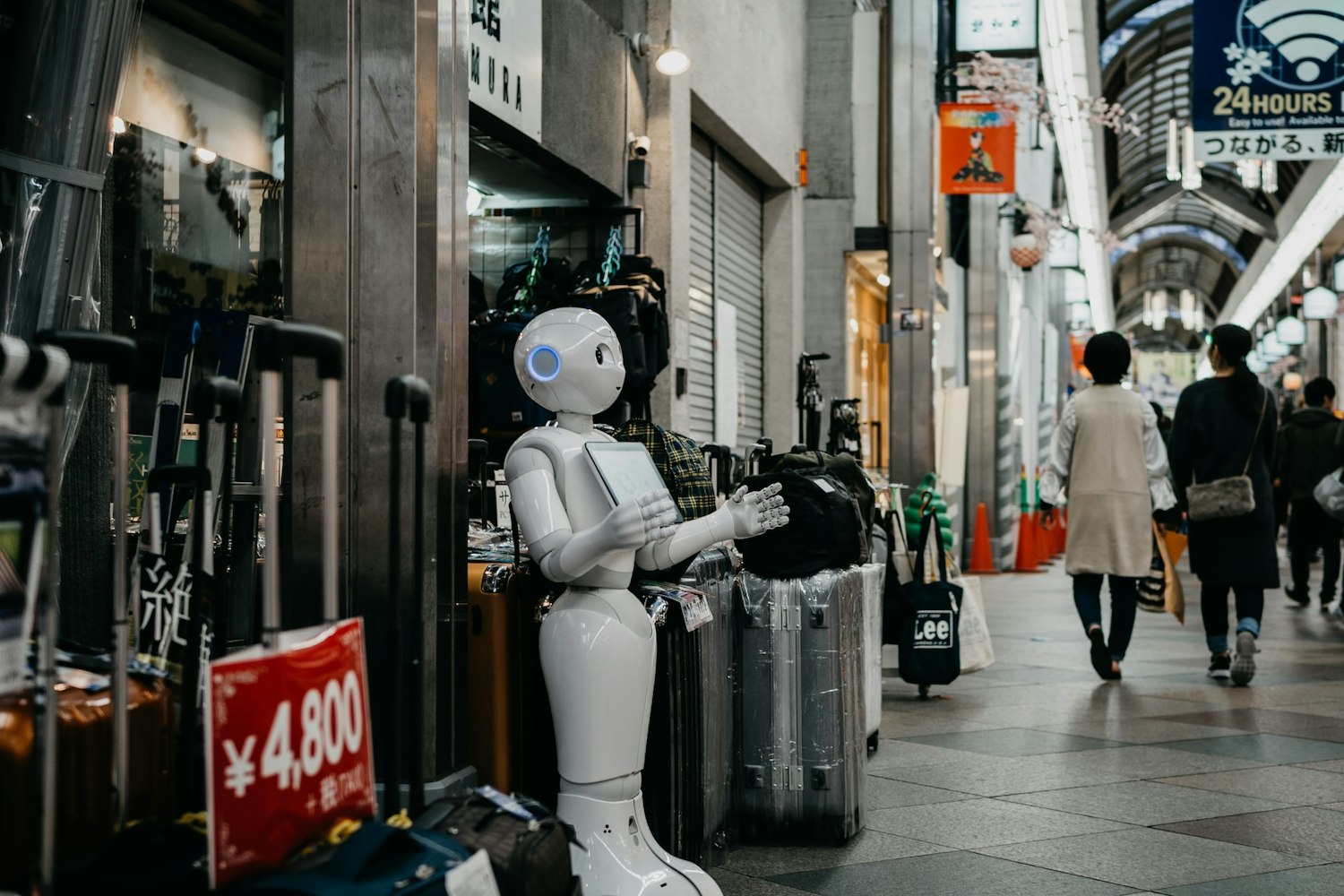
Japan’s reputation for cutting-edge robotics is well-earned, and the integration of AI is taking these systems to a new level. From industrial robots used in manufacturing to humanoid robots developed for eldercare, AI is creating unprecedented efficiencies. Companies like FANUC and SoftBank Robotics are leading the market with advanced, AI-enabled robots designed to adapt to complex manufacturing processes and handle repetitive or hazardous tasks safely.
Revolutionizing the Production Floor
AI supports process automation and predictive maintenance, ensuring minimal downtime and enhanced production capabilities in factories—a key competitive advantage for Japan’s export-driven economy.
Automotive Industry and Transportation
Another significant area is the automotive industry, which benefits immensely from AI in the development of autonomous vehicles and driver-assistance systems. Japanese companies are not only improving safety features in passenger cars but are also experimenting with AI-controlled transportation solutions. In defense, Japan is field-testing its first AI-enabled unmanned aerial vehicles (UAVs), showcasing the integration of AI in high-stakes environments.
Autonomous and Semi-autonomous Systems
Emphasis is placed on vehicle safety, precision engineering, and the efficient integration of AI with traditional mechanized systems, ensuring Japan remains competitive as these technologies are adopted globally.
Smart Cities and Urban Development
AI is pivotal in Japan’s vision of creating “Society 5.0,” a futuristic societal model that integrates digital and physical systems to improve everyday life. Through AI-powered smart city initiatives, urban areas are experiencing enhanced resource management, reduced energy consumption, and improved public safety measures. Advanced data analytics and IoT (Internet of Things) integration allow for optimized traffic management, better emergency response times, and an overall smarter allocation of municipal resources.
Innovative Urban Planning
Smart city projects combine AI with big data analytics to drive initiatives that address sustainability and efficiency, thereby transforming the urban landscape and ensuring a higher quality of life for citizens.
Finance and Cybersecurity
In finance, AI is extensively used for fraud detection, risk management, and predictive analyses in high-frequency trading. Meanwhile, Japan is bolstering its cybersecurity frameworks with AI-enabled systems designed to detect and prevent sophisticated cyber threats. This balance between financial innovation and robust security protocols exemplifies the holistic integration of AI across critical sectors.
Enhancing Security Measures
Proactive measures involving AI have become a central pillar in safeguarding infrastructure and maintaining the integrity of financial systems against increasingly digital threats.
Regulatory Framework and Ethical Considerations
Japan’s approach to AI regulation is notably characterized by its emphasis on “soft-law” measures. Rather than imposing rigid, overarching legislation, the country favors a flexible and adaptive framework that guides the ethical development and deployment of AI technologies. This approach seeks to encourage innovation while ensuring that AI developments remain aligned with societal values and ethical standards.
Soft Law Guidelines and Voluntary Governance
Japan’s regulatory philosophy is built around the concept of voluntary governance. Instead of enforcing strict regulations, the government relies on issuing non-binding guidelines and transparency obligations. These are designed to help companies self-regulate their AI endeavors without burdening them with excessive legal constraints. This method is particularly effective in fast-evolving tech industries where rigid laws might hinder innovation. By relying on industry adherence to ethical standards, Japan fosters an environment where both innovation and accountability coexist.
Balancing Innovation and Ethical Standards
Central to this framework is the formation of institutes such as the AI Safety Institute, which supports the research and development of unbiased algorithms and transparent systems. Ensuring that AI operates within ethical boundaries while still fostering a competitive market is vital to Japan’s comprehensive AI strategy.
Cultural Influences and Global Collaboration
Japan’s conservative cultural stance on risk and failure contributes to a cautious yet high-quality approach to technology adoption. The nation’s focus on precision, safety, and ethical responsibility is evident in its rigorous testing procedures and comprehensive industry standards. International collaborations, such as partnerships during global summits like the G7, further illustrate Japan's commitment to responsible global AI development. Projects like the Hiroshima AI Process facilitate discourse on international AI standards and ensure that Japan remains at the forefront of technological ethics while participating in global innovation networks.
Influence of Cultural Values
The inherent cultural emphasis on thoroughness and resilience in Japan translates into AI systems that are designed with both efficiency and ethical integrity in mind. This dual focus not only promotes better technology but also reinforces trust among users, investors, and global partners.
Innovative Applications and Future Trends
The future prospects of AI in Japan are promising, with potential productivity gains and technological breakthroughs anticipated to reshape various industries. Japan’s approach seamlessly integrates current technological strengths with forward-looking strategies, ensuring that its AI ecosystem remains competitive.
Economic Impact and Productivity Growth
Analysts predict that Japan’s AI market will continue to grow, not only in terms of monetary value but also in its potential to revolutionize industries. With estimates suggesting that AI could unlock hundreds of billions of dollars in productivity gains by 2030, sectors from manufacturing to healthcare are expected to see transformative impacts. AI’s role in automating routine tasks, optimizing supply chains, and facilitating predictive maintenance is especially critical for Japan’s export-driven industries. These innovations aim to contribute significantly to the national GDP while also positioning Japan as a hub for next-generation technology.
Leveraging AI for Economic Transformation
The strategic integration of AI into core industries is central to Japan’s future economic agenda. Whether through advanced diagnostics in healthcare or enhanced robotics in manufacturing, AI's influence is redefining productivity benchmarks across the nation.
Noteworthy Innovations and Projects
Several high-profile projects illustrate the breadth of Japan’s AI innovation. One notable example is the development of advanced AI systems for playing shogi, a traditional Japanese board game, which has not only been used to entertain but also to improve strategic thinking techniques. Similarly, initiatives in the realm of natural language processing have resulted in AI systems particularly adept at translation and communication, capabilities that are crucial in today’s global business environment. These projects reflect Japan’s comprehensive approach by tackling both traditional cultural domains and modern technological challenges.
Technological Innovations in Practice
Among the groundbreaking advancements, AI-powered unmanned aerial vehicles (UAVs) stand out as a testament to Japan’s determination to integrate AI in defense and security applications. These systems are undergoing rigorous tests to ensure they meet the high standards required for both civilian and military use, underscoring the trust placed in AI technologies that are simultaneously innovative and safe.
Society 5.0 and Urban Transformation
One of the most forward-thinking initiatives under Japan’s AI umbrella is the concept of “Society 5.0.” This visionary framework is designed to harness the full potential of digital transformation to create a society where economic growth and quality of life are enhanced through technology. In this ecosystem, AI is used to revamp urban infrastructure, streamline public services, and promote sustainability.
Visionary Urban Integration
Society 5.0 is more than just a concept—it is an actionable strategy aimed at transforming cities into hubs of intelligent resource management. Through the integration of AI with data analytics, IoT, and smart systems, Japan is creating environments where challenges like traffic congestion, energy waste, and public safety are addressed in innovative ways.
Summary Table of Japan’s AI Landscape
| Sector | Key Applications | Impact & Innovation |
|---|---|---|
| Healthcare | Diagnostic support systems, medical imaging, telemedicine | Improved diagnostic accuracy, early disease detection, enhanced patient care |
| Manufacturing & Robotics | Industrial robots, predictive maintenance, humanoid robots | Enhanced production efficiency, safer work environments, innovation in eldercare |
| Automotive & Transportation | Autonomous vehicles, driver-assistance systems, AI-enabled UAVs | Improved road safety, smarter transportation logistics, breakthrough defense applications |
| Smart Cities & Urban Development | Resource management, IoT integration, data analytics | Optimized traffic management, sustainable urban planning, enhanced public services |
| Finance & Cybersecurity | Fraud detection, risk management, digital security systems | Robust security frameworks, efficient financial operations, proactive threat mitigation |
References
- The Rise of AI in Japan – ULPA
- Japan Generative Artificial Intelligence – Trade.gov
- Japan's Approach to AI Regulation – CSIS
- Japan to Test First AI-Powered Aircraft – Defence Blog
- Hiroshima AI Process – Japan.gov
Recommended Related Searches
Last updated March 6, 2025