
Unlock Your Mobility: Your Comprehensive 12-Week Knee Replacement Rehab Roadmap
Navigate your recovery week-by-week with expert-guided exercises and milestones for optimal results after surgery.
Highlights of Your 12-Week Knee Rehab Journey
- Phase-Based Recovery: Rehabilitation follows distinct phases over 12 weeks, focusing initially on pain management and basic mobility, then progressing to strengthening and functional activities.
- Consistency is Key: Daily exercises tailored to each recovery phase are crucial for regaining range of motion, building strength, and preventing stiffness.
- Personalized Progress: While this guide provides a framework, recovery varies; close collaboration with your physical therapist is essential to adapt the program to your specific needs and pace.
Understanding the 12-Week Rehabilitation Timeline
Why 12 Weeks is the Critical Window
Recovering from total knee replacement surgery (total knee arthroplasty or TKA) is a marathon, not a sprint. The first 12 weeks are widely recognized by medical professionals as the most critical period for rehabilitation. This timeframe allows for structured healing, gradual strengthening, and the restoration of function necessary to return to an active life. While full recovery can take up to a year, diligently following a rehabilitation program during these initial 12 weeks lays the foundation for long-term success.
This comprehensive guide breaks down the 12-week recovery period into manageable phases, outlining daily exercises, goals, and milestones based on consensus from orthopedic resources. Remember, this is a general guideline; your journey will be unique. Always follow the specific advice of your surgeon and physical therapist (PT), who will tailor exercises to your progress, health status, and any specific surgical considerations. Let's begin your roadmap to recovery.
Phase 1: Weeks 1-2 - Laying the Groundwork for Healing
Focus: Pain Management, Swelling Control, and Early Movement
The first two weeks post-surgery are centered on managing pain and swelling, protecting the incision site, and initiating gentle movement to prevent stiffness and blood clots. Physical therapy often begins within 24-48 hours of surgery, sometimes even the same day. You'll likely use an assistive device like a walker or crutches.
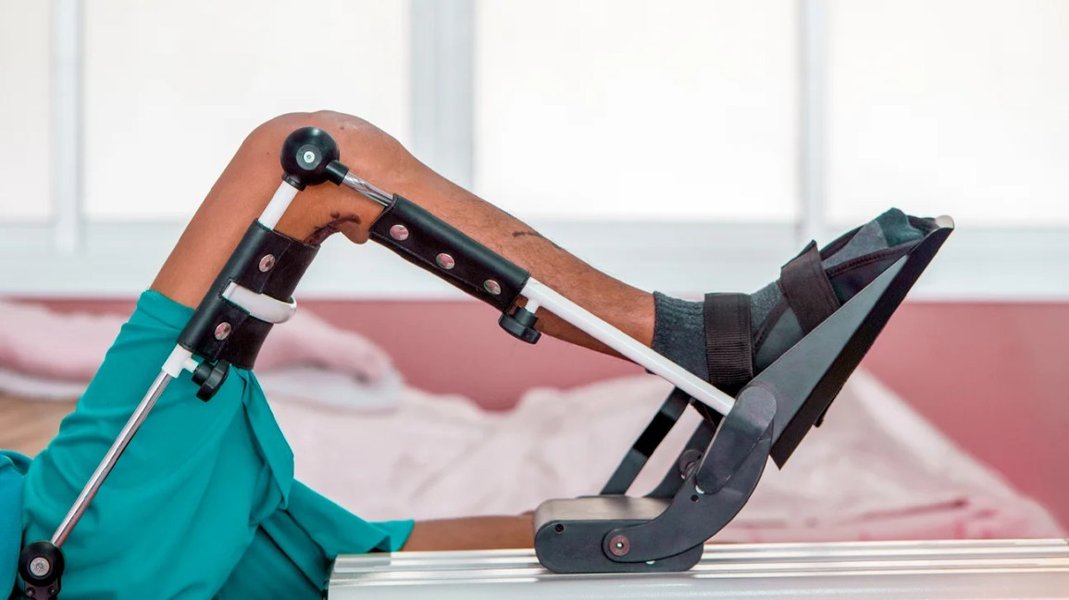
Continuous Passive Motion (CPM) machines may be used in the early stages to gently move the knee joint.
Daily Routine & Goals (Perform exercises 2-3 times daily, 10-15 min sessions)
- Pain and Swelling Management: Crucial during this phase. Elevate your leg above heart level frequently (e.g., 20-30 minutes several times a day) and apply ice packs for 15-20 minutes every 2-3 hours, especially after exercises. Use prescribed pain medication as directed.
- Wound Care: Follow your surgeon's instructions for keeping the incision clean and dry.
- Basic Mobility: Focus on getting in and out of bed and chairs safely. Short walks (5-10 minutes, multiple times a day) with your walker or crutches are encouraged to promote circulation and prevent complications. You should be able to put full weight on the leg soon after surgery.
- Essential Exercises:
- Ankle Pumps: Point your toes up towards your head, then down away from you. Repeat 10-15 times. Helps circulation and reduces swelling.
- Quad Sets (Quadriceps Setting): Lie or sit with your leg straight. Tighten your thigh muscle (quadriceps) by pushing the back of your knee down into the bed/floor. Hold for 5-10 seconds, then relax. Repeat 8-15 times. Activates thigh muscles.
- Gluteal Sets: Squeeze your buttock muscles together. Hold for 5-10 seconds, then relax. Repeat 8-15 times. Strengthens hip muscles supporting the knee.
- Heel Slides (Assisted Knee Bending): Lie on your back. Gently slide your heel towards your buttocks, bending your knee as far as comfortable. You might use a towel or strap around your foot to assist. Hold briefly, then slowly straighten. Repeat 8-15 times. Improves knee flexion (bending).
- Straight Leg Raises (if approved): Lie on your back with your non-operated knee bent. Tighten the thigh muscle of your operated leg and lift it straight up a few inches off the bed, keeping the knee locked. Hold briefly, then lower slowly. Repeat 8-15 times. Strengthens quadriceps. (Ensure your PT approves this early on).
Milestones by End of Week 2:
- Reduced pain and swelling compared to the first few days.
- Ability to bend the knee to approximately 90 degrees.
- Walking short distances comfortably with an assistive device.
- Independent basic self-care (dressing, bathing with precautions).
Phase 2: Weeks 3-6 - Building Strength and Increasing Mobility
Focus: Improving Range of Motion, Weaning Off Assistive Devices, Light Strengthening
During this phase, you'll typically see significant improvements. Pain should lessen, allowing for more intensive physical therapy. The goal is to increase your knee's range of motion (both bending and straightening), build foundational strength, and gradually reduce reliance on walkers or crutches, possibly transitioning to a cane.

Exercises transition towards building more strength in the muscles surrounding the knee.
Daily Routine & Goals (Perform exercises 2-3 times daily, 15-30 min sessions)
- Continued Pain Management: Use ice after exercise and elevate as needed, but frequency may decrease. Continue over-the-counter or prescribed pain relief as advised.
- Range of Motion (ROM) Focus: Actively work on bending (flexion) and straightening (extension) your knee.
- Heel Slides: Continue, aiming for a greater bend each week.
- Sitting Knee Flexion: Sit on a chair and slide the foot of your operated leg back underneath the chair, bending the knee as much as possible. Hold, then return. Repeat 8-15 times.
- Prone Hangs (Extension): Lie face down on a bed with your leg hanging off the edge from the knee down. Let gravity gently straighten the knee. Hold for several minutes as tolerated. (Consult PT first).
- Strengthening Exercises:
- Continue Quad Sets, Glute Sets, Straight Leg Raises (potentially adding light ankle weights if approved by PT).
- Short Arc Quads: Lie on your back with a rolled towel under your operated knee. Lift your foot off the bed, straightening the knee completely. Hold for a few seconds, then lower slowly. Repeat 8-15 times. Isolates quadriceps.
- Stationary Bike: Start with low or no resistance for 5-10 minutes. Ensure the seat is high enough to allow comfortable rotation without excessive bending initially. Excellent for improving ROM and endurance gently.
- Mini-Squats/Wall Squats (with support): If cleared by PT, perform shallow squats holding onto a counter or with your back against a wall for support. Bend knees slightly, keeping weight over heels. Repeat 8-15 times.
- Mobility Progression: Increase walking duration and distance as tolerated. Practice walking without an assistive device indoors under PT supervision. Begin practicing stairs if cleared, typically leading with the non-operated leg going up and the operated leg going down ("up with the good, down with the bad").
Milestones by End of Week 6:
- Walking independently or with a cane for moderate distances.
- Knee flexion approaching 100-110 degrees.
- Ability to perform basic household activities with greater ease.
- Potential clearance to resume driving (typically 4-6 weeks, varies by surgeon and surgery side - right vs. left).
Phase 3: Weeks 7-12 - Enhancing Function and Endurance
Focus: Advanced Strengthening, Balance, Functional Activities, Return to Recreation
This phase focuses on consolidating gains, building higher-level strength and endurance, improving balance, and gradually returning to more demanding daily activities and low-impact recreation. Formal PT sessions might decrease in frequency, but continuing your home exercise program daily is vital.
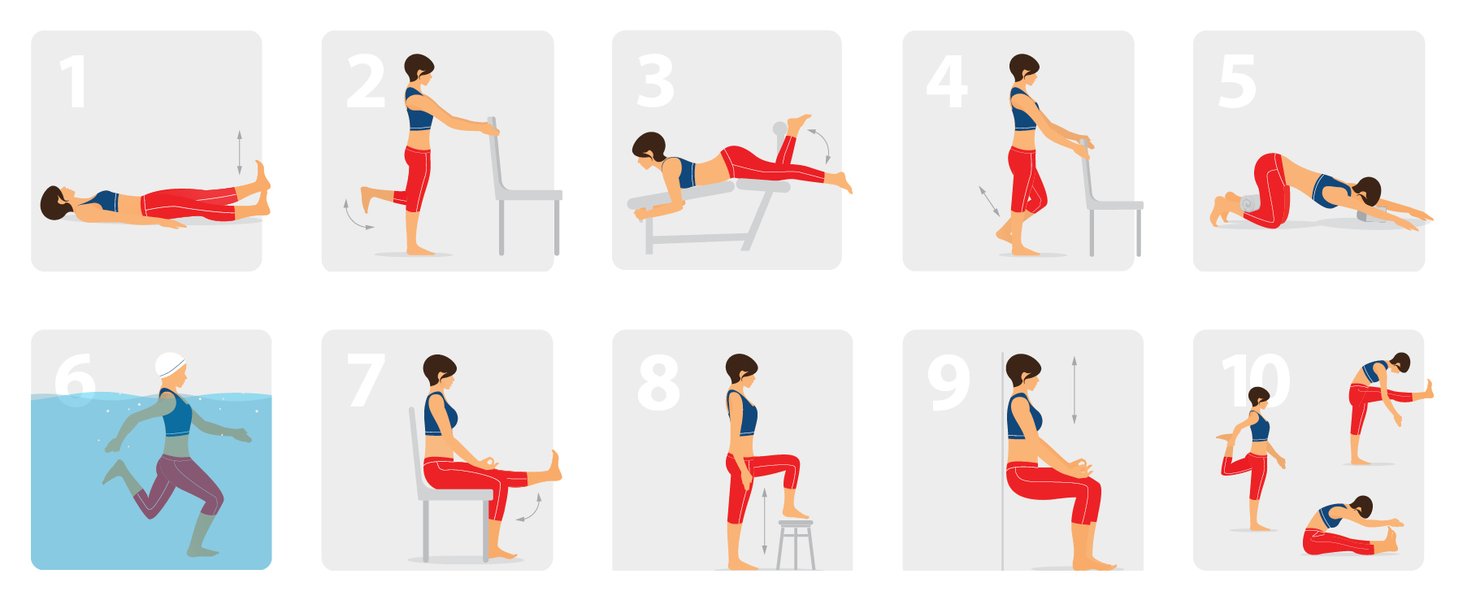
Advanced exercises focus on functional movements and building endurance.
Daily Routine & Goals (Perform exercises 1-2 times daily, 30-45 min sessions)
- Advanced Strengthening: Increase resistance or repetitions for previous exercises.
- Stationary Bike: Increase duration (15-20+ minutes) and gradually add resistance.
- Leg Press Machine (if available/approved): Use light weight initially, focusing on controlled movement.
- Step-Ups: Step up onto a low platform or stair with your operated leg, then step down. Repeat 8-15 times per leg.
- Lunges (shallow, with support): If cleared, perform controlled lunges, ensuring the knee doesn't go past the toes.
- Resistance Bands: Incorporate band exercises for hip abduction, adduction, and knee extension/flexion.
- Balance and Proprioception: Improving balance is key to preventing falls and increasing confidence.
- Single Leg Stance: Stand on your operated leg, initially holding onto support, progressing to less support. Aim for 10-30 seconds.
- Weight Shifts: Stand with feet shoulder-width apart and slowly shift your weight from side to side and forward/backward.
- Functional Activities: Practice activities mimicking daily life, like getting up from the floor (if cleared), carrying light objects while walking, and navigating uneven surfaces carefully.
- Return to Low-Impact Recreation: Gradually introduce activities like swimming, water aerobics, walking on level surfaces, or cycling outdoors (if approved). Avoid high-impact activities like running, jumping, or contact sports unless specifically cleared by your surgeon (often discouraged long-term).
Milestones by End of Week 12:
- Near-full or full knee extension (straightening) and flexion approaching 110-120+ degrees.
- Significantly improved strength and endurance.
- Ability to walk longer distances without pain or assistive devices.
- Confidence in performing most daily activities.
- Return to work (depending on job demands) and low-impact recreational activities.
Visualizing Your Rehab Focus: A Phased Approach
Tracking Key Recovery Areas Over 12 Weeks
This chart illustrates how the focus of your rehabilitation shifts across the three main phases. Early on, managing pain and achieving basic movement are paramount. As you progress, the emphasis shifts towards building strength, improving balance, and regaining functional independence. Scores are relative, indicating the general emphasis within each phase (1=Low Focus, 5=High Focus).
Mapping Your Knee Rehab Journey
Key Components of the 12-Week Program
This mind map provides a visual overview of the essential elements involved in your 12-week knee replacement rehabilitation program, highlighting the interconnectedness of goals, exercises, and milestones across the different phases.
Exercise Progression Summary Table
Key Exercises and Goals Across Rehab Phases
This table summarizes some of the key exercises and their general goals/frequency throughout the 12-week rehabilitation period. Remember that specific exercises, sets, reps, and progression will be determined by your physical therapist.
| Phase | Key Exercises | Frequency / Duration | Primary Goals |
|---|---|---|---|
| Weeks 1-2 | Ankle Pumps, Quad Sets, Glute Sets, Gentle Heel Slides, Assisted Walking | 2-3 sessions/day 10-15 mins/session |
Reduce swelling, activate muscles, basic ROM, prevent clots, safe transfers/walking |
| Weeks 3-6 | Heel Slides, Sitting Knee Flexion, Short Arc Quads, Stationary Bike (low/no resistance), Supported Mini-Squats, Gait Training | 2-3 sessions/day 15-30 mins/session |
Increase ROM (esp. flexion), build initial strength, improve walking pattern, wean off aid |
| Weeks 7-12 | Stationary Bike (resistance), Step-Ups, Leg Press (light), Single Leg Stance, Advanced ROM stretches, Functional Task Practice | 1-2 sessions/day 30-45 mins/session |
Build strength & endurance, enhance balance, achieve functional ROM, return to activities |
Expert Guidance: Essential Post-Surgery Exercises
Visual Demonstrations from Physical Therapists
Watching demonstrations can significantly help in understanding the correct form for your rehabilitation exercises. This video from licensed physical therapists showcases some of the fundamental exercises often included in a post-total knee replacement program. It covers exercises suitable for various stages of early recovery, reinforcing the types of movements discussed in the phased plan above. Observing proper technique is crucial for safety and effectiveness.
This video demonstrates key exercises beneficial after knee replacement surgery.
Frequently Asked Questions (FAQ)
Your Common Concerns Addressed
How long does knee replacement recovery really take?
The initial intensive rehabilitation phase typically lasts about 12 weeks. During this time, you'll regain most of your basic mobility and strength. However, full recovery, including the complete resolution of swelling and achieving maximum strength and endurance, can take 6 months to a year or even longer. Significant improvements are usually seen within the first 3 months.
When can I expect to walk without a walker or crutches?
Many people transition from a walker to crutches or a cane within the first few weeks. By weeks 3 to 6, many patients can start walking short distances without any assistive device, especially indoors. However, this depends heavily on individual progress, strength, balance, and confidence. Your physical therapist will guide you on when it's safe to discontinue using walking aids.
When can I drive after knee replacement?
Most surgeons recommend waiting at least 4 to 6 weeks before driving. Key factors include which leg had surgery (right leg recovery takes longer for driving due to pedal use), whether you are off narcotic pain medication, and if you have regained sufficient reaction time, strength, and control in your leg. Always get clearance from your surgeon before resuming driving.
What activities should I avoid after knee replacement?
In the early weeks (first 6-12 weeks), avoid high-impact activities, deep squatting, kneeling directly on the incision (use padding later if necessary), twisting or pivoting motions on the operated leg, and heavy lifting (usually restricted to under 10-20 lbs initially). Long-term, most surgeons advise against activities like running, jumping, contact sports, and high-impact aerobics to prolong the life of the implant. Low-impact activities like walking, swimming, cycling, and golf are generally encouraged.
How much knee bend (flexion) should I expect?
The goal is typically to achieve at least 90 degrees of flexion by week 2, around 110 degrees by week 6, and ideally 115-120 degrees or more by week 12. Sufficient flexion (around 110-115 degrees) is needed for activities like climbing stairs normally and getting up from a low chair. Full straightening (0 degrees extension) is equally important for an efficient walking pattern.
References
- Total Knee Replacement Exercise Guide - OrthoInfo - AAOS
- Knee Replacement Recovery Time: What to Expect in the First 12 Weeks - Healthline
- The Best Exercises After Knee Replacement, from a PT - HSS
-
Knee Replacement: Surgery Details & Recovery - Cleveland Clinic
- Recovering from a knee replacement - NHS
- Home exercise program - Allina Health
Recommended Reading
Last updated April 16, 2025