
Unveiling the Critical Need: Why South Korea's Environmental Strains Demand Urgent Scientific Scrutiny
A deep dive into the escalating pollution, carbon emissions, and climate impacts shaping the Korean peninsula's environmental future.
Key Insights: The Imperative for Environmental Research in South Korea
- High Emission Levels: South Korea's significant CO2 emissions, particularly its high per capita rate (12.27 tons in 2022), driven largely by fossil fuel dependence in its energy sector, underscore a critical area for scientific investigation into mitigation and transition strategies.
- Severe Air Pollution & Health Impacts: Persistent air pollution, including PM2.5 and other hazardous substances, has been scientifically linked to increased mortality and adverse health outcomes, necessitating further research into sources, effects, and effective abatement technologies.
- Accelerating Climate Change Effects: Tangible impacts of climate change, such as rising average temperatures (1.5°C above the 1981-2010 baseline) and increased frequency of extreme weather events like heatwaves and wildfires, demand comprehensive studies on adaptation and resilience.
Core Justification for Scientific Investigation: A Synthesis for Academic Discourse
Meeting the User's Request for a Scientific Article Summary
South Korea's pressing environmental challenges, notably its high levels of air pollution and substantial CO2 emissions, provide a compelling justification for intensive scientific study. The nation recorded fossil CO2 emissions of 635.5 million metric tons in 2022, translating to a per-capita rate of approximately 12.27 tons, among the highest globally. This significant carbon footprint is largely attributed to a heavy reliance on fossil fuels, particularly coal, which fuels nearly 42% of its electricity generation. Scientific evidence robustly links long-term exposure to prevalent air pollutants like particulate matter (PM10, PM2.5) and sulfur dioxide (SO2) with increased all-cause and cardiovascular mortality rates across the population, as detailed in studies such as Lee et al. (2020) published in Environmental Research. Further research by Kim et al. (2014) in Environmental Health Perspectives highlights the tangible health consequences of PM2.5 exposure, including respiratory and cardiovascular diseases, underscoring the need for effective policy interventions.
Compounding these domestic issues, transboundary pollution, significantly from neighboring countries, exacerbates Korea's air quality problems (Nature Communications, 2024), while the impacts of climate change, including a 1.5°C rise in average temperatures compared to the 1981-2010 baseline and an increase in extreme weather events, present further research imperatives. Despite policy efforts, such as the Korea Emissions Trading Scheme and a 2050 carbon neutrality goal, current emission trajectories suggest these may be insufficient without more aggressive, scientifically-informed strategies. The multifaceted nature of these environmental stressors, their profound public health implications, documented ecological degradation including plastic pollution and water issues, and the socio-economic ramifications—such as research by Park et al. (2021) in Sustainability correlating air pollution with increased assault rates—collectively underscore the urgent necessity for continued, multidisciplinary scientific investigation to develop sustainable solutions and inform effective environmental governance in South Korea.
Deep Dive: South Korea's Environmental Landscape
South Korea's rapid economic development has come at a significant environmental cost. The nation faces a complex web of challenges ranging from greenhouse gas emissions and air quality degradation to climate change impacts and resource management issues. Understanding these problems in detail is crucial for formulating effective responses.
Greenhouse Gas Emissions: A Persistent Challenge
South Korea's economy, heavily reliant on manufacturing and export-oriented industries, is a significant contributor to global greenhouse gas emissions. The energy sector is the primary source, accounting for 83.6% of total emissions in 2021, with carbon dioxide (CO2) making up 85.9% of these energy-related emissions.

Industrial efforts, like those by Hyundai Steel to reduce CO2 emissions, highlight the challenge within the manufacturing sector.
Carbon Dioxide Output
In 2022, South Korea's fossil CO2 emissions reached a staggering 635,502,970 tons. While this represented a slight decrease of 1.15% from the previous year, the per capita emission rate stood at 12.27 tons per person, placing South Korea among the countries with high individual carbon footprints. The continued dependence on fossil fuels, especially coal for power generation (approximately 42%), is a major driver of these emissions.
Policy Responses and Emission Targets
The South Korean government has acknowledged these challenges and implemented policies such as the Korea Emissions Trading Scheme (KETS) and has set a target for carbon neutrality by 2050. The Ministry of Environment's 2025 plans include enhancing carbon trading, incentivizing electric vehicles, and improving resource management. However, projections from Climate Action Tracker suggest that current policies might not be sufficient to meet ambitious climate goals, with emissions potentially rising without stronger interventions.
Technological advancements, like KEPCO's carbon capture demonstration plant, are part of Korea's strategy to mitigate emissions.
Air Pollution: A Public Health Crisis
Air quality remains a paramount concern in South Korea. Major pollutants include fine particulate matter (PM2.5 and PM10) and sulfur dioxide (SO2). These pollutants originate from industrial activities, vehicle emissions, and significantly, from transboundary sources, with pollution from China often exacerbating local conditions.
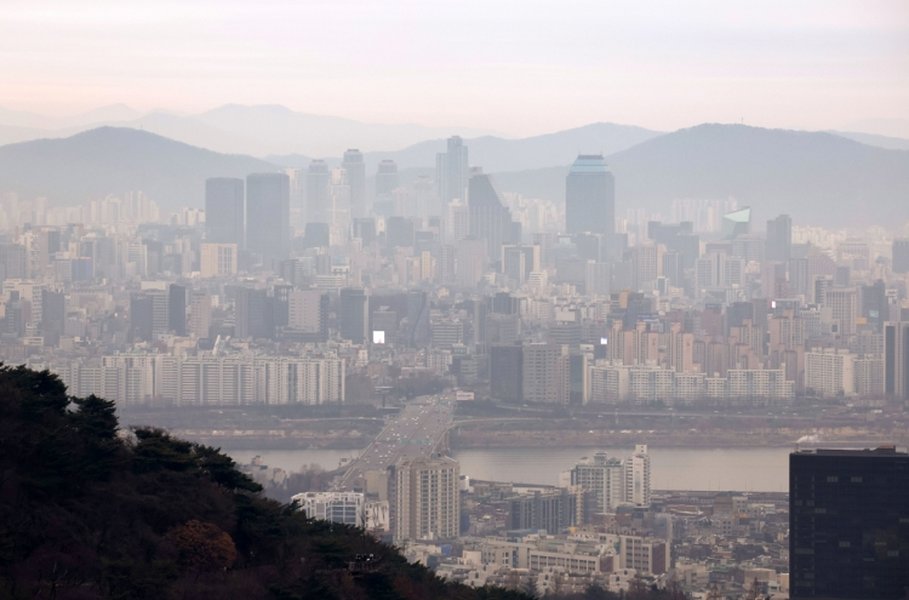
Visual representation of air quality concerns in urban South Korean environments.
Documented Health Impacts
The health consequences of this pollution are severe and well-documented. A significant body of scientific research links long-term exposure to these air pollutants with serious health issues:
- Increased Mortality: Studies like Lee et al. (2020) have found strong associations between prolonged exposure to PM10 and SO2 and higher rates of all-cause and cardiovascular mortality.
- Respiratory and Cardiovascular Diseases: Research by Kim et al. (2014) has confirmed that elevated PM2.5 levels contribute to various respiratory and cardiovascular ailments.
- Broader Societal Effects: Interestingly, some research, such as Park et al. (2021), has even explored correlations between high air pollution concentrations and increased rates of social issues like assault, suggesting wider societal implications beyond direct physical health.
While some improvements in PM2.5 levels and a reduction in "poor air" days have been noted recently, the overall burden of air pollution on public health justifies continuous scientific monitoring and research into more effective mitigation strategies.
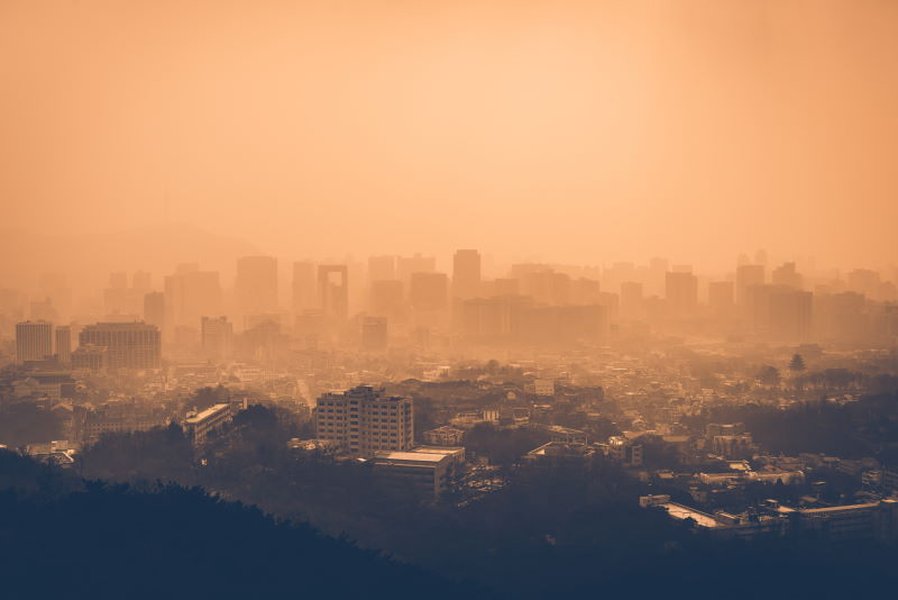
Innovative technologies are being developed and deployed to tackle South Korea's air pollution challenges.
Climate Change Impacts Taking Hold
South Korea is already experiencing the tangible effects of global climate change. The annual mean temperature in 2021 was 1.5 degrees Celsius higher than the 1981-2010 average. This warming trend is accompanied by an increase in the frequency and intensity of extreme weather events.
Observable Changes
- Rising Temperatures and Heatwaves: The nation has seen a noticeable increase in the number of heatwave days, posing risks to public health and agriculture.
- Increased Wildfire Risk: Climate change has reportedly doubled the likelihood of hot, dry, and windy conditions that fuel devastating wildfires, with these conditions being about 15% more intense due to global warming.
- Water Resource Management: Changes in precipitation patterns and increased evaporation rates necessitate enhanced strategies for water resource management and flood defense, leading to initiatives like elevating the status of local rivers.
Visualizing South Korea's Environmental Stressors
To better understand the comparative scale of South Korea's environmental challenges, the following chart provides an illustrative comparison across several key indicators. The data points are conceptual, representing relative intensity rather than precise measurements, to highlight areas of concern.
This radar chart illustrates conceptual stress levels for South Korea compared to an idealized target or OECD average across critical environmental domains. For indicators like CO2 emissions, air quality (where a higher PM2.5 index is worse), fossil fuel reliance, plastic pollution, and water stress, a higher score indicates a more severe problem. Conversely, for 'Climate Policy Action Score,' a higher score represents more robust action. The chart aims to visually emphasize the areas where South Korea faces significant challenges and where scientific research can guide improvement.
Interconnected Environmental Challenges: A Mindmap
The environmental issues facing South Korea are not isolated; they are interconnected, creating a complex web that requires a holistic approach to research and solutions. This mindmap illustrates these connections and highlights key areas demanding scientific investigation.
& Research Imperatives"] id1["High Greenhouse Gas Emissions"] id1a["CO2 Dominance
(635.5M tons, 12.27 t/capita)"] id1b["Energy Sector Driven
(83.6% of total GHG)"] id1c["Heavy Fossil Fuel Dependency
(Coal approx. 42% electricity)"] id1d["Industrial Emissions"] id2["Severe Air Pollution"] id2a["Key Pollutants
(PM2.5, PM10, SO2, NOx)"] id2b["Significant Health Crises
- Increased Mortality (Lee et al., 2020)
- Respiratory & Cardiovascular Diseases (Kim et al., 2014)"] id2c["Transboundary Pollution Factors
(e.g., from China - Nature Comm., 2024)"] id2d["Broader Social Impacts
(e.g., correlation with assault rates - Park et al., 2021)"] id3["Manifestations of Climate Change"] id3a["Accelerated Temperature Rise
(+1.5°C vs. 1981-2010 baseline)"] id3b["Increase in Extreme Weather
(Heatwaves, Typhoons, Wildfires)"] id3c["Impacts on Ecosystems & Biodiversity"] id3d["Sea Level Rise Concerns for Coastal Areas"] id4["Other Critical Environmental Pressures"] id4a["Plastic Pollution & Waste Management
(Host of World Environment Day 2025)"] id4b["Water Scarcity & Quality Issues"] id4c["Acid Rain Impacts"] id4d["Soil Degradation & Land Use"] id5["Justification for Scientific Study & Policy Gaps"] id5a["Current Policies & Targets
(e.g., K-ETS, Carbon Neutrality 2050)"] id5b["Identified Insufficiencies & Need for Stronger Interventions"] id5c["Demand for Evidence-Based Strategies"] id5d["Research into Mitigation Technologies & Adaptation Measures"] id5e["Socio-Economic Impact Assessments"] id5f["International Cooperation & Global Commitments"]
This mindmap visually lays out the core environmental challenges facing South Korea, from emissions and pollution to the direct impacts of climate change and other resource pressures. It also highlights the critical need for further scientific research to address policy gaps, develop effective mitigation and adaptation strategies, and understand the broader socio-economic consequences. Each branch represents a significant area requiring in-depth study to navigate towards a more sustainable future.
Key Environmental Indicators and Challenges
The following table summarizes some of the critical environmental statistics and challenges for South Korea, drawing from various reports and data sources. This data underscores the urgency for scientific investigation and targeted action.
| Indicator | Statistic / Finding | Implication / Source Example |
|---|---|---|
| Fossil CO2 Emissions (2022) | 635,502,970 tons | Highlights the scale of carbon output (Worldometers). |
| CO2 Emissions per capita (2022) | 12.27 tons | Indicates high individual carbon footprint compared to many nations (Worldometers). |
| Energy Sector's GHG Contribution (2021) | 83.6% of total GHG emissions | Shows dominance of energy production in emissions profile (Emission-Index.com). |
| CO2 in Energy Sector Emissions (2021) | 85.9% of energy GHG | CO2 is the primary gas from energy (Emission-Index.com). |
| Coal in Electricity Generation | Approximately 42% | Significant reliance on a high-carbon fuel source (Trade.gov). |
| Air Pollution Health Impact (PM10, SO2) | Linked to increased all-cause and cardiovascular mortality | Scientific evidence of severe health risks (Lee et al., 2020, Environmental Research). |
| Air Pollution Health Impact (PM2.5) | Associated with respiratory and cardiovascular diseases | Further evidence of public health burden (Kim et al., 2014, Environ. Health Perspect.). |
| Transboundary Pollution | Significantly contributes to local air quality issues | External factors complicating pollution control (Nature Communications, 2024). |
| Annual Mean Temperature Increase | +1.5°C (2021 vs. 1981-2010 average) | Clear evidence of local warming trends (KEIA). |
| Extreme Heat Events | Increase in the number of heat wave days | Direct impact of climate change on weather patterns (KEIA). |
| Plastic Pollution | Major environmental concern; focus of World Environment Day 2025 | Highlights a growing waste and pollution challenge (UNEP). |
| SDG Environmental Sustainability | 2025 SDG Report noted structural weaknesses | Indicates ongoing challenges in achieving sustainability goals (KoreaPro.org). |
This table quantifies several aspects of South Korea's environmental situation, reinforcing the multifaceted nature of the challenges. The combination of high emissions, severe air pollution with documented health effects, and tangible climate change impacts justifies extensive scientific research to inform policy and drive sustainable solutions.
Global and Local Efforts: Addressing the Climate Crisis
South Korea is actively participating in global discussions and implementing domestic policies to combat climate change. The following video provides insights into "Climate Change Week" in South Korea, discussing both local initiatives and the nation's role in global environmental challenges.
This video, titled "S.Korea's Climate Change Week: Tackling local and global Challenges in fight against Climate Change," touches upon the complexities South Korea faces. It reflects the nation's engagement in addressing environmental issues, from local air quality management to international climate commitments. Such discussions are vital as they bring together experts, policymakers, and the public to foster solutions. Scientific research plays a crucial role in underpinning these discussions with data, assessing the effectiveness of current strategies, and identifying new pathways for sustainable development. The video highlights the dual challenge of tackling domestic environmental problems while contributing to global efforts, a common theme for industrialized nations like South Korea.
Frequently Asked Questions (FAQ)
What are the primary drivers of South Korea's high CO2 emissions?
South Korea's high CO2 emissions are primarily driven by its energy sector, which accounted for 83.6% of total greenhouse gas emissions in 2021. Within this, CO2 is the dominant gas (85.9%). A significant factor is the country's reliance on fossil fuels, particularly coal, for electricity generation (around 42%). Its large industrial and manufacturing base also contributes substantially to overall emissions.
How severe is air pollution in South Korea and what are its health impacts?
Air pollution, particularly from PM2.5, PM10, and SO2, is a significant environmental and public health concern in South Korea. Scientific studies have established clear links between long-term exposure to these pollutants and adverse health outcomes, including increased all-cause and cardiovascular mortality, as well as higher incidences of respiratory and cardiovascular diseases. Transboundary pollution from neighboring countries often worsens the situation.
What evidence is there of climate change impacting South Korea?
South Korea is already experiencing clear impacts of climate change. These include a rise in the annual mean temperature (1.5°C higher in 2021 compared to the 1981-2010 average), an increased number of heatwave days, and a heightened risk of severe wildfires due to hotter, drier, and windier conditions. These changes necessitate adaptive measures and further research into future climate scenarios.
Is South Korea taking action to address these environmental issues?
Yes, South Korea has implemented various policies and initiatives. These include the Korea Emissions Trading Scheme (KETS), a national goal for carbon neutrality by 2050, investments in renewable energy, incentives for electric vehicles, and measures to improve resource management and air quality. South Korea will also host World Environment Day in 2025, focusing on plastic pollution. However, reports suggest that current efforts may need to be intensified to meet its climate targets, justifying ongoing scientific evaluation of policy effectiveness.
Recommended Further Exploration
Delve Deeper into Related Topics
- What are the specific health impacts of PM2.5 exposure in major South Korean cities?
- How effective is South Korea's Emissions Trading Scheme in reducing industrial CO2 output?
- What are the latest technological innovations for combating transboundary air pollution in Northeast Asia?
- How is climate change projected to affect South Korea's agriculture and water resources in the coming decades?
References
Sources and Further Reading
Last updated May 6, 2025