
Ladakh Protests for Sixth Schedule Inclusion: A Comprehensive Analysis
Understanding the Quest for Autonomy and Cultural Preservation in Ladakh
Key Takeaways
- Statehood and Autonomy: Ladakh's demand centers on gaining statehood and greater self-governance mechanisms through the Sixth Schedule.
- Preservation of Cultural and Environmental Identity: The movement emphasizes protecting Ladakh's unique tribal culture and environment from external administrative pressures.
- Job Reservations and Local Empowerment: Ensuring that local populations benefit from employment opportunities and have control over resource management.
Background of Ladakh and the Sixth Schedule
Reorganization of Ladakh as a Union Territory
In August 2019, the Government of India revoked Article 370 of the Indian Constitution, which had granted special autonomous status to the former state of Jammu and Kashmir. This led to the bifurcation of the state into two Union Territories: Jammu & Kashmir, and Ladakh. Unlike other Union Territories such as Delhi and Puducherry, Ladakh was established without its own legislative assembly, thereby centralizing legislative authority and reducing regional autonomy. This administrative shift has been a catalyst for the current protests, as many Ladakhis feel that their unique cultural and socio-economic needs are not being adequately addressed under the new governance structure.
What is the Sixth Schedule?
The Sixth Schedule of the Indian Constitution provides for the administration of tribal areas in the northeastern states of Assam, Meghalaya, Tripura, and Mizoram. It allows for the creation of Autonomous District Councils (ADCs) and Autonomous Regional Councils (ARCs), which have legislative, judicial, and executive powers to manage local affairs. These councils can legislate on matters such as land management, forest conservation, agriculture, and cultural preservation, thereby granting significant autonomy to tribal communities. The Sixth Schedule aims to protect the rights of indigenous populations, prevent resource exploitation, and preserve cultural heritage by allowing self-governance.
The Protests: Voices and Demands
Leadership and Organization
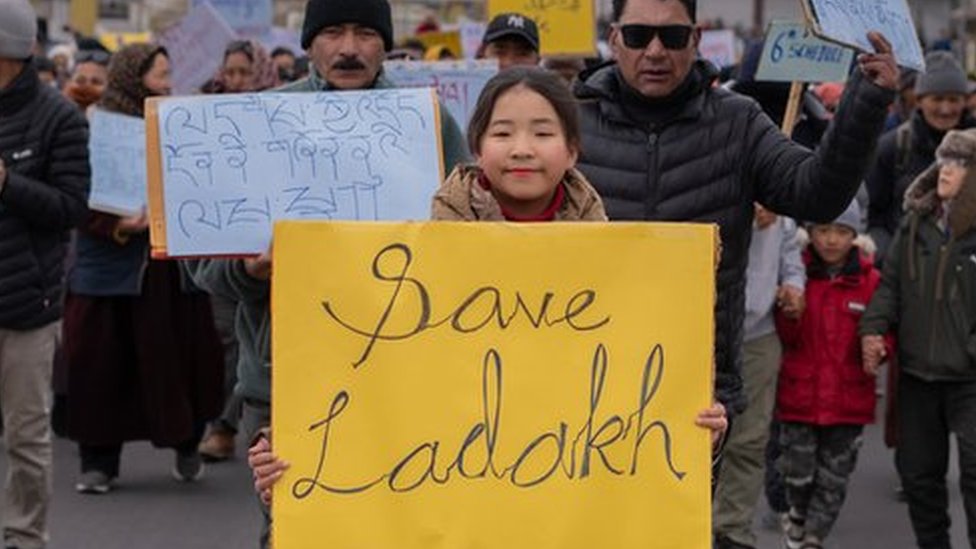
The protest movement in Ladakh has been spearheaded by prominent figures such as Sonam Wangchuk, an environmentalist and innovator renowned for his contributions to sustainable development in the region. Organizations like the Leh Apex Body (LAB) and the Kargil Democratic Alliance (KDA) have been instrumental in mobilizing support and organizing demonstrations. The protests have taken various forms, including peaceful rallies, hunger strikes, mass demonstrations, and foot marches extending from Leh to New Delhi, aimed at drawing national attention to the demands.
Core Demands
-
Inclusion under the Sixth Schedule of the Indian Constitution
-
Restoration of statehood for Ladakh
-
Creation of a separate Public Service Commission for the region
-
Allocation of parliamentary seats specifically for Leh and Kargil districts
-
Job reservations to ensure local employment opportunities
-
Preservation of cultural heritage and environmental conservation
Rationale Behind the Sixth Schedule Inclusion
Cultural Preservation
Ladakh boasts a rich tapestry of cultural heritage, with a predominantly tribal population that maintains distinct traditions, languages, and customs. Inclusion under the Sixth Schedule is viewed as a means to protect and preserve this cultural identity against homogenizing forces of modernization and external administrative interventions. Autonomous councils under this schedule would have the authority to enact and implement policies that align with local cultural practices, ensuring that development does not come at the expense of cultural erosion.
Administrative Autonomy
The demand for administrative autonomy stems from the desire to have greater control over local governance. Under the Sixth Schedule, Autonomous District Councils would manage local affairs such as education, land use, and resource management. This decentralization is expected to lead to more effective and contextually relevant governance, as decision-making powers would be vested in bodies that are more attuned to the region's unique needs and challenges.
Environmental Conservation
Ladakh's fragile Himalayan ecosystem is a critical aspect of its identity and sustainability. Autonomous governance structures would empower local authorities to implement and enforce environmental conservation measures tailored to the region's specific ecological conditions. This includes managing natural resources, controlling pollution, and implementing sustainable development practices that align with the community's environmental values.
Economic Empowerment
Economic empowerment is a key aspect of the protest movement. Local job reservations aim to ensure that the benefits of infrastructural development and economic growth are directly accrued by the residents of Ladakh. By controlling local resources and industries, the region can foster economic initiatives that prioritize sustainable growth, reduce unemployment, and prevent the exploitation of local resources by external entities.
Demand and Provision Mapping
| Protest Demand | Sixth Schedule Provision |
|---|---|
| Inclusion under the Sixth Schedule | Establishment of Autonomous District Councils with legislative powers |
| Restoration of Statehood | Greater autonomy and self-governance within the Union Territory |
| Job Reservations for Locals | Local governance bodies can prioritize employment for residents |
| Cultural and Environmental Preservation | Legislative authority to protect cultural heritage and manage environmental resources |
Government Response and Deliberations
Initial Assurances and Commitments
In response to the widespread protests, the Union Government has acknowledged the demands of the Ladakhi people. During the 2019 Lok Sabha elections and the 2020 local elections, the Bharatiya Janata Party (BJP) had pledged to grant Sixth Schedule status to Ladakh. However, these promises remain unfulfilled, leading to increased frustration and a loss of trust among the protesters. The central government has cited security concerns and administrative complexities as reasons for the delay in decision-making.
Current Status of Negotiations
The government has established a High Power Committee to examine Ladakh's demands for inclusion under the Sixth Schedule. Negotiations have been ongoing, with several dialogue sessions held between central officials and regional leaders. Despite these efforts, substantive progress has been limited, resulting in intermittent suspensions of protests during negotiation phases. The Union Ministry of Home Affairs has expressed openness to exploring models that enhance administrative autonomy, though no definitive framework has been proposed to date.
Recent Developments
In October 2024, Sonam Wangchuk ended a 21-day hunger strike following a letter from the Union Ministry of Home Affairs that promised future talks. Subsequently, the government agreed to meet with Ladakh's representatives on December 3, 2024, to further discuss their demands. These meetings are seen as critical steps towards finding a mutually acceptable solution, though the underlying issues of autonomy and cultural preservation remain deeply contentious.
Challenges and Criticisms
Security Concerns
The central government has raised security concerns as a primary reason for hesitancy in granting Sixth Schedule status to Ladakh. The region's proximity to international borders and its strategic importance require robust security measures. Authorities argue that increasing administrative autonomy could complicate security protocols and undermine national integrity. However, protesters counter that autonomous governance would empower locals to better manage and safeguard their region.
Implementation Complexities
Integrating the Sixth Schedule into Ladakh's administrative framework presents significant challenges. These include delineating jurisdictional boundaries, establishing effective governance structures, and ensuring that legislative powers are exercised in a manner that aligns with both local needs and national policies. Additionally, there are concerns about the potential for bureaucratic inefficiencies and conflicts between Autonomous District Councils and central authorities.
Political Opposition
Opposition parties and regional political groups have expressed skepticism about extending Sixth Schedule provisions to Ladakh. Some argue that the existing constitutional and administrative frameworks should be enhanced without adopting models from the Northeast region, which has its unique socio-political dynamics. Others fear that granting such autonomy could set a precedent for similar demands in other regions, potentially leading to a fragmented federal structure.
Future Implications
For Ladakh
Granting Sixth Schedule status to Ladakh could have profound implications for the region's governance and development. It would empower local councils to make decisions tailored to the unique socio-economic and environmental context of Ladakh, fostering more effective and sustainable development. Enhanced autonomy could lead to better preservation of cultural heritage, improved management of natural resources, and increased local participation in governance, thereby addressing many of the protesters' core concerns.
For India’s Federal Structure
The inclusion of Ladakh under the Sixth Schedule could influence India's federal dynamics by introducing a new model of regional autonomy. It may prompt other regions with distinct cultural and tribal identities to seek similar protections, necessitating a broader reevaluation of constitutional provisions related to autonomy and self-governance. This could ultimately lead to a more decentralized and culturally sensitive federal system, capable of accommodating India's diverse and multifaceted societal landscapes.
Conclusion
The ongoing protests in Ladakh for inclusion under the Sixth Schedule of the Indian Constitution represent a significant movement towards achieving greater autonomy, preserving unique cultural and environmental identities, and ensuring local empowerment. Spearheaded by leaders like Sonam Wangchuk and supported by organizations such as the Leh Apex Body and the Kargil Democratic Alliance, the movement seeks to address the administrative and socio-economic challenges introduced by Ladakh's reclassification as a Union Territory. While the central government has shown tentative willingness to engage in dialogue, substantial progress remains elusive due to security concerns, implementation complexities, and political opposition. Should the demands be met, Ladakh could emerge as a pioneering model for regional autonomy within India’s federal framework, balancing national integrity with local self-governance. The resolution of this movement is crucial not only for Ladakh’s future but also for the broader narrative of India’s democratic and federal evolution.
References
Last updated February 15, 2025