
Understanding Local Area Networks (LANs)
An in-depth exploration of LAN architecture, components, and applications
Highlights
- Definition and Scope: Discover what defines a LAN and its typical operational environments.
- Core Components: Learn about the hardware, protocols, and connectivity options that form a LAN.
- Applications and Advantages: Understand the benefits and common applications in homes, offices, and campuses.
A Local Area Network (LAN) is a dedicated digital communications network that interconnects computing devices within a limited geographical area such as a residence, school, office building, or campus. This targeted design maximizes efficiency, resource sharing, and data exchange, ensuring devices can communicate at high speeds. By emphasizing a restricted area, LANs benefit partly from the ease of management and the robust performance inherent in shorter distance communications. Over the years, LAN architecture has evolved with significant milestones, incorporating both wired and wireless technologies to meet evolving digital needs.
Defining the LAN Environment
At its core, a LAN is a computer network that spans a compact geographical limit. It is designed primarily for the communication between devices, resource sharing, server management, and collaborative projects. The network is typically managed by local administrators who implement specific settings and security protocols suited to a controlled environment. Through the utilization of modern communication protocols, generally based on the Internet Protocol Suite (TCP/IP), LANs provide reliable, secure, and high-speed data transmission.
Components of a LAN
The functionality of a LAN depends on various hardware and software components working together to enable effective communication and information exchange. Below are key aspects that constitute a typical LAN:
Devices
The fundamental devices include computers, printers, servers, mobile devices, and network storage. In modern corporate environments, these devices typically connect together to form a cohesive digital workspace. Each device is equipped with a network interface card (NIC) that permits it to access and communicate over the network.
Network Interface Cards (NICs)
NICs are essential for establishing connections in both wired and wireless configurations. They manage the data conversion from digital signals to the analog signals necessary for physical transmission media (such as Ethernet cables) and vice versa.
Cabling and Wireless Technologies
LAN connectivity can be established using either physical cables or wireless signals. Wired LANs predominantly use Ethernet cables that ensure robust and high-speed data transmission. In contrast, wireless LANs (WLANs) rely on Wi-Fi technologies to provide flexibility and mobility without compromising connectivity quality.
Switches and Routers
While switches connect devices within the network, routers are pivotal in managing traffic between different networks. Switches facilitate the distribution of data packets among LAN devices internally, and routers can also support external connectivity, such as connecting a LAN to the Internet or a wide area network (WAN).
Network Operating Systems (NOS)
Managing a LAN effectively often requires specialized software known as a network operating system. These systems help in resource allocation, security management, and ensuring all devices communicate seamlessly. Examples include Windows Server or Linux-based operating systems which provide tools for user management, access control, and file sharing.
Key Technologies and Protocols
Protocols are the underlying rules that manage how data is sent, received, and interpreted on the network. A majority of modern LANs utilize TCP/IP protocols which ensure reliable and ordered data transmission. Ethernet is the dominant technology used in LANs due to its robust architecture and high-speed capabilities. Wireless LANs further extend these features using radio frequencies to connect devices.
Wired LANs
Ethernet remains the foundational technology for wired communications within a LAN. Traditionally, LAN speeds have ranged from 10 Mbps to 100 Mbps, but advancements in cable technology have seen speeds escalate into the gigabit range (1 Gbps, 10 Gbps) to support data-intensive applications.
Wireless LANs (WLANs)
WLANs offer mobility and flexible installation options. They often employ Wi-Fi standards such as IEEE 802.11, which enables a range of speeds, reduced latency, and expanded coverage, making them suitable for dynamic environments like offices, campuses, and public hotspots. Two common operational modes of WLANs are:
- Infrastructure Mode: Centralized management is conducted through a wireless access point (WAP) that coordinates communication between devices.
- Ad-hoc Mode: Direct communication between devices without an intermediary, though this mode is less common in managed environments.
Applications and Benefits of LANs
LANs are widely adopted for numerous practical and strategic applications across various sectors. Their ability to provide fast, reliable, and secure communication has made them indispensable in many settings.
Resource Sharing and Collaboration
One of the key reasons for deploying a LAN is the facilitation of resource sharing. In an office environment, for example, LANs permit multiple users to share printers, files, and databases without the need for duplicate hardware. This efficient resource distribution not only saves costs but also enables real-time collaboration on projects. File servers can house shared documents, and printers or multifunction devices are made accessible, maximizing productivity.
Enhanced Communication
LANs inherently provide high-speed communication channels that support real-time applications such as video conferencing, VoIP (Voice over Internet Protocol), and other interactive data services. The proximity of connected devices minimizes latency and significantly improves the overall user experience. For organizations, this translates into better collaboration, simplified workflows, and rapid decision-making processes.
Security and Control
Given that LANs are confined to a specific geographic area, they are easier to secure compared to wide area networks (WANs). Local administrators can implement tailored security measures – such as firewalls, encryption, and access control mechanisms – to protect sensitive data from unauthorized access and cyber threats. This localized control also supports compliance with internal policies and external regulations.
Comparative Analysis: LAN vs. Other Networks
To better understand LANs, it is useful to compare them to other network types such as Metropolitan Area Networks (MANs) and Wide Area Networks (WANs). While these networks share some basic principles, their scale, infrastructure, and management differ markedly.
Local Area Network (LAN)
A LAN typically connects devices within a very limited range, such as a single building or campus. The localized nature of LANs makes them ideal for scenarios where high speed, secure communication, and controlled access are paramount.
Metropolitan Area Network (MAN)
A MAN covers a larger geographic area than a LAN, often encompassing multiple buildings within a city or a large campus. MANs connect several LANs and facilitate communication across broader urban scopes. Although they also offer high speeds, the infrastructure and management become more complex due to the larger size of the coverage area.
Wide Area Network (WAN)
WANs span extensive geographic areas, such as states, countries, or even continents. The Internet is the most prominent example of a WAN. While WANs enable global connectivity, they operate at slower speeds compared to LANs due to the physical distances involved and rely on telecommunications infrastructure such as leased lines, satellites, and other network technologies to ensure connectivity.
| Feature | LAN | MAN | WAN |
|---|---|---|---|
| Geographical Scope | Limited (single building/campus) | City or district level | National or international |
| Speed | High (up to 10 Gbps or more) | Moderate to high | Generally lower than LAN |
| Management | Locally administered | Often regional or municipal | Managed by service providers |
| Connectivity | Ethernet and Wi-Fi | Fiber optics; wireless backhaul | Public networks, satellite, leased lines |
Evolution of LAN Technologies
The concept of local area networking has evolved significantly over the decades. Early LAN implementations relied on technologies such as ARCNET, Token Ring, and LocalTalk. With the standardization and scalability of Ethernet, LANs transitioned into becoming the cornerstone of digital communications in both private and professional spheres.
Ethernet’s Dominance
Ethernet, introduced in the 1970s and rapidly gaining popularity in the early 1980s, quickly became the standard for LAN connectivity. Its simplicity, cost-effectiveness, and adaptability made it the technology of choice for connecting computers in a localized setting. Ethernet technology has continuously advanced, with modern iterations offering speeds that cater to high-performance requirements of today’s networks.
Rise of Wireless Networks
While wired connections have been a backbone for LANs, wireless technology (Wi-Fi) emerged to address mobility and ease of installation. Wireless LAN solutions enable devices to connect without the constraints of physical cabling, thereby promoting flexibility and facilitating the adoption of smart devices in both consumer and industrial environments.
Integration with the Internet
Modern LANs often serve as the local gateway to the World Wide Web. Routers not only manage data traffic internally but also establish connections with broader networks and the Internet. This duality enables LAN administrators to control both local network security and Internet access with features such as firewalls, VPNs, and advanced access controls.
LAN Management and Security Considerations
Effective management of a LAN involves both discovering potential network inefficiencies and reinforcing security measures. Given the private nature of LANs, administrators must continuously monitor network traffic, manage user permissions, and update software to safeguard against vulnerabilities.
Network Monitoring
Network monitoring tools provide real-time metrics regarding network performance and detect anomalies that may indicate issues such as bandwidth hogging, unauthorized access attempts, or hardware failures. These tools support the successful maintenance and operation of the network by enabling timely interventions.
Security Mechanisms
With growing cybersecurity threats, LAN security has become paramount. Administrators employ firewalls, network encryption, and intrusion detection systems to protect sensitive data. Regular updates and patch management ensure that the network devices remain resilient to the latest security vulnerabilities.
Scalability and Flexibility
LANs are inherently scalable, allowing infrastructure expansion as organizational needs evolve. Whether expanding in terms of adding more physical devices or integrating technologies like Virtual LAN (VLAN) to segregate network traffic logically, LANs evolve with the growth of their user base. VLANs are particularly useful in large organizations, where dividing the network into smaller segments can enhance security and overall performance.
Real-World Applications and Case Studies
The practical implications of implementing a Local Area Network are evident in both residential and professional settings. In homes, LANs have transitioned into integrated systems that connect computers, smart televisions, gaming consoles, and Internet-of-Things (IoT) devices—enhancing daily life with seamless digital interactions. In businesses, LANs create the backbone of office IT infrastructure. For example, in a corporate setting, LANs enable shared file servers that centralize data management, printers that are accessible to all employees, and collaboration tools that support distributed teamwork.
Home Networks
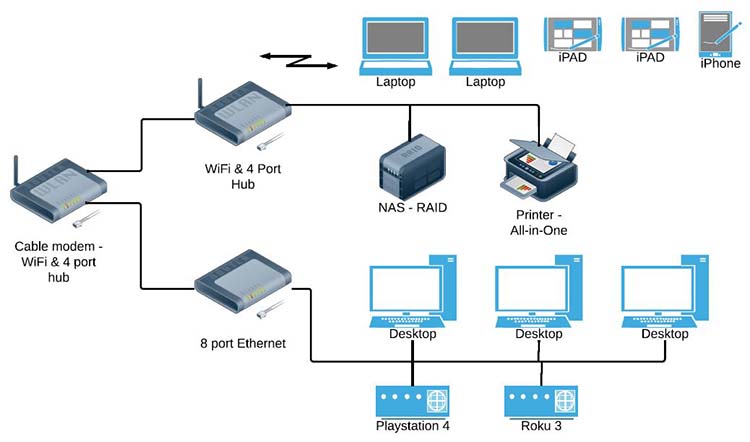
Home LANs typically involve a combination of wired and wireless configurations. A common setup includes a router that doubles as a wireless access point. This router connects to multiple devices, including desktops, laptops, smartphones, and smart appliances. The LAN in such environments not only facilitates media streaming, gaming, and online education, but also extends to home automation systems where devices can communicate in real-time.
Corporate and Office Networks
In business settings, LANs are critical for operation efficiency. For instance, an office may deploy a segmented network using VLANs to separate administrative departments from production teams, enhancing security and reducing broadcast traffic. Additionally, server management, cloud integration, and centralized backups are executed via the LAN, ensuring data is secure and available to authorized users.
Educational and Campus Networks
Universities and schools often implement comprehensive LAN infrastructures to enable interactive learning, access to digital libraries, and administrative connectivity. These campus networks often integrate wired internet access in lecture halls with Wi-Fi coverage for flexible learning spaces, allowing students and staff to connect with educational resources seamlessly.
Technical Considerations and Future Trends
The rapid evolution of digital technologies has driven LANs to continuously adapt and upgrade. Currently, increasing data loads and the emergence of IoT devices have pushed the demands on LAN infrastructure. Future trends indicate further improvements in speed, security, and management.
Adoption of Gigabit and Higher Speeds
With the growing need for high-speed data exchange, modern LANs are increasingly employing gigabit Ethernet and even higher-speed technologies. This progression supports the high bandwidth requirements of video streaming, cloud computing, and complex online services. Additionally, advancements in fiber-optic cabling are gradually making their way into LAN deployments, ensuring ultra-fast and reliable connectivity.
Integration with Cloud Computing
As businesses adopt cloud computing solutions, LANs serve as the crucial bridge between local networks and global data centers. This integration necessitates optimized routing, enhanced security measures, and improved quality-of-service (QoS) provisions to ensure that both in-house and cloud-based resources work in concert.
Emerging Security Protocols
Future LAN security protocols will increasingly leverage advancements in artificial intelligence and machine learning to monitor and counter cyber threats. Proactive security measures—ranging from anomaly detection systems to automated threat response—will continue to evolve in order to protect increasingly complex network configurations. As cyber threats evolve, LAN administrators will continue to prioritize a robust security framework that leverages these innovative technologies.
References
- Local area network - Wikipedia - Wikipedia
- What is a LAN (local area network)? - Cloudflare
- What Is a LAN? Local Area Network - Cisco
- What is a Local Area Network (LAN)? | Definition from TechTarget - TechTarget
- LAN Definition | What Is Local Area Network - CompTIA
Recommended Related Queries
Last updated March 21, 2025