
Unlocking Material Mysteries: The Revolutionary LIBS Technology
How Laser-Induced Breakdown Spectroscopy is transforming analytical chemistry across industries
Key Insights into LIBS Technology
- LIBS uses high-energy laser pulses to create micro-plasmas that reveal elemental compositions with minimal sample preparation
- This technology can analyze virtually any material - solids, liquids, and gases - making it incredibly versatile across industries
- Applications span from Mars exploration to biomedical analysis, with portable devices enabling on-site testing
What Is Laser-Induced Breakdown Spectroscopy?
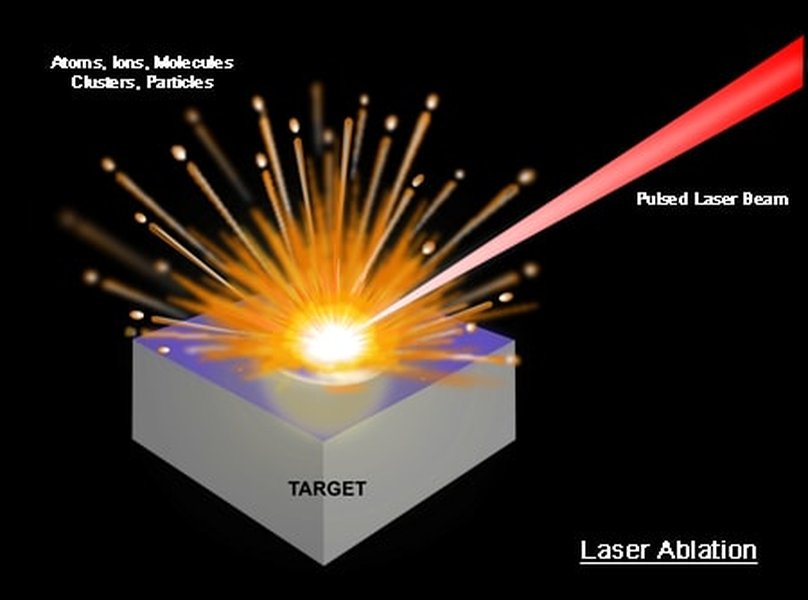
Laser-Induced Breakdown Spectroscopy (LIBS) is a powerful analytical technique that determines the elemental composition of materials by using a short, high-energy laser pulse. As a type of atomic emission spectroscopy, LIBS works by focusing a laser beam onto a sample's surface, creating a micro-plasma that excites and breaks down the material into its constituent elements. The excited atoms emit light at characteristic wavelengths as they return to their ground state, producing unique spectral "fingerprints" that identify the elements present in the sample.
The technology has experienced rapid advancement in recent decades, evolving from laboratory equipment to portable, handheld devices that can perform on-site analysis in various environments. LIBS combines speed, versatility, and minimal sample preparation requirements, making it a revolutionary tool for elemental analysis across numerous scientific and industrial applications.
The Fundamental Working Principles of LIBS
Understanding how LIBS works requires examining the distinct stages of the analytical process:
Laser Pulse and Sample Ablation
The process begins with a short-pulse laser (typically a few nanoseconds in duration) focused onto the sample surface. The intense energy—usually in the millijoule range—ablates a small amount of material (typically 100 nanograms to 1 microgram), creating a microscopic crater on the sample surface.
Plasma Formation
The ablated material forms a high-temperature plasma (around 10,000-20,000 Kelvin), where the sample is atomized, ionized, and excited. This plasma contains free electrons, atoms, and ions from the sample material.
Light Emission
As the plasma cools (within microseconds), the excited atoms and ions emit light at characteristic wavelengths in the UV, visible, and IR regions of the electromagnetic spectrum. These wavelengths serve as unique identifiers for each element in the periodic table.
Spectroscopic Analysis
The emitted light is collected and analyzed using a spectrometer, which separates the light by wavelength. The resulting spectrum displays intensity peaks at wavelengths corresponding to specific elements, allowing both qualitative identification (which elements are present) and quantitative analysis (how much of each element is present).
Applications of LIBS Technology
LIBS technology has found applications across numerous fields due to its versatility, speed, and minimal sample preparation requirements. Here's how this powerful analytical tool is being used across various industries:
Industrial and Manufacturing Applications
In industrial settings, LIBS serves as a critical tool for quality control and material verification. Manufacturers use it for positive material identification (PMI) to ensure components meet specifications, particularly in industries where material composition directly affects safety and performance. LIBS analyzers can rapidly identify alloy grades, detect contaminants, and verify material consistency during production processes.
The technology is particularly valuable in metallurgy for analyzing metal compositions, detecting impurities in raw materials, and monitoring heat treatments. In recycling facilities, LIBS helps sort different metal alloys efficiently, improving recycling rates and material purity.
Environmental Monitoring and Analysis
Environmental scientists employ LIBS for analyzing soil, water, and air samples to detect pollutants and monitor environmental changes. The technology allows for rapid field testing of contaminated sites, providing immediate data on hazardous elements like lead, mercury, and arsenic. LIBS has been used to analyze ice cores for climate research, detect pollutants in waterways, and monitor industrial emissions.
Its ability to perform in-situ analysis makes LIBS particularly valuable for environmental remediation projects, where real-time data can guide cleanup efforts and verify their effectiveness.
Space Exploration and Planetary Science
LIBS has ventured beyond Earth, playing a crucial role in space exploration. The Mars Curiosity rover uses a LIBS instrument called ChemCam to analyze Martian rocks and soil from a distance. By firing its laser at targets up to 7 meters away, ChemCam can determine the elemental composition of Martian materials without requiring physical contact, providing valuable insights into Mars' geology and potential habitability.
Future missions to other planets and moons are expected to utilize LIBS technology for similar remote analysis capabilities, helping scientists understand extraterrestrial environments without requiring sample return missions.
Biomedical and Pharmaceutical Applications
In medicine and pharmaceuticals, LIBS offers promising applications for tissue analysis, detection of toxic metals in biological samples, and quality control in pharmaceutical manufacturing. Researchers are exploring LIBS for cancer detection by analyzing the elemental composition of tissues, which can differ between healthy and cancerous cells.
LIBS also helps pharmaceutical companies verify the consistency and purity of medications, detect counterfeit drugs, and ensure proper dosing of active ingredients.
The radar chart above compares LIBS with other analytical techniques across key performance metrics, highlighting its particular strengths in rapid analysis with minimal sample preparation and versatility across material types.
LIBS Analysis Process: From Laser Pulse to Element Identification
The LIBS analysis process follows a systematic approach that transforms a laser pulse into valuable elemental data. This mindmap illustrates the complete LIBS workflow and how each component contributes to the analytical process:
Advantages and Limitations of LIBS Technology
As with any analytical technique, LIBS offers distinct advantages while facing certain limitations. Understanding these characteristics helps determine when LIBS is the optimal choice for elemental analysis.
Key Advantages of LIBS
LIBS provides numerous benefits that have contributed to its growing adoption across scientific fields and industries:
Minimal to No Sample Preparation
Unlike many analytical techniques that require extensive sample preparation, LIBS can analyze samples directly in their natural state. This dramatically reduces analysis time and eliminates potential contamination during preparation steps.
Rapid Analysis
LIBS delivers results within seconds, making it ideal for time-sensitive applications and high-throughput analysis. This rapid analysis capability enables real-time process monitoring and quality control in industrial settings.
Multi-Element Detection
A single LIBS measurement can detect virtually all elements in the periodic table simultaneously, providing comprehensive compositional information in a single analysis.
Remote and Standoff Analysis
LIBS can analyze samples from a distance, enabling measurements in hazardous or inaccessible environments. This standoff capability has proven particularly valuable for applications like explosive detection and analysis of radioactive materials.
Limitations to Consider
Despite its many advantages, LIBS faces certain challenges that researchers and manufacturers continue to address:
Detection Limits
While LIBS can detect most elements, its sensitivity (typically in the low parts-per-million range) is generally lower than techniques like ICP-MS (Inductively Coupled Plasma Mass Spectrometry). This may limit its application for ultra-trace analysis.
Matrix Effects
The composition of the sample matrix can influence LIBS results, potentially affecting quantitative accuracy. Calibration standards that closely match the sample matrix are often required for precise quantitative analysis.
Surface Analysis
Traditional LIBS primarily analyzes the surface of materials, though depth profiling is possible with multiple laser pulses at the same location.
| Feature | LIBS | X-Ray Fluorescence (XRF) | ICP-MS | Raman Spectroscopy |
|---|---|---|---|---|
| Principle | Atomic emission from laser-induced plasma | X-ray emission from electron transitions | Mass-to-charge ratio measurement | Molecular vibration analysis |
| Sample Preparation | Minimal to none | Minimal to moderate | Extensive (digestion required) | Minimal to none |
| Analysis Speed | Seconds | Minutes | Minutes to hours | Minutes |
| Detection Limits | 1-100 ppm | 1-100 ppm | ppt-ppb | 0.1-1% |
| Portability | High (handheld available) | High (handheld available) | Low (laboratory-based) | Medium (portable units available) |
| Cost | Moderate | Moderate | High | Moderate to high |
| Primary Applications | Alloy identification, environmental analysis | Metal analysis, mining, archaeology | Trace element analysis, environmental monitoring | Molecular identification, pharmaceutical analysis |
LIBS Technology in Action
To better understand how LIBS works in practical applications, this video provides an excellent visual demonstration of the technology and its capabilities:
The video above from Ocean Optics demonstrates the fundamentals of LIBS technology, showing how laser pulses create plasma that emits light for spectroscopic analysis. It illustrates both the hardware components and analytical capabilities of modern LIBS systems.
Frequently Asked Questions about LIBS
References
- What is LIBS? - Applied Spectra
- LIBS Measurement Techniques - Avantes
- How Does LIBS Work? - Thermo Fisher Scientific
- What is LIBS? - SciAps
- LIBS Methods and Applications - Carleton College
- An Inside Look at Recent Studies Using LIBS - Spectroscopy Online
- Laser-Induced Breakdown Spectroscopy (LIBS): An Overview - AZoLifeSciences
- LIBS in Biomedical Applications - RPMC Lasers
Recommended Topics
 assets.thermofisher.com
 cdn.fortuneonline.org
assets.thermofisher.com
 cdn.fortunejournals.com
Last updated April 7, 2025