
Unlock Operational Excellence: Your Comprehensive Lean Six Sigma Tutorial
Master the methodologies that drive efficiency, quality, and continuous improvement across industries.
Key Highlights of Lean Six Sigma
- Combined Power: Leverages Lean's focus on waste elimination and Six Sigma's emphasis on defect reduction for holistic process improvement.
- Structured Approach: Utilizes the DMAIC (Define, Measure, Analyze, Improve, Control) framework for systematic problem-solving and optimization.
- Measurable Results: Aims to drastically reduce errors (targeting 3.4 defects per million opportunities) and streamline workflows, leading to significant cost savings and enhanced customer satisfaction.
What Exactly is Lean Six Sigma?
Lean Six Sigma is a powerful, data-driven methodology designed to improve business performance by systematically removing waste and reducing variation in processes. It combines two proven continuous improvement methodologies: Lean and Six Sigma.
The Lean Approach: Eliminating Waste
Originating from the Toyota Production System, Lean focuses on maximizing customer value while minimizing waste. It identifies and targets activities that consume resources but don't add value from the customer's perspective. The goal is to create smoother, faster process flows.
The Six Sigma Approach: Reducing Variation
Developed by Motorola, Six Sigma focuses on reducing process variation and minimizing defects or errors. It uses statistical methods to understand process performance, identify root causes of problems, and implement solutions that lead to consistent, high-quality outcomes.
The Power of Synergy: Lean + Six Sigma
By integrating Lean and Six Sigma, organizations gain a comprehensive toolkit to tackle process inefficiencies from multiple angles. Lean principles speed up processes by removing non-value-added steps, while Six Sigma principles ensure these faster processes are also capable, consistent, and produce high-quality results. This combined approach leads to enhanced efficiency, reduced costs, improved quality, and increased customer satisfaction across various industries, not just manufacturing.
Foundational Principles Guiding Success
Lean Six Sigma operates on a set of core principles derived from its parent methodologies:
Defining Customer Value
The starting point is always understanding what the customer values. Any activity that doesn't contribute to this value is potentially waste.
Identifying and Eliminating the 8 Wastes (Muda)
Lean identifies eight common types of waste in processes, often remembered by the acronym DOWNTIME or TIMWOODS:
- Defects: Errors requiring rework or scrap.
- Overproduction: Producing more than needed or sooner than needed.
- Waiting: Idle time caused by process bottlenecks or delays.
- Non-Utilized Talent: Failing to leverage employees' skills and ideas.
- Transportation: Unnecessary movement of materials or information.
- Inventory: Excess products or materials that tie up capital.
- Motion: Unnecessary movement of people.
- Extra-Processing: Performing work that adds no value from the customer's perspective.
Focus on Process Variation
Six Sigma emphasizes that variation is the enemy of quality. Reducing variation leads to more predictable processes and consistent outputs.
Data-Driven Decision Making
Lean Six Sigma relies on data, not assumptions, to understand problems, identify root causes, and verify improvements. Statistical analysis is central to the methodology.
Striving for Perfection (3.4 DPMO)
The "Six Sigma" level of quality represents a statistically derived goal of operating with near-perfect processes, aiming for no more than \(3.4\) defects per million opportunities (DPMO). While achieving this level isn't always the immediate goal, the continuous pursuit of reducing defects drives significant improvement.
The DMAIC Engine: Driving Improvement Step-by-Step
The heart of Lean Six Sigma project execution is the DMAIC framework – a systematic, five-phase approach to problem-solving and process optimization.

A visual representation of the DMAIC cycle.
Define Phase: Setting the Stage
This phase focuses on clearly defining the problem, project goals, scope, and customer requirements.
Key Activities
- Develop a Project Charter outlining the business case, problem statement, goals, scope, timeline, and team members.
- Identify stakeholders and understand the Voice of the Customer (VOC) to determine Critical-to-Quality (CTQ) characteristics.
- Create a high-level map of the process using tools like SIPOC (Suppliers, Inputs, Process, Outputs, Customers).
Essential Tools
Project Charter, VOC analysis tools (surveys, interviews), SIPOC Diagram.
Measure Phase: Understanding the Current State
The goal here is to collect data to establish a baseline understanding of the current process performance and quantify the problem.
Key Activities
- Develop a detailed Data Collection Plan specifying what data is needed, how it will be collected, and who will collect it.
- Create detailed process maps (flowcharts) to visualize the steps involved.
- Collect baseline data on process performance, focusing on CTQs and potential sources of variation or waste.
- Assess the reliability and validity of the measurement system (Measurement System Analysis or Gage R&R).
- Calculate initial process capability metrics (e.g., DPMO, Sigma level).
Essential Tools
Process Mapping (Flowcharts, Swimlane Diagrams), Data Collection Forms, Basic Statistics (Mean, Median, Standard Deviation), Histograms, Run Charts, Pareto Charts (initial view), Measurement System Analysis (MSA).
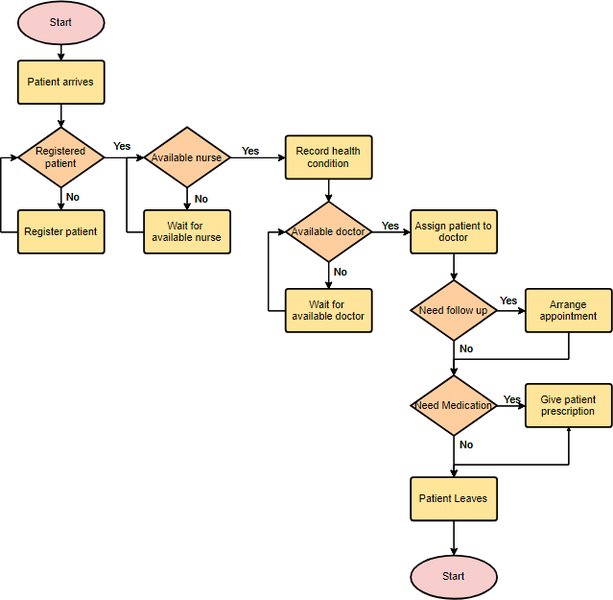
Detailed process mapping is crucial in the Measure phase.
Analyze Phase: Pinpointing the Root Causes
This phase involves analyzing the collected data to identify the root causes of the problem (defects, delays, variation).
Key Activities
- Analyze the data collected in the Measure phase to identify patterns, relationships, and potential causes.
- Employ various analytical tools to drill down to the fundamental root causes of the problem.
- Generate and test hypotheses about potential causes using statistical methods.
- Validate root causes with data before moving to solutions.
Essential Tools
Pareto Analysis, Fishbone (Cause and Effect) Diagrams, 5 Whys, Process Analysis, Hypothesis Testing, Correlation and Regression Analysis, Value Stream Mapping (detailed analysis).
Improve Phase: Developing and Testing Solutions
Focus shifts to identifying, developing, testing, and implementing solutions to address the validated root causes.
Key Activities
- Brainstorm potential solutions to eliminate or mitigate the root causes.
- Evaluate and select the most promising solutions based on criteria like effectiveness, cost, and feasibility.
- Develop detailed implementation plans for the selected solutions.
- Pilot test solutions on a small scale to verify their effectiveness and identify potential issues.
- Refine solutions based on pilot results before full-scale implementation.
Essential Tools
Brainstorming techniques, Solution Selection Matrices, Design of Experiments (DOE), Failure Mode and Effects Analysis (FMEA), Kaizen events, 5S implementation, Poka-Yoke (Mistake-Proofing), Pilot Testing.
Control Phase: Sustaining the Gains
The final phase ensures that the implemented improvements are maintained over time and that the process remains stable at the improved performance level.
Key Activities
- Develop and implement Control Plans to monitor the improved process.
- Standardize the improved process through updated procedures, work instructions, and training.
- Implement Statistical Process Control (SPC) charts to monitor key process metrics.
- Document the project results, lessons learned, and best practices.
- Formally close the project and hand over process ownership.
Essential Tools
Statistical Process Control (SPC) Charts, Control Plans, Standard Operating Procedures (SOPs), Process Audits, Documentation, Training Materials.
Visualizing the DMAIC Process: A Mindmap Overview
This mindmap illustrates the interconnected phases of the DMAIC cycle and some of the key activities or tools associated with each stage, providing a high-level view of the Lean Six Sigma improvement process.
Essential Lean Six Sigma Toolkit
Lean Six Sigma utilizes a wide array of tools and techniques. While the specific tools depend on the project phase and context, here are some of the most commonly used ones:
| Tool Name | Category | Primary Purpose |
|---|---|---|
| Project Charter | Define | Formally defines the project scope, goals, and team. |
| SIPOC Diagram | Define | Provides a high-level overview of the process and its boundaries. |
| Process Map / Flowchart | Measure / Analyze | Visually documents the sequence of steps in a process. |
| Value Stream Map (VSM) | Lean / Analyze | Visualizes material and information flow to identify waste and bottlenecks. |
| Data Collection Plan | Measure | Specifies how data will be gathered for analysis. |
| Pareto Chart | Analyze | Identifies the vital few causes or problems contributing to the majority of effects (80/20 rule). |
| Fishbone (Ishikawa) Diagram | Analyze | Systematically explores potential causes contributing to a specific effect or problem. |
| 5 Whys | Analyze | A simple technique to drill down to the root cause by repeatedly asking "Why?". |
| Statistical Process Control (SPC) Charts | Control | Monitors process performance over time to detect shifts or special cause variation. |
| Failure Mode and Effects Analysis (FMEA) | Improve | Proactively identifies potential failures in a process or design and prioritizes mitigation efforts. |
| 5S System | Lean / Improve | Organizes the workplace for efficiency and effectiveness (Sort, Set in Order, Shine, Standardize, Sustain). |
| Kanban | Lean / Improve | A visual signaling system to manage workflow and inventory (Just-In-Time). |
| Hypothesis Testing | Analyze | Uses statistical methods to test assumptions about relationships between variables. |
| Control Plan | Control | Documents how the improved process will be monitored and managed to sustain gains. |
Comparing Key Dimensions Across DMAIC Phases
The emphasis on different aspects like data analysis, team creativity, and statistical rigor varies across the DMAIC phases. This radar chart provides a conceptual comparison of the relative focus on key dimensions within each phase of a typical Lean Six Sigma project.
A Quick Introduction to Lean Six Sigma
For a concise overview of Lean Six Sigma, its core ideas, and benefits, watch this short video. It provides a great starting point or refresher on the methodology.
Roles, Belts, and Certification Paths
Understanding the Belt System
Lean Six Sigma utilizes a belt system, similar to martial arts, to denote levels of expertise and responsibility:
- White Belt: Basic awareness of Lean Six Sigma concepts. Can support local improvement efforts.
- Yellow Belt: Understands foundational concepts and basic tools. Participates as a team member on projects led by Green or Black Belts.
- Green Belt: Possesses a strong understanding of the DMAIC methodology and tools. Leads smaller-scoped improvement projects, often within their functional area, and supports Black Belts on larger initiatives.
- Black Belt: Advanced practitioner and leader of complex, cross-functional improvement projects. Mentors Green Belts and possesses deep statistical analysis skills. Often a full-time continuous improvement role.
- Master Black Belt: Highest level of technical and organizational proficiency. Trains and coaches Black Belts and Green Belts, advises leadership on strategy, and manages the overall Lean Six Sigma program.
Pursuing Certification
Certification validates an individual's knowledge and ability to apply Lean Six Sigma principles and tools effectively. Various organizations offer training and certification at different belt levels. Training typically involves coursework covering the body of knowledge for the specific belt level, often including statistical software (like Minitab) instruction. Certification usually requires passing a proctored exam and, for Green and Black Belt levels, often involves completing one or more successful improvement projects.
Implementing Lean Six Sigma Effectively
Successful implementation goes beyond just training individuals; it requires organizational commitment and structure.
Project Selection and Prioritization
Projects should align with strategic business objectives, address significant pain points (e.g., high costs, customer complaints, defects), and have measurable outcomes. Prioritize projects based on potential impact, resource requirements, and likelihood of success.
Building the Right Team
Cross-functional teams bring diverse perspectives and expertise. Team members should include process owners, subject matter experts, and individuals directly involved in the process being improved, guided by a certified Green or Black Belt.
The Role of Leadership and Change Management
Strong leadership commitment is crucial for providing resources, removing roadblocks, and driving cultural change. Effective change management strategies are needed to address resistance and ensure buy-in from all levels of the organization.
Sustaining Improvements and Cultivating Culture
The Control phase of DMAIC is critical, but long-term success requires building a culture of continuous improvement where identifying and solving problems becomes part of the daily routine. This involves ongoing monitoring, celebrating successes, and integrating Lean Six Sigma thinking into organizational systems.
Frequently Asked Questions (FAQ)
What's the main difference between Lean and Six Sigma? +
Lean primarily focuses on eliminating waste (non-value-added activities) and improving process speed and flow. Six Sigma primarily focuses on reducing variation and defects (errors) to improve quality and consistency. Lean Six Sigma combines both approaches for comprehensive process improvement.
Is Lean Six Sigma only for manufacturing companies? +
No, absolutely not. While Lean Six Sigma originated in manufacturing (Toyota for Lean, Motorola for Six Sigma), its principles and tools are highly adaptable and widely used across various sectors, including healthcare, finance, IT, government, logistics, customer service, and more, to improve any type of process.
How long does it take to get Lean Six Sigma certified? +
Training time varies by belt level and provider. White and Yellow Belt training can often be completed in a day or two. Green Belt training typically involves about two weeks (or 80-100 hours) of coursework, often spread out. Black Belt training is more intensive, usually requiring about four weeks (or 150-180 hours) of coursework. Certification also often requires passing an exam and completing a project, which adds to the overall timeline.
Do I need special software for Lean Six Sigma? +
While many basic Lean Six Sigma tools can be used with standard office software like Excel, more advanced statistical analysis (common at Green and Black Belt levels) often utilizes specialized statistical software. Minitab is a very popular choice in the field, but other options like JMP or even Python/R with specific libraries can also be used.
Recommended Further Exploration
- Discover how to select impactful Lean Six Sigma projects for maximum business results.
- Explore different providers and criteria for choosing a Lean Six Sigma certification program.
- Learn about specific case studies where Lean Six Sigma transformed healthcare processes.
- Understand the distinct responsibilities and skill sets required for Green Belt versus Black Belt practitioners.
References
 cdn.bookey.app

 todoproyecto.files.wordpress.com
Last updated May 4, 2025