
Unlock Peak Performance: Leveraging Risk Management for Organizational Excellence
A professional guide to integrating the risk management cycle for understanding, assessing, planning, and managing uncertainties to drive superior results.
Achieving and sustaining performance excellence demands more than just setting ambitious goals. It requires organizations to proactively navigate the inherent uncertainties and potential disruptions that could derail progress. The generic risk management process provides a robust, systematic framework not merely for defense, but as a strategic enabler for enhancing resilience, optimizing resources, and ultimately, driving superior performance outcomes. This process is a continuous cycle, deeply interwoven with an organization's strategy, operations, and culture.
Essential Insights for Integrating Risk and Performance
- Proactive Strategy: Shift from reactive problem-solving to proactively identifying and mitigating threats that could impede performance objectives, fostering resilience.
- Integrated Framework: Embed risk management principles directly into strategic planning, operational processes, and performance metrics for holistic success and alignment.
- Continuous Improvement: Utilize ongoing risk monitoring and review as a catalyst for learning, adaptation, and sustained performance excellence in a dynamic environment.
The Risk Management Cycle: A Foundation for Excellence
The journey toward performance excellence is intrinsically linked to how effectively an organization manages risk. The generic risk management process, adapted and applied strategically, provides the necessary structure. Let's critique and explore each phase:
Phase 1: Understanding Risks – Framing and Identification
The foundational phase involves establishing the context (framing) and then identifying potential risks.
Setting the Stage: Risk Framing
Before identifying specific risks, organizations must define what "performance excellence" means in their context. This involves articulating clear strategic objectives, defining key performance indicators (KPIs), and establishing the organization's risk appetite and tolerance levels (ScienceDirect Topics, N-able). How much uncertainty is acceptable in the pursuit of specific goals? This framing, often driven by senior leadership, sets the boundaries and priorities for the entire risk management effort (imd.org). It requires understanding assumptions, constraints, and the overall strategic direction.
Uncovering Threats and Opportunities: Risk Identification
This step systematically identifies potential events or conditions that could positively or negatively impact the achievement of performance excellence objectives (AuditBoard, MEGA). It answers the crucial question: "What could go wrong (or right)?" Diverse risks must be considered, including:
- Operational Risks: Failures in processes, systems, or human error impacting efficiency or quality.
- Strategic Risks: Market shifts, competitive pressures, or flawed strategic choices affecting long-term goals.
- Financial Risks: Liquidity issues, credit defaults, market volatility impacting financial stability.
- Compliance & Legal Risks: Regulatory changes, litigation, or ethical breaches affecting reputation and operations.
- Technological & Cyber Risks: System outages, data breaches, technology obsolescence impacting capabilities (Deloitte, N-able).
- Human Capital Risks: Talent shortages, skill gaps, or low employee engagement hindering productivity.
Effective identification requires a multi-faceted approach, involving brainstorming sessions, SWOT analysis, process mapping, incident data analysis, and crucial input from stakeholders across various levels and functions (AuditBoard, MIGSO-PCUBED). Documenting identified risks in a risk register is a common practice (C, D).

Involving diverse teams in risk identification ensures comprehensive coverage.
Critique: While essential, identification can be superficial if it relies solely on checklists or fails to engage diverse perspectives. It may lean too heavily on qualitative intuition, potentially overlooking emerging or complex risks. A failure to deeply integrate this step with strategic objectives can result in a list of risks disconnected from what truly matters for performance excellence (C).
Phase 2: Assessing Risks – Analysis and Evaluation
Once risks are identified, they must be analyzed to understand their potential characteristics and evaluated to determine their significance.
Understanding Potential Impact: Risk Analysis
Analysis involves examining the nature, sources, likelihood (probability), and consequences (impact) of each identified risk (N-able, MEGA). This can involve:
- Qualitative Analysis: Using descriptive scales (e.g., High/Medium/Low) or risk matrices to assess likelihood and impact based on expert judgment and experience (MEGA, C). This is often used for initial screening or for risks difficult to quantify.
- Quantitative Analysis: Employing numerical data and statistical methods (e.g., Monte Carlo simulations, sensitivity analysis) to estimate the potential financial, operational, or reputational impact (MEGA, D). This is particularly useful for financial and operational risks.
For performance excellence, the impact analysis must be directly linked to key performance indicators and strategic objectives. How would this risk affect customer satisfaction, product quality, market share, or employee productivity?
Prioritizing Action: Risk Evaluation
Assessed risks are then evaluated by comparing the level of risk against the organization's pre-defined risk appetite and criteria (N-able, ScienceDirect Topics). This comparison determines which risks require immediate attention and resources. Risk prioritization often uses tools like risk heatmaps, ranking risks based on their combined likelihood and impact scores (D). This ensures focus on the most significant threats or opportunities concerning performance excellence.
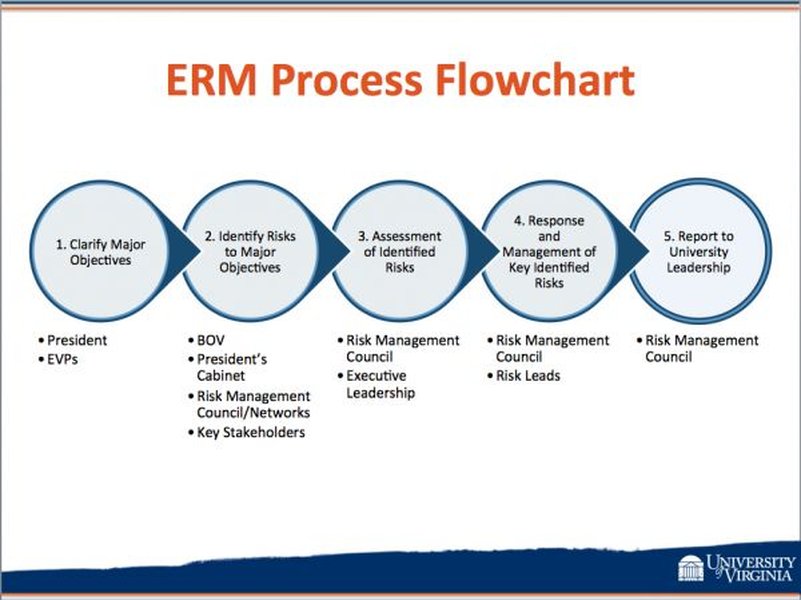
Flowcharts illustrate the cyclical nature of risk assessment and management.
Critique: Risk assessment can be flawed if based on poor data, inherent biases (e.g., over-optimism, focusing only on familiar risks), or static snapshots in time. Quantitative analysis might provide false precision if underlying assumptions are weak. Without regular updates and dynamic assessment techniques (like risk-adjusted forecasting mentioned in B), organizations risk making decisions based on outdated information, hindering their agility and pursuit of excellence (B, C).
Phase 3: Planning Risk Responses – Treatment Strategies
Based on the evaluation, organizations develop and select appropriate strategies to address prioritized risks.
Choosing the Right Approach
Common risk treatment options include (IBM, N-able, Asana, D):
- Risk Avoidance: Deciding not to start or continue with the activity that gives rise to the risk. (e.g., abandoning a product line with insurmountable compliance risks).
- Risk Reduction (Mitigation): Taking actions to reduce the likelihood or impact of the risk. (e.g., implementing enhanced quality controls, cybersecurity measures, or safety protocols).
- Risk Sharing (Transfer): Shifting or sharing a portion of the risk with a third party. (e.g., purchasing insurance, outsourcing certain activities, forming joint ventures).
- Risk Acceptance: Acknowledging the risk and making a deliberate decision not to take action, often because the cost of treatment outweighs the potential impact, or it falls within the defined risk appetite. Contingency plans might still be developed.
The choice of strategy depends on the risk's nature, its alignment with the risk appetite, cost-benefit analysis, and its potential effect on performance objectives. Planning involves defining specific actions, responsibilities, timelines, and resource requirements for implementing the chosen strategies. This often includes designing and implementing internal controls (MEGA, IBM).
Integrating Responses with Performance Goals
For performance excellence, risk treatment shouldn't be an isolated activity. Mitigation strategies should be integrated into existing operational processes, quality management systems, and continuous improvement initiatives (B). Planning should ensure that risk responses support, rather than hinder, the achievement of performance goals like innovation, efficiency, and customer focus.
The following table summarizes common risk response strategies and their relevance to performance excellence:
| Strategy | Description | Example for Performance Excellence | Considerations |
|---|---|---|---|
| Avoidance | Eliminating the activity or source causing the risk. | Discontinuing a service offering that consistently fails to meet customer satisfaction targets and poses reputational risk. | May result in missed opportunities. Ensures focus on high-performing areas. |
| Mitigation (Reduction) | Implementing measures to lower the probability or impact of the risk. | Investing in advanced training programs to reduce errors in a critical manufacturing process, improving product quality. Implementing robust cybersecurity protocols to protect customer data integrity. | Requires resources (time, money). Directly enhances operational control and reliability. |
| Transfer (Sharing) | Shifting risk impact or ownership to a third party. | Purchasing cyber insurance to cover potential financial losses from a data breach, protecting financial performance. Outsourcing non-core functions to specialized providers. | Often involves costs (premiums, fees). Does not eliminate the risk itself, only financial consequence. Requires careful vendor management. |
| Acceptance | Acknowledging the risk and deciding not to act, often with contingency planning. | Accepting minor variations in supplier delivery times that have minimal impact on overall production schedules, provided monitoring is in place. | Appropriate for low-impact/low-likelihood risks or where treatment cost exceeds benefit. Requires clear rationale and alignment with risk appetite. |
Critique: Planning can become a bureaucratic exercise if not clearly linked to action and accountability. Generic responses may not suit unique or complex risks (e.g., strategic vs. operational risks need different approaches - HBR via C). There's a risk of implementing controls that add complexity without significantly reducing risk or improving performance. Success hinges on organizational commitment and embedding responses into daily operations, not just documenting plans (C).
Phase 4: Managing Risks – Monitoring, Review, and Communication
Risk management is not a one-off project but a dynamic, ongoing process.
Keeping Watch: Monitoring and Review
This phase involves continuously tracking identified risks, evaluating the effectiveness of implemented response plans, monitoring key risk indicators (KRIs), and scanning the environment for new or changing risks (IBM, N-able, Asana). Regular reviews and audits ensure that the risk management process remains relevant and effective. Are the controls working? Have risk levels changed? Are new threats emerging? This feedback loop is critical for adaptation and learning (A, B).
Embedding Risk Awareness: Communication and Culture
Effective risk management requires ongoing communication and reporting to stakeholders at all levels. It also necessitates fostering a risk-aware culture where employees understand their role in managing risk and feel empowered to raise concerns (ProjectManager.com blog, HUB International). Integrating risk considerations into performance appraisals and management discussions reinforces this culture (LinkedIn via A, B). Success relies on the interplay of people, processes, and technology (IBM, AuditBoard).

Building a collaborative, risk-aware culture is key to effective management.
Critique: Monitoring can become a tick-box activity if not supported by robust systems and clear accountability. Inconsistent monitoring can lead to surprises and allow residual risks to grow unchecked (C). Communication breakdowns can silo risk information. Without genuine leadership commitment and cultural embedding, risk management efforts may remain superficial and fail to drive meaningful improvements in performance excellence (C).
Visualizing Risk Management Maturity
Organizations can assess their capability across the risk management process dimensions. The following chart provides a hypothetical assessment of an organization's maturity in leveraging risk management for performance excellence. Higher scores indicate greater maturity. Understanding these strengths and weaknesses helps target improvement efforts.
Mapping the Process for Clarity
A mind map can help visualize the interconnected elements of the risk management process tailored for achieving performance excellence. It highlights the key stages and considerations within each.
Performance Excellence"] id1["Understanding Risks"] id1a["Risk Framing
(Context, Appetite, KPIs)"] id1b["Risk Identification
(Sources: Operational, Strategic,
Financial, Cyber, etc.)"] id1c["Methods
(Brainstorming, SWOT,
Stakeholder Input, Data Analysis)"] id1d["Documentation
(Risk Register)"] id2["Assessing Risks"] id2a["Risk Analysis
(Likelihood, Impact)"] id2b["Qualitative Methods
(Scales, Matrices)"] id2c["Quantitative Methods
(Financial Modeling, Statistics)"] id2d["Risk Evaluation
(Comparison to Criteria)"] id2e["Prioritization
(Heatmaps, Ranking)"] id3["Planning Responses"] id3a["Develop Strategies"] id3a1["Avoidance"] id3a2["Mitigation/Reduction
(Controls)"] id3a3["Transfer/Sharing
(Insurance, Outsourcing)"] id3a4["Acceptance
(Contingency Planning)"] id3b["Resource Allocation"] id3c["Integration with
Processes & Goals"] id4["Managing & Monitoring"] id4a["Implementation of
Response Plans"] id4b["Continuous Monitoring
(KRIs, Control Effectiveness)"] id4c["Regular Review & Updates"] id4d["Communication & Reporting"] id4e["Fostering Risk-Aware Culture"] id4f["Leveraging Technology"]
Watch: The Risk Management Process Explained
For a visual overview of the core steps involved in a typical risk management process, the following video provides a concise explanation. Understanding these fundamental stages is the first step towards adapting them for the specific goal of performance excellence.
This video outlines the general cycle of identifying, analyzing, responding to, and monitoring risks – principles that organizations pursuing excellence must embed deeply within their strategic and operational fabric. While generic, it lays the groundwork for the more nuanced integration discussed throughout this guide.
Frequently Asked Questions (FAQ)
What is the difference between risk management and crisis management?
Risk management is proactive and ongoing. It focuses on identifying potential future events (both threats and opportunities), assessing their likelihood and impact, and implementing strategies to manage them before they occur, aiming to achieve objectives like performance excellence. Crisis management is reactive. It deals with managing the immediate fallout of an adverse event that has already happened, focusing on response, containment, and recovery.
How does an organization's risk appetite influence performance goals?
Risk appetite defines the amount and type of risk an organization is willing to pursue or retain to achieve its strategic objectives. A higher risk appetite might support more ambitious performance goals involving innovation or market expansion, accepting greater uncertainty for potentially higher rewards. A lower risk appetite might lead to more conservative goals, prioritizing stability and predictability. Aligning performance goals with risk appetite ensures strategic coherence and prevents taking on unacceptably high levels of risk.
Can implementing a formal risk management process stifle innovation?
Poorly implemented risk management, focused solely on downside prevention and excessive control, can potentially stifle innovation. However, a well-designed process integrated with performance excellence frameworks should actually support innovation. By understanding and managing the risks associated with new ventures (e.g., market acceptance, technological feasibility), organizations can make more informed decisions about which innovations to pursue, allocate resources effectively, and increase the likelihood of successful outcomes. It enables calculated risk-taking rather than hindering it.
What are the biggest challenges in implementing risk management for performance excellence?
Common challenges include lack of senior management commitment, difficulty in embedding a risk-aware culture across the organization, insufficient resources or expertise, poor data quality for risk assessment, integrating risk management with existing strategic planning and performance management systems, overcoming resistance to change, and ensuring the process remains dynamic and relevant rather than becoming a static, bureaucratic exercise.
References
- Risk Management 101: Process, Examples, Strategies - AuditBoard
- What Is Risk Management? - IBM
- Risk management: A cornerstone of sustainable success - IMD Business School
- Baldrige Excellence Framework - NIST
- Enterprise Risk Management Best Practices - HUB International
- Integrating Risk and Performance Management - CFO University
- What is Risk Management Process Definition? - N-able
Recommended Further Exploration
Last updated April 18, 2025