
Unlocking Peak Performance: Which Leadership Style Reigns Supreme in Driving Organizational Success?
A deep dive into how transformational and transactional approaches shape organizational success, backed by recent research.
Key Insights at a Glance
- Transformational leadership generally demonstrates a stronger positive impact on long-term organizational outcomes like employee motivation, innovation, commitment, and overall firm performance.
- Transactional leadership excels in maintaining stability, ensuring task completion through clear structures and rewards, and is effective for achieving short-term, well-defined goals.
- Recent studies suggest that while distinct, the most effective leaders often combine elements of both styles, adapting their approach to the specific context, team, and organizational objectives.
Understanding the Dichotomy: Transformational vs. Transactional Leadership
In the realm of organizational management, leadership styles play a pivotal role in shaping employee behavior, motivation, and ultimately, the overall performance of an enterprise. Two of the most extensively studied and contrasted styles are transformational and transactional leadership. While both aim to guide teams towards achieving goals, their methodologies and underlying philosophies differ significantly.
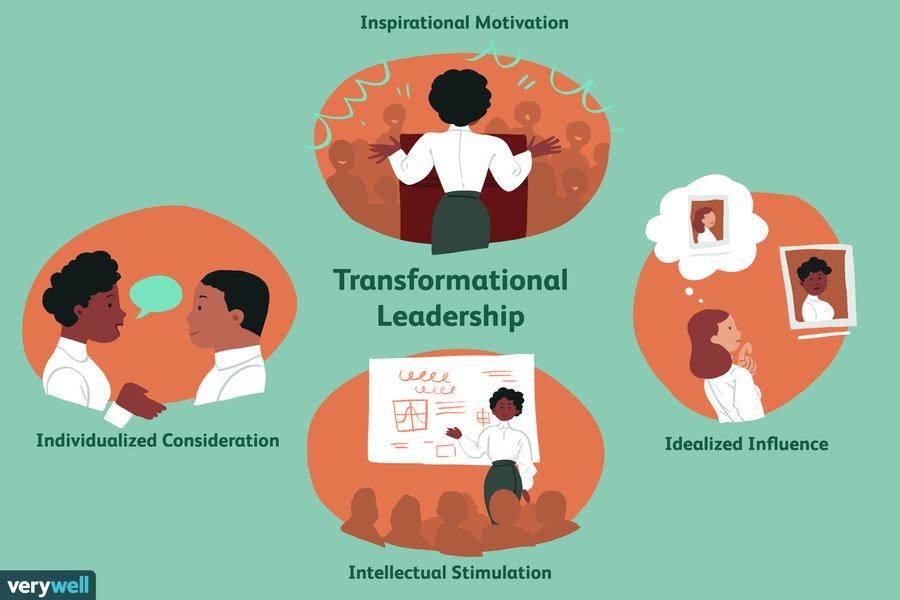
Fig 1: Transformational leaders often focus on inspiring and motivating their teams towards a shared vision.
The Essence of Transformational Leadership
Transformational leadership is characterized by its focus on inspiring and motivating followers to achieve extraordinary outcomes and, in the process, develop their own leadership capacity. These leaders articulate a compelling vision for the future, act as role models, and encourage innovation and critical thinking. They are often described as charismatic, intellectually stimulating, and considerate of individual team members' needs and aspirations.
Core Components:
- Idealized Influence: Serving as a role model, earning trust and respect.
- Inspirational Motivation: Articulating a clear and appealing vision, inspiring enthusiasm and optimism.
- Intellectual Stimulation: Challenging assumptions, encouraging creativity, and soliciting followers' ideas.
- Individualized Consideration: Paying attention to each individual's needs for achievement and growth, acting as a coach or mentor.

Fig 2: Transactional leadership often involves a clear exchange process between leaders and followers.
The Mechanics of Transactional Leadership
Transactional leadership, in contrast, operates on a system of rewards and punishments. It focuses on supervision, organization, and performance. Leaders clarify roles and task requirements, and provide rewards (e.g., bonuses, promotions) for meeting expectations or apply corrective actions (e.g., warnings, penalties) for failing to do so. This style is more about maintaining the status quo and ensuring operational efficiency through a structured management approach.
Core Components:
- Contingent Reward: Clarifying expectations and offering recognition or rewards when goals are met.
- Management by Exception (Active): Actively monitoring for deviations from rules and standards and taking corrective action.
- Management by Exception (Passive): Intervening only if standards are not met or problems arise.
- Laissez-Faire: (Often considered a component or an absence of leadership) Avoiding decision-making and abdicating responsibilities.
Impact on Organizational Performance: A Comparative Look
Research consistently indicates that both leadership styles have distinct impacts on various facets of organizational performance. While neither is universally superior, their effectiveness often depends on the context, industry, organizational culture, and specific goals.
Transformational Leadership's Edge in Fostering Growth and Innovation
Numerous studies highlight transformational leadership's stronger positive correlation with several key performance indicators, particularly those related to long-term success and employee well-being.
Employee Engagement and Motivation
Transformational leaders, through their inspiring vision and individualized support, tend to foster higher levels of intrinsic motivation and employee engagement. Employees feel more valued, connected to the organization's mission, and are more willing to go the "extra mile." This heightened engagement often translates into increased productivity and lower turnover rates.
Innovation and Creativity
By encouraging intellectual stimulation and challenging existing norms, transformational leaders create an environment conducive to innovation and creativity. Team members feel empowered to experiment, propose new ideas, and take calculated risks, which is crucial for organizations seeking to adapt and thrive in dynamic markets.
Project Success and Long-Term Goals
Meta-analytic reviews suggest that transformational leadership has a stronger effect on project success compared to transactional leadership. Its emphasis on vision and long-term development aligns well with complex projects and strategic organizational objectives that require sustained effort and adaptability.
The Indispensable Role of Transactional Leadership
Despite the notable advantages of transformational leadership, transactional approaches remain vital for certain organizational functions and situations.
Ensuring Stability and Efficiency
Transactional leadership excels in environments where tasks are routine, procedures are well-defined, and efficiency is paramount. The clear structure of rewards and consequences helps maintain operational stability and ensures that day-to-day tasks are completed correctly and on time.
Clarity in Expectations and Compliance
This style provides clear direction and expectations, which can reduce ambiguity and improve focus, particularly for new employees or in highly regulated industries. Its emphasis on monitoring and adherence to standards ensures compliance with policies and quality control.
Visualizing Leadership Impact: A Comparative Analysis
To better illustrate the differing strengths of transformational and transactional leadership across various performance dimensions, the following radar chart offers a visual comparison. The scores are based on general trends observed in leadership research, where higher values indicate a stronger positive influence of the leadership style on that particular dimension.
This chart visually underscores how transformational leadership tends to score higher on aspects like inspiring vision and fostering innovation, while transactional leadership shows greater strength in areas such as task efficiency and maintaining stability. Understanding these nuances helps organizations strategically deploy leadership approaches tailored to specific needs.
Mapping the Landscape: Core Concepts and Connections
The following mindmap provides a structured overview of transformational and transactional leadership styles, highlighting their key characteristics, impacts on organizational performance, and the interconnectedness of these concepts. It serves as a visual guide to understanding the broader framework within which these leadership styles operate and influence outcomes.
(Coaching & Mentoring)"] id_trans_char4["Intellectual Stimulation
(Encourages Creativity)"] id_trans_char5["Acts as a Role Model
(Idealized Influence)"] id_trans_impact["Primary Impacts"] id_trans_impact1["Higher Employee Engagement & Motivation"] id_trans_impact2["Increased Innovation & Adaptability"] id_trans_impact3["Stronger Organizational Commitment & Loyalty"] id_trans_impact4["Improved Long-term Strategic Performance"] id_trans_impact5["Enhanced Project Success & Quality"] id_trans_impact6["Fosters a Culture of Learning & Growth"] id_tract["Transactional Leadership"] id_tract_char["Characteristics"] id_tract_char1["Contingent Rewards
(Performance-based Incentives)"] id_tract_char2["Management by Exception
(Active Monitoring & Passive Intervention)"] id_tract_char3["Clear Expectations & Established Structures"] id_tract_char4["Focus on Tasks & Short-term Goals"] id_tract_char5["Emphasis on Compliance & Rules"] id_tract_impact["Primary Impacts"] id_tract_impact1["Efficient Task Completion & Productivity"] id_tract_impact2["Ensures Compliance & Adherence to Standards"] id_tract_impact3["Maintains Stability & Order in Operations"] id_tract_impact4["Effective for Achieving Clearly Defined,
Short-term Objectives"] id_tract_impact5["Can Foster a Goal-Oriented Culture"] id_comp["Comparative Synthesis"] id_comp1["Styles are Often Complementary, Not Mutually Exclusive"] id_comp2["Effectiveness is Context-Dependent
(Industry, Culture, Task Nature)"] id_comp3["Full Range Leadership Model Integrates Both"] id_comp4["Transformational: Better for Change & Innovation"] id_comp5["Transactional: Better for Stability & Routine Operations"]
This mindmap illustrates that while distinct, both leadership approaches offer valuable tools for managers. The optimal approach often involves a blend, tailored to the specific situation and desired outcomes, as suggested by concepts like the Full Range Leadership Model.
Literature Survey: Recent Studies on Leadership Impact
The following table summarizes recent research articles (published up to 2025) that compare transformational and transactional leadership styles and their respective impacts on organizational performance. This survey provides insights into current academic findings in the field.
| Author(s) | Year | Title of Article | Abstract Summary | Methodology | Key Findings |
|---|---|---|---|---|---|
| Karauri, Lena G. et al. | 2024 | Impact of Effective Leadership on Organisational Performance: An Empirical Investigation | Empirically investigates how transformational and transactional leadership styles influence organizational outcomes such as employee motivation, innovation, and goal achievement in diverse contexts. | Quantitative study using survey data from multiple organizations, analyzed via statistical models (e.g., regression). | Transformational leadership positively correlated with overall organizational performance and employee motivation. Transactional leadership showed moderate effects, mainly on task completion and short-term goals. Effective leadership combines elements of both. |
| Ahmed et al. | 2025 | The Impact Of Transformational Leadership On Organizational Performance And Employee Motivation | Examines transformational leadership's role in motivating employees and enhancing overall organizational success, often contrasting it with transactional approaches. | Cross-sectional survey approach covering employees in various sectors, analyzed using regression analysis and possibly structural equation modeling (SEM). | Transformational leadership significantly improves employee motivation and overall organizational success compared to purely transactional leadership. Highlights the inspirational aspect as a key driver. |
| Study from Frontiers in Psychology (Authors not specified in summary) | 2022 | The Impact of Transformational Leadership on Affective Organizational Commitment and Job Performance | Investigates how transformational leadership enhances employee affective commitment and job performance, often finding it more impactful than transactional leadership in fostering these outcomes. | Mixed methods or quantitative survey questionnaire and performance data analysis with statistical correlation and regression techniques. | Transformational leadership positively influences affective commitment and job performance. Transactional leadership showed weaker associations with these attitudinal and performance outcomes. |
| Study from RSIS International (Authors not specified in summary) | 2024 | The Effect Of Leadership Style On Organizational Performance In Oman | Explores transformational leadership’s effect on employee creativity and happiness, linking these to organizational success in Omani organizations, often in comparison to transactional effects. | Survey-based research with quantitative analysis using reliability tests, regression analysis, and potentially factor analysis. | Transformational leadership has a strong positive effect on employee creativity and happiness, which in turn drives organizational performance. Transactional leadership impacts were less pronounced in these areas. |
| ResearchGate Systematic Review (Authors not specified in summary) | 2024 | Transformational Leadership and Transactional Leadership Styles: Systematic Review of Literature | Reviews and synthesizes empirical research comparing the impacts of transformational and transactional leadership on organizational effectiveness, employee behavioral outcomes, and financial performance. | Systematic literature review, possibly meta-analysis, synthesizing findings from numerous empirical studies over the past decade. | Transformational leadership consistently shows stronger positive effects on organizational change, innovation, employee engagement, and often financial performance than transactional leadership. |
| Study from PMCID 11687278 (Authors not specified in summary) | 2023 | Exploring the Impact of Transformational and Transactional Style of Leadership on Nursing Care Performance and Patient Outcomes | Examines how different leadership styles (transformational and transactional) affect nursing care performance, staff satisfaction, and patient outcomes within healthcare settings. | Mixed-methods study including surveys with nursing staff and qualitative interviews in healthcare settings, possibly analysis of patient outcome data. | Transformational leadership improved nursing care quality, staff job satisfaction, and patient satisfaction more significantly compared to transactional leadership in healthcare environments. |
| Fiaz, M., Su, Q., Ikram, A., Adeel, A., & Usman, M. | 2021 | Transformational versus transactional leadership styles and project success: A meta-analytic review | This meta-analysis reviews existing studies to determine the comparative effects of transformational and transactional leadership on project success across various contexts. | Meta-analytic synthesis of 64 effect sizes from 41 primary studies focusing on project-based work. | Transformational leadership had a stronger positive effect on project success than transactional leadership. Moderators like project complexity and team dynamics were also considered. |
| Study from Emerald Insight (Authors not specified in summary) | 2024 | Mediating Role of Employee Engagement Between Leadership Styles and Employee Retention | Assesses how transformational and transactional leadership styles affect employee retention, with a specific focus on the mediating role of employee engagement. | Quantitative survey study using statistical techniques such as mediation analysis and structural equation modeling. | Both leadership styles influence employee retention, but transformational leadership leads to significantly higher employee engagement, which in turn strongly predicts better retention rates. |
The consensus from these recent studies suggests that while transactional leadership has its place in ensuring operational efficiency and compliance, transformational leadership generally fosters greater employee engagement, innovation, and long-term organizational success. Many studies also point towards the benefits of a flexible leadership approach that can integrate elements of both styles depending on the situation.
Visual Insights: Understanding the Leadership Styles
The following video provides a concise overview and comparison of transactional and transformational leadership styles, discussing their core tenets, differences, and practical examples. This can help in visually and audibly grasping the nuances between these two influential approaches.
This video, "Transactional vs Transformational Leadership" by Communication Coach, effectively breaks down the theories, definitions, and examples of each style. It elaborates on how transformational leaders inspire and motivate by creating a vision and fostering personal development, contrasting this with transactional leaders who focus on a system of rewards and punishments based on performance against set objectives. The discussion often highlights scenarios where one style might be more effective than the other, reinforcing the idea that leadership is not one-size-fits-all and that context plays a crucial role. Understanding these differences can empower leaders to adapt their style for optimal team performance and organizational outcomes.
Frequently Asked Questions (FAQ)
Which leadership style is definitively 'better' for an organization?
Neither style is universally "better." The optimal leadership style depends heavily on the specific context, including the industry, organizational culture, nature of tasks, employee characteristics, and strategic goals. Transformational leadership is often more effective for fostering innovation, employee engagement, and long-term change. Transactional leadership can be highly effective for ensuring efficiency in routine tasks, maintaining stability, and achieving clear, short-term objectives. Many modern theories suggest that the most effective leaders can adapt and use elements of both styles.
Can a leader exhibit both transformational and transactional traits?
Yes, absolutely. In fact, many contemporary leadership models, like the Full Range Leadership Model, propose that effective leaders often utilize a combination of both transformational and transactional behaviors. For instance, a leader might inspire their team with a compelling vision (transformational) while also implementing clear performance metrics and reward systems (transactional). The ability to flexibly apply different leadership behaviors according to the situation is a hallmark of highly effective leadership.
How does organizational culture influence the effectiveness of these leadership styles?
Organizational culture plays a significant role. A culture that values innovation, employee empowerment, and adaptability is likely to thrive under transformational leadership. Conversely, a culture that prioritizes stability, efficiency, and clear hierarchies might respond well to transactional leadership. For example, research suggests transactional leadership can lead employees to perceive the culture as more goal-oriented, while transformational leadership fosters a perception of a more innovative culture. Misalignment between leadership style and organizational culture can lead to friction and reduced effectiveness.
What are some potential downsides or criticisms of transformational leadership?
While generally viewed positively, transformational leadership is not without potential drawbacks. It can sometimes be ineffective if the leader's vision is unrealistic or misaligned with organizational goals. There's also a risk of followers becoming overly dependent on a charismatic leader. In some situations, the emphasis on inspiration and vision might overshadow the need for clear, practical steps and operational details, which transactional leadership often addresses more directly. Furthermore, not all employees respond equally well to transformational approaches; some may prefer more direct instruction and tangible rewards.
Recommended Further Exploration
- How does the Full Range Leadership Model integrate transformational and transactional styles for optimal performance?
- What are the specific impacts of leadership styles on employee well-being and mental health in the workplace?
- Explore case studies of organizations that successfully shifted their leadership approach and the resulting impact on performance.
- How do cultural differences across countries affect the preference and effectiveness of transformational versus transactional leadership?
References
Last updated May 8, 2025