
From Code to Creation: Your Advanced Programmer's Roadmap to Mastering Robotics
Leverage your programming expertise to fast-track your journey into the exciting world of robotics.
Welcome! As an advanced programmer stepping into robotics, you possess a significant advantage. Your deep understanding of software development, algorithms, and logical problem-solving provides a strong foundation. This guide will help you bridge the gap between pure programming and the multidisciplinary field of robotics, combining your existing skills with essential knowledge in hardware, electronics, and control systems. Our knowledge cutoff is Monday, May 05, 2025.
Highlights: Key Takeaways for Your Robotics Journey
- Leverage Your Code Skills: Your programming background in languages like Python and C++ is highly valuable. Focus on applying these skills within robotics frameworks like ROS and controlling hardware.
- Master the Fundamentals: While coding is crucial, understanding core robotics concepts – mechanics (kinematics, dynamics), electronics (sensors, actuators), and control theory – is essential for building functional robots.
- Embrace Hands-On Learning: Theoretical knowledge must be paired with practical experience. Start with simulators, progress to microcontrollers (Arduino, Raspberry Pi) and robot kits, and tackle progressively complex projects.
Leveraging Your Programming Superpowers
Accelerating Your Entry into Robotics
Your experience as an advanced programmer is your greatest asset. Unlike absolute beginners, you can grasp the software aspects of robotics much faster. Concepts like data structures, algorithms, and software architecture are directly transferable. The key is learning how to apply these within the unique constraints and requirements of robotic systems, which interact with the physical world.
Python & C++: The Languages of Robotics
Python and C++ are the dominant languages in robotics. Python is often favored for rapid prototyping, high-level control, AI/ML integration, and working with ROS due to its ease of use and extensive libraries (like NumPy, OpenCV). C++ is typically used for performance-critical tasks, low-level hardware control, real-time systems, and implementing complex algorithms efficiently within ROS nodes. Your existing expertise will allow you to quickly learn the specific libraries and APIs used in robotics for tasks like sensor data processing, motion planning, and actuator control.
Mastering ROS/ROS2: The Standard Framework
The Robot Operating System (ROS, and its successor ROS2) is an open-source framework that provides libraries and tools to help software developers create robot applications. It's the de facto standard in robotics research and industry. Learning ROS/ROS2 is crucial. It offers functionalities like hardware abstraction, device drivers, message-passing between processes, package management, and visualization tools. Familiarizing yourself with ROS concepts like nodes, topics, services, and actions will be a priority. Given your background, you can likely dive into intermediate ROS tutorials relatively quickly.
The Power of Simulation
Before investing in potentially expensive hardware, robotics simulators like Gazebo and Webots are invaluable. These tools allow you to model robots and environments, test algorithms (like navigation and manipulation), and debug code virtually. Your programming skills will enable you to effectively utilize these simulators, creating complex scenarios and validating your software logic in a safe, cost-effective manner. This is an excellent way to practice applying programming concepts to robotic behaviors like pathfinding and inverse kinematics.
Building the Robotic Foundation
Beyond Code: Understanding the Physical Machine
Robotics is inherently multidisciplinary. While your software skills are paramount, a functional understanding of the physical aspects is necessary for effective development and troubleshooting.
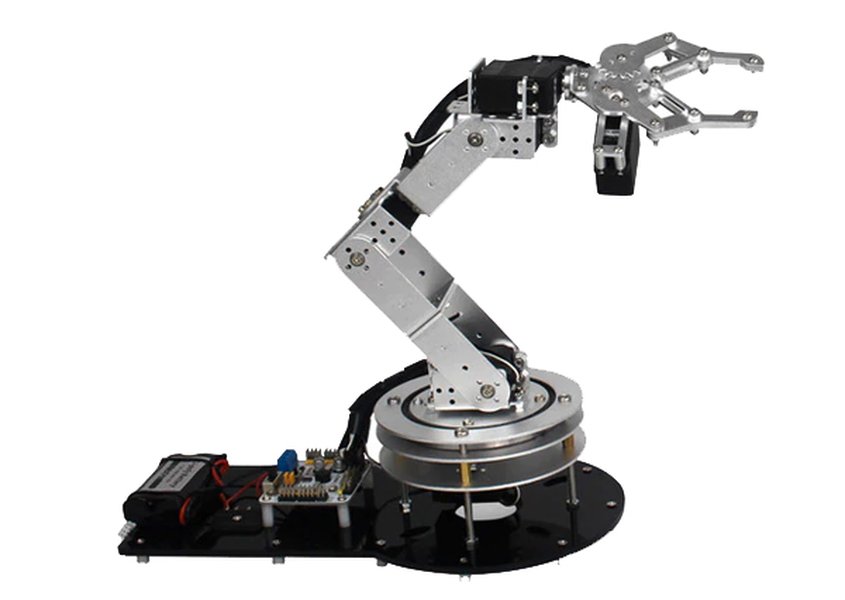
An industrial 6-axis robot arm trainer, demonstrating hardware complexity in robotics.
Mechanics: Kinematics & Dynamics
Understanding how robots move is fundamental.
- Kinematics: Deals with the geometry of motion. Forward kinematics calculates the position and orientation of the robot's end-effector (hand or tool) based on joint angles. Inverse kinematics calculates the required joint angles to reach a desired end-effector position and orientation – a computationally intensive but crucial task for manipulation.
- Dynamics: Considers the forces and torques that cause motion. Understanding dynamics helps in designing controllers that can move the robot accurately and efficiently, accounting for factors like inertia, gravity, and friction. While deep expertise might require a mechanical engineering background, grasping the core concepts is important for programmers working on motion control.
Electronics: Sensors & Actuators
Robots perceive and interact with the world through sensors and actuators.
- Sensors: Provide information about the robot's state and its environment (e.g., cameras for vision, LiDAR for distance mapping, encoders for joint position, IMUs for orientation, force sensors). You'll need to programmatically interface with these sensors and process their data.
- Actuators: Create motion (e.g., electric motors, servos, hydraulic or pneumatic systems). You'll write code to control these actuators precisely.
Basic Electronics Concepts
While you don't need to become an electrical engineer, understanding basic electronics is crucial for interfacing hardware components and troubleshooting. Key concepts include:
- Voltage (V): Electrical potential difference.
- Current (I): Flow of electric charge.
- Resistance (R): Opposition to current flow (Ohm's Law: \(V = IR\)).
- Power (P): Rate of energy transfer (\(P = VI\)).
- Understanding datasheets for components like sensors and motors.
- Basic circuit concepts (series, parallel).
Control Systems
Control theory deals with designing algorithms to manage the behavior of dynamic systems. In robotics, this means creating controllers that make the robot follow a desired trajectory, maintain stability, or regulate variables like speed or force. Concepts like feedback loops (e.g., PID controllers - Proportional, Integral, Derivative) are fundamental for making robots perform tasks accurately and robustly despite uncertainties and disturbances.
Your Learning Roadmap: Theory Meets Practice
A Structured Path for Programmers
Here's a suggested learning path, leveraging your programming skills while building robotics-specific knowledge:
- Phase 1: Foundations & Simulation (1-2 Months):
- Take introductory robotics courses focusing on kinematics, dynamics, sensors, and control (e.g., Coursera's UPenn Robotics Specialization or Northwestern's Modern Robotics).
- Simultaneously, learn ROS/ROS2 basics and practice controlling virtual robots in simulators like Gazebo or Webots. Implement basic navigation and manipulation tasks.
- Phase 2: Microcontrollers & Kits (2-4 Months):
- Get hands-on with Arduino or Raspberry Pi. Start with basic electronics tutorials.
- Build simple robots (e.g., line follower, obstacle avoider) to understand hardware integration and low-level control. Program sensors and motors directly.
- Begin using ROS/ROS2 with your hardware projects if feasible (e.g., using
rosserial).
- Phase 3: Advanced Projects & ROS Integration (Ongoing):
- Work on more complex projects using platforms like TurtleBot or building custom robots.
- Deepen your ROS/ROS2 skills: Implement SLAM (Simultaneous Localization and Mapping), navigation stacks, computer vision (OpenCV), and motion planning algorithms.
- Contribute to open-source robotics projects on GitHub.
- Phase 4: Specialization (Ongoing):
- Explore advanced topics based on your interests: AI/Machine Learning for robotics, multi-robot systems, manipulation, industrial robotics (e.g., ABB programming), autonomous vehicles, humanoid robotics.
- Consider specialized courses or certifications (e.g., Udacity Robotics Nanodegree, The Construct courses).
Recommended Platforms & Tools
Hardware Platforms
- Microcontrollers: Arduino (great for beginners, C++ based), Raspberry Pi (more powerful, runs Linux, good for Python/ROS).
- Robot Kits: TurtleBot (popular ROS platform), LEGO Mindstorms/SPIKE Prime (good educational tools), VEX Robotics (used in competitions), various Arduino/RPi-based kits.
- Industrial Robots (if applicable): ABB, KUKA, Fanuc (require specialized training).
Simulation Software
- Gazebo: Powerful, integrates well with ROS, realistic physics.
- Webots: User-friendly, cross-platform, supports various programming languages.
- NVIDIA Isaac Sim: Advanced simulation for AI-driven robotics.
- CoppeliaSim (formerly V-REP): Versatile simulator with many features.
Comparing Learning Resources
Numerous online platforms offer robotics courses. Here's a comparison of some popular options suitable for someone with your background:
| Platform | Focus Areas | Target Audience | Format | Notes |
|---|---|---|---|---|
| Coursera | Theory (Kinematics, Control), ROS, Specializations (e.g., UPenn, Northwestern) | Beginner to Advanced | Courses, Specializations | University-level content, often requires subscription for certificates. |
| Udemy | Practical Skills, Python/C++ for Robotics, ROS, Specific Tools | Beginner to Intermediate | Individual Courses | Wide variety, often project-based, variable quality. |
| edX | University Courses (e.g., MIT, Harvard), Foundational Engineering, AI | Beginner to Advanced | Courses, MicroMasters | Access to high-quality academic material, often free to audit. |
| The Construct | ROS/ROS2 Development, Practical Skills, Simulation | Intermediate to Advanced | Online Academy, Bootcamps (e.g., Robotics Developer Masterclass) | Highly practical, ROS-focused, browser-based simulation environment. |
| Udacity | Robotics Software Engineering, AI for Robotics, Self-Driving Cars | Intermediate to Advanced | Nanodegrees | Project-based, career-focused, significant time/cost commitment. |
| Robot Academy (QUT) | Comprehensive Robotics Topics (Kinematics, Vision, Control) | Beginner to Advanced | Free Online Lessons/Videos | Excellent free resource from Prof. Peter Corke, complements other learning. |
Essential Robotics Skills Radar
This chart visualizes key skill areas in robotics learning for someone with an advanced programming background. It rates the general importance of each skill, how much your programming background can be leveraged, and the relative learning difficulty (higher means more challenging for a typical programmer transitioning to robotics).
As you can see, your programming skills provide a huge head start ('Leverage' score is high for Programming, Simulation, AI/ML, Project Building). The main challenges ('Learning Difficulty') often lie in grasping the physical sciences – Electronics, Mechanics, and Control Systems – and mastering the complexities of ROS/Frameworks. However, focusing on practical 'Project Building' is highly important and leverages your existing abilities well.
Connecting the Dots: Robotics Concepts Mindmap
This mindmap provides a visual overview of the interconnected areas you'll explore while learning robotics as an advanced programmer.
for Programmers"] id1["Foundations"] id1a["Mechanics"] id1a1["Kinematics (Fwd/Inv)"] id1a2["Dynamics"] id1b["Electronics"] id1b1["Sensors"] id1b2["Actuators"] id1b3["Basic Circuits"] id1c["Control Systems"] id1c1["Feedback Loops (PID)"] id1c2["Stability"] id1c3["Trajectory Following"] id2["Core Tools"] id2a["Programming"] id2a1["Python"] id2a2["C++"] id2b["Software Frameworks"] id2b1["ROS / ROS2"] id2b2["Libraries (OpenCV, NumPy)"] id2c["Simulation"] id2c1["Gazebo"] id2c2["Webots"] id2c3["Isaac Sim"] id2d["Hardware"] id2d1["Microcontrollers (Arduino, RPi)"] id2d2["Robot Kits (TurtleBot)"] id2d3["Components (Motors, Sensors)"] id3["Learning Resources"] id3a["Online Courses"] id3a1["Coursera, Udemy, edX"] id3a2["The Construct, Udacity"] id3a3["Robot Academy"] id3b["Communities"] id3b1["Reddit (r/robotics)"] id3b2["GitHub"] id3b3["Forums (ROS Discourse)"] id3c["Projects & Practice"] id3c1["Simulations"] id3c2["Hardware Builds"] id3c3["Competitions"] id4["Applications & Specializations"] id4a["Industrial Automation"] id4b["Mobile Robots (Navigation, SLAM)"] id4c["Manipulation (Robot Arms)"] id4d["AI & Machine Learning in Robotics"] id4e["Humanoid Robotics"] id4f["Autonomous Vehicles"]
This map highlights how foundations in mechanics, electronics, and control underpin the use of core tools like programming languages, ROS, simulators, and hardware. Effective learning combines structured resources with hands-on projects, leading towards various application areas and specializations.
Deep Dive: Getting Hands-On
From Virtual to Physical Robots
Theory is essential, but robotics is learned by doing. Applying your programming skills to control physical or simulated robots solidifies understanding.
Starting Projects
- Arduino/Raspberry Pi Projects: Begin with simple tasks like blinking an LED, reading sensor values (e.g., photoresistors, ultrasonic sensors), and controlling servo or DC motors. A classic first robot project is a light-following or obstacle-avoiding wheeled robot. These projects teach basic hardware interfacing and control logic.
- Working with Simulators: Use Gazebo or Webots to tackle more complex tasks without hardware constraints. Implement path planning algorithms (like A*), practice using ROS navigation stacks, simulate robot arm manipulation using inverse kinematics, or experiment with simulated sensor data (like LiDAR scans or camera images).
Visualizing the Learning Journey
The following video provides a comprehensive roadmap for starting your journey into robotics, covering many of the concepts discussed here.
Video discussing a roadmap for learning robotics.
This video outlines steps including understanding fundamentals, choosing hardware/software, and finding resources, reinforcing the structured approach beneficial for learners like you.
Joining the Community
Learning Together
The robotics community is vibrant and collaborative. Engaging with others can accelerate your learning, provide support, and expose you to new ideas and opportunities.
Online Forums & Groups
Platforms like Reddit's r/robotics, ROS Discourse, Stack Exchange (Robotics Stack Exchange), and various Discord servers are excellent places to ask questions, share your projects, learn from experts, and discover resources. Don't hesitate to ask for help when you're stuck – often, someone else has faced the same challenge.
GitHub & Open Source
Explore robotics projects on GitHub. You can learn a lot by reading code from established projects (like ROS packages). Consider contributing to open-source projects – it's a great way to practice your skills on real-world codebases, collaborate with experienced developers, and build your portfolio.
Challenges & Competitions
Participating in robotics competitions (even virtual ones initially) can be highly motivating and provide practical experience under pressure. They often involve solving specific problems within defined constraints, pushing you to integrate various skills.
Advanced Paths & Career
Specializing and Professionalizing
Once you have a solid grasp of the fundamentals and practical experience, you can start specializing.
Potential Specializations
- AI/Machine Learning for Robotics: Applying deep learning for perception, reinforcement learning for control, etc.
- Industrial Robotics: Programming and integrating robots (like ABB, KUKA) in manufacturing settings, focusing on tasks like welding, assembly, and logistics.
- Autonomous Systems: Developing software for self-driving cars, drones, or autonomous mobile robots (AMRs), focusing on navigation, SLAM, and perception.
- Manipulation: Focusing on robot arms, grasping, and complex interaction tasks.
- Human-Robot Interaction (HRI): Designing robots that can safely and effectively work alongside or interact with humans.
Certifications
While practical experience and projects are paramount, certifications can help validate your skills to potential employers. Consider programs like:
- Udacity's Robotics Software Engineer Nanodegree.
- Specialized courses/certifications from The Construct (e.g., Robotics Developer Masterclass).
- Certifications from industrial robot manufacturers (e.g., ABB, Fanuc) if you pursue that path.
Your advanced programming background combined with dedicated learning in robotics specific areas puts you in a strong position to enter this dynamic and growing field.
Frequently Asked Questions (FAQ)
As an advanced programmer, how much electronics/mechanics do I *really* need to know? +
You don't need an engineering degree in these areas, but a solid conceptual understanding is crucial. For electronics, you need to comfortably read datasheets, understand power requirements, signal types (analog/digital), and basic communication protocols (I2C, SPI, UART) to interface sensors and actuators. For mechanics, grasp core kinematics (understanding coordinate frames, transformations, forward/inverse kinematics concepts) and basic dynamics principles (inertia, torque) to understand motion control challenges. Focus on the level needed to effectively integrate hardware with your software and troubleshoot common issues.
Should I start with ROS 1 or ROS 2? +
As of 2025, ROS 2 is recommended for new projects. While ROS 1 (Noetic) is still widely used and has more existing packages, ROS 2 offers significant improvements, especially regarding real-time capabilities, multi-robot systems, security, and support for modern C++ and Python. Major development efforts are focused on ROS 2, and it's considered the future standard. Starting with ROS 2 now will better position you for future developments, although you might encounter less legacy documentation compared to ROS 1 initially.
What's a good first *hardware* project that leverages programming skills? +
A good first project is building a small wheeled robot using Raspberry Pi (which runs Linux and easily supports Python/C++/ROS) or Arduino. Focus on programming complex behaviors rather than just basic movement. For example:
- An obstacle avoidance robot using ultrasonic sensors or LiDAR, implementing more sophisticated algorithms than simple stop/turn (e.g., potential fields, bug algorithms).
- A robot that follows a line using computer vision (with a Raspberry Pi camera) instead of simple IR sensors.
- A robot that can be teleoperated via Wi-Fi using keyboard commands, involving network programming.
Can I learn robotics effectively through self-study and online courses alone? +
Yes, especially with your advanced programming background, self-study using the wealth of online resources (courses, tutorials, documentation, communities) is highly viable. The key is discipline and ensuring you combine theoretical learning with consistent hands-on practice (both simulation and hardware). While formal education or expert mentorship can provide structure and deeper insights, motivated self-learners can definitely become proficient in robotics. The abundance of high-quality free and paid resources makes it accessible.
How long does it typically take to become proficient enough for a robotics role? +
This varies greatly depending on your learning intensity, the specific role, and your definition of "proficient." Leveraging your programming background, you might grasp core software concepts (like ROS programming) within 3-6 months of dedicated study and practice. Becoming truly proficient, comfortable with hardware integration, troubleshooting, and advanced topics like control systems or AI, typically takes 1-2 years of consistent learning and project work. Building a strong portfolio of personal projects is crucial for demonstrating skills to potential employers.
Recommended Further Exploration
- Compare ROS vs ROS2 for beginner robotics projects.
- Best robotics simulation software for learning motion planning.
- Advanced C++ techniques for real-time robot control.
- Integrating machine learning models into ROS applications.
References
Last updated May 5, 2025