
Mastering Learning Rate in Q-Learning: The Key to Balancing Speed and Stability
Understanding how the learning rate parameter shapes an agent's ability to learn optimal strategies in reinforcement learning
Essential Insights on Learning Rate in Q-Functions
- The learning rate (α) determines how quickly an agent incorporates new experiences into its decision-making model
- It creates a crucial balance between rapidly adapting to new information and maintaining stability from past learning
- Finding the optimal learning rate is essential for effective convergence to an optimal policy
Fundamentals of Learning Rate in Q-Learning
In reinforcement learning (RL), the learning rate is a critical hyperparameter that fundamentally influences how the Q-function evolves during training. The Q-function, which estimates the expected future rewards for taking action a in state s, updates based on new experiences through a carefully controlled process.
The learning rate (typically represented as α) governs the magnitude of updates to the Q-values stored in the Q-table or approximated by a neural network. It acts as a weighting factor that determines how much new information overrides existing knowledge.
The Q-Function Update Formula
To understand the learning rate's role, we must examine the fundamental Q-learning update equation:
Where:
- Q(s, a) is the current estimate of the Q-value for state s and action a
- α is the learning rate (between 0 and 1)
- r is the immediate reward received
- γ (gamma) is the discount factor for future rewards
- maxa' Q(s', a') is the maximum Q-value for the next state
- [r + γ maxa' Q(s', a') - Q(s, a)] represents the temporal difference (TD) error
The learning rate α directly scales how much of this temporal difference error is used to update the current Q-value. This simple parameter has profound implications for the learning process.
Impact of Different Learning Rate Values
Effects Across the Spectrum
The chosen learning rate value dramatically affects how an agent learns:
| Learning Rate | Effect on Learning | Advantages | Disadvantages |
|---|---|---|---|
| α = 0 | No learning occurs | Maintains existing knowledge perfectly | Agent never improves or adapts to new information |
| 0 < α < 0.1 | Very slow learning | Highly stable, resistant to noise | May require excessive training time to converge |
| 0.1 ≤ α ≤ 0.5 | Moderate learning speed | Good balance between stability and learning speed | May still be too slow for complex environments |
| 0.5 < α < 1 | Fast learning | Quickly adapts to new information | May become unstable or oscillate in stochastic environments |
| α = 1 | Immediate replacement of old values | Maximizes adaptation to most recent experience | Completely discards historical knowledge, highly unstable |
Visual Comparison of Learning Rates
The following chart illustrates how different learning rates affect key performance aspects of Q-learning:
Learning Rate Strategies in Practice
Static vs. Dynamic Learning Rates
While a constant learning rate might work in simple, deterministic environments, more complex scenarios often benefit from adaptive approaches:
Static Learning Rate
Using a fixed learning rate throughout the entire training process. This approach is simple but may not be optimal as learning needs change during training.
Decaying Learning Rate
Starting with a higher learning rate and gradually decreasing it over time. This strategy allows for fast initial learning while ensuring stability as the agent approaches an optimal policy.
Adaptive Learning Rate
Adjusting the learning rate based on performance metrics or other factors during training. This can help balance exploration and exploitation more dynamically.
Common decay functions include:
- Linear decay: αt = α0 * (1 - t/T)
- Exponential decay: αt = α0 * e(-kt)
- Step decay: Reducing the learning rate by a factor after a set number of episodes
Mindmap: Learning Rate Considerations in Q-Learning
Video Tutorial: Understanding Learning Rate in Q-Learning
This video explains the importance of learning rate (alpha) and other key parameters in Q-learning, offering practical insights into how they affect reinforcement learning agent performance:
The video provides a clear explanation of the learning rate parameter (alpha) in Q-learning, how it influences the update rule, and demonstrates its effects on learning performance. It covers the balance between exploration and exploitation, showing why parameter tuning is critical for effective reinforcement learning.
Visual Representations of Learning Rate Effects
These images illustrate key concepts related to learning rate in Q-learning and reinforcement learning more broadly:

Reinforcement Learning Flow: Shows how agents interact with environments, collecting experiences that update Q-values using the learning rate parameter.
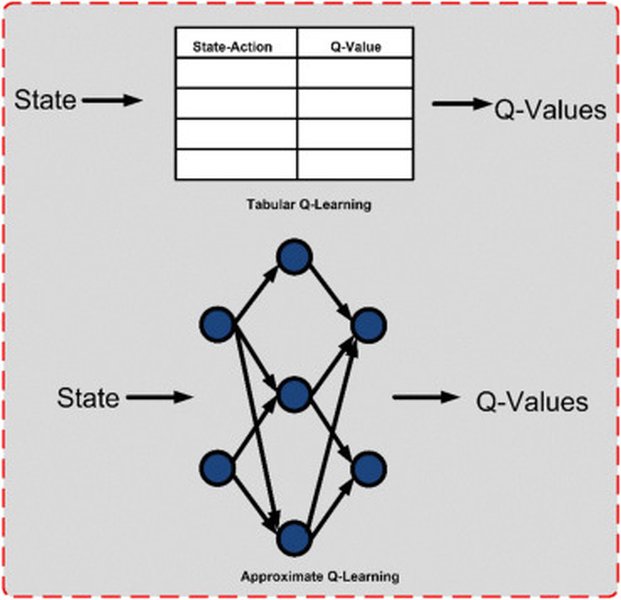
Q-Learning Process: Illustrates how the learning rate affects the Q-value update process during reinforcement learning.
Frequently Asked Questions
References
- Q-learning - Wikipedia
- Q-Learning in Reinforcement Learning - GeeksforGeeks
- Level up — Understanding Q learning - Nancy Jemimah - Medium
- Understanding the role of alpha in Q-learning - Reddit
- In Q-learning, shouldn't the learning rate change dynamically? - AI Stack Exchange
- Finding a learning rate in Deep Reinforcement Learning - Medium
- Epsilon-Greedy Q-learning - Baeldung
Recommended Topics
Last updated April 3, 2025