
The Unparalleled Mind Games: Unpacking the Light vs. L Rivalry in Anime
A deep dive into the psychological warfare that defines the ultimate intellectual clash in animated storytelling.

- 1.Highlights of the Light vs. L Rivalry
- 2.The Genesis of a Grand Intellectual Duel
- 3.Philosophical Underpinnings: A Clash of Ideologies
- 4.The Mechanics of Mental Warfare
- 5.Enduring Cultural Impact and Legacy
- 6.Comparing Rivalry Elements Across Anime
- 7.Key Elements Contributing to the Rivalry's Greatness
- 8.Comparative Analysis of Rivalry Components
- 9.FAQ: Deepening Your Understanding of the Rivalry
- 10.Conclusion
- 11.Recommended Further Exploration
- 12.Referenced Search Results
Highlights of the Light vs. L Rivalry
- Philosophical Depth: More than just a chase, it's a profound clash of ideologies regarding justice and morality, pitting Light's absolute authority against L's adherence to law.
- Pure Intellectual Warfare: The rivalry is characterized by intricate strategies, deductions, and counter-moves, relying solely on mental prowess rather than physical combat or superpowers.
- Symmetrical Genius: Both Light and L are portrayed as intellectual titans, pushing each other to their limits and ensuring a constantly escalating, high-stakes psychological chess match.
The rivalry between Light Yagami and L Lawliet in Death Note is widely celebrated as the zenith of mental battles and intellectual clashes in anime. This isn't merely a consensus born of fan enthusiasm, but a recognition of how their dynamic reshaped storytelling within the medium. Their conflict transcends a simple hero-villain dichotomy, evolving into an intricate dance of wits, deception, and philosophical debate that deeply resonates with audiences and analysts alike.
The Genesis of a Grand Intellectual Duel
At its core, the Light vs. L rivalry is a monumental psychological chess match. What makes it so compelling is the sheer intellectual parity between the two protagonists. Light, wielding the supernatural power of the Death Note, embarks on a mission to rid the world of criminals, intending to become a god of a new world order. L, an eccentric and highly intelligent detective, is tasked with identifying and apprehending this mysterious killer, whom the public dubs "Kira." Their initial moves are cautious, probing, and designed to reveal the other's identity and methods without exposing their own.
The brilliance of this setup lies in the fact that neither character possesses overt physical advantages over the other. Their battlefield is the mind, their weapons are deduction, misdirection, and an astute understanding of human psychology. This intellectual combat is not merely a subplot; it is the fundamental engine driving the entire narrative. Every development, every twist, and every turn is a direct consequence of their strategic maneuvering against each other.
A prime example of their early mind games is L's televised broadcast trap, designed to pinpoint Kira's location. Light's immediate, albeit rash, reaction confirmed L's hypothesis that Kira was indeed in the Kanto region of Japan, setting the stage for their direct confrontation. Conversely, Light's meticulous efforts to deflect suspicion, such as hiding the Death Note or feigning innocence, constantly challenge L's investigative prowess.
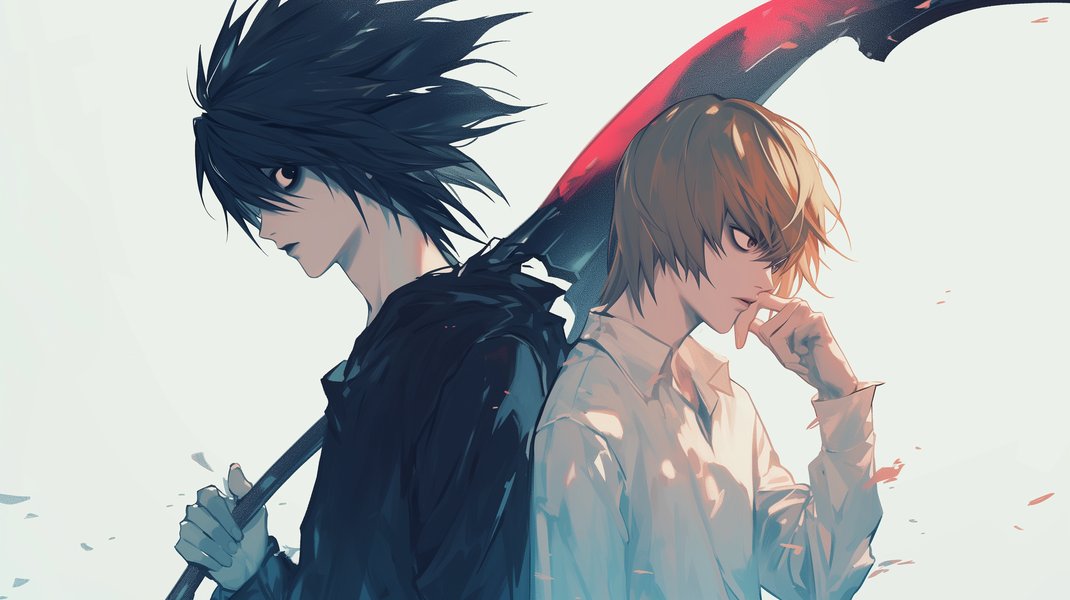
A pivotal face-off between Light Yagami and L, embodying the core of their mental conflict.
Philosophical Underpinnings: A Clash of Ideologies
Justice Defined: Light's Utopia vs. L's Due Process
Beyond the tactical brilliance, the rivalry gains its enduring significance from the profound philosophical questions it raises. Light Yagami operates under a radical, almost tyrannical, vision of justice. He believes that by eliminating criminals, he can forge a utopian world free from evil. This belief system is predicated on absolute authority and the conviction that he alone can determine who deserves to live or die. His methods, while efficient in their own twisted way, bypass all conventional legal and ethical frameworks.
In stark contrast, L represents a more traditional, albeit occasionally unconventional, approach to justice. He embodies the principles of investigation, evidence, and due process. While L is willing to bend rules and employ psychological tactics to catch Kira, his ultimate goal is to uphold the law and deliver justice through established legal channels. This fundamental clash of ideologies—absolute authority versus rule of law, vigilante justice versus due process—elevates their conflict far beyond a simple criminal hunt. It forces the audience to grapple with complex moral dilemmas and the nature of true justice.
The Mechanics of Mental Warfare
Strategic Deception and Counter-Deception
The narrative of Death Note is intricately structured around the mind games between Light and L. Their encounters are not about physical confrontations but about psychological warfare, deception, and manipulation. Both characters employ elaborate traps, misdirection, and an uncanny ability to anticipate the other's thought processes. Light's brilliance lies in his ability to manipulate people and circumstances, even supernatural entities like the Shinigami, to further his goals and maintain his anonymity.
L, on the other hand, excels in deductive reasoning, psychological profiling, and maintaining an unpredictable persona. He consistently forces Light into situations where he has to react, revealing glimpses of his true nature. The tension in the series is palpable because each move carries immense stakes, where a single misstep could mean exposure or death for either party.
This radar chart illustrates the perceived strengths of Light Yagami and L Lawliet across key intellectual domains relevant to their rivalry. Light excels in strategic planning and resource manipulation, showcasing his ability to orchestrate complex schemes and leverage external factors like the Death Note. L shines in deductive reasoning and emotional control, demonstrating his unparalleled ability to analyze information and maintain composure under pressure. Both exhibit high levels of adaptability, constantly adjusting their tactics in response to the other.
The "Cat and Mouse" Dynamic
The phrase "cat and mouse" perfectly encapsulates the Light vs. L dynamic. Each character is simultaneously the hunter and the hunted. Light constantly tries to identify L while evading capture, and L relentlessly pursues Kira while attempting to expose Light. This continuous back-and-forth, where the advantage shifts subtly from one to the other, creates an atmosphere of relentless suspense and intellectual stimulation.
Enduring Cultural Impact and Legacy
The Light vs. L rivalry has left an indelible mark on anime and psychological thrillers as a whole. It set a new benchmark for what intellectual conflicts in fiction could achieve, proving that profound tension and dramatic impact could be derived entirely from mental rather than physical battles. Many subsequent anime series that feature mind games or psychological duels are often measured against the standard set by Death Note.
The series demonstrated that a compelling narrative could be driven by the complex psychological interplay between two brilliant minds, exploring themes of justice, morality, and the corrupting influence of power without resorting to conventional action sequences. The enduring discussions about who was truly smarter, Light or L, further solidify its status as a masterpiece of intellectual storytelling.
This video delves into the eternal question of who was truly smarter, Light Yagami or L Lawliet, dissecting their strategies and moments of brilliance throughout Death Note. It provides a detailed analysis of their intellectual strengths and weaknesses, further highlighting why their rivalry is considered the pinnacle of mental battles in anime.
Comparing Rivalry Elements Across Anime
To further understand why the Light vs. L rivalry is considered the gold standard, it's helpful to consider various aspects that contribute to a compelling anime rivalry. The following bar chart provides an opinionated comparison of several key elements across different prominent anime rivalries, illustrating how Light vs. L consistently ranks high in purely intellectual domains.
This bar chart compares the Light vs. L rivalry with other prominent anime rivalries across several critical dimensions. It highlights that the Death Note rivalry excels particularly in "Intellectual Depth," "Philosophical Stakes," and "Psychological Tension," often surpassing others that might rely more on physical prowess or emotional development. This analysis underscores why it is frequently cited as the pinnacle of mental combat in anime.
Key Elements Contributing to the Rivalry's Greatness
The greatness of the Light vs. L rivalry can be broken down into several essential components:
This mindmap illustrates the multifaceted reasons behind the Light vs. L rivalry's acclaim. It highlights the intellectual parity of the characters, the deep philosophical clash, their reliance on pure mind games, the high stakes involved, and how the rivalry is intrinsically woven into the narrative, ultimately leaving an enduring cultural legacy in anime.
Symmetry of Genius
Both Light and L are portrayed as intellectual titans, operating on a level far beyond their peers. This symmetry is crucial because it creates a credible challenge for both characters. Neither feels arbitrarily superior, ensuring that the audience is genuinely invested in the outcome. Their constant striving to outwit each other pushes them to new intellectual heights, revealing layers of strategic depth.
Psychological Depth and Manipulation
The rivalry delves deep into human psychology. Light manipulates not only individuals but also public opinion and even the system itself. L, in turn, uses psychological profiling to understand Light's motivations and predict his moves. Their interactions are masterclasses in misdirection, bluffing, and subtle provocations, constantly blurring the lines between truth and deception.
Absence of Physical Conflict
Unlike many anime rivalries that culminate in spectacular physical battles, the Light vs. L conflict is almost entirely devoid of direct combat. This focus on intellect over brawn underscores the unique nature of their struggle and emphasizes that mental acuity can be far more thrilling and impactful than any superpower or martial art.
Narrative Engine
The rivalry is not just an element of the story; it is the story. Every major plot point, every character introduction, and every thematic exploration serves to advance or deepen this central intellectual conflict. This structural integration ensures that the rivalry remains at the forefront, driving suspense and character development.
Comparative Analysis of Rivalry Components
To further contextualize the Light vs. L rivalry, here is a table comparing several key aspects that define great anime rivalries. This highlights how the Death Note rivalry distinguishes itself.
| Rivalry Aspect | Light Yagami vs. L Lawliet (Death Note) | Naruto Uzumaki vs. Sasuke Uchiha (Naruto) | Goku vs. Vegeta (Dragon Ball Z) |
|---|---|---|---|
| Primary Conflict Type | Intellectual, Philosophical, Psychological | Ideological, Personal, Power-based | Power-based, Personal Pride |
| Core Motivation | Redefining Justice vs. Upholding Law | Acknowledgement/Belonging vs. Revenge/Power | Strength/Self-Improvement vs. Pride/Superiority |
| Battleground | Minds, Deception, Strategy | Physical Combat, Jutsu, Destiny | Martial Arts, Energy Blasts, Transformations |
| Stakes | Control over global justice, individual freedom | World peace, village protection, personal growth | Protection of Earth, universal dominance |
| Symmetry of Power/Intellect | Near-perfect intellectual parity | Varying physical power, growing emotional depth | Constant power escalation, distinct fighting styles |
| Resolution Style | Intellectual defeat leading to character demise | Eventual reconciliation and mutual respect | Continuous competition, often leading to teamwork |
| Cultural Impact | Set standard for psychological thrillers | Iconic shonen rivalry, themes of friendship | Defined shonen action, power fantasy |
This table offers a comparative overview of the Light vs. L rivalry alongside two other iconic anime rivalries, Naruto vs. Sasuke and Goku vs. Vegeta. It underscores how the Death Note rivalry stands out for its primary reliance on intellectual, philosophical, and psychological conflicts, contrasting with the more physical or power-driven aspects of other famous anime clashes.
FAQ: Deepening Your Understanding of the Rivalry
Why is it called a "chess match"?
Did the rivalry have a clear winner?
How did this rivalry influence other anime?
What makes both characters equally compelling?
Conclusion
The rivalry between Light Yagami and L Lawliet is more than just a struggle between two characters; it is a meticulously crafted intellectual epic that delves into the fundamental questions of justice, morality, and human nature. Its enduring appeal stems from the symmetrical genius of its combatants, the purely psychological nature of their warfare, and the profound philosophical debate that underpins every strategic move. By prioritizing mind over might, Death Note redefined the possibilities of anime storytelling, cementing Light and L's clash as the greatest mental battle in the medium's history.
Recommended Further Exploration
- What are other psychological thriller anime with similar mind games?
- How do philosophical themes deeply influence the plot of Death Note?
- A detailed character analysis comparing Light Yagami and L Lawliet's intelligence and motivations.
- What was the broader impact of Death Note on the psychological genre in anime?