
Unlocking the Secrets of Lipids: A Deep Dive into Sunflower Seed Extraction and Analysis
Exploring the fascinating world of lipid chemistry, from molecular properties to practical extraction from common sunflower seeds.
The study of lipids—a diverse class of naturally occurring molecules vital for life—offers profound insights into biological processes and material science. This exploration focuses on understanding their physical and chemical characteristics, particularly through an experiment involving the extraction of lipids from sunflower seeds. We will delve into concepts such as lipid polarity, saturation levels, and the critical role of solvents in isolating these essential compounds.
Essential Insights: Key Takeaways
- Lipid Solubility is Governed by Polarity: Lipids, being predominantly non-polar, readily dissolve in non-polar organic solvents like methylene chloride and ethanol, but not in polar solvents such as water, a principle often summarized as "like dissolves like."
- Saturation Levels Determine Lipid Properties: The presence or absence of double bonds in fatty acid chains (saturation) significantly influences lipids' physical state and chemical reactivity, which can be indicated by tests like the sulfuric acid test.
- Solvent-Based Extraction is Key for Isolation: Organic solvents are crucial for efficiently extracting lipids from biological materials like sunflower seeds, with the choice of solvent impacting yield and purity.
Deciphering Lipids: Nature, Properties, and Significance
Lipids encompass a broad group of molecules, including fats, oils, waxes, phospholipids, and steroids. As referenced by foundational biochemistry texts (e.g., Nelson & Cox, 2017), they play indispensable roles in biological systems, serving as concentrated energy reserves, providing thermal insulation, forming the structural backbone of cell membranes, and acting as signaling molecules.
Sunflower seeds are a rich source of lipids, primarily in the form of oil, which is extracted for various uses.
Physical Traits: More Than Just Appearance
Appearance and Odor
Lipids exhibit a range of physical appearances. For instance, fats like butter are solid at room temperature, while oils, such as sunflower oil, are liquid. Sunflower oil typically appears as a clear to pale yellow oily liquid. The odor of lipids can vary from neutral or virtually odorless, especially when highly purified, to characteristic smells depending on their source and the presence of volatile compounds. Fresh sunflower oil, for example, often has a mild, slightly nutty aroma.
Chemical Foundations: Polarity, Solubility, and Saturation
The Polarity Principle and Solubility
One of the defining chemical characteristics of lipids is their general non-polar nature. This means their molecular structure does not have a significant separation of positive and negative charges. This non-polarity dictates their solubility: lipids are hydrophobic ("water-fearing") and thus are largely insoluble in polar solvents like water. When mixed with water, they tend to form separate layers or emulsions.
Conversely, lipids are typically soluble in non-polar organic solvents. This is because non-polar substances can readily interact with and dissolve other non-polar substances. Examples of such solvents include:
- Methylene chloride (Dichloromethane): A non-polar solvent effective for dissolving many lipids.
- Ethanol: While ethanol has a polar hydroxyl (-OH) group, its ethyl (-CH2CH3) portion is non-polar. This dual nature allows it to dissolve some lipids, particularly those with some polar character or when used in combination with other solvents. Its effectiveness can vary depending on the specific lipid.
- Other common solvents: Hexane, chloroform, ether, and benzene are also widely used for lipid dissolution and extraction due to their non-polar characteristics.
This behavior is encapsulated by the chemical rule of thumb: "like dissolves like."
Understanding Saturation Levels
The fatty acid components of lipids can be either saturated or unsaturated.
- Saturated lipids: Their fatty acid chains contain only single carbon-carbon bonds. This structure allows the molecules to pack tightly together, often resulting in a solid state at room temperature (e.g., animal fats like butter and lard).
- Unsaturated lipids: Their fatty acid chains possess one or more carbon-carbon double bonds. These double bonds introduce "kinks" in the chains, preventing tight packing. Consequently, unsaturated lipids are typically liquid at room temperature (e.g., vegetable oils like sunflower oil, olive oil). Sunflower oil, for instance, is rich in unsaturated fatty acids, particularly oleic acid (monounsaturated) and linoleic acid (polyunsaturated).
The degree of unsaturation impacts not only the physical state but also the chemical reactivity and nutritional properties of lipids.
The Art and Science of Lipid Extraction from Sunflower Seeds
Sunflower seeds are a commercially important source of edible oil, containing a substantial lipid content, often ranging from 40% to 50% of their dry weight. Extracting these lipids efficiently is a key process in food production and biochemical research.

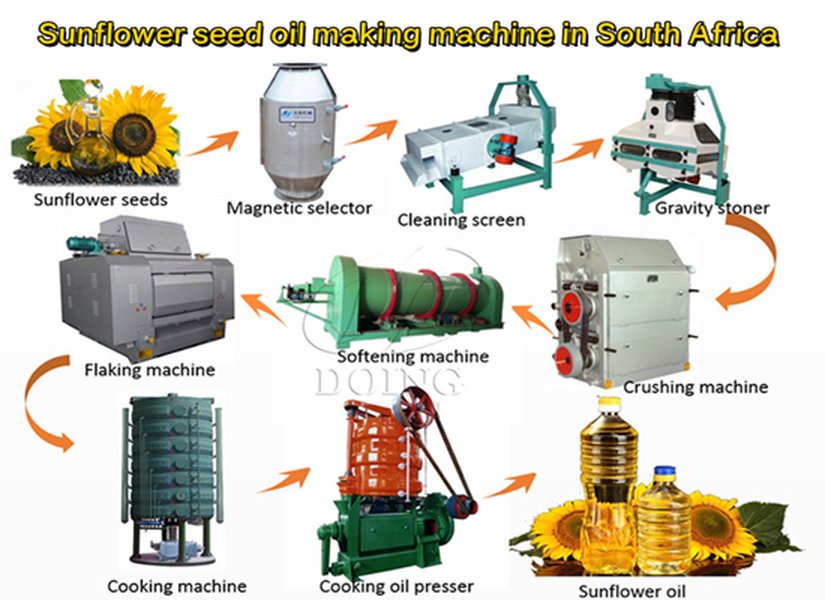
A typical industrial process for sunflower oil extraction involves seed preparation, pressing, and solvent extraction to maximize yield.
The Crucial Role of Solvents in Extraction
Solvent extraction is a widely used method to isolate lipids from plant materials. The choice of solvent is critical and depends on factors like the type of lipid being extracted, desired purity, cost, safety, and environmental impact. The solvent works by permeating the plant material and dissolving the lipids, which are then separated from the solid residue.
As hypothesized in many lipid experiments, non-polar solvents like methylene chloride or slightly polar solvents like ethanol are expected to be effective. Methylene chloride is a potent solvent for a broad range of lipids. Ethanol, being less toxic and more environmentally friendly than some chlorinated solvents, is also used, sometimes in heated conditions or in mixtures, to enhance its lipid-dissolving capabilities.
Comparative Efficacy of Lipid Extraction Solvents
The choice of solvent is a critical decision in lipid extraction, balancing yield, cost, safety, environmental concerns, and the selectivity for specific lipid classes. The radar chart below offers a conceptual comparison of common solvents based on these factors. Note that these are generalized, illustrative ratings for comparative purposes and actual performance can vary based on specific conditions and lipid types.
This chart visualizes how different solvents perform across multiple criteria:
- Yield: The amount of lipid extracted relative to the starting material.
- Cost-Effectiveness: The expense associated with the solvent and its recovery/disposal.
- Safety (Handling): The risks involved in using the solvent (toxicity, flammability).
- Environmental Impact: The effect of the solvent on the environment.
- Selectivity: The ability of the solvent to extract specific types of lipids while leaving others.
Overview of Common Extraction Techniques
Several methods are employed for lipid extraction, ranging from classical laboratory techniques to industrial-scale processes:
- Soxhlet Extraction: A traditional method involving continuous washing of the sample material with a cycling heated solvent (e.g., hexane or petroleum ether). It's thorough but can be time-consuming and use large solvent volumes.
- Folch Method: A common laboratory procedure using a chloroform-methanol mixture, particularly effective for extracting a broad range of lipids from tissues.
- Bligh-Dyer Method: Similar to Folch, using a chloroform-methanol-water mixture, adjusted for samples with high water content.
- Aqueous and Mechanical Processes: These methods, sometimes used for sunflower seeds, involve crushing or homogenizing the seeds in water to release oil bodies, often followed by centrifugation. Organic solvents might still be used for final purification.
- Supercritical Fluid Extraction (SFE): Uses supercritical CO₂ as a solvent. This is considered a "green" technology as CO₂ is non-toxic, non-flammable, and easily removed, leaving no solvent residue.
Quantifying Success: Measuring Lipid Yield
A crucial outcome of any extraction experiment is the determination of lipid yield. This is typically expressed as the percentage of lipid extracted from the original mass of the sunflower seeds. For example, if 10 grams of lipids are extracted from 50 grams of sunflower seeds, the yield is (10/50) * 100 = 20%. Measuring the yield allows for the assessment of the extraction method's efficiency and can be used to optimize conditions like solvent type, temperature, and extraction time.
Experimental Verification: Testing Hypotheses
Experiments designed to explore lipid properties, such as the one described involving sunflower seeds, typically test specific hypotheses based on established chemical principles.
Validating Solubility Predictions
A core hypothesis in lipid experiments relates to their solubility. As discussed, lipids are expected to dissolve in non-polar solvents like methylene chloride and show limited or no solubility in polar solvents like water. Ethanol, with its intermediate polarity, might show partial solubility depending on the specific lipid. These predictions can be tested by mixing the extracted lipid with different solvents and observing whether it dissolves or forms a separate phase.
The following table summarizes the expected solubility of lipids in different solvent types:| Solvent Type | Example Solvents | Typical Lipid Solubility | Rationale ("Like Dissolves Like") |
|---|---|---|---|
| Polar | Water | Insoluble / Very Low | Lipids are predominantly non-polar and hydrophobic; water is highly polar. |
| Non-polar | Hexane, Methylene Chloride, Chloroform, Benzene | Soluble / High | Both lipids and these solvents are non-polar, allowing for favorable interactions. |
| Slightly Polar / Intermediate | Ethanol, Acetone | Often Soluble / Moderate | These solvents have both polar and non-polar regions, allowing some interaction with lipids, especially those with some polar groups or shorter chains. |
This table illustrates the fundamental principle guiding lipid solubility, crucial for selecting appropriate solvents for extraction and analysis.
Detecting Unsaturation: The Sulfuric Acid Test
Another important hypothesis often involves testing for the presence of unsaturated fatty acids in the extracted lipids. The sulfuric acid test is a qualitative test used for this purpose. Concentrated sulfuric acid (H2SO4) reacts with the carbon-carbon double bonds present in unsaturated lipids.
The reaction mechanism can be complex, potentially involving the formation of carbocations and subsequent polymerization or charring. A positive test is usually indicated by a color change. For instance, the lipid solution might turn reddish, pink, brownish, or greenish upon the addition of sulfuric acid if unsaturated components are present. The intensity and specific color can vary depending on the concentration and type of unsaturated fatty acids. No significant color change or only slight charring might suggest a predominance of saturated lipids or very low levels of unsaturation.
Visualizing the Interconnected Concepts
The study of lipids from sunflower seeds involves several interconnected concepts, from the fundamental nature of lipids to the practicalities of their extraction and analysis. The mindmap below provides a visual overview of these relationships.
Energy Storage, Insulation, Cell Membranes"] id1b["Classification
Fats, Oils, Phospholipids, Steroids"] id1c["Physical Characteristics
Appearance (e.g., oily liquid), Odor (e.g., mild, nutty)"] id1d["Chemical Properties"] id1d1["Polarity & Hydrophobicity
Generally Non-polar, Water-repelling"] id1d2["Solubility Behavior
Soluble in non-polar organic solvents (e.g., methylene chloride)
Insoluble in polar solvents (e.g., water)
Ethanol: intermediate/partial solubility"] id1d3["Saturation Levels
Saturated (no C=C double bonds)
Unsaturated (one or more C=C double bonds, e.g., oleic, linoleic acid)"] id2["Extraction from Sunflower Seeds"] id2a["Source Material
Sunflower seeds (high lipid content, ~40-50%)"] id2b["Solvent Selection Criteria
Polarity match, Efficiency, Safety, Cost, Environmental impact"] id2c["Common Solvents
Methylene Chloride, Ethanol, Hexane, Chloroform-Methanol"] id2d["Extraction Techniques
Soxhlet, Folch, Bligh-Dyer, Aqueous/Mechanical, Supercritical CO₂"] id2e["Yield Quantification
Percentage of lipid extracted from seeds"] id3["Experimental Verification & Analysis"] id3a["Solubility Tests
Confirming solubility in various solvents"] id3b["Sulfuric Acid Test
Detection of unsaturation (C=C bonds)
Indicated by color change (e.g., red, pink, greenish)"] id3c["Other Qualitative Tests
e.g., Translucent spot test"] id3d["Quantitative Analysis
e.g., Gravimetric determination of yield"]
This mindmap illustrates how the definition and properties of lipids directly inform the strategies for their extraction from natural sources like sunflower seeds, and how experimental tests are used to verify these characteristics.
From Seed to Oil: A Glimpse into Sunflower Oil Production
While laboratory experiments focus on principles and small-scale extractions, understanding the industrial production of sunflower oil provides context. The following video showcases the journey of sunflower seeds from harvesting to the extraction of oil in a factory setting, highlighting some of the large-scale mechanical and chemical processes involved.
This video, "Mega Sunflower Oil Factory | How Sunflowers are Harvested & their Oil Extracted," illustrates the large-scale processes including seed cleaning, de-hulling, grinding, pressing (to mechanically extract some oil), and often solvent extraction (typically using hexane) to maximize oil recovery from the remaining seed meal. While the specific solvents and safety precautions in a lab setting might differ, the underlying principle of using a solvent to dissolve and separate the oil remains similar.
Frequently Asked Questions (FAQ)
What makes lipids generally insoluble in water?
Lipids are primarily non-polar molecules, meaning they have long hydrocarbon chains with an even distribution of electrical charge. Water, on the other hand, is a highly polar molecule with distinct positive (hydrogen) and negative (oxygen) regions. Due to the "like dissolves like" principle, polar substances dissolve well in other polar substances, and non-polar substances dissolve well in other non-polar substances. The strong attractive forces between water molecules (hydrogen bonds) tend to exclude non-polar lipid molecules, leading to their insolubility or separation into distinct layers.
What is the key difference between saturated and unsaturated lipids?
The key difference lies in the type of carbon-carbon bonds within their fatty acid chains. Saturated lipids contain only single bonds between carbon atoms, allowing their chains to be straight and pack closely together, often making them solid at room temperature (e.g., butter). Unsaturated lipids contain one or more carbon-carbon double bonds. These double bonds create kinks or bends in the fatty acid chains, preventing close packing and typically resulting in a liquid state at room temperature (e.g., sunflower oil).
Why are organic solvents like methylene chloride or ethanol used for lipid extraction?
Organic solvents are used because of their ability to dissolve lipids. Methylene chloride is a non-polar solvent that effectively dissolves the non-polar lipid molecules from the plant matrix (like sunflower seeds). Ethanol, while having some polar characteristics due to its hydroxyl group, also has a non-polar ethyl group, allowing it to dissolve certain lipids, especially when heated or used in mixtures. The choice of solvent leverages the "like dissolves like" principle, where the solvent's polarity is matched to that of the lipids to achieve efficient extraction.
What does a color change in the sulfuric acid test signify for lipids?
A color change (e.g., to red, pink, greenish, or brown) in the sulfuric acid test typically signifies the presence of unsaturated fatty acids in the lipid sample. Concentrated sulfuric acid reacts with the carbon-carbon double bonds found in unsaturated lipids. This reaction can lead to the formation of colored products or charring. The absence of a significant color change may suggest that the lipids are predominantly saturated or that the concentration of unsaturated lipids is very low.
Recommended Further Exploration
- What are the different types of phospholipids and their functions in cell membranes?
- How does the Soxhlet extraction method compare to supercritical CO2 extraction for lipids in terms of efficiency and environmental impact?
- What are the health benefits and drawbacks of consuming oils rich in monounsaturated versus polyunsaturated fatty acids?
- Explore the detailed chemical mechanisms involved in the rancidification of fats and oils.
References
Last updated May 12, 2025