
Coding with LLMs and Automatic Documentation
Harnessing RAG for effective context reduction and accurate code documentation
Highlights
- Automated Documentation Generation: LLMs can generate detailed, context-aware documentation from code repositories.
- Retrieval-Augmented Generation (RAG): RAG reduces context and improves output accuracy by integrating external, relevant data.
- Efficient Integration: Combining LLMs with web-based context retrieval tools streamlines coding workflows and enhances collaboration.
Introduction to LLMs in Coding and Documentation
Modern software development has grown increasingly complex, with codebases that span thousands of files and multiple languages. To match this complexity, developers and organizations are turning to Large Language Models (LLMs) not only for generating code but also for producing comprehensive documentation. The integration of LLMs into software practices opens up possibilities for automating tasks that were once labor-intensive, such as writing documentation, creating thorough code comments, and ensuring that documentation stays current as projects evolve.
One key advancement in this landscape is the use of Retrieval-Augmented Generation (RAG), a technique that fortifies the LLM's output by incorporating external, context-relevant data. RAG reduces the necessity of embedding the full context in a single model prompt, thereby allowing a more focused, accurate retrieval of essential code snippets, documentation segments, and real-time data sourced from the web. This synthesis enables developers to generate documentation that not only explains the code but does so with the most recent and pertinent external context, offering a significant improvement over standalone LLM outputs.
Automated Documentation using LLMs
Understanding Automatic Documentation
Automated documentation generation involves leveraging LLMs to read and understand code, then produce human-readable explanations, docstrings, API references, and user guides. The process begins with the LLM parsing the source code for semantic cues such as variable names, function signatures, and inline comments. Once the LLM has established the context, it generates descriptive text that details the functionality, intended usage, and any necessary clarifications about the code.
The benefits of this approach are substantial:
- It reduces the manual overhead for developers, allowing them to focus on writing and optimizing code rather than spending excessive time on documentation tasks.
- The generated documentation is more likely to be up-to-date, as it can be automatically regenerated to reflect changes in the codebase.
- It encourages consistency across the documentation, since the LLM can be fine-tuned to adhere to specific formatting and stylistic guidelines agreed upon within teams.
Tools and Technologies
A variety of tools and libraries now exist to assist in automatic documentation generation:
Toolchains and Frameworks
Modern integrated development environments (IDEs) and version control systems can seamlessly integrate with LLM-powered documentation tools. These toolchains typically analyze entire code repositories and generate comprehensive documentation across multiple modules. Tools that perform a depth-first traversal of repositories capture context from every applicable source file, ensuring that no critical part of the codebase is left undocumented.
Moreover, specialized frameworks and libraries leverage APIs from established LLM providers or deploy open-source models to assist in creating documentation. These solutions are not limited to generating comments but also extend to integrating with web resources to provide added context and references.
Fine-Tuning for Custom Documentation Needs
To enhance the quality of LLM-generated documentation, many organizations opt to fine-tune LLMs on their specific codebases, using historical documentation as training data. Fine-tuning allows the model to adopt the particular stylistic and technical requirements of the organization, ensuring consistency and accuracy. This process is particularly useful in environments where detailed technical explanations or specific naming conventions play a critical role.
Retrieval-Augmented Generation (RAG) for Context Reduction
Principles of RAG
At its core, Retrieval-Augmented Generation (RAG) is a method designed to enhance LLM outcomes by providing them with external, contextually rich information. The underlying philosophy is simple: instead of attempting to embed every relevant detail into a single prompt – which can be both inefficient and prone to errors – information is selectively retrieved from curated databases, existing documentation, or the web. This selected information is then used as an additional context layer when generating responses.
The process of RAG can be broken down into three primary stages:
- Retrieval: Identify and extract relevant segments of data from external sources. This ensures that the data fed into the LLM is both recent and contextually relevant.
- Augmentation: Integrate this retrieved context with the original prompt or code snippet, crafting an enriched input that is more likely to yield accurate and detailed documentation.
- Generation: The LLM processes the augmented prompt, generating documentation that is precise, detailed, and linked to the contextual information.
Techniques for Effective Context Reduction
RAG techniques are vital in ensuring that the LLM does not become overwhelmed by irrelevant data. By carefully segmenting code and documentation sources, RAG strategies focus on the parts of the code that are most relevant to a given query:
- Selective Retrieval: Instead of passing the entire codebase to the model, RAG systems query targeted segments, reducing noise and focusing on high-value content.
- Vector Embeddings: Using vector embeddings to represent code segments or documentation, RAG can match semantic similarities between the prompt and potential context sources. This leads to more relevant retrieval of information.
- Multi-Stage Filtering: After an initial retrieval, a subsequent LLM-based filtering step ranks the relevance of retrieved documents. This ensures that the final context includes only the most pertinent data.
Improving LLM Accuracy with Augmented Context
One of the key advantages of implementing RAG is the marked improvement in the quality and accuracy of generated documentation. By grounding LLM responses in solid, up-to-date external data, RAG helps mitigate common issues such as hallucinations (fabricating data) or outdated information. This is particularly important in scenarios where the generated documentation must reflect recent changes, modern best practices, or newly released software libraries.
Essentially, the retrieved content acts as a reality check for the model’s internal representations, ensuring that the resulting documentation is both context-aware and factually correct.
Web-Based Context Integration
Leveraging the Web for Real-Time Data
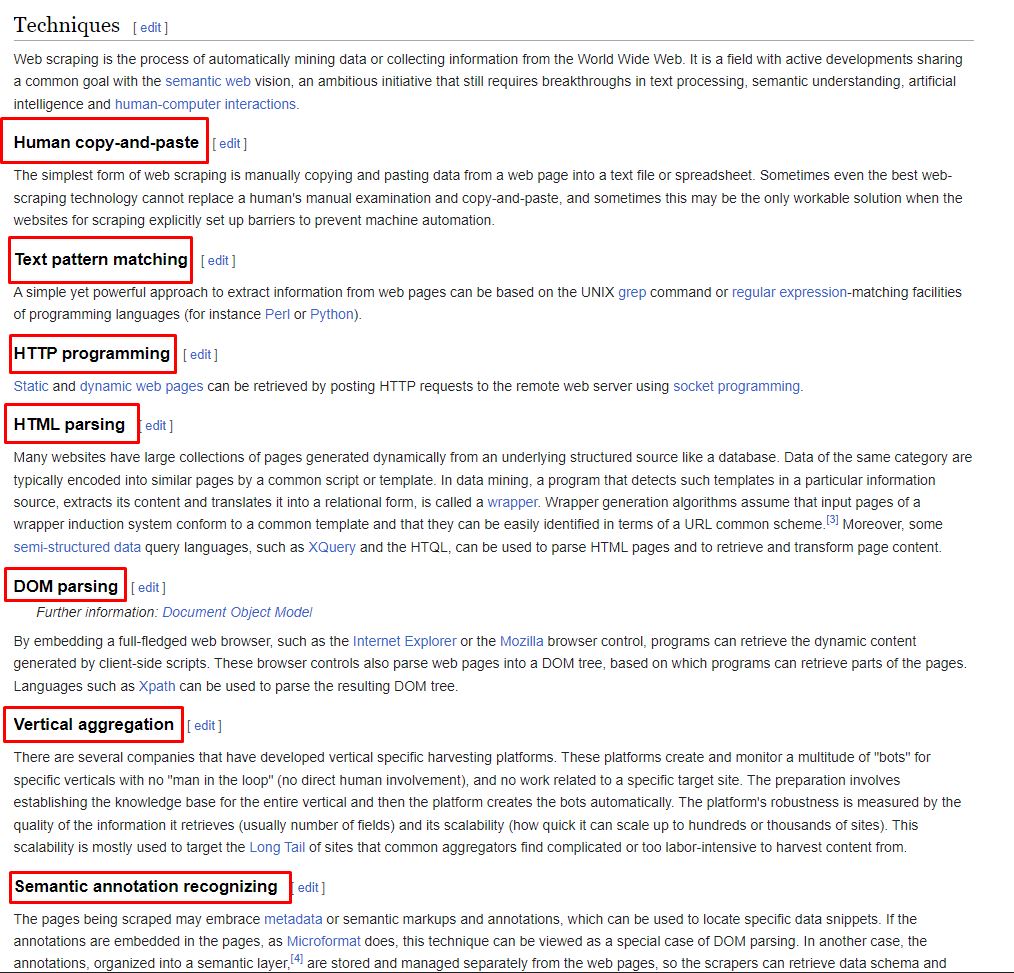
In today’s connected world, the web is an invaluable resource for augmenting the context used in code documentation. By employing web scraping and data retrieval techniques, LLMs can access the latest documentation updates, industry best practices, and real-world examples from public code repositories, forums, and official documentation websites.
Web-based context integration entails extracting relevant snippets from the internet and combining them with the internal code analysis. This not only enriches the generated documentation but also ensures that the output is reflective of current trends and standards in software development.
Implementing Web-Based RAG Systems
The technical implementation of web-based RAG systems involves several key steps:
- Data Extraction: Use web scraping tools to gather documentation and code examples from reliable online sources. These tools must effectively parse HTML content and convert it into text that can be incorporated into the LLM's input.
- Parsing and Cleaning: Extracted data undergoes filtering and cleaning to remove irrelevant information and ensure the quality of the context fed to the LLM.
- Contextual Integration: The cleaned data is then merged with local code context. This hybrid context provides a robust dataset for the LLM to draw inspiration and factual grounding from.
Table: RAG Process in Web-Based Documentation
| Step | Description | Key Components |
|---|---|---|
| Data Extraction | Utilize web scraping to obtain relevant online documentation and examples. | Scraping tools, APIs, HTML parsers |
| Data Cleaning | Filter and transform web data to ensure relevance and readability. | Parsing algorithms, text processing modules |
| Context Augmentation | Merge cleaned external data with internal code content. | Vector embeddings, semantic matching |
| Generation | Feed the augmented prompt into the LLM for accurate documentation. | LLM engines, fine-tuned parameters |
Through this structured process, web-based RAG systems can provide the LLM with the most accurate and recent information, which in turn results in documentation that is not only reflective of the current state of the codebase but also incorporates external insights that enhance its quality.
Challenges and Considerations
Managing Large-Scale Codebases
One of the primary challenges when implementing LLMs with RAG for coding and documentation is dealing with large-scale repositories. As software projects increase in size, ensuring that the correct pieces of context are retrieved and integrated becomes a complex task. Efficient chunking strategies are required to break down large codebases into manageable sections without losing critical context.
Developers must design systems that not only retrieve the right segments of code but also rank them according to relevance. This involves creating detailed indices and utilizing vector-based retrieval methods to navigate vast amounts of data effectively.
Ensuring Data Quality and Relevance
The quality of external data is paramount for successful documentation generation. Erroneous or outdated information, if integrated into the context, can lead to inaccuracies in the generated documentation. Therefore, validating the sources of external data and regularly updating them is crucial.
It is also important to implement robust filtering mechanisms to ensure that only high-quality, relevant data is passed to the LLM. This not only enhances the accuracy of the documentation but also reduces the risk of "hallucination" where the model might generate content not supported by any factual basis.
Continuous Improvement and Customization
As coding practices and documentation standards evolve, so too must the systems that underpin LLM-generated documentation. Continuous feedback loops, human-in-the-loop systems, and regular fine-tuning of the models are essential for maintaining a high-quality output.
Furthermore, the customization of RAG systems to specific project needs can significantly improve outcomes. Tailoring the retrieval and integration processes to the specifics of a codebase—such as the programming language used, modular structure, or internal documentation guidelines—results in more precise and useful documentation.
Practical Implementation Strategies
Step-by-Step Approach
Implementing an LLM-powered documentation system integrated with RAG involves several concrete steps:
- Repository Analysis: Begin by conducting a thorough analysis of the codebase. Identify key modules, critical functions, and areas where documentation is essential.
- Tool Integration: Select and integrate appropriate tools for LLM deployment and web-based data retrieval. This might involve incorporating APIs from LLM providers, utilizing web scraping frameworks, and implementing custom retrieval algorithms.
- Contextual Retrieval Setup: Develop a system for selective context retrieval. Utilize vector embeddings and multi-stage filtering to ensure that the most relevant pieces of external and internal data are identified.
- Fine-Tuning and Customization: Fine-tune the LLM on your specific codebase and documentation style. Customize the RAG integration to match your project’s unique requirements.
- Deployment and Monitoring: Deploy the system in a controlled environment and monitor its performance. Collect feedback and iterate on the fine-tuning to continuously improve accuracy and relevance.
Integrating with Development Workflows
For the system to be truly useful, it should integrate seamlessly with existing development workflows. Continuous integration (CI) pipelines can be enhanced to automatically trigger documentation generation upon code commits. Furthermore, collaboration platforms can utilize these generated documents, enabling teams to access context-rich, dynamically updated documentation as code evolves.
With such integration, the risk of outdated or inconsistent documentation is markedly reduced. Development teams can focus more on code quality and innovation, knowing that their documentation remains current and contextually accurate.
Evaluation Metrics and Performance
Quality Assurance Measures
Evaluating the success of an LLM-powered documentation system relies on several performance metrics. Quality assurance should focus on:
- Accuracy: Ensuring that the generated descriptions match the actual functionalities of the code.
- Relevance: Confirming that the context included is pertinent to the code segment or function being documented.
- Completeness: Assessing whether the documentation covers all aspects of the code, including edge cases and dependencies.
- Maintainability: Evaluating the system’s ability to update documentation as the codebase evolves.
Regular audits and user feedback play a critical role in ensuring that these metrics remain high. Implementing A/B testing and other iterative improvement methods can help refine the documentation process over time.
Table: Evaluation Metrics for LLM Documentation
| Metric | Description | Measurement Approach |
|---|---|---|
| Accuracy | Correctness of documented information relative to code functionality. | Code reviews, automated tests, user validation |
| Relevance | Extent to which the context provided matches the code need. | Relevance scoring, semantic similarity checks |
| Completeness | Coverage of all critical components and edge cases in documentation. | Comprehensive test cases, peer reviews |
| Maintainability | Ease with which documentation is updated and managed over time. | Change logs, version tracking, CI/CD integration |
References
Below are some valuable references that can further enhance understanding of LLM-enabled coding documentation and the applications of RAG in context reduction:
- LLM Fine-tuning Use Case: Generate Code Documentation - Predibase
- Building a LLM Agent for Software Code Documentation - Ambilio
- Autodoc: Experimental Toolkit for Auto-Generating Documentation - GitHub
- Doc Comments AI - LLM-Powered Documentation Generation - GitHub
- A Practitioners Guide to Retrieval Augmented Generation - Substack
- What is Retrieval-Augmented Generation (RAG)? - IBM Research
- RAG for Large Scale Code Repositories - Qodo
- Advanced Techniques in Retrieval-Augmented Generation - DataCamp
- Evaluating an LLM Code Documentation Generation Application - Medium
- RAG for Code Generation - Chitika
Recommended Queries
For further exploration of this topic, try these related queries:
Last updated March 1, 2025