
Local LLM Context Length Considerations
Explore how your Ultra9 285K, 64GB RAM, and dual RTX 3090 setup handles extensive LLM inference
Key Highlights
- GPU Memory and Architecture: Your dual RTX 3090s provide a total of 48GB VRAM, which is vital in determining the maximum token capacity.
- Model Size and Optimizations: The specific LLM, its architecture, and quantization optimizations critically influence context length.
- Practical Range: Real-world configurations suggest that context lengths can vary from a few hundred tokens for very large models to exceeding 16k tokens for well-optimized, moderately sized models.
Understanding the System Components
1. Hardware Overview
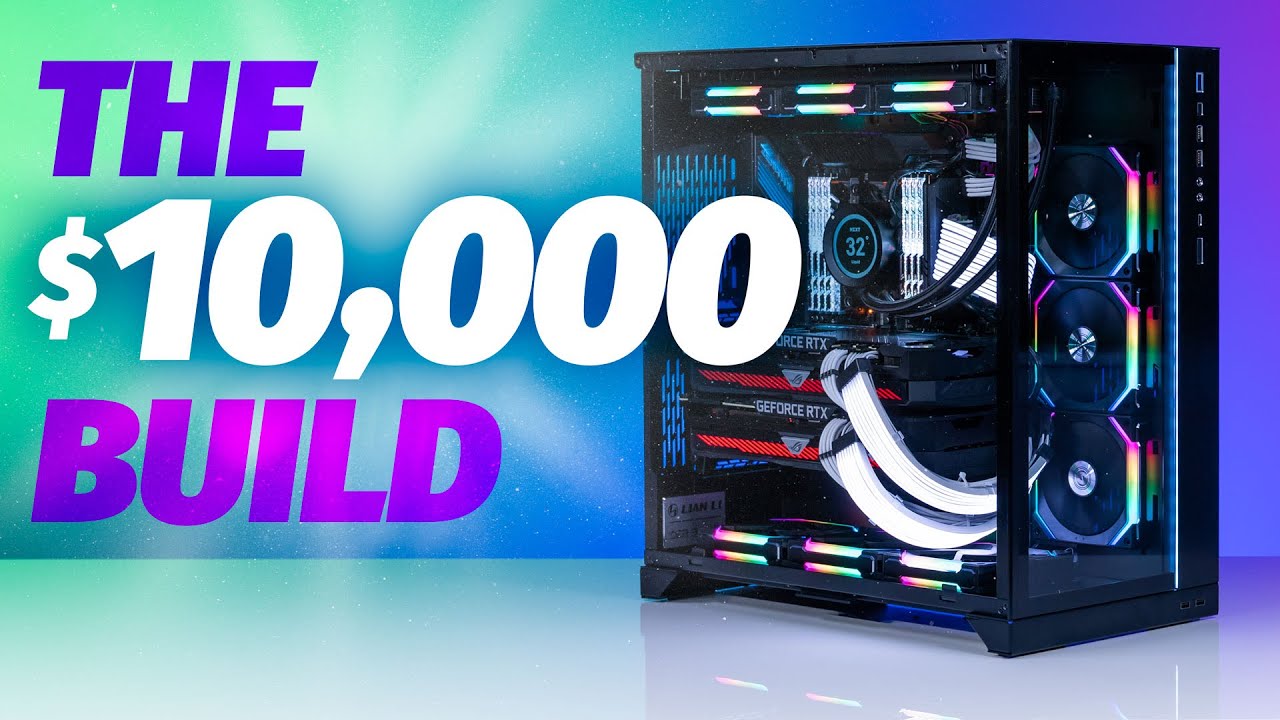
Your system, featuring an Ultra9 285K processor paired with 64GB of RAM and two NVIDIA RTX 3090 GPUs, is designed for high-performance tasks. Each RTX 3090 comes with 24GB of GDDR6X memory, providing a total of 48GB when using both cards. This memory is essential to support the heavy weight of transformer-based models by storing not only the parameters of the model but also the intermediate computations, embeddings, and attention matrices required during inference.
2. Role of VRAM and RAM
The context length that you can support is inherently tied to the available memory. With 48GB combined GPU memory, tasks can handle high-context length inputs. Meanwhile, the 64GB of system RAM complements this by accommodating overall system overheads, model weights, and ensuring the CPU can efficiently feed the GPUs. However, the precise allocation in each memory segment may depend on the specific software framework and model optimizations (e.g., precision adjustments, quantization techniques).
Model Considerations and Optimizations
1. Impact of Model Architecture and Size
Different LLM architectures and sizes exhibit varying behavior when it comes to context length. For example, transformer-based models, including variants similar to BERT, GPT, or Llama, employ self-attention mechanisms which scale quadratically with sequence length. This means that as you increase the number of tokens in the input (the context length), the memory requirement increases dramatically. Here are typical ranges:
- Small Models (e.g., 110M parameters): Models can feasibly work with context lengths up to 2048 tokens, though many applications use far fewer tokens.
- Medium Models (e.g., 340M parameters): A context length might be relatively lower, typically in the range of 512 to 1024 tokens, unless optimizations are extensively applied.
- Large Models (billions of parameters): These models may require the context length to be reduced further to 512 tokens or even 256 tokens for extremely large architectures.
2. Context Length Versus Batch Size
The practical context length isn’t solely defined by model size. Batch size, which is the number of input sequences processed in parallel, plays an important role. Reducing the batch size can allow for a longer sequence (or context) because it lessens memory pressure. Additionally, techniques such as gradient checkpointing and mixed-precision inference enable more efficient resource utilization.
3. Optimizations: Quantization and Software Improvements
Quantization is a popular method to reduce the memory footprint by representing weights with fewer bits, such as a 6-bit version compared to an ideal 16- or 32-bit form. For example, some users have reported that with models like Mixtral quantized to 6-bit precision, the setup can support considerably larger context lengths, potentially fitting within 48GB of VRAM more comfortably.
Simultaneously, adopting optimized inference engines such as ExLlama can help distribute the model across multiple GPUs, allowing software to be more efficient. However, leveraging two GPUs effectively requires that the software supports multi-GPU parallel execution; otherwise, the advantage of additional VRAM might not be fully realized.
Practical Context Length Scenarios
1. Single GTX 3090 Scenarios
When operating with just one RTX 3090 (24GB), users have demonstrated that context lengths of roughly 8k tokens can be achieved when operating with intelligent batching and memory optimization techniques. The limitations here are mostly due to the memory required by both the model parameters and the token embeddings.
2. Dual RTX 3090 in Concert
Utilizing two RTX 3090 GPUs theoretically provides double the VRAM, which means that context lengths can be roughly doubled compared to a single GPU if the model and drivers allow for efficient parallel processing. In practice, reports have indicated that such setups have successfully handled context lengths up to 16k tokens. It is important to note, however, that context scaling is not a strictly linear improvement; performance bottlenecks may arise from inter-GPU communication overhead and software limitations in utilizing the full extent of both GPUs' memory.
3. Influential Use Cases
Reports from various experiments with local LLM setups indicate that:
- Users have run configurations with models as large as 70B parameters using a single RTX 3090 through memory-efficient techniques and optimizations, though such setups might struggle with context lengths beyond 16k tokens.
- Optimized configurations using dual RTX 3090 GPUs can achieve context lengths in the range of 16k tokens, particularly when using specific frameworks that distribute model inference across GPUs.
- Some ambitious implementations claim support for models that work on even 32k tokens, but these are often highly tuned cases, and practical limits may start around 25,000-30,000 tokens beyond which the models can become less reliable or “confused.”
Comparative Table of Context Length Limits
| Model Category | Approximate Parameters | Single GPU (RTX 3090) | Dual GPUs |
|---|---|---|---|
| Small Models | ~110M | Up to 2048 tokens | Potentially up to 4096 tokens (with optimizations) |
| Medium Models | ~340M | 512 to 1024 tokens | Up to 2048 tokens (subject to batch size) |
| Large Models | ~1B | Approximately 512 tokens | Potential for 1024 tokens |
| Extra Large Models | 10B+ parameters | Around 256 tokens or fewer | Slight improvements possible but still memory constrained |
| Specialized LLMs (e.g., Llama variants) | Varies from a few billion to 70B | Up to 8k tokens with careful management | Up to 16k tokens in well-optimized settings |
Software Considerations
1. Multi-GPU Support and Distribution
For your GPU configuration to fully translate into an enhanced context length support, the software you choose must properly support multi-GPU execution. Not every LLM implementation is designed to seamlessly share load across GPUs. Software solutions like ExLlamaV2 and certain custom inference engines have shown significant improvements by effectively distributing model parameters and computations over multiple GPUs. Therefore, verifying that your chosen framework is optimized for multi-GPU setups on Ubuntu is key.
2. Quantization and Precision Reduction
Utilizing quantization provides a substantial advantage by shrinking the memory required for storing and processing model parameters. For instance, moving from a 32-bit to a 6-bit precision model can free up VRAM to allow more tokens to be processed simultaneously. Such approaches enable models that might typically struggle with large context windows to extend support beyond their usual range.
3. Batching Techniques and Resource Allocation
Smaller batches during inference can reduce the per-token overhead in memory usage. In practical scenarios, strategically tuning batch size alongside context length will help you achieve an optimal balance and prevent out-of-memory errors. Experimentation with different parameter settings is essential to determine the highest feasible token count for your configuration.
Practical Implementation Tips
Testing and Experimentation
The best way to ascertain the maximum supported context length on your system is by iterative testing. Start with conservative token counts and monitor the GPU and RAM utilization during inference. Gradually increase the context length while ensuring that performance remains acceptable. Tracking performance metrics like throughput, latency, and memory consumption can offer insights into the optimal configurations for your specific LLM setup.
Leveraging Community Experiences
Many users in the LLM community have shared their real-world experiences on forums such as Reddit and GitHub. These platforms offer valuable hands-on advice ranging from hardware-specific tweaks to software optimizations for handling longer context lengths. Considering community benchmarks can help set realistic expectations and guide your experimentation process.
Software Updates and Driver Considerations
Since you are running Ubuntu, also keep in mind that driver versions and CUDA updates can significantly affect performance and memory management. Ensure that you have the latest GPU drivers and that your software environment is up to date to benefit from the latest optimizations and bug fixes. This proactive approach helps maintain compatibility especially when pushing for maximum context lengths during LLM inference.
Summary of Key Considerations
Hardware-Driven Limits
Your two RTX 3090 GPUs collectively offer significant VRAM (48GB), permitting larger context lengths provided that the software distributes loads efficiently and uses the available memory effectively.
Model and Software Optimizations
Depending on the LLM being used, context lengths can range considerably. Approaches such as model quantization, small batch processing, and multi-GPU support are central in extending the support beyond a few thousand tokens. Specialized implementations in the community illustrate that optimized settings can reach up to 16k tokens or even more for certain configurations.
Practical Testing and Trade-Offs
In experimentation, consider starting with lower context lengths and gradually increasing them while monitoring for performance degradation and memory bottlenecks. The trade-offs involve balancing batch sizes, quantization precision, and hardware limits to achieve the desired outcome.
References
- How to: Summarization with 70B on a Single 3090 - Reddit
- Build A Capable Machine For LLM and AI - Hardware Corner
- My 32k Llama Setup for 3090 and 64GB RAM - Reddit
-
Hacker News Discussion - Y Combinator
- Best GPU LLM Training & Inference - Bizon Tech
Recommended Related Queries
Last updated March 21, 2025