
Revolutionizing Network Forensics: LLMs in PCAP Analysis
Unlocking Deeper Insights from Packet Captures with Advanced AI
Key Insights into LLM-Powered PCAP Analysis
- Enhanced Efficiency and Speed: Large Language Models (LLMs) significantly accelerate the analysis of vast and complex PCAP datasets, automating tasks that traditionally require extensive manual effort from network and security professionals.
- Advanced Threat Detection and Anomaly Identification: LLMs excel at processing massive amounts of network traffic, security logs, and threat intelligence feeds to identify subtle patterns, anomalies, and potential security breaches that might evade conventional detection methods.
- Democratization of Network Insights: Tools leveraging LLMs, such as Selector Packet Copilot and Local Packet Whisperer, are making complex packet analysis accessible to a broader audience by enabling natural language interaction with PCAP data, reducing the need for specialized tool expertise.
The landscape of network analysis and cybersecurity is undergoing a profound transformation with the integration of Large Language Models (LLMs). Traditionally, analyzing Packet Capture (PCAP) files—which store recorded network traffic—has been a labor-intensive process, demanding deep expertise in network protocols and specialized tools like Wireshark. However, LLMs are emerging as a game-changer, promising to streamline this complex task, enhance threat detection, and democratize access to critical network insights. This comprehensive analysis delves into how different LLMs are being applied to PCAP file analysis, highlighting their capabilities, challenges, and the innovative solutions emerging in this exciting field.
The Core Challenge of PCAP Analysis
Navigating the Deluge of Network Data
PCAP files are indispensable for network troubleshooting, security incident response, performance optimization, and forensic investigations. They capture raw network data, including headers and payloads, providing a detailed snapshot of communications. The sheer volume and complexity of this data, however, present significant challenges:
- Manual Intensive: Sifting through gigabytes of packet data to pinpoint relevant events requires considerable time and expert knowledge.
- Complexity of Protocols: Understanding the intricacies of various network protocols (HTTP, SMB, DNS, SSL/TLS, etc.) is crucial but challenging.
- Anomaly Detection: Identifying subtle anomalies or malicious patterns within legitimate traffic can be like finding a needle in a haystack.
- Scalability: Traditional tools struggle to handle the high velocity and large volume of modern network traffic.
This is where LLMs offer a compelling solution, leveraging their ability to process and interpret vast amounts of unstructured data, much like human language, to extract actionable insights from PCAP files.
LLMs: A New Paradigm for Network Analysis
Transforming Raw Data into Actionable Intelligence
LLMs are poised to revolutionize PCAP analysis by automating many of the tedious and complex tasks, providing insights in a more accessible format, and enhancing the speed and accuracy of investigations. Their core strength lies in their natural language understanding and generation capabilities, which can be applied to textual representations of packet data.
Conversational Analysis and Troubleshooting
One of the most immediate benefits of integrating LLMs with PCAP analysis tools is the ability to engage in conversational analysis. Instead of relying on complex filter syntax or deep protocol knowledge, users can ask natural language questions about the network traffic. Tools like Selector Packet Copilot and the hobby project Local Packet Whisperer exemplify this. They allow users to upload PCAP files and then query the data in plain English, asking questions such as "Show me all network traffic egressing US-EAST-1 in the last 24 hours heading to embargoed countries" or "Analyze the PCAP file for suspicious network activity." This dramatically lowers the barrier to entry for network analysis, making it accessible to a broader range of professionals.
An example of the conversational analysis interface in Selector Packet Copilot.
Automated Threat Detection and Anomaly Identification
LLMs are exceptionally good at pattern recognition and anomaly detection, crucial for cybersecurity. By analyzing large volumes of security logs, network traffic, and threat intelligence feeds, LLMs can identify unusual behavior, suspicious patterns, and indicators of compromise that might be missed by traditional rule-based systems. For instance, LLMs can detect and classify malware by analyzing code snippets and behavioral patterns. They can also aid in identifying IDS evasion techniques and "beaconing" behavior indicative of command and control malware.
Predictive Capabilities for Network Optimization
Beyond retrospective analysis, LLMs can also offer predictive insights. By analyzing historical PCAP data, LLMs can forecast future network traffic patterns, helping network administrators with better planning, resource allocation, and capacity management. This proactive approach ensures smoother network operations and minimizes downtime.
Self-Supervised Learning for Failure Detection: LLMcap
A significant innovation in this domain is LLMcap, a self-supervised LLM-based method designed to revolutionize fault detection in telecommunication networks. Unlike traditional machine learning approaches that require vast amounts of labeled data for training, LLMcap learns generic traffic representations from heterogeneous raw data without explicit labeling. This adaptability makes it highly valuable for diverse network environments where labeled data is scarce or impractical to obtain. LLMcap demonstrates high accuracy in identifying and localizing failures within PCAP data, providing valuable insights for troubleshooting and root cause analysis in production environments.
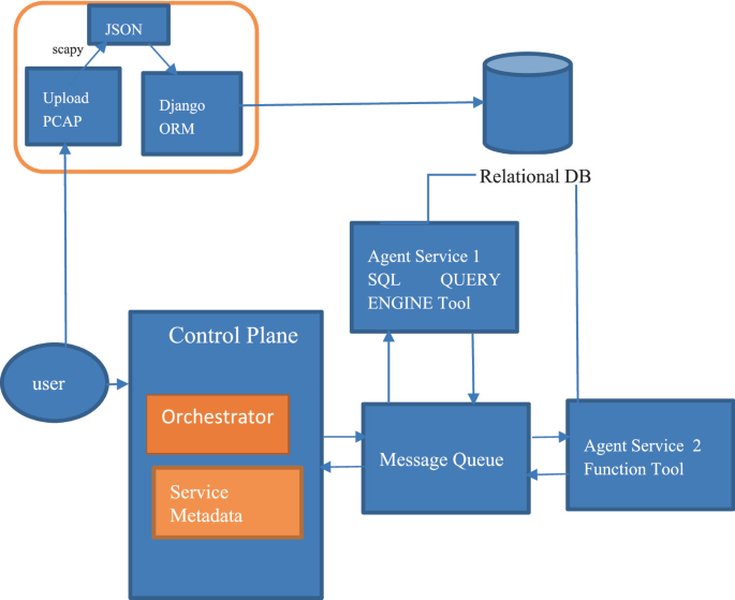
Conceptual framework illustrating the application of LLMs in PCAP analysis.
Comparing LLMs for PCAP Analysis: A Radar Chart Perspective
Evaluating Performance Across Key Metrics
When considering which LLMs are suitable for PCAP analysis, several factors come into play, including their accuracy, speed, model size, energy efficiency, and cost. While specific benchmarks for PCAP analysis are still evolving, we can infer performance based on their general capabilities and reported metrics for complex tasks like code generation and natural language processing. The following radar chart provides an opinionated comparative analysis of prominent LLMs, considering their potential suitability for PCAP analysis workflows.
This radar chart illustrates the trade-offs involved when selecting an LLM for PCAP analysis. Proprietary models like GPT-4.5 and Claude 3.7 generally offer higher accuracy and superior natural language understanding, but come with higher costs and typically require cloud-based API access, posing privacy concerns for sensitive PCAP data. Open-source models like Llama 3 and DeepSeek R1, especially when run locally via platforms like Ollama, provide excellent cost-effectiveness and data privacy, making them ideal for sensitive environments. While their out-of-the-box accuracy on complex, domain-specific tasks might sometimes lag behind their proprietary counterparts, they offer significant flexibility for fine-tuning and integration into custom workflows.
Diving Deeper into LLM Performance and Selection
The choice of LLM for PCAP analysis often depends on specific requirements:
- For maximum accuracy and ease of use (cloud-based): GPT-4.5 and Claude 3.7 are strong contenders due to their advanced reasoning and broad knowledge base, making them adept at interpreting complex network behaviors and security implications.
- For privacy-sensitive or cost-constrained environments (local deployment): Llama 3, DeepSeek R1, and other open-source models supported by tools like Ollama are excellent choices. Projects like "Local Packet Whisperer" demonstrate the viability of running powerful LLMs locally for private PCAP analysis, leveraging Python libraries like PyShark for packet parsing.
- For telecom-specific failure detection: LLMcap, with its self-supervised learning approach, stands out for its ability to analyze PCAP data without labeled examples, which is crucial for dynamic and complex telecommunication networks.
Practical Applications and Emerging Tools
Bridging the Gap Between AI and Network Operations
The application of LLMs to PCAP analysis extends across various practical scenarios in network engineering and cybersecurity.
Security Monitoring and Incident Response
LLMs can significantly enhance security operations by analyzing network traffic to identify potential threats. For instance, they can be trained to recognize patterns associated with specific attack vectors, detect command-and-control (C2) communications, or identify unauthorized data exfiltration. When a security incident occurs, LLMs can quickly sift through relevant PCAP data to provide a summary of the incident, identify affected systems, and suggest remediation steps, thereby dramatically reducing incident response times.
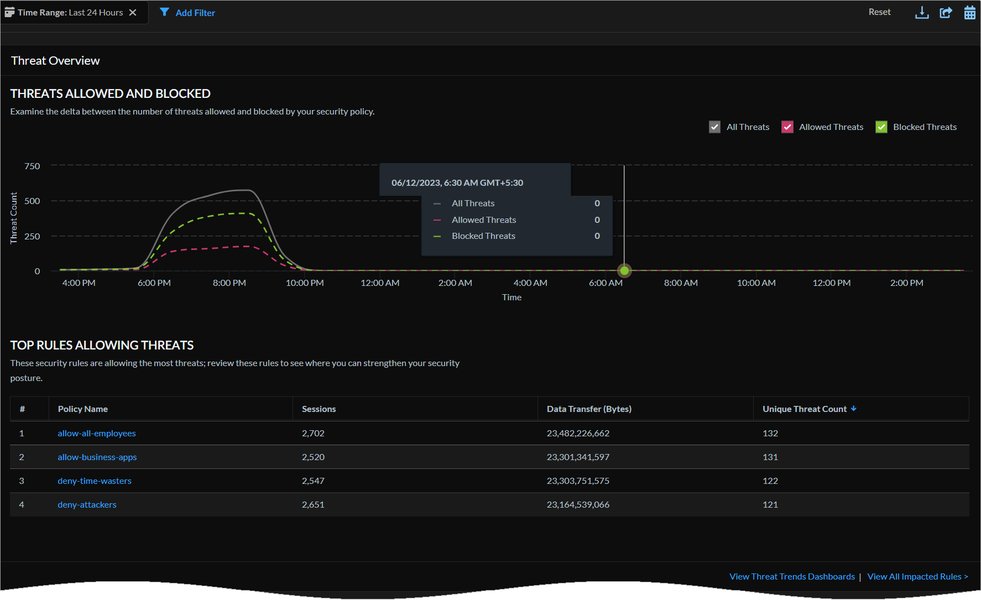
An advanced threat prevention dashboard, illustrative of the insights LLMs can contribute to.
Network Performance Optimization and Troubleshooting
For network engineers, LLMs offer new ways to diagnose performance issues. By analyzing PCAP files, an LLM can identify bottlenecks, latency issues, excessive retransmissions, or misconfigurations. Instead of manually inspecting packet headers and payloads, engineers can ask the LLM to identify the root cause of slow application performance or intermittent connectivity problems. This capability helps optimize network resources and maintain service reliability.
Automated Documentation and Code Generation
LLMs can also assist in more general network operations tasks. They can automate the generation of network documentation based on observed traffic patterns or assist in writing scripts for network automation and analysis. For example, an LLM could generate Wireshark display filters based on a natural language query, or even propose Python code snippets for Scapy-based packet manipulation.
Here's an example of how an LLM might generate a Wireshark filter based on a request:
# User query: "Show me all HTTP GET requests to example.com"
# LLM generated Wireshark filter:
http.request.method == "GET" and http.host == "example.com"
Key Tools and Platforms for LLM-Powered PCAP Analysis
Innovations in the Ecosystem
The development of LLM-powered PCAP analysis is still nascent but rapidly evolving. Several tools and projects are spearheading this integration:
| Tool/Platform | Description | LLM Integration | Key Features for PCAP Analysis |
|---|---|---|---|
| Selector Packet Copilot | A groundbreaking tool for interactive, AI-powered network packet analysis. | Leverages advanced AI and machine learning for conversational analysis. | Effortless PCAP uploads, natural language querying, real-time insights, democratizes access. |
| Local Packet Whisperer (LPW) | A hobby project for 100% local and private PCAP analysis. | Uses Ollama and open-source LLMs (e.g., Llama, DeepSeek) for local inference. | Private data handling, Streamlit UI, PyShark for parsing, agentic insights (experimental). |
| LLMcap | A self-supervised LLM for unsupervised PCAP failure detection in telecom networks. | Trained on PCAP data without labeled examples using masked language modeling. | High accuracy in failure detection and localization, adaptable to various network services, eliminates need for labeled data. |
| DynamiteLab | A free online PCAP file viewer and analyzer. | Performs network traffic analysis and cyber threat detection, likely incorporating AI/ML elements. | Successor to PacketTotal, large repository of PCAP files, online alternative to tcpdump/Wireshark. |
| A-Packets | Online PCAP analysis and network traffic insights platform. | APIs allow automation of PCAP file parsing and extraction of useful information. | Extracts passwords, analyzes HTTP, SMB, DNS, SSL/TLS, supports IPv4/IPv6, Telnet, FTP, SSDP, WPA2. |
| Wireshark with LLM Integrations | The de facto standard for packet analysis, now with experimental LLM add-ons. | External scripts or plugins to send PCAP data (or parsed text) to LLMs (e.g., ChatGPT Packet Buddy). | Leverages Wireshark's robust dissection capabilities, uses LLMs for high-level summaries and complex query generation. |
Challenges and Future Directions
Navigating the Path Forward
While the potential of LLMs in PCAP analysis is immense, several challenges need to be addressed:
- Data Privacy and Sensitivity: PCAP files can contain highly sensitive information. Sending this data to cloud-based LLMs raises significant privacy and security concerns. Local LLM deployments, as seen with Local Packet Whisperer, are crucial for mitigating this.
- Context Window Limitations: Even large LLMs have context window limits, meaning they can only process a finite amount of text at a time. This can be a hurdle when analyzing extremely large PCAP files. Techniques like retrieval-augmented generation (RAG) and intelligent data filtering are essential to overcome this.
- Hallucinations: LLMs can sometimes "hallucinate" or generate plausible but incorrect information. In critical network analysis, this can lead to misdiagnoses or security oversights. Robust validation and human oversight remain vital.
- Domain-Specific Training: General-purpose LLMs may not always interpret highly technical network jargon or complex protocol interactions accurately without specific fine-tuning on network-related datasets. Specialized LLMs like TrafficLLM and LLMcap are addressing this by focusing on domain-specific training.
- Computational Resources: Running powerful LLMs, especially locally, requires substantial computational resources (GPUs, RAM), which might be a barrier for some users.
The future of LLM-powered PCAP analysis lies in overcoming these challenges through continued research in self-supervised learning, efficient model architectures, privacy-preserving techniques, and robust integration with existing network analysis workflows. As LLMs become more specialized and accessible, they are set to become an indispensable tool for network and security professionals.
Harnessing AI for Network Insights: A Visual Deep Dive
Understanding LLMs in Action for PCAP Analysis
To further illustrate the practical application of LLMs in network analysis, let's explore a video that discusses automating network packet analysis with AI. This video provides a direct insight into how AI can be leveraged for troubleshooting and understanding complex network behaviors, which is at the core of PCAP analysis.
B-Yond: Automating Network Packet Analysis With AI. This video discusses the power of PCAPs in network analysis and how AI, specifically LLMs, can automate and enhance the troubleshooting process.
This video from B-Yond highlights the critical role of packet captures in network analysis and how the integration of AI, particularly LLMs, can automate and enhance the process. The core message resonates with the potential of LLMs to transform manual, resource-intensive analysis into an automated, insightful workflow. By abstracting complex network events into human-readable explanations and actionable recommendations, LLMs can significantly reduce the time and expertise required for in-depth network troubleshooting and performance monitoring. This automation extends beyond simple anomaly detection to proactive identification of potential issues and even suggesting root causes, moving network operations closer to a truly intelligent, self-healing infrastructure.
Frequently Asked Questions
What is a PCAP file?
How do LLMs help with PCAP analysis?
Are there privacy concerns when using LLMs for PCAP analysis?
Can LLMs replace traditional network analysis tools like Wireshark?
Conclusion
The integration of Large Language Models into PCAP file analysis represents a significant leap forward in network operations and cybersecurity. By leveraging their advanced natural language processing capabilities, LLMs can transform the tedious and complex task of analyzing vast network datasets into a more intuitive, efficient, and insightful process. From enhancing threat detection and accelerating incident response to optimizing network performance and enabling conversational troubleshooting, LLMs are proving to be invaluable. While challenges such as data privacy and the need for domain-specific training persist, ongoing innovations in self-supervised learning, local LLM deployment, and refined integration strategies are rapidly paving the way for LLMs to become an indispensable component of modern network analysis toolkits, ultimately making network insights more accessible and actionable for professionals across the globe.
Recommended Further Queries
- How to implement local LLMs for network security?
- Role of AI in predictive network traffic analysis
- Challenges of using LLMs in real-time network monitoring
- Comparison of open-source vs proprietary LLMs for enterprise cybersecurity