
Integration of Machine Learning with Radar Time-Frequency Analysis
Exploring advanced signal processing enhanced by artificial intelligence
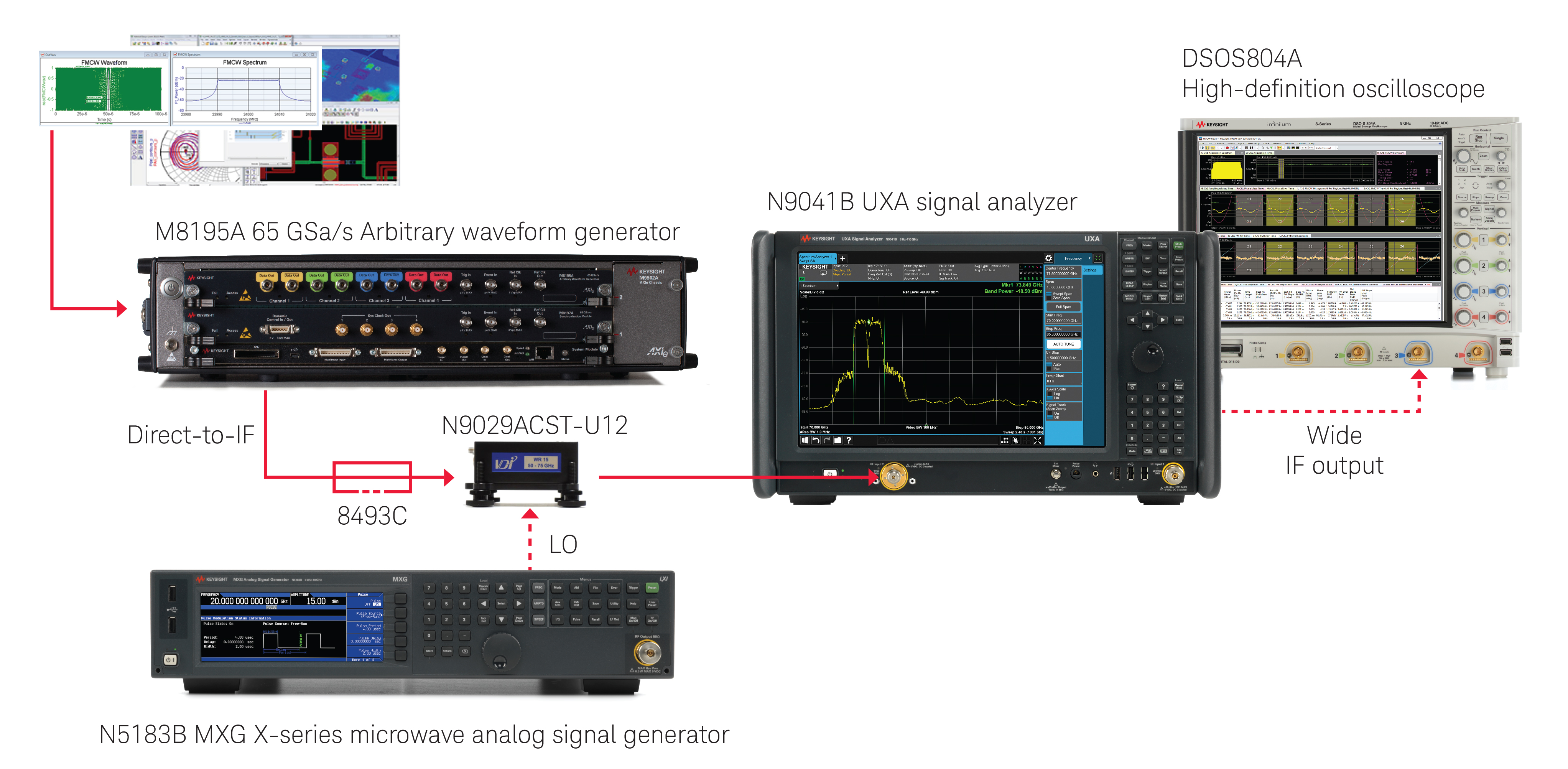
Key Highlights
- Enhanced Target Classification: Leveraging time-frequency imagery to classify objects with high precision.
- Real-Time Adaptation: Advanced ML algorithms continuously adapting radar systems to dynamic environments.
- Improved Signal Processing: Integration of deep learning with sophisticated signal transformations enhances noise reduction and feature extraction.
Overview
The integration of machine learning (ML) with radar time-frequency analysis represents a significant evolution in radar technology. This synergy has allowed for more nuanced data processing, enabling the extraction of features from complex radar signals that are often noisy or non-stationary. By converting one-dimensional radar data into time-frequency images, ML models—especially deep neural networks—can more accurately identify patterns, classify targets, and even predict behaviors based on historical data. In this detailed discussion, we explore the key concepts, methodologies, and applications that underpin this integration.
Fundamental Concepts
Time-Frequency Analysis Explained
Time-frequency analysis is a technique that studies signals across both the time and frequency domains simultaneously. Traditional Fourier analysis provides frequency domain information but lacks temporal resolution. In contrast, methods such as the Short-Time Fourier Transform (STFT), Continuous Wavelet Transform (CWT), and Synchrosqueezing transform allow for a detailed representation of how a signal's frequency content evolves over time. When applied to radar signals, these techniques transform raw data into rich, multidimensional representations, revealing features like transient behavior and non-stationary patterns.
Key Time-Frequency Techniques
Common techniques include:
- STFT: Offers a balanced view by dividing the signal into small time windows, then applying Fourier Transform to each segment.
- Wavelet Transform: Provides multi-resolution analysis, essential for capturing both high-frequency details and low-frequency trends.
- Synchrosqueezing: Enhances time-frequency representations by reassigning energy to produce sharper images, thereby aiding feature extraction.
Machine Learning and Its Role
Machine learning, particularly deep learning, has become a transformative approach in processing massive, complex datasets. By training on vast quantities of radar data, ML algorithms are capable of uncovering patterns that may be imperceptible to traditional analytical methods. The ability to perform real-time learning and adaptation positions ML as a critical asset in improving radar system performance. The integration involves both supervised learning, where models learn from labeled examples, and unsupervised learning, wherein they discover inherent structures in the input data.
Applications of ML in Radar
- Target Classification: Differentiating targets like pedestrians, vehicles, and UAVs from radar signatures.
- Signal Sorting and Sorting Anomalies: Sorting signals into distinct categories based on modulation characteristics or interference patterns.
- Interference Mitigation: Identifying and filtering out unwanted noise or jamming signals in real-time.
- Healthcare Monitoring: Interpreting micro-Doppler signatures for vital sign monitoring and activity recognition.
Core Integration Methodologies
The practical integration of machine learning with radar time-frequency analysis involves several technical and methodological steps. These approaches enhance radar systems’ ability to process data efficiently, even when faced with complex environments.
Data Acquisition and Preprocessing
High-quality data is the cornerstone for effective machine learning applications. Radar systems generate vast amounts of raw data, including radar echoes and pulse-range maps. This data must first be converted into time-frequency representations through techniques like STFT or wavelet transforms. The result is generally a two-dimensional “image” where one axis represents time and the other frequency.
Data Augmentation and Simulation
In many cases, particularly where real-world data may be scarce or incomplete, simulations are used to generate additional training datasets. Data augmentation techniques, which include adding noise, scaling, or shifting the data, help create robust models that generalize well to unseen radar signals.
Feature Extraction and Representation Learning
Once the data is prepared, feature extraction is the next critical step. Converting radar signal data into time-frequency images exposes features that are instrumental for subsequent machine learning. Deep learning networks, particularly Convolutional Neural Networks (CNNs), have been effective in recognizing patterns from these images. The role of feature extraction in radar signal analysis is twofold: it enhances the resolution of salient features, and it simplifies the classification problem by reducing the dimensionality of the data.
Techniques for Feature Extraction
Various methods are applied to extract and enhance features:
- Deep convolutional layers in NN architectures extract hierarchical features, from edges to complex shapes.
- Traditional methods, such as wavelet scattering, provide complementary cues that can enhance and augment deep learning approaches.
- Transfer learning from pre-trained models such as SqueezeNet or ResNet enables efficient feature extraction even when limited training data is available.
Classification and Recognition
The classified time-frequency images can be used to perform various recognition tasks. These tasks range from identifying specific signal modulations in electronic warfare to classifying micro-Doppler signatures produced by different types of targets like UAVs or ground vehicles. For example, radar echoes from different shaped objects generate unique time-frequency patterns, enabling highly accurate target classification when processed through deep learning pipelines.
Algorithms in Use
Common machine learning models and approaches include:
- Convolutional Neural Networks (CNNs): Used primarily for image-based analysis of time-frequency representations.
- Long Short-Term Memory Networks (LSTMs): Beneficial for sequential data analysis, capturing temporal dependencies in radar signals.
- Support Vector Machines (SVMs): Often used in combination with feature extraction techniques to classify radar waveforms.
- Random Forests: Applied in scenarios where multiple decision trees improve classification accuracy, particularly in complex environments with overlapping signals.
Practical Applications of the Integration
Military and Surveillance
Radar systems play an essential role in military and surveillance applications. The integration of machine learning significantly enhances these systems by offering advanced target classification capabilities and improved interference mitigation. Complex electromagnetic environments, such as battlefields, require rapid identification and tracking of multiple moving targets. ML models can process real-time radar data to identify signatures that differentiate friendly from hostile targets, and even predict the behavior of unknown objects by analyzing historical patterns.
UAV Detection and Classification
Unmanned aerial vehicles (UAVs) have become prominent in modern defense scenarios. Micro-Doppler analysis, in combination with ML, is particularly effective in detecting and classifying UAVs by examining the rotor blade signatures and flight dynamics captured in time-frequency images. Advanced algorithms can differentiate between different types of drones and even estimate their flight trajectories.
Environmental Monitoring
Outside of military applications, radar systems integrated with machine learning find valuable applications in weather forecasting and environmental monitoring. By analyzing the Doppler shifts and spectral content derived from time-frequency analysis, it’s possible to accurately monitor precipitation, wind patterns, and other atmospheric phenomena. These capabilities are vital for both civilian purposes such as meteorological forecasting, and for early warning systems in disaster management.
Healthcare and Vital Sign Monitoring
An emerging field leveraging this integration is healthcare, where radar systems are used for non-invasive monitoring. Machine learning algorithms analyze micro-Doppler signatures to detect subtle movements associated with vital signs or human activities. For example, small changes in a patient’s respiration or cardiac activity, which may be indicative of health issues, are monitored by converting these signals into time-frequency representations and classifying them with deep learning models.
Comparative Analysis and Performance Metrics
Evaluating the performance of radar systems enhanced by machine learning requires a detailed comparison based on several key performance metrics. The following table provides an overview of the comparative advantages of traditional signal processing techniques versus those enhanced with ML integration.
| Parameter | Traditional Methods | ML Enhanced Methods |
|---|---|---|
| Classification Accuracy | Moderate; relies on manual feature extraction | High; automatic feature learning through CNNs and deep networks |
| Real-Time Adaptability | Limited by static models and pre-defined algorithms | Enhanced through continuous learning and adaptation |
| Interference Mitigation | Standard filtering with limited interference characterization | Advanced filtering using deep learning for dynamic noise cancellation |
| Signal-to-Noise Ratio | Depends on hardware and static signal processing methods | Improved through robust feature extraction and adaptive filtering |
| Operational Complexity | Lower; easier to deploy but less flexible | Higher; requires powerful computational resources yet offers scalability |
Challenges and Future Directions
Despite the significant advances brought by the integration of machine learning with radar time-frequency analysis, several challenges remain. The accuracy and efficiency of ML models depend heavily on the quality and volume of training data, which can be a constraint in environments where gathering extensive labeled radar data is difficult. Furthermore, developing systems capable of processing data in real-time without compromising accuracy poses both hardware and algorithmic challenges.
Data Quality and Simulation
One of the critical challenges is obtaining comprehensive datasets that capture the variability of radar signals in real-world environments. Simulation and data augmentation techniques are increasingly used to offset the shortage of high-quality data, but these methods must ensure that synthetic data accurately mimics real-world conditions. With improvements in simulation fidelity, future radar systems are anticipated to benefit from even more robust training regimens.
Real-Time Processing Limitations
The computational demands of processing time-frequency data in real-time using advanced ML methods represent another significant challenge. Emerging hardware accelerators, edge computing solutions, and more efficient algorithms are likely to alleviate these constraints, enabling next-generation radar systems to provide rapid response capabilities in dynamic environments.
Integration with Multi-Sensor Systems
Future advancements include the fusion of radar data with other sensor modalities such as optical, acoustic, or infrared inputs. Combining diverse data sources can enhance target detection and classification, especially in scenarios where radar data alone might be ambiguous or insufficient.
Case Studies and Illustrative Examples
Several case studies underline successful integrations of machine learning with radar time-frequency analysis. In military applications, models have demonstrated the ability to classify different vehicle types or distinguish between friendly and hostile assets by analyzing the time-frequency characteristics of their radar returns. Similarly, environmental weather radars enhanced by ML have shown marked improvements in predicting and tracking storm systems, contributing valuable data for early warning systems.
Innovative Research in Micro-Doppler Analysis
Research in micro-Doppler analysis has led to the differentiation of subtle human motions, such as walking, running, or even falling. These methods have found utility in smart surveillance and healthcare monitoring, providing non-intrusive ways to monitor individuals in sensitive environments. Machine learning algorithms have increased the granularity of these analyses, correctly identifying even small nuances in human activity from the radar data.
Emerging Trends
Innovations such as the incorporation of generative adversarial networks (GANs) to simulate rare radar events and the use of contrastive learning to refine signal sorting are driving future directions in the field. These advancements promise to widen the applicability of radar systems into areas like autonomous vehicle sensing, urban planning, and advanced climatology.
Conclusion
The integration of machine learning with radar time-frequency analysis has ushered in a new era of signal processing and target detection. This technological convergence not only elevates the accuracy and efficiency of target classification but also enhances the adaptability of radar systems across diverse applications. From military surveillance and UAV detection to environmental monitoring and healthcare, advanced ML algorithms combined with sophisticated signal transformation techniques offer unprecedented insights into complex datasets.
As research continues and data quality improves, future radar systems are expected to become even more adaptive, intelligent, and capable of processing information in real-time. The challenges of data scarcity, computational demands, and sensor integration are being actively addressed through innovations in simulation, hardware acceleration, and algorithmic refinement. By bridging traditional radar signal processing with cutting-edge machine learning, developers and researchers are opening up new avenues for applications that leverage rich time-frequency data streams, driving the evolution of modern radar technologies.
Overall, this integration marks a significant technological advancement with far-reaching implications, promising enhanced performance and more intelligent systems that can operate effectively in increasingly complex electromagnetic environments.
References
- AI and Machine Learning in Radar Systems - Dr. Zhang Blog
- AI Transforming Adaptive Radar - MachineLearn.com
-
Radar Signal Analysis for Biosignals - PMC
- Radar Target Classification Using Deep Learning - MDPI
-
Time-Frequency Analysis in Radar - ScienceDirect
- AI for Radar - MathWorks
Recommended Further Queries
Last updated February 25, 2025