
Unlocking Radar's Full Potential: How Machine Learning Revolutionizes Time-Frequency Analysis
Discover the synergistic power of AI in decoding complex radar signals for unprecedented accuracy and insight.
Key Insights: The ML-Radar Symbiosis
- Enhanced Signal Interpretation: Machine learning (ML) algorithms, particularly deep learning, significantly improve the ability to extract meaningful patterns from complex radar time-frequency representations (TFRs), leading to more accurate target detection and classification.
- Robustness in Complex Environments: The integration allows radar systems to perform more reliably in noisy, cluttered, and dynamic electromagnetic environments where traditional methods falter, by learning to differentiate targets from interference.
- Automation and Efficiency: ML automates the feature extraction process from TFRs, reducing reliance on manual engineering and enabling faster, more adaptable radar systems for diverse applications like autonomous driving, defense, and biomedical monitoring.
The Convergence: Machine Learning Meets Radar Time-Frequency Analysis
Radar systems are pivotal in numerous fields, from weather forecasting and air traffic control to autonomous vehicles and medical diagnostics. At the heart of radar signal processing lies Time-Frequency Analysis (TFA), a technique crucial for understanding signals whose frequency content changes over time. These non-stationary signals are common in radar applications due to target motion, environmental interference, or the inherent characteristics of the radar pulses themselves. The integration of Machine Learning (ML) with TFA marks a significant leap forward, offering powerful new ways to interpret and utilize radar data.
Understanding Radar Time-Frequency Analysis (TFA)
TFA methods provide a two-dimensional representation of a signal, showing its energy distribution across both time and frequency. This is essential for radar because it allows for the detailed examination of how signal characteristics evolve, revealing information about target velocity (via Doppler shift), range, and even subtle micro-motions.
Common TFA Techniques in Radar:
- Short-Time Fourier Transform (STFT): This technique applies the Fourier Transform to short, overlapping segments of a signal, providing a series of frequency spectra localized in time. It's widely used for its simplicity but has a fixed time-frequency resolution.
- Wavelet Transforms (e.g., Continuous Wavelet Transform - CWT): Wavelets offer a multi-resolution analysis, meaning they can use short time intervals for high-frequency components and long time intervals for low-frequency components. This makes them adept at capturing transient features and non-stationary signal characteristics.
- Wigner-Ville Distribution (WVD) and other Quadratic TFRs: These methods can offer higher time-frequency resolution compared to STFT. However, they can suffer from cross-term interference when analyzing multi-component signals, though variations exist to mitigate this.
- Fractional Fourier Transform (FrFT): Particularly useful for analyzing chirp signals and dealing with maneuvering targets where Doppler frequencies change rapidly, FrFT is a generalization of the classical Fourier Transform.
While these TFA techniques are powerful, interpreting their outputs, especially in dense or noisy environments, can be challenging and often requires expert knowledge. This is where ML offers transformative potential.
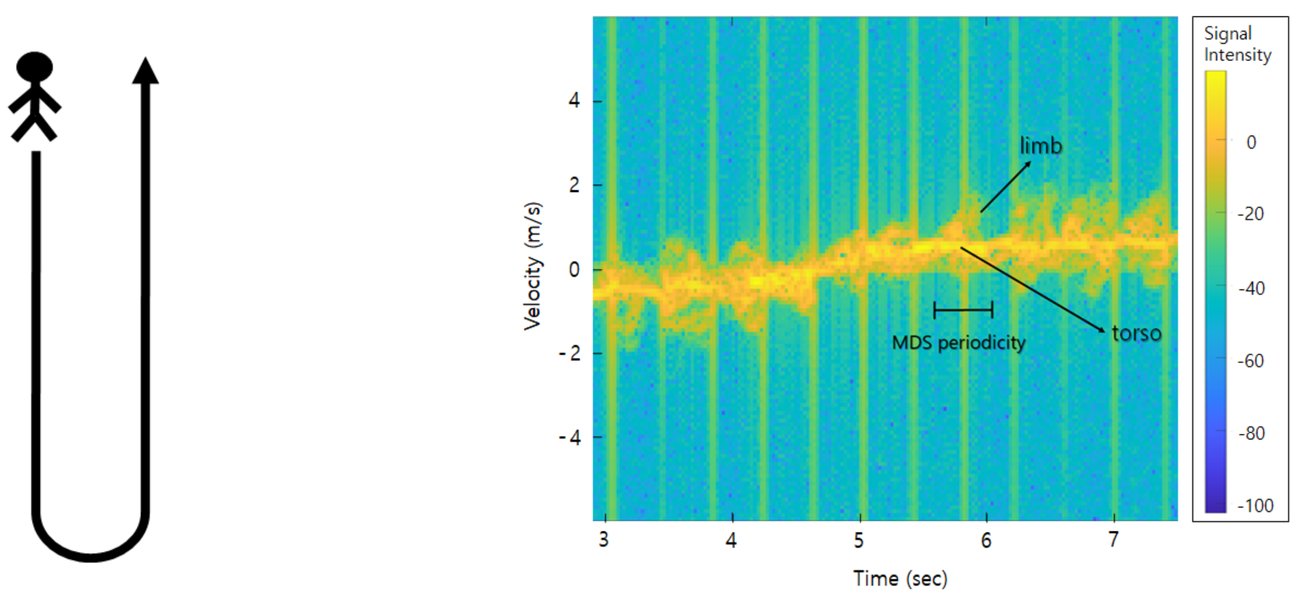
Radar spectrograms (a type of Time-Frequency Representation) used for classifying different types of Unmanned Aerial Vehicles (UAVs) with Convolutional Neural Networks.
Why Integrate Machine Learning with Radar TFA?
The increasing complexity of radar operational environments—characterized by dense target scenarios, sophisticated electronic warfare tactics, and the need for high-precision measurements—pushes traditional signal processing algorithms to their limits. Integrating ML offers several compelling advantages:
- Automated Feature Extraction: ML models, especially deep learning architectures like Convolutional Neural Networks (CNNs), can automatically learn relevant features from raw or minimally processed TFRs. This bypasses the need for laborious and often suboptimal manual feature engineering.
- Enhanced Detection and Classification: ML algorithms can identify subtle patterns in TFRs that might be invisible to the human eye or classical algorithms, leading to significantly improved accuracy in target detection, recognition, and classification, even for low-probability-of-intercept (LPI) waveforms or in high clutter.
- Robustness to Noise and Interference: By training on diverse datasets, ML models can learn to distinguish target signals from various types of noise, clutter (e.g., ground, sea, weather), and intentional interference, enhancing radar system resilience.
- Adaptability: ML systems can be continuously trained and updated with new data, allowing them to adapt to evolving environments, new target types, or changing interference characteristics.
- Handling High-Dimensional Data: TFRs can be high-dimensional. ML techniques are well-suited to process and find patterns in such complex data spaces.
- Real-Time Processing: Optimized ML models can be deployed on edge devices for real-time decision-making, crucial for applications like autonomous driving and active protection systems.
The Synergistic Workflow: ML Operating on TFRs
The integration typically follows a structured workflow where TFA prepares the data for ML-driven analysis:
1. Signal Acquisition and Pre-processing
Raw radar echo signals are captured. Initial pre-processing might include noise filtering or down-conversion.
2. Time-Frequency Transformation
The 1D time-domain radar signals are transformed into 2D time-frequency representations (TFRs). Common TFRs include:
- Spectrograms: Generated using STFT, providing a visual representation of frequency content over time.
- Scalograms: Generated using CWT, offering multi-resolution insights.
- Choi-Williams Distribution, Wigner-Ville Distribution: More advanced TFRs providing higher resolution but with potential trade-offs.
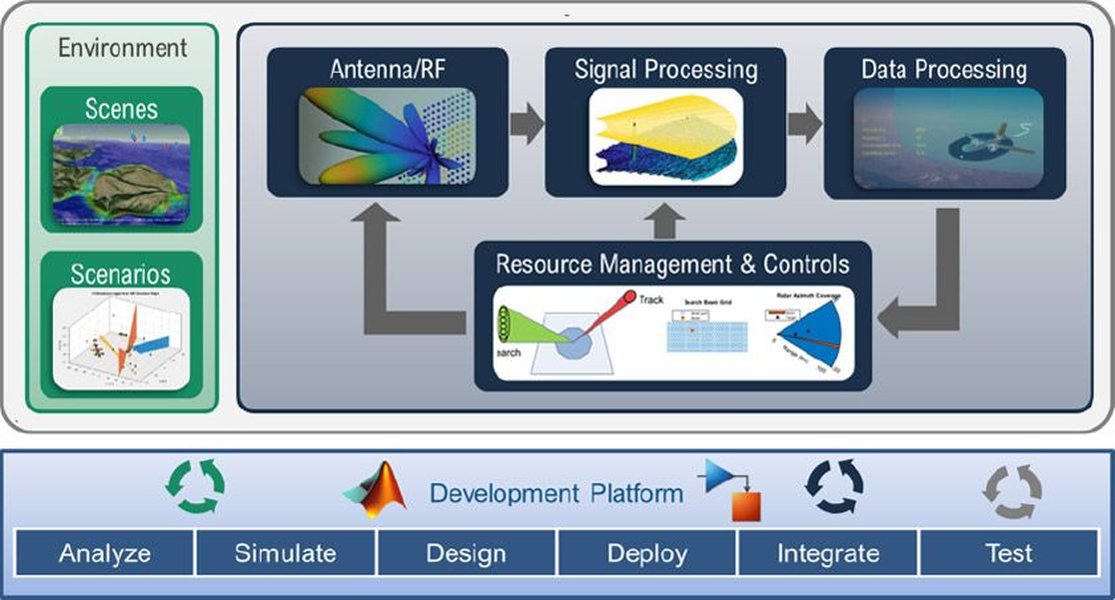
Conceptual overview of radar system components, where signal processing, including TFA and ML, plays a crucial role.
3. Machine Learning Model Training and Application
The generated TFRs serve as input to ML models.
Feature Extraction:
For deep learning models like CNNs, feature extraction is an intrinsic part of the learning process. The network's convolutional layers automatically learn hierarchical features from the TFR images – from simple edges and textures in early layers to more complex, abstract patterns relevant to the task (e.g., target signatures) in deeper layers.
Model Architectures:
- Convolutional Neural Networks (CNNs): Highly effective for image-like data (TFRs), excelling at tasks like target classification (e.g., distinguishing between cars, pedestrians, drones) and object detection. Pre-trained CNNs like SqueezeNet or ResNet are often adapted using transfer learning.
- Recurrent Neural Networks (RNNs), including LSTMs (Long Short-Term Memory): Suitable for analyzing sequences of TFRs or extracting temporal patterns within a single TFR, useful for tracking or activity recognition.
- Support Vector Machines (SVMs), Random Forests: Can also be used, often with manually engineered features extracted from TFRs, though deep learning approaches are increasingly dominant for their end-to-end learning capabilities.
Tasks:
- Classification: Assigning a label to a detected radar signature (e.g., type of vehicle, aircraft, or human activity).
- Detection: Identifying the presence of targets amidst noise and clutter.
- Parameter Estimation: Regressing parameters like velocity, range, or micro-Doppler characteristics.
- Interference Mitigation: Identifying and suppressing RFI or clutter by learning their TFR signatures.
4. Decision Making and Output
The ML model's output (e.g., a classification label, a detected object's bounding box, an estimated parameter) is then used for the specific radar application.
Performance Enhancement through ML-TFA Integration
The integration of Machine Learning with Time-Frequency Analysis offers distinct advantages over traditional TFA methods alone, particularly in complex scenarios. The radar chart below provides an opinionated comparison of key performance aspects for Traditional TFA, ML-Enhanced TFA (where ML is used with pre-defined features from TFA), and Deep Learning directly on TFRs.
This chart illustrates that while Deep Learning on TFRs offers significant gains in accuracy, robustness, adaptability, and automation of feature engineering, it may come with higher computational costs and potentially lower direct interpretability compared to traditional methods. ML-enhanced TFA with traditional features offers a balanced improvement.
Mapping the Landscape: Key Concepts in ML-TFA Integration
The integration of Machine Learning with Radar Time-Frequency Analysis involves several interconnected concepts. The mindmap below outlines the primary components, techniques, applications, and challenges in this evolving field.
(Spectrograms, Scalograms)"] id3c["ML Model Selection & Training"] id3c1["Convolutional Neural Networks (CNNs)"] id3c2["Recurrent Neural Networks (RNNs/LSTMs)"] id3c3["Transfer Learning"] id3d["Automated Feature Extraction"] id3e["Classification / Detection / Estimation"] id4["Prominent Applications"] id4a["Autonomous Driving
(Object Detection, ADAS)"] id4b["Defense & Surveillance
(Target ID, LPI Waveform Analysis)"] id4c["Biomedical Monitoring
(Vital Signs, Gait Analysis)"] id4d["Environmental Sensing & Weather Radar"] id4e["Interference Mitigation"] id5["Challenges & Future Directions"] id5a["Need for Large, Labeled Datasets"] id5b["Interpretability of Deep Learning Models (Explainable AI)"] id5c["Real-Time Processing on Edge Devices"] id5d["Synthetic Data Generation"] id5e["Multi-Modal Sensor Fusion"]
This mindmap provides a visual overview of how different facets of ML and TFA come together, highlighting the multidisciplinary nature of this advanced signal processing approach.
Applications in Action
The fusion of ML and TFA is paving the way for advancements across various domains:
Autonomous Driving and ADAS
Radar is a key sensor for autonomous vehicles due to its robustness in adverse weather. ML models process TFRs of radar signals to detect and classify objects like vehicles, pedestrians, and cyclists with greater accuracy. This improves the reliability of Advanced Driver-Assistance Systems (ADAS) and self-driving capabilities. Companies like Teraki are developing ML pipelines to process radar signals efficiently at the edge for real-time performance.
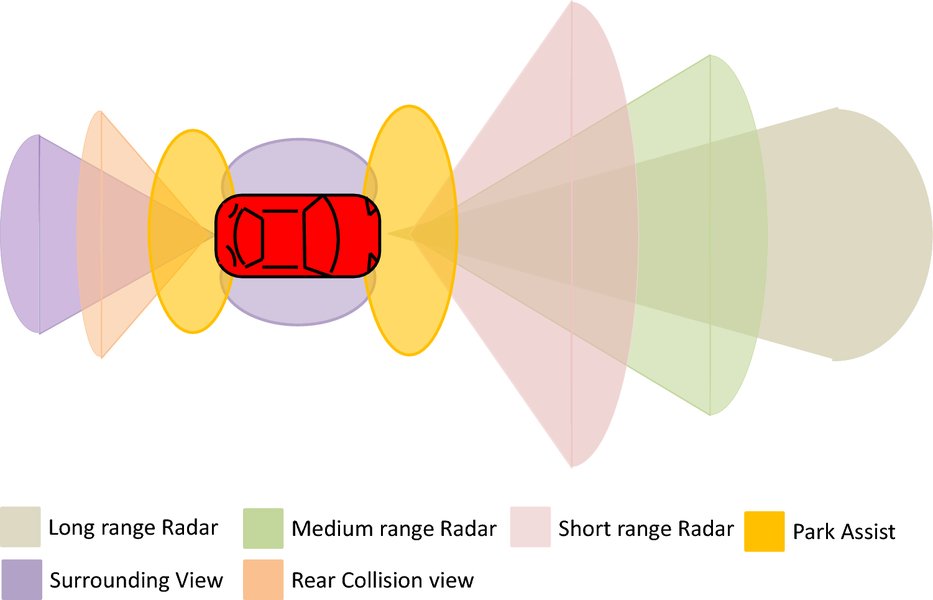
Illustration of a radar sensor setup and processing pipeline using machine learning for precise vehicle classification in an automotive context.
Defense and Surveillance
In electronic warfare and surveillance, identifying and classifying radar emitters or targets (e.g., aircraft, ships, drones) is crucial. ML models trained on TFRs can recognize complex radar waveforms, including LPI signals, and identify subtle signatures that differentiate targets, even in dense signal environments.
Biomedical Monitoring
Radar's ability to detect minute movements makes it suitable for non-contact vital sign monitoring (heart rate, respiration) and human activity recognition (e.g., fall detection, gait analysis). ML algorithms analyze TFRs of radar signals reflected from the human body to extract these biomedical parameters, offering potential for remote healthcare and assisted living.
Interference Mitigation
Frequency-Modulated Continuous-Wave (FMCW) radars, common in automotive applications, can suffer from mutual interference. ML techniques combined with TFA can identify and mitigate such interference by learning its specific time-frequency signature, thereby improving the radar's overall performance and reliability.
Weak and Maneuvering Target Detection
Detecting targets with low radar cross-sections or those performing evasive maneuvers is challenging. Long-time coherent integration techniques, enhanced by ML's ability to discern patterns in TFRs affected by range and Doppler migration, can improve detection capabilities.
Benefits Summarized
The integration of machine learning with radar time-frequency analysis offers a multitude of advantages, enhancing the capabilities of modern radar systems. The table below outlines some of an key benefits:
| Benefit | Explanation |
|---|---|
| Enhanced Detection & Classification | ML models analyze complex patterns in TFRs, leading to higher accuracy in identifying and categorizing targets compared to traditional methods alone. |
| Improved Robustness | Systems become more resilient to noise, clutter, and various forms of interference, as ML algorithms learn to distinguish target signals effectively. |
| Handling of Non-Stationary Signals | The combination is adept at processing signals from maneuvering targets or in dynamic environments where signal characteristics change rapidly. TFA captures these dynamics, and ML exploits the extracted features. |
| Automation & Efficiency | Reduces the need for manual feature engineering, speeding up development and allowing systems to learn optimal features directly from data. |
| Adaptability | ML models can be retrained and updated with new data, allowing radar systems to adapt to new threats, targets, or environmental conditions. |
| Real-Time/Edge Deployment | Optimized ML frameworks and hardware advancements enable the deployment of these sophisticated techniques on embedded platforms for real-time decision-making. |
| Multi-Sensor Fusion Potential | Radar TFR data, when processed by ML, can be more effectively fused with information from other sensors (e.g., cameras, LiDAR) for a more comprehensive understanding of the environment. |
Visualizing ML in Radar Applications
Understanding how machine learning is practically applied in radar can be enhanced by seeing real-world discussions and demonstrations. The following video provides insights into machine learning applications for radar, touching upon how AI algorithms process radar data for various tasks, often involving time-frequency characteristics implicitly or explicitly.
This video, "»Radar in Action« Machine Learning for Radar Applications," discusses the application of ML techniques in radar systems, showcasing research and practical implementations.
The video explores how ML algorithms can process complex radar data to achieve better detection, classification, and overall system performance, which aligns with the core theme of integrating ML with sophisticated signal analysis techniques like TFA.
Challenges and Future Outlook
Despite the significant progress, several challenges and areas for future research remain in the integration of ML with radar TFA:
- Data Availability and Quality: Training robust ML models requires large, diverse, and accurately labeled datasets of radar TFRs, which can be difficult and expensive to acquire, especially for niche applications or specific threat types. The development of open-access datasets and benchmarks is crucial.
- Interpretability (Explainable AI - XAI): Deep learning models are often considered "black boxes." Understanding why a model makes a particular decision based on a TFR is important for validation, debugging, and building trust, especially in safety-critical applications. Research into XAI techniques for radar is ongoing.
- Computational Resources for Edge Deployment: While progress has been made, deploying complex deep learning models on resource-constrained edge devices for real-time radar processing remains a challenge. This necessitates continued research into model compression, quantization, and efficient hardware architectures.
- Generalization and Adaptability: Ensuring that models trained on one set of conditions or target types can generalize well to new, unseen scenarios is critical. Techniques for domain adaptation and continual learning are important.
- Synthetic Data Generation: Using simulations to generate synthetic radar TFR data can help augment limited real-world datasets, but ensuring the synthetic data accurately reflects real-world complexities is key.
- Multi-Modal Fusion: Effectively combining TFR-derived radar information with data from other sensors (e.g., LiDAR, cameras, IMUs) using ML for a more holistic perception is an active area of research.
The future points towards even tighter integration, with ML potentially influencing radar waveform design and adaptive sensor management based on real-time analysis of the electromagnetic environment through TFA.
Frequently Asked Questions (FAQ)
What is the primary benefit of converting 1D radar signals to 2D Time-Frequency Representations before applying Machine Learning?
Converting 1D time-domain radar signals into 2D Time-Frequency Representations (TFRs) like spectrograms or scalograms allows us to leverage powerful Machine Learning models, especially Convolutional Neural Networks (CNNs), which are designed to process image-like data. TFRs expose both the temporal evolution and spectral content of the radar signal simultaneously, providing a richer feature space. This enables ML models to learn intricate patterns, such as micro-Doppler signatures or subtle changes in frequency over time, which are critical for tasks like target classification, interference identification, and activity recognition, and might be less apparent in the 1D signal alone.
Can Machine Learning completely replace traditional radar signal processing techniques?
It's more accurate to say that Machine Learning complements and enhances traditional radar signal processing (RSP) rather than completely replacing it. Traditional RSP, including Time-Frequency Analysis, is based on well-understood physical principles and mathematical models. ML excels at learning complex patterns from data, especially in scenarios where explicit modeling is difficult. The most powerful approaches often involve a synergy: traditional techniques (like TFA) are used for initial signal conditioning and feature representation, and ML models then operate on these representations for higher-level tasks like classification or anomaly detection. For instance, basic physics-based filtering and Doppler processing often precede ML stages.
What are some challenges in training ML models for radar TFA applications?
Several challenges exist. Firstly, acquiring large, diverse, and accurately labeled datasets of radar TFRs can be difficult and costly. Radar signals are sensitive to many factors (target type, aspect angle, environment, interference), requiring extensive data collection. Secondly, the "black box" nature of some deep learning models can be an issue for interpretability and validation in critical applications. Thirdly, ensuring models generalize well from training data to unseen real-world scenarios is crucial. Lastly, deploying complex ML models for real-time processing on resource-constrained radar hardware (edge devices) presents computational challenges.
How does transfer learning apply to ML in radar TFA?
Transfer learning is a valuable technique, especially when radar-specific labeled data is scarce. It involves taking a model (often a CNN) that has been pre-trained on a large, general-purpose dataset (commonly image datasets like ImageNet) and adapting it for a specific radar task. The initial layers of these pre-trained models learn general features (like edges, textures) that can also be useful for interpreting TFR "images." By fine-tuning the later layers of the pre-trained model with a smaller radar TFR dataset, one can achieve good performance with less radar-specific data than training a model from scratch. For example, models like SqueezeNet, originally trained for image classification, have been successfully adapted for radar target classification using their TFRs.
Recommended Further Exploration
- What are the most effective deep learning architectures for analyzing radar spectrograms in target recognition?
- What are the primary challenges and solutions for implementing machine learning based radar signal processing in real-time on edge computing devices?
- How is synthetic data generation being used to improve the training of machine learning models for radar time-frequency analysis?
- Which Explainable AI (XAI) techniques are being applied to understand the decisions made by machine learning models in radar target classification based on time-frequency features?
References

Last updated May 17, 2025