
Major Climate Drivers
Understanding the Forces Shaping Our Planet's Climate
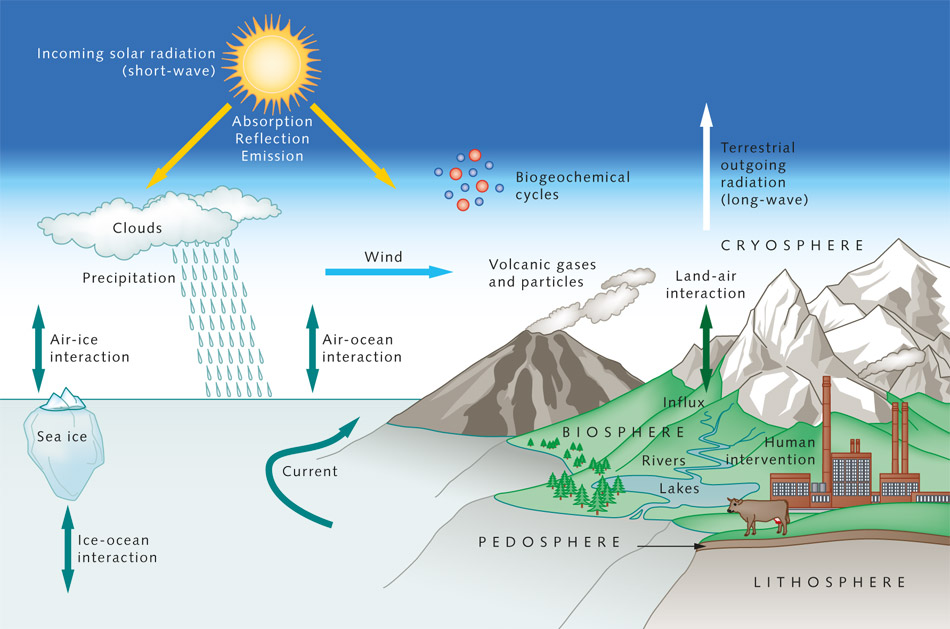
Key Takeaways
- Human activities, especially greenhouse gas emissions, are the primary drivers of recent climate change.
- Natural factors like solar radiation and volcanic eruptions also significantly influence climate patterns.
- Interactions between various climate drivers can amplify or mitigate their individual impacts.
1. Anthropogenic Climate Drivers
1.1 Greenhouse Gas Emissions
Greenhouse gases (GHGs) are the most significant human-induced drivers of climate change. These gases trap heat in the Earth's atmosphere, leading to the greenhouse effect, which warms the planet. The primary greenhouse gases include:
1.1.1 Carbon Dioxide (CO₂)
Carbon dioxide is the most prevalent greenhouse gas emitted by human activities. Major sources include:
- Burning of fossil fuels for energy and transportation.
- Deforestation, which reduces the number of trees that can absorb CO₂.
- Industrial processes and cement production.
1.1.2 Methane (CH₄)
Methane is the second most important greenhouse gas. It is produced by:
- Agriculture, particularly livestock farming and rice cultivation.
- Decomposition of organic waste in landfills.
- Leakages from natural gas systems.
1.1.3 Nitrous Oxide (N₂O)
Nitrous oxide is released from agricultural and industrial activities, including:
- Use of synthetic fertilizers.
- Chemical manufacturing processes.
- Combustion of fossil fuels and solid waste.
1.1.4 Fluorinated Gases
Fluorinated gases, such as hydrofluorocarbons (HFCs), are synthetic gases used in various industrial applications, including refrigeration and air conditioning systems. They have a high global warming potential and contribute significantly to climate change.
1.2 Land Use Changes
Land use changes, particularly deforestation and urbanization, play a crucial role in climate dynamics:
- Deforestation: Removing forests decreases the planet's capacity to absorb CO₂, exacerbating greenhouse gas concentrations.
- Urbanization: Expansion of urban areas leads to changes in land surface properties, such as increased surface albedo and reduced vegetation cover.
- Agricultural Expansion: Conversion of natural landscapes into agricultural land alters local and regional climate patterns.
1.3 Aerosols and Contrails
Aerosols are tiny particles or droplets suspended in the atmosphere that can influence climate by interacting with sunlight and cloud formation:
- Reflective Aerosols: Particles like sulfate aerosols reflect sunlight back into space, potentially cooling the Earth's surface.
- Absorbing Aerosols: Black carbon and other absorbing particles can increase atmospheric warming by absorbing sunlight.
- Contrails: Condensation trails formed by aircraft can contribute to cloud formation, affecting both temperature and precipitation patterns.
2. Natural Climate Drivers
2.1 Solar Radiation
The Sun is the primary source of energy driving the Earth's climate system. Variations in solar radiation can lead to significant climate changes:
- Solar Cycles: The 11-year solar cycle influences the amount of solar energy reaching Earth, affecting global temperatures.
- Milankovitch Cycles: Long-term changes in the Earth's orbital parameters (eccentricity, axial tilt, and precession) alter the distribution and intensity of solar radiation, contributing to ice ages and interglacial periods.
2.2 Volcanic Eruptions
Volcanic eruptions can have both short-term and long-term effects on the climate:
- Short-Term Cooling: Eruptions release large quantities of sulfur dioxide (SO₂) and other aerosols into the stratosphere, which reflect sunlight and cool the Earth's surface temporarily.
- Long-Term Effects: Persistent volcanic activity can alter atmospheric composition, influencing climate patterns over extended periods.
2.3 Natural Climate Variability
Natural climate variability refers to inherent fluctuations in the climate system that occur independently of human activities:
- El Niño–Southern Oscillation (ENSO): A climate pattern that describes the variations in the temperature of the surface of the tropical eastern Pacific Ocean. ENSO has significant impacts on global weather and climate, including temperature and precipitation anomalies.
- Atlantic Multidecadal Oscillation (AMO): Long-term fluctuations in sea surface temperatures in the North Atlantic Ocean, influencing weather patterns and climate trends.
- Pacific Decadal Oscillation (PDO): A pattern of Pacific climate variability that shifts phases on at least inter-decadal time scales, affecting marine ecosystems and weather.
3. Interactions and Feedback Mechanisms
3.1 Albedo Changes
Albedo refers to the reflectivity of Earth's surface. Changes in albedo can significantly impact the climate:
- Snow and Ice: High albedo surfaces like snow and ice reflect most sunlight. Melting ice reduces albedo, leading to increased absorption of solar energy and further warming.
- Vegetation: Changes in land cover, such as deforestation, alter the Earth's surface albedo, influencing local and global temperatures.
3.2 Ocean Currents and Circulation
Ocean currents play a critical role in regulating the Earth's climate by distributing heat around the globe:
- Thermohaline Circulation: Driven by differences in water density, this global circulation pattern transports heat and affects climate patterns.
- Surface Currents: Currents like the Gulf Stream carry warm water from the equator towards the poles, influencing regional climates.
- Impact of Climate Change: Changes in ocean temperature and salinity can disrupt current patterns, leading to altered climate conditions.
3.3 Feedback Mechanisms
Feedback mechanisms can either amplify or dampen the effects of climate drivers:
- Positive Feedback: Processes that enhance climate change, such as ice-albedo feedback, where melting ice reduces albedo and leads to more warming.
- Negative Feedback: Processes that mitigate climate change, such as increased cloud cover reflecting more sunlight.
4. Quantitative Analysis of Climate Drivers
4.1 Greenhouse Gas Emissions by Sector
The following table illustrates the distribution of greenhouse gas emissions across different sectors:
| Sector | Percentage of Total Emissions (%) | Primary Sources |
|---|---|---|
| Energy Production | 30.6 | Electricity generation, heat production |
| Industry | 5.8 | Manufacturing processes, chemical production |
| Transportation | 14 | Cars, trucks, ships, planes |
| Agriculture | 10 | Livestock farming, rice cultivation |
| Land Use Changes | 5.7 | Deforestation, urbanization |
| Other Sectors | 34.9 | Waste management, fluorinated gases |
4.2 Impact of Greenhouse Gases on Global Temperatures
The relationship between greenhouse gas concentrations and global temperature changes can be described by the following formula:
$$\Delta T = \lambda \times \Delta F$$
Where:
- ΔT: Change in global temperature
- λ: Climate sensitivity parameter
- ΔF: Radiative forcing change due to greenhouse gases
This equation highlights how increases in radiative forcing from greenhouse gases lead to temperature changes, moderated by the climate sensitivity.
5. Mitigation and Adaptation Strategies
5.1 Reducing Greenhouse Gas Emissions
Mitigation strategies focus on reducing the sources and enhancing the sinks of greenhouse gases:
- Transition to Renewable Energy: Shifting from fossil fuels to renewable energy sources like wind, solar, and hydroelectric power.
- Energy Efficiency: Improving energy efficiency in buildings, transportation, and industries to lower energy consumption.
- Reforestation and Afforestation: Planting trees to absorb CO₂ from the atmosphere.
- Carbon Pricing: Implementing carbon taxes or cap-and-trade systems to incentivize emission reductions.
5.2 Enhancing Carbon Sinks
Enhancing natural carbon sinks helps sequester more CO₂ from the atmosphere:
- Forestry Management: Sustainable forestry practices to maintain and increase forest carbon stocks.
- Soil Carbon Sequestration: Agricultural practices that increase the amount of carbon stored in soils.
- Blue Carbon: Protecting and restoring coastal ecosystems like mangroves and seagrasses that store large amounts of carbon.
5.3 Adaptation Measures
Adaptation strategies aim to manage the impacts of climate change:
-
Infrastructure Resilience: Designing buildings and infrastructure to withstand extreme weather events.
-
Water Management: Implementing efficient water use and conservation practices to cope with changing precipitation patterns.
-
Agricultural Adaptation: Developing climate-resilient crops and farming techniques.
-
Disaster Preparedness: Enhancing early warning systems and emergency response plans.
6. Conclusion
The climate system is influenced by a complex interplay of anthropogenic and natural drivers. Human activities, particularly the emission of greenhouse gases from energy production, transportation, and industrial processes, are the primary contributors to the recent and accelerated changes in the global climate. Natural factors, including variations in solar radiation and volcanic activity, also play significant roles but are generally overshadowed by the impact of human-induced changes. Understanding these drivers is essential for developing effective mitigation and adaptation strategies to address the challenges posed by climate change.
References
Last updated February 8, 2025