
Unlock the Secrets to Crafting Smaller, Superior Solenoid Valves: A Comprehensive Guide
Discover innovative strategies in design, materials, and manufacturing to elevate the performance and shrink the footprint of your solenoid valves.
Solenoid valves are indispensable components in a vast array of applications, from intricate medical devices and precision industrial automation to aerospace systems and even creative DIY projects. The ongoing demand for more compact, efficient, and reliable systems necessitates a continuous evolution in solenoid valve technology. This guide delves into the multifaceted approach required to design and build solenoid valves that are not only smaller in size but also significantly better in performance.
Key Insights: Building Better, Smaller Solenoid Valves
- Material Mastery: Selecting advanced, lightweight materials like reinforced polymers or specialized stainless steels for the body, and high-permeability materials for the magnetic core, is crucial for reducing size and weight while enhancing durability and magnetic efficiency.
- Design Ingenuity: Adopting compact architectures, such as non-spool designs with fewer moving parts or High-Density Interface (HDI®) technology, minimizes physical dimensions, reduces friction, and improves reliability and lifespan.
- Performance Optimization: Enhancing response times through techniques like coil optimization, electrical boosting (e.g., higher initial voltage pulses), and advanced core materials (e.g., through sintering) contributes to a "better" valve. Energy efficiency can be improved via optimized coil designs and pulsed operation modes.
Understanding the Solenoid Valve: The Basics Reimagined
The Heart of Electro-Mechanical Flow Control
A solenoid valve is an electromechanically operated device that controls the flow of liquids or gases. Its core components include a solenoid (an electric coil wound around a ferromagnetic core, often a movable plunger called an armature) and the valve body containing one or more ports. When an electric current passes through the coil, it generates a magnetic field that exerts a force on the armature. This force moves the armature, which in turn actuates the valve mechanism (e.g., opening or closing a seal over an orifice), thus regulating the fluid flow.
Valves can be:
- Direct-acting: The solenoid plunger directly opens or closes the valve. These are simpler and faster for smaller flows but require more power for larger orifices or higher pressures.
- Pilot-operated: The solenoid controls a smaller pilot valve, which then uses the line pressure to operate the main valve seal. This allows control of high flows and pressures with a relatively small solenoid.
To make a valve "better," we aim to improve its efficiency, response speed, reliability, and lifespan. To make it "smaller," we focus on reducing its physical dimensions and weight without compromising these performance aspects.
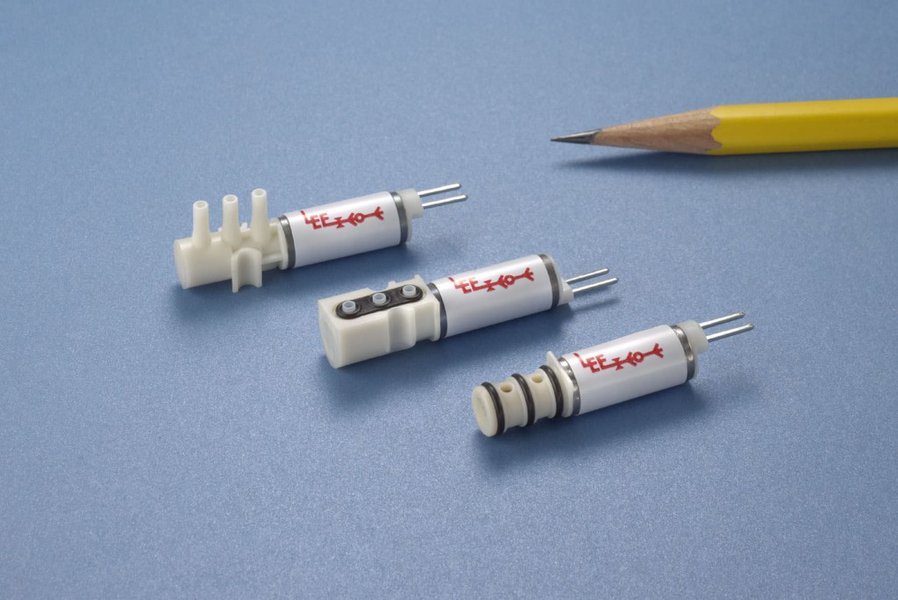
An array of miniature solenoid valves, highlighting their compact form factors suitable for space-constrained applications.
Strategies for Miniaturization: Thinking Small, Performing Big
Reducing the size and weight of solenoid valves is paramount in applications like portable medical equipment, aerospace technology (e.g., satellites), and densely packed industrial machinery. Prioritizing a decrease in valve weight and envelope dimensions can significantly impact overall system integration and cost.
Architectural Innovations
Compact Valve Architectures
Employing designs with fewer moving parts, such as non-spool or diaphragm isolation valves, reduces internal complexity, friction, and wear. This not only allows for smaller overall dimensions but also contributes to longer operational life, potentially exceeding 100 million cycles in some designs. High-Density Interface (HDI®) technology is another approach, integrating components very closely to shrink the valve's footprint while maintaining high flow rates and low leakage.
Cartridge-Style Construction
Cartridge-type valves, some with diameters as small as 7 mm, offer an excellent combination of diminutive size, light weight, and low-power operation. These are often designed for easy integration into manifolds or custom housings, further saving space in the end application.
Material Selection for Compactness
The choice of materials plays a vital role. Lightweight yet robust materials such as reinforced polyamide, advanced polymers (like PEEK or PTFE), and certain grades of stainless steel enable smaller, thinner-walled constructions without sacrificing strength or chemical compatibility. For the solenoid core, materials like soft iron or silicon steel, which offer high magnetic permeability, allow for a stronger magnetic field from a smaller coil.

Example of an ultra-miniature 2-port HDI solenoid valve, demonstrating high-density packaging.
Enhancing Performance: Beyond Size Reduction
A "better" solenoid valve operates more efficiently, responds faster, lasts longer, and provides more precise control. Several avenues can be explored to achieve these performance gains.
Boosting Response Time
Magnetic Circuit Optimization
The speed at which a solenoid valve actuates is critical in many applications. Improving the magnetic circuit is key. This can involve:
- Sintering: This manufacturing process for the solenoid's magnetic components can increase material density, enhancing coil strength and thus improving response speed.
- Core Material: Using materials with high magnetic permeability and low coercivity allows the magnetic field to build up and collapse quickly.
Electrical Drive Techniques
Clever electrical control can significantly speed up actuation:
- Voltage Spiking: Applying a higher voltage pulse (e.g., 24V to a 12V coil for a very short duration) at the beginning of actuation can make the solenoid pull in faster. This must be carefully managed to prevent overheating.
- Current Chopping: After initial actuation with a higher current, the current can be reduced to a lower "holding" level, saving energy and reducing heat.
- Rapid De-energization: Incorporating components like a Zener diode or a flyback diode in parallel with the coil can help dissipate the stored magnetic energy more quickly, allowing the valve to close faster.
Improving Energy Efficiency
Minimizing power consumption is crucial for battery-operated devices and for reducing overall energy costs and heat generation in larger systems.
- Optimized Coil Design: Careful selection of wire gauge, number of turns, and coil geometry can maximize magnetic force for a given power input.
- Pulsed Operation: For applications that don't require continuous holding, "bang-bang" control (short pulses to actuate) or latching solenoid designs (which require power only to change state, not to maintain it) can drastically reduce energy use. Some miniature valves can handle high pressures (e.g., up to 4500 psi / 310 bar for helium) using such pulsed operation.
Ensuring Durability and Precision
Seal and Orifice Optimization
The interface between the moving part of the valve and the valve seat is critical.
- Materials: Using durable and compatible seal materials (e.g., FKM, EPDM, PTFE) ensures longevity and leak-tight performance across a range of temperatures and fluids.
- Orifice Design: Extremely small orifice diameters (down to 0.4 mm or less) enable precise flow control and help reduce the overall valve size, as less force is needed to seal against pressure. However, they can be more susceptible to contamination.
Reliability Through Design and Testing
Minimizing moving parts, as seen in some diaphragm or poppet designs, reduces wear points and potential failure modes. Rigorous lifecycle testing (tens of millions of cycles) and routine stroke testing in demanding applications help detect and mitigate issues like sticking or inconsistent performance.
Comparative Design Priorities for Solenoid Valves
The optimal design of a solenoid valve often involves trade-offs based on its intended application. The radar chart below illustrates hypothetical design priorities for solenoid valves in different sectors. A higher score (out of 10) indicates greater importance for that characteristic in the specific application context. For instance, in medical devices, extremely small size and low power consumption are paramount, while in heavy industrial settings, durability and high flow rate might take precedence, with cost-effectiveness also being a significant driver.
This chart helps visualize that designing a "better and smaller" valve isn't a one-size-fits-all endeavor. The definition of "better" shifts with the application's specific demands, guiding material choices, design architecture, and performance targets.
Material Selection and Advanced Design Insights
The careful selection of materials and the application of advanced design methodologies are fundamental to creating superior miniature solenoid valves.
Strategic Material Choices
The table below outlines some common material choices and design features, and their typical impact on valve size and performance.
| Aspect | Material/Feature Example | Impact on Size | Impact on Performance | Key Considerations |
|---|---|---|---|---|
| Valve Body | Reinforced Polyamide, PEEK | Reduction (Lightweight) | Good chemical resistance, durable, machinable for complex shapes | Temperature limits, fluid compatibility, cost |
| Valve Body | Stainless Steel (e.g., 316L) | Can be compact, density adds weight | High strength, excellent corrosion resistance, high pressure/temperature capability | Cost, machinability, weight |
| Plunger/Core | Soft Iron, Silicon Steel, Permalloy | Optimized for magnetic flux path, enables smaller coil | High magnetic permeability, fast response, low residual magnetism | Saturation limits, purity of material, cost of specialized alloys |
| Seals | PTFE, FKM (Viton®), EPDM | Minimal direct size impact; enables compact sealing designs | Low friction, excellent chemical inertness, wide temperature range, long life | Wear rate, compression set, specific fluid/gas compatibility |
| Coil Winding | Fine Magnet Wire (e.g., AWG 30-40) | Enables compact coil for required amp-turns | Optimized magnetic field strength, potentially lower power consumption | Wire gauge, number of turns, insulation type, heat dissipation |
| Actuation | Direct-Acting | Generally smaller and simpler | Faster response for low flow/pressure | Force limited by solenoid size, may require higher power for larger orifices |
| Actuation | Pilot-Operated | Can be larger due to pilot stage | Controls high flow/pressure with small solenoid | Slightly slower response, requires minimum operating pressure differential |
| Internal Design | Single Moving Part (e.g., diaphragm, clapper) | Reduction in complexity and size | Reduced friction, potentially very high cycle life, improved reliability | May have limitations on flow path complexity or fine control |
| Orifice | Micro-machined, Laser Drilled | Enables overall smaller valve for low flows | Precise low flow control, low internal volume, minimal leakage | Susceptible to clogging, higher pressure drop for a given flow |
Advanced Design and Manufacturing Techniques
Optimization Algorithms
Computational tools can greatly aid in design. Multi-objective optimization techniques, such as Particle Swarm Optimization (PSO), can be used to refine the geometry of the solenoid actuator and valve components. These algorithms can simultaneously consider factors like minimizing size, maximizing force, and improving response time, leading to highly optimized designs that would be difficult to achieve through manual iteration alone.
Simulation and Prototyping
Electromagnetic numerical simulation (e.g., Finite Element Analysis - FEA) allows designers to model and predict the magnetic field strength, forces, and thermal performance of a solenoid design before physical prototyping. This reduces development time and cost. For creating complex geometries or rapid prototypes, 3D printing (Additive Manufacturing) can be invaluable, especially for intricate internal passages or custom form factors, though material properties for 3D printed parts must be carefully considered for final production.
Visualizing Solenoid Valve Optimization: A Mindmap
To achieve a better and smaller solenoid valve, a holistic approach considering various interconnected factors is necessary. The mindmap below outlines the key areas of focus in the optimization process, from initial design strategies to manufacturing and testing considerations.
(e.g., HDI, Non-Spool)"] id1b["Lightweight Materials
(Polymers, Composites)"] id1c["Cartridge Designs"] id1d["Reduced Moving Parts"] id2["Performance Enhancement"] id2a["Faster Response Time"] id2aa["Electrical Boosting (Voltage Pulse)"] id2ab["Sintering for Core Material"] id2ac["Zener Diode for Quick Cut-off"] id2b["Energy Efficiency"] id2ba["Optimized Coil Design"] id2bb["Pulsed Operation (Bang-Bang)"] id2bc["Latching Mechanisms"] id2c["Flow Control Precision"] id2ca["Optimized Orifice & Seals"] id2d["Durability & Reliability"] id2da["Material Selection (e.g., Stainless Steel)"] id2db["Lifecycle Testing"] id2dc["Reduced Friction Design"] id3["Material Selection Focus"] id3a["Magnetic Core
(Soft Iron, Silicon Steel, Permalloy)"] id3b["Valve Body
(Polyamide, Stainless Steel, PEEK, PTFE)"] id3c["Seals
(PTFE, FKM, EPDM, Perfluoroelastomer)"] id4["Advanced Design & Manufacturing"] id4a["Multi-Objective Optimization (e.g., PSO)"] id4b["Simulation (FEA for electromagnetics, CFD for flow)"] id4c["3D Printing for Prototypes/Complex Parts"] id4d["Micro-machining for Orifices"] id5["DIY & Prototyping Considerations"] id5a["Coil Winding Techniques (Wire Gauge, Turns)"] id5b["Simple Actuator Mechanisms (e.g., Pinch, Direct Plunger)"] id5c["Iterative Testing & Refinement"] id5d["Power Supply & Drive Circuitry"]
This mindmap illustrates how different aspects—from material science to advanced manufacturing and electrical engineering—converge to produce a superior, compact solenoid valve.
DIY Considerations and Prototyping a Simple Solenoid
While commercial miniature solenoid valves are highly engineered, understanding the basics through DIY construction can be insightful. If you're looking to experiment with making a simple solenoid, which is the heart of a solenoid valve, the following video provides a good starting point. Keep in mind that DIY valves are typically suited for low-pressure applications and may not achieve the performance or reliability of commercial units without significant design and fabrication expertise.
This video demonstrates how to construct a basic solenoid at home, illustrating the fundamental principles of electromagnetism involved in a solenoid valve's actuator.
Tips for DIY Solenoid Valve Construction
Building the Solenoid Coil
For a DIY solenoid, you'll typically need:
- Magnet Wire: Fine gauge insulated copper wire (e.g., 26-30 AWG).
- Core/Bobbin: A non-magnetic tube (e.g., plastic pen tube) to wind the coil on.
- Plunger: A ferromagnetic material (e.g., an iron nail or rod) that fits loosely inside the bobbin.
Simple Valve Mechanisms
For a very basic valve, you might consider:
- Pinch Valve: The solenoid plunger is designed to pinch a piece of flexible tubing (e.g., silicone) closed, stopping flow. This is simple but usually limited to very low pressures.
- Direct Plunger Seal: The plunger has a small rubber or soft plastic seal on one end, which is pulled against a small opening (orifice) to stop flow. This requires more precise alignment.
Powering and Testing
A low-voltage DC power supply (e.g., 6V, 12V, or 24V, depending on your coil design) is needed. When current flows, the plunger should move. Iterative testing is key. If the force is too weak, you might need more coil turns, a higher current (within wire limits), or a more efficient magnetic circuit (e.g., adding a steel C-frame around the coil to concentrate the flux).
Remember, building a robust, leak-proof, and reliable valve mechanism that integrates effectively with a homemade solenoid presents significant mechanical challenges, especially for achieving precise fits, low friction, and handling any significant pressure.
Frequently Asked Questions (FAQ)
What are the main challenges in miniaturizing solenoid valves?
Key challenges include:
- Maintaining Performance: Achieving sufficient actuating force, flow rate, and sealing integrity with smaller components.
- Power Consumption: Designing small coils that can generate enough magnetic force without excessive power draw or overheating.
- Manufacturing Tolerances: Smaller parts require tighter manufacturing tolerances, increasing complexity and cost.
- Material Limitations: Finding materials that are lightweight, strong, and compatible with fluids at micro scales.
- Heat Dissipation: Smaller volumes make it harder to dissipate heat generated by the coil.
How does material choice significantly affect solenoid valve performance and size?
Material choice is critical:
- Body: Lightweight polymers or composites can reduce overall weight and size. Stainless steel offers strength and corrosion resistance but is denser.
- Magnetic Core/Plunger: High-permeability materials (e.g., soft iron, silicon steel) allow for a stronger magnetic field from a smaller coil, enabling miniaturization and faster response.
- Seals: The right elastomer or polymer (e.g., FKM, PTFE) ensures chemical compatibility, temperature resistance, low friction, and longevity, impacting reliability and leak-tightness.
- Springs: Material choice affects fatigue life and consistent return force.
What are some simple ways to improve the response time of a solenoid valve?
Several methods can improve response time:
- Over-excitation (Voltage Spike): Briefly applying a higher voltage than nominal to the coil during initial activation can increase the current ramp-up rate and thus the magnetic force, leading to faster actuation. This needs careful control to avoid coil damage.
- Optimized Coil Design: Reducing coil inductance (e.g., fewer turns if permissible, or different core geometry) can lead to faster current rise.
- Mechanical Design: Minimizing the mass of moving parts (plunger) and reducing friction will allow for quicker movement.
- Quick Exhaust/Release: For de-actuation, circuitry (like a Zener diode across the coil) can help the magnetic field collapse faster.
Can I use 3D printing to make parts for a solenoid valve?
Yes, 3D printing (Additive Manufacturing) can be used, particularly for:
- Prototyping: Rapidly creating valve bodies, bobbins, or custom enclosures to test form, fit, and sometimes function (depending on materials and pressures).
- Complex Geometries: Manufacturing intricate internal flow paths or manifold designs that would be difficult or expensive with traditional machining.
- Non-critical components: Items like coil bobbins or actuator housings.
Recommended Further Exploration
- What are the latest innovations in miniature solenoid valve materials?
- How do latching solenoid valves achieve ultra-low power consumption?
- Explore techniques for optimizing solenoid coil design for maximum force and minimum size.
- What are common failure modes in solenoid valves and how can they be prevented through design?
References
Last updated May 6, 2025