
Unveiling Marxism: A Comprehensive Dive into its Core Tenets and Enduring Impact
Explore the foundational ideas of Karl Marx and Friedrich Engels that continue to shape global thought and discourse.
Key Insights into Marxism
- Historical Materialism: Marxism posits that societal development and historical change are primarily driven by economic conditions and the "mode of production," rather than abstract ideals.
- Class Struggle: At its core, Marxism identifies an inherent conflict between the bourgeoisie (owners of production) and the proletariat (workers) under capitalism, driven by opposing interests.
- Critique of Capitalism: Marx meticulously critiqued capitalism for its intrinsic exploitation of labor, where "surplus value" is extracted from workers, leading to alienation and inequality.
Marxism, a profound social, political, and economic philosophy, emerged in the mid-19th century through the seminal works of Karl Marx and Friedrich Engels. It provides a comprehensive framework for analyzing history and society through a dialectical and materialist lens, critically examining class relations, social conflict, and the dynamics of societal transformation. Born from the tumultuous backdrop of the Industrial Revolution in Europe, Marx's theories were a direct response to the stark inequalities and struggles of the working class.
The Foundational Pillars of Marxist Thought
At the heart of Marxism lies a set of interconnected concepts that offer a unique perspective on societal development and human interaction. These core ideas coalesce to form a powerful critique of capitalism and a vision for an alternative future.
Historical Materialism: The Engine of Societal Change
A cornerstone of Marxist theory, historical materialism asserts that the primary driver of historical progress is the development of material economic conditions and the "mode of production"—how goods and services are produced and distributed within a society. Marx argued that societies evolve through distinct stages, such as feudalism, capitalism, and eventually communism, with each stage defined by its specific relations of production and technological capacities. This perspective posits that human consciousness and social institutions are shaped by their material existence and economic activities, rather than the other way around. It's the economic base that forms the foundation upon which political, legal, and ideological "superstructures" are built.
Class Struggle: The Inevitable Conflict
Central to Marxism is the concept of class struggle, viewing society as inherently divided into antagonistic social classes with conflicting interests. In capitalist societies, Marx identified two primary classes: the bourgeoisie, who are the owners of the means of production (factories, capital, land), and the proletariat, who are the workers who must sell their labor power to survive. Marx contended that the history of all hitherto existing society is the history of class struggles. This inherent conflict arises from the bourgeoisie's relentless pursuit of profit through the exploitation of the proletariat, who are paid less than the value they create, leading to an imbalance of power and pervasive inequality.
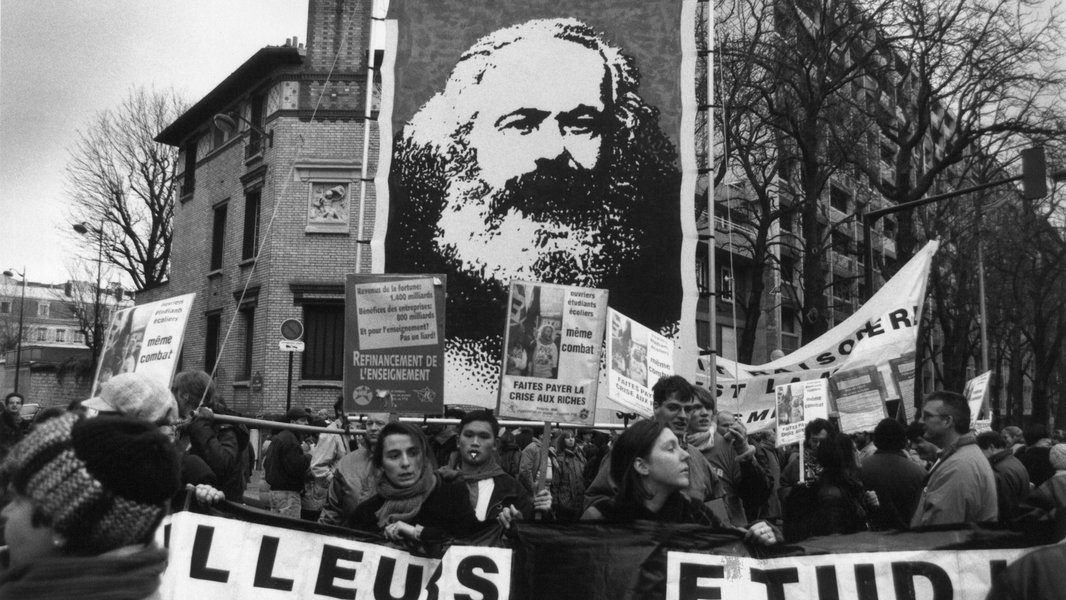
Critique of Capitalism: Exploitation and Alienation
Marx's most incisive critique was leveled against capitalism, which he argued is fundamentally exploitative. He elaborated on this through the labor theory of value, positing that the value of a commodity is determined by the socially necessary labor time required for its production. Capitalists, according to Marx, extract "surplus value"—the difference between the value produced by the workers and the wages they receive. This surplus value is the source of capitalist profit and leads to the accumulation of wealth for the owners, while simultaneously fostering precarity and impoverishment for the working class. This process also leads to alienation, where workers become detached from the products of their labor, the labor process itself, their own human potential, and ultimately, from each other. Labor becomes a mere commodity, stripped of its creative and fulfilling aspects.
Understanding Surplus Value: A Quantitative Perspective
The concept of surplus value is central to Marx's critique of capitalism. It can be represented as the difference between the total value produced by labor and the wages paid to that labor. In simpler terms:
\[ \text{Surplus Value (S)} = \text{Total Value Produced (V)} - \text{Wages Paid (W)} \]
Marx argued that capitalists aim to maximize \(S\) by extending working hours, intensifying labor, or reducing wages, thereby extracting more value than they compensate for. This systematic appropriation of unpaid labor forms the basis of profit and perpetuates class inequality within the capitalist system.
Revolution and the Vision of Communism
Marxist theory predicts that the inherent contradictions and exploitative nature of capitalism will inevitably lead to a revolutionary uprising by the proletariat. This revolution would dismantle the capitalist system, transitioning first through a phase of socialism—where the means of production are communally or state-controlled for the benefit of all—and ultimately culminating in a classless, stateless communist society. In this envisioned communist society, private property would be abolished, the means of production would be commonly owned, and the conditions for alienation and exploitation would cease to exist. Key features of such a society, as envisioned, include no inherited wealth, a steeply graduated income tax, and centralized control of essential industries like banking, communication, and transport, alongside universal free public education.
The Dialectical Method and Praxis in Marxism
Marxism is not merely a theoretical framework but also a guide for revolutionary practice, known as praxis. It employs a distinctive methodology to analyze societal dynamics.
Dialectical Materialism: Philosophy of Change
The philosophical underpinning of Marxism is dialectical materialism. This method integrates dialectics—the idea that change arises from the resolution of internal contradictions and conflicts—with materialism—the belief that material conditions, not abstract ideas, are the fundamental drivers of historical and social processes. For example, capitalism itself contains internal contradictions, such as inherent tendencies towards overproduction and escalating inequality, which Marx believed would ultimately lead to its downfall and the emergence of a new social order.
Evolution and Enduring Influence
Since its inception, Marxism has evolved into diverse branches and schools of thought, adapting to various historical and national contexts. Its influence extends across numerous academic disciplines and political movements.
Developments and Variants of Marxism
Marxism is not a monolithic theory. Significant adaptations include Leninism and Maoism, which emerged in the 20th century, applying Marxist principles to specific revolutionary movements in Russia and China, respectively. In the West, neo-Marxist traditions, such as the Frankfurt School, expanded the critique to encompass culture, ideology, and critical theory. Contemporary Marxists continue to engage with modern issues like globalization, race, gender, and intersectionality, demonstrating the theory's adaptability while maintaining its core focus on class and economic structures.
Disciplinary Impact and Modern Relevance
Marxism has had a profound and diverse impact across numerous academic disciplines. From anthropology and archaeology to art theory, criminology, and cultural studies, its analytical framework has been adopted to dissect societal structures. In economics, Marxian economics continues to scrutinize the flaws and contradictions inherent in capitalism. Sociology, in particular, has seen significant influence, with Marxist sociology examining how insights from Marx's methodology explain modern society's complex dynamics, influencing later theories like race-conflict theory, gender-conflict theory, and intersectional theory. Political science, literary criticism, and urban planning are among many other fields that have drawn from Marxist ideas to understand power relationships, economic systems, and social change.
Key Aspects of Marxism's Enduring Influence
The table below summarizes key aspects of Marxism's influence and relevance across various domains, highlighting its broad impact beyond pure economic theory.
| Aspect of Influence | Description | Examples of Application |
|---|---|---|
| Academic Research | Provides a critical lens for analyzing social structures, power dynamics, and historical change. | Sociology, Economics, Political Science, Cultural Studies, Literary Criticism, Anthropology. |
| Social Movements | Informs and inspires various movements advocating for social justice, labor rights, and economic equality. | Labor unions, anti-globalization movements, civil rights struggles. |
| Critique of Capitalism | Continues to offer a robust framework for identifying and challenging the systemic inequalities and exploitative tendencies within market capitalism. | Analysis of income disparity, corporate power, financial crises, and precarious labor. |
| Political Ideology | Serves as the foundation for socialist and communist political parties and ideologies worldwide. | Various communist and socialist parties, anti-colonial movements. |
| Philosophical Discourse | Contributes significantly to debates on human nature, freedom, historical determinism, and the relationship between material conditions and consciousness. | Western Marxism, Critical Theory, post-structuralist critiques. |
Analyzing Marxism: Strengths and Criticisms
While Marxism offers a powerful critique of capitalism and a compelling vision for societal transformation, it has also faced significant scrutiny and criticism.
Common Criticisms of Marxist Theory
Despite its profound insights, several criticisms have been leveled against Marxism:
- Economic Determinism: Critics argue that Marxism often overemphasizes economic factors as the sole drivers of historical change, potentially neglecting the roles of culture, religion, individual agency, and other non-economic forces in shaping society.
- Overemphasis on Class: While class conflict is central, some argue that Marxism disproportionately focuses on economic class struggle, undervalues other forms of identity, such as race, gender, or ethnicity, and overlooks conflicts arising from these dimensions. Modern theories like intersectionality have sought to expand on Marxist analysis by integrating these factors.
- Practical Failures: In real-world applications, Marxist-inspired regimes in the 20th century (e.g., the Soviet Union, China) often led to authoritarian outcomes, economic inefficiencies, and human rights abuses. This has raised questions about the feasibility of achieving a truly classless, stateless society without compromising individual liberties. However, proponents argue these implementations deviated significantly from Marx's original ideas.
- Underestimation of Capitalism's Resilience: Marx's prediction of capitalism's inevitable collapse has not universally materialized. Critics point out that capitalism has demonstrated a remarkable capacity for adaptation, innovation, and self-correction through technological advancements, welfare systems, and regulatory reforms, which have seemingly prolonged its existence.
This radar chart illustrates a conceptual comparison between the perceived strengths of Marxist theory and common criticisms leveled against it. While Marxism is highly regarded for its deep economic analysis and its ability to highlight systemic inequalities (represented as "Marxist Theory Strengths"), it often faces criticism regarding its deterministic view of history, its perceived overemphasis on class to the exclusion of other social identities, and the challenging outcomes of its practical implementations (represented as "Common Criticisms"). The chart visually emphasizes that areas of strength for the theory often correspond to areas where it receives criticism, prompting a nuanced understanding of its complex legacy.
Exploring Marxism in Depth: A Visual Journey
To further understand the foundational ideas and historical context of Marxism, the following video provides an engaging introduction:
Frequently Asked Questions (FAQ) about Marxism
What is the central idea of Marxism?
Who were the main developers of Marxism?
What is "surplus value" in Marxist theory?
How does Marxism view capitalism?
What is the ultimate goal of Marxism?
Further Exploration: Recommended Queries
- How has Marxist theory influenced modern sociology?
- What are the differences between socialism and communism in Marxist thought?
- Criticisms and adaptations of Marxism in the 21st century
- The concept of alienation in Karl Marx's philosophy