
Understanding the Mathematical Function
A detailed exploration of functions and their key components
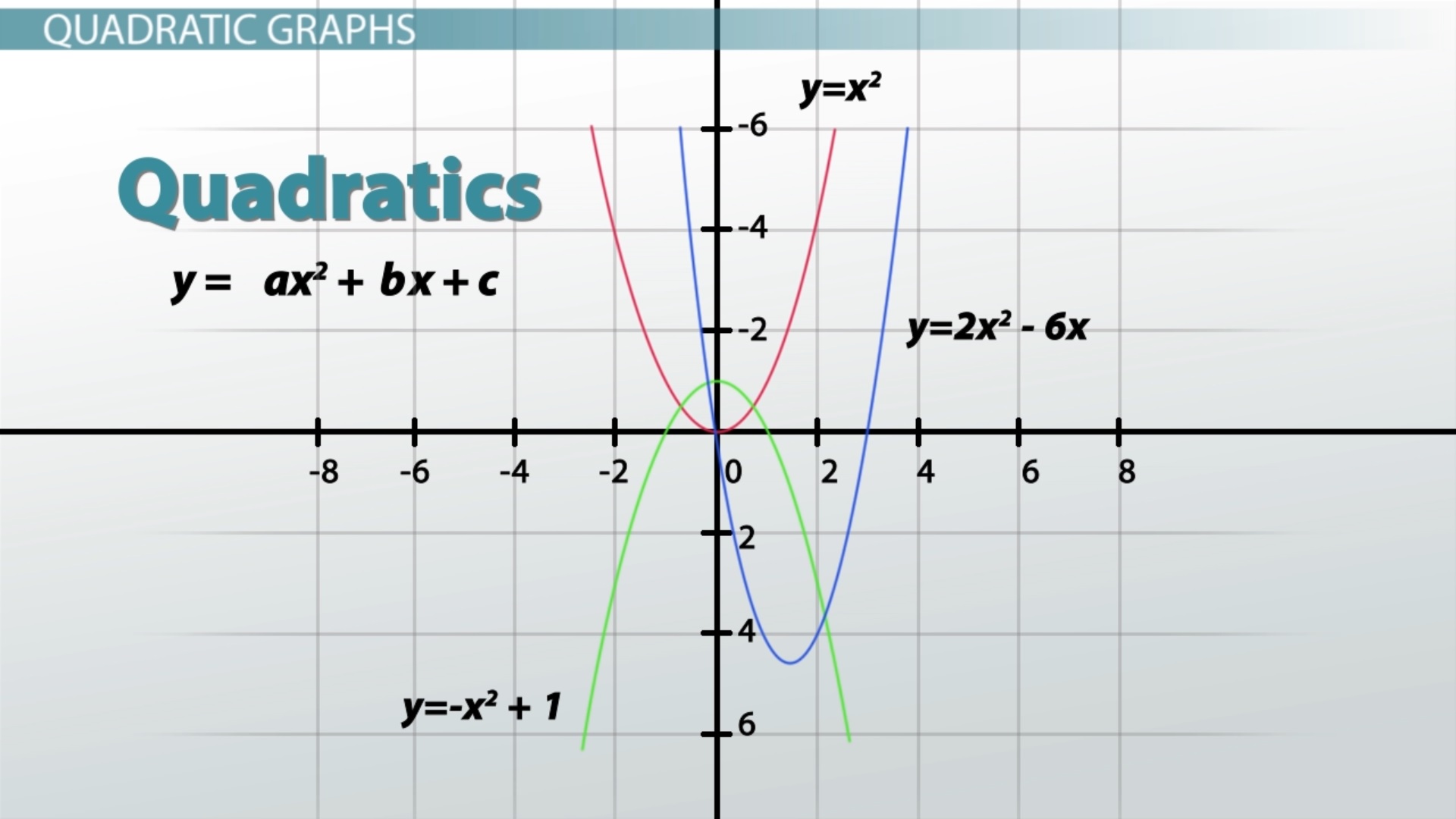
Key Highlights
- Unique Output: Each input value in a function is paired with exactly one output.
- Domain and Codomain: Functions operate between well-defined sets of values—inputs and possible outputs.
- Representation: Functions can be represented using equations, graphs, tables, or sets of ordered pairs.
Defining a Mathematical Function
In mathematics, a function is a fundamental concept that describes a specific type of relationship between two sets of elements. Essentially, a function acts like a "machine" that accepts inputs from one set (called the domain) and produces outputs in another set (called the codomain or range). The defining characteristic of a function is that every input is associated with exactly one output. This guarantees a predictable and unique result for each input value, ensuring that the function is well-defined.
Notation and Representation
Functions are generally denoted by symbols such as f, g, or h. A common notation for a function f is f(x), where x represents the input. For example, if you have the function f(x) = x/2, this indicates that for every number you insert as x, the function produces an output equal to half that number.
Mathematical Notation
Functions are often written in the form \( f: X \to Y \), where:
- \( X \) denotes the domain, which is the set of all possible inputs.
- \( Y \) represents the codomain, which is the set of values that might be produced by the function.
For example, consider the function \( f(x) = x^2 \). If the domain \( X \) is all real numbers, each input x is squared to produce an output in the codomain \( Y \), which may be all non-negative real numbers.
Exploring the Core Concepts of Functions
Unique Input-Output Relationship
One of the most critical aspects of a function is its uniqueness property: for every input value, there is exactly one corresponding output. This rule prevents any ambiguity and ensures that functions work predictably. When you think of a function as a machine, imagine that every time you input a value into the machine, it processes the input in a consistent manner to generate exactly one result.
Domain and Codomain
The terms "domain" and "codomain" are central when discussing functions:
- Domain: This is the collection of all possible input values for a function. The function is defined for these values.
- Codomain: This is the set of potential output values. In some contexts, especially in elementary explanations, the term "range" might be used to indicate the actual outputs generated by the function, though in more rigorous settings codomain is a broader concept.
Visualizing Domain and Codomain
To help visualize these concepts, consider the following table that captures the relationship between the input and output for a simple function:
| Input (Domain) | Function Operation | Output (Codomain) |
|---|---|---|
| 2 | \( f(x) = \frac{x}{2} \) | 1 |
| 4 | \( f(x) = \frac{x}{2} \) | 2 |
| 8 | \( f(x) = \frac{x}{2} \) | 4 |
This table clearly demonstrates that each input maps to one distinct output, which is at the core of what it means to be a function.
Various Forms of Functions
Functions can be expressed in multiple ways depending on the context and the level of detail required. Some common representations include:
- Equations: For example, in the equation \( f(x) = x^2 - 4x + 4 \), the functional relationship is described algebraically.
- Graphs: Visual representations that plot the input values against their corresponding outputs. Graphs offer an intuitive view of the behaviour of the function.
- Tables: Data organized in rows and columns that show specific input-output pairs.
- Ordered Pairs: Sets of pairs \((x, y)\) where x is an element from the domain and y is the corresponding output.
Real-Life Analogies
One common analogy for a function is a vending machine. When you enter a code (input), the machine dispenses a specific snack (output). Regardless of how many times you press the same code, the machine will consistently deliver the same snack, highlighting the unique output property of functions.
Types and Applications of Functions
Varieties of Mathematical Functions
Functions in mathematics are diverse and can take many forms. Some common types include:
- Linear Functions: Represented by equations like \( y = mx + b \), these functions form straight lines when graphed.
- Quadratic Functions: Represented typically by equations such as \( y = ax^2 + bx + c \), these yield parabolic curves on graphs.
- Polynomial Functions: Involving terms with exponents, including the examples mentioned in linear and quadratic functions, these functions have applications across various mathematical realms.
- Exponential and Logarithmic Functions: Essential in modeling growth and decay, these functions are frequent in fields such as biology, finance, and physics.
- Trigonometric Functions: Functions like \( \sin(x) \), \( \cos(x) \), and \( \tan(x) \) are pivotal in studying periodic phenomena such as waves and oscillations.
Applications in Science and Engineering
Beyond pure mathematics, functions serve as foundational tools in various branches of science and engineering. They are integral in physics for describing motion and forces, in economics for modeling market trends, and in biology for representing growth patterns. The ability to encapsulate a relationship between variables in the form of a function is crucial for both theoretical investigations and practical problem-solving in these fields.
Role in Calculus
In calculus, functions are central to understanding limits, derivatives, and integrals. These concepts help in analyzing the continuous change of quantities and are essential in fields such as physics and engineering. For instance, the derivative of a function provides the rate at which the output changes relative to changes in the input.
Formal Characteristics and Conditions
Formal Definition
Formally, a function is defined as a specific relation between two sets that pairs every element of the first set (domain) with exactly one element of the second set (codomain). This definition is what distinguishes functions from more general relations where an input might be related to multiple outputs.
Key Mathematical Expression
The functional relationship can be succinctly captured by the notation:
\( f: X \to Y \) where, for every \( x \in X \), there exists exactly one \( y \in Y \) such that \( f(x) = y \).
Real-World Applications and Modelling
In addition to their theoretical importance, functions are used extensively in real-world modeling. For instance, in finance, functions regularly appear in the form of interest formulas or economic models. In biology, functions can model population dynamics, and in computer science, they play a critical role in algorithm design and data processing.
Additional Information
Understanding Through Examples
Working with examples is one of the best ways to grasp the concept of functions. Consider these two examples:
-
Example 1: \( f(x) = x/2 \)
Here, if you input 6 for \( x \), the function outputs 3. The simplicity of this function showcases the core property: each input produces a unique result. -
Example 2: \( g(x) = x^2 \)
In this case, if you input 4, the output is 16. Notice how every input has only one possible squared value.
Graphical Representation
Graphs of functions visually demonstrate how input values correspond with output values. The steadily increasing or decreasing nature of these graphs underscores the consistent relationship defined by the function. Moreover, functions can display various properties such as continuity, limits, and even points of discontinuity which are central topics in advanced mathematics.
References
- Function - Britannica
- Function Definition - Math is Fun
- What is a Function? - BYJU'S
- What are Functions? - Cuemath
- Function (mathematics) - Wikipedia
- Function and Sets - Math is Fun
- Understanding Functions - BYJU'S
- Functions in Mathematics - Britannica
- Mathematical Function - Wikipedia
- Exploring Functions - Cuemath
Recommended Further Exploration
Last updated March 4, 2025