
Comprehensive Research on the Maya Civilization
Unveiling the Depths of an Ancient Mesoamerican Powerhouse
Key Takeaways
- Advanced Mathematical and Astronomical Systems: The Maya civilization pioneered the concept of zero and developed highly accurate calendar systems.
- Monumental Architecture and Urban Planning: Maya cities boasted impressive pyramids, temples, and sophisticated water management systems.
- Rich Cultural Legacy: Despite the decline of their cities, Maya culture persists today through language, traditions, and modern communities.
Introduction to the Maya Civilization
The Maya civilization stands as one of the most remarkable and enduring cultures in the history of the Americas. Flourishing in the region that encompasses present-day southeastern Mexico, Guatemala, Belize, western Honduras, and El Salvador, the Maya developed a complex society with profound achievements in various domains. Spanning several millennia, their civilization is divided into distinct periods, each marked by significant advancements and transformations.
Historical Timeline of the Maya Civilization
Archaic Period (8000–2000 BCE)
The Archaic Period marks the earliest phase of the Maya civilization, characterized by the transition from nomadic lifestyles to settled agricultural communities. During this time, the Maya began cultivating staple crops such as maize, beans, and squash, laying the foundation for more complex societal structures.
Preclassic Period (2000 BCE–250 CE)
Spanning nearly two millennia, the Preclassic Period saw significant advancements in architecture, agriculture, and societal organization. Early cities like Nakbé and El Mirador emerged, featuring monumental structures that demonstrated architectural ingenuity. This era also witnessed the development of hieroglyphic writing, which would become a cornerstone of Maya cultural expression.
Classic Period (250–900 CE)
The Classic Period is often regarded as the "Golden Age" of the Maya civilization. During these centuries, Maya city-states such as Tikal, Copán, and Palenque flourished, exhibiting unparalleled achievements in art, architecture, astronomy, and mathematics. The societal structure became highly stratified, with kings and priests holding significant power over political and religious life.
Postclassic Period (900–1500 CE)
Following the decline of many southern cities around the end of the Classic Period, the Postclassic Period saw a shift in power to northern cities like Chichen Itzá and Mayapan. Despite political instability and environmental challenges, Maya culture continued to adapt and thrive in these new centers of power.
Contact Period (1511–1697 CE)
The Contact Period marks the arrival of Spanish conquistadors and the eventual conquest of the Maya city-states. While the political structures were dismantled, Maya descendants retained their cultural identity, preserving language, traditions, and practices that continue to influence the region today.
Cultural and Developmental Aspects
Agriculture and Economy
At the heart of Maya society was a robust agricultural system. The cultivation of maize, beans, squash, chili peppers, and cacao formed the staple diet and economic foundation of the civilization. To support large populations, the Maya developed advanced agricultural techniques, including terracing, raised fields, and sophisticated irrigation systems. These innovations allowed them to maximize arable land and ensure food security even in challenging environments.
Trade played a crucial role in the Maya economy, facilitating the exchange of goods such as jade, obsidian, feathers, cacao, and salt. Extensive trade networks connected various city-states, enabling not only economic prosperity but also cultural exchanges that enriched Maya society.
Architecture and Urban Planning
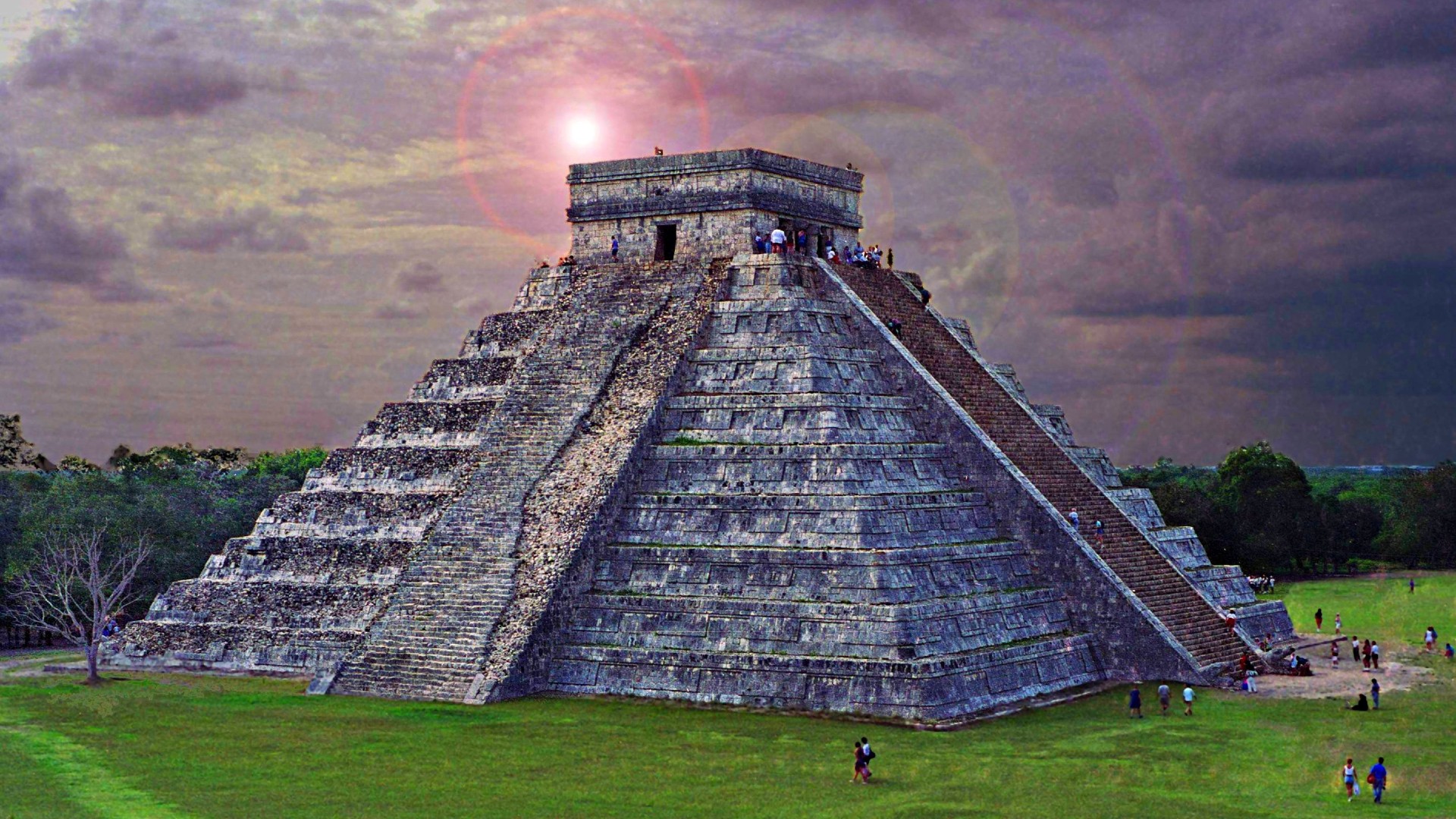
Maya cities were architectural marvels, featuring grand pyramids, temples, palaces, and ceremonial plazas. The construction techniques employed were highly sophisticated, with stone masonry that has withstood centuries. Notable architectural sites include Tikal, renowned for its towering temples and expansive plazas; Chichen Itzá, famous for the iconic El Castillo pyramid; and Copán, celebrated for its intricate stelae and altars.
Urban planning in Maya cities demonstrated a keen understanding of aesthetics and functionality. Cities were often designed around central ceremonial areas, with residential districts and marketplaces strategically placed to facilitate community interaction and governance. Water management systems, including aqueducts and reservoirs, were integral to sustaining these urban centers.
Writing and Language
The Maya developed one of the most sophisticated writing systems in the pre-Columbian Americas. Utilizing a logosyllabic hieroglyphic script, the Maya recorded historical events, religious texts, astronomical data, and administrative records. This writing system was integral to maintaining the complex societal and political structures of the civilization.
Today, approximately 30 Maya languages are still spoken, preserving a vital link to their ancient heritage. The preservation and study of these languages continue to provide insights into Maya culture and history.
Science and Mathematics
The Maya demonstrated exceptional prowess in astronomy and mathematics. They developed an advanced numerical system based on a vigesimal (base-20) structure, which included the innovative concept of zero—one of the earliest known uses of zero in human history. This mathematical foundation was essential for their complex calendrical systems and architectural endeavors.
Astronomically, the Maya were meticulous observers of celestial movements. They tracked the cycles of the sun, moon, Venus, and other celestial bodies with remarkable precision. This knowledge was not only scientific but also deeply intertwined with their religious and agricultural practices, guiding ceremonial events and farming activities.
Calendar Systems
The Maya developed several interlocking calendar systems that showcased their sophisticated understanding of timekeeping. The most notable among these are:
- Haab: A 365-day solar calendar divided into 18 months of 20 days each, plus a short month of 5 days known as Wayeb.
- Tzolk'in: A 260-day sacred calendar consisting of 20 periods of 13 days each, used primarily for religious and ceremonial purposes.
- Calendar Round: A 52-year period created by the combination of the Haab and Tzolk'in calendars, marking a complete cycle of time.
- Long Count: A chronological system dating from a mythical creation date, allowing the Maya to record historical dates spanning thousands of years.
These calendars were integral to Maya society, providing a framework for agricultural planning, religious ceremonies, and historical record-keeping.
Religion and Cosmology
Maya religion was polytheistic, with a pantheon of gods associated with natural elements, celestial bodies, and agricultural cycles. Major deities included Itzamna (creator god), Kukulkan (serpent god), and Chac (rain god).
Religious practices were deeply embedded in daily life, involving rituals such as bloodletting, human sacrifice, and elaborate ceremonies designed to appease the gods and ensure cosmic harmony. Sacred sites like temples, pyramids, and ceremonial caves served as focal points for religious activities and were often adorned with intricate carvings and murals depicting mythological narratives.
The Maya held a cyclical view of time, believing in the recurring cycles of creation and destruction. This worldview was reflected in their calendrical systems and was a fundamental aspect of their cosmology.
Art and Culture
Maya art is renowned for its intricacy and symbolic depth, encompassing sculpture, pottery, murals, textiles, and jade carvings. Artistic expressions often depicted religious themes, rulers, mythological scenes, and historical events, serving both decorative and ceremonial purposes.
Architecture itself was a form of artistic expression, with buildings designed not only for function but also to convey religious and political power. Murals and carvings within these structures provided a visual narrative of Maya cosmology and societal hierarchy.
Music, dance, and storytelling were integral aspects of Maya culture, playing central roles in religious and social ceremonies. These art forms facilitated the transmission of cultural values, historical knowledge, and communal identity.
Social Structure
Maya society was highly stratified, with a clear hierarchy that structured daily life and governance. The social hierarchy typically included:
- Ruling Elite: Comprising kings (Ajaw), nobles, priests, and scribes, this class held significant political and religious authority.
- Artisans and Merchants: Skilled workers and traders who produced goods and facilitated economic exchanges both within and between city-states.
- Farmers and Laborers: The backbone of Maya society, responsible for agricultural production and construction projects.
- Slaves: Individuals who were often prisoners of war or indebted persons, performing various forms of labor.
The elite class controlled religious and political life, while the commoners contributed to the essential activities that sustained the civilization, such as agriculture, construction, and craftsmanship.
Urban Development and Infrastructure
Maya cities were centers of political power, economic activity, and cultural expression. Urban development was characterized by the strategic placement of monumental architecture, residential areas, marketplaces, and religious sites. Advanced infrastructure, including roads, aqueducts, and reservoirs, facilitated movement, water supply, and public health within the cities.
The layout of Maya cities often reflected astronomical alignments, with temples and pyramids positioned to correspond with celestial events such as solstices and equinoxes. This integration of astronomy into urban planning underscores the importance of celestial phenomena in Maya cosmology and daily life.
Decline and Legacy of the Maya Civilization
Factors Contributing to the Decline
The decline of the Classic Maya civilization around the 9th century CE is attributed to a combination of interrelated factors:
- Environmental Degradation: Intensive agricultural practices may have led to deforestation, soil depletion, and decreased agricultural yields.
- Overpopulation: Population pressures could have strained resources, leading to food shortages and societal stress.
- Warfare and Political Instability: Increased warfare between city-states disrupted trade networks and political alliances, weakening societal cohesion.
- Climate Change: Prolonged droughts and adverse weather patterns likely exacerbated agricultural challenges and resource scarcity.
- Economic Decline: Disruptions in trade and economic activities further undermined the stability of Maya cities.
While these factors contributed to the decline of southern lowland cities, northern cities like Chichen Itzá and Mayapan continued to thrive for several more centuries, demonstrating the resilience and adaptability of Maya society.
Resilience and Continuity
Despite the collapse of many urban centers, Maya culture did not vanish. Instead, it endured through the Postclassic Period and persisted into the modern era. Maya communities continued to maintain their language, agricultural practices, and cultural traditions, adapting to changing political and environmental landscapes.
The Spanish conquest in the 16th century marked a significant turning point, leading to the decline of traditional political structures and the imposition of colonial rule. However, Maya descendants remained resilient, preserving aspects of their heritage and contributing to the rich cultural tapestry of Central America today.
Modern Legacy of the Maya Civilization
The legacy of the Maya civilization is evident in various facets of contemporary society:
-
Language: Over 30 Maya languages are still spoken by millions, serving as a direct link to their ancient past.
-
Cultural Practices: Traditional agricultural methods, crafts, and ceremonial rituals continue to be practiced, blending ancient customs with modern life.
-
Archaeological Significance: Ongoing archaeological research and excavations continue to uncover new insights into Maya society, contributing to our understanding of pre-Columbian history.
-
Tourism and Education: Maya sites like Tikal and Chichen Itzá are major tourist attractions, fostering cultural appreciation and economic benefits for the region.
-
Art and Literature: Maya motifs and themes influence contemporary art, literature, and media, reflecting the enduring fascination with their civilization.
Conclusion
The Maya civilization represents a pinnacle of human achievement in the ancient Americas, characterized by its advanced knowledge in mathematics, astronomy, architecture, and written language. Their ability to build monumental cities, develop complex societal structures, and create enduring cultural legacies speaks to their ingenuity and resilience. Although the Maya cities experienced decline due to a confluence of environmental, social, and political factors, the essence of Maya culture persists today through living communities, languages, and traditions. The study of the Maya continues to inspire awe and provides valuable lessons in sustainability, cultural preservation, and the complexities of societal development.
References
Last updated January 26, 2025