
Coolest Ancient Inventions
Exploring the marvels of human ingenuity from early civilizations
Highlights
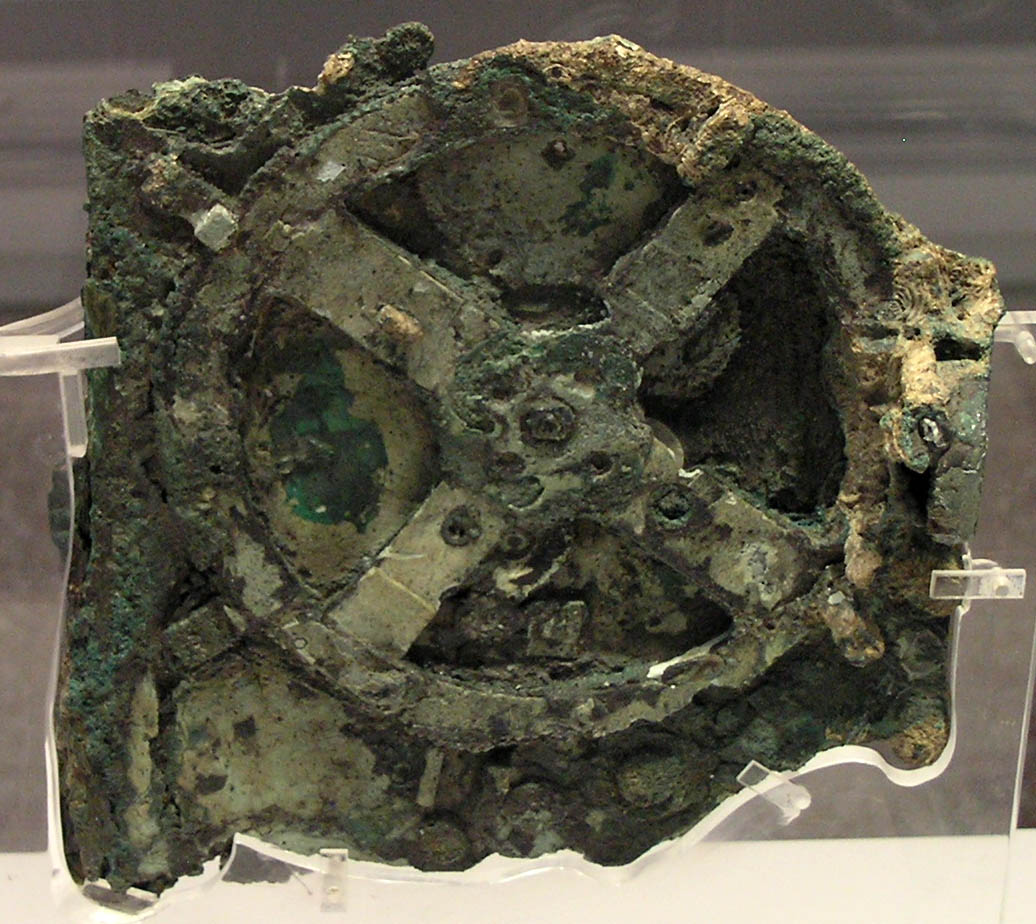
- The Antikythera Mechanism – The world's first analog computer that predicted astronomical events.
- Greek Fire and Damascus Steel – Revolutionary military technologies that changed warfare.
- Innovative Engineering – From the hypocaust system to the yakhchal, ancient systems for heating, cooling, and transferring resources.
Introduction
Human civilization has witnessed brilliant feats of creativity and engineering since its inception. Before the advent of modern technology, ancient societies developed inventions that not only solved everyday problems but also paved the way for today's scientific and technological advancements. From devices that computed celestial movements to ingenious military tactics, ancient inventions have continually astonished and influenced the modern world. This in-depth exploration delves into some of the coolest ancient inventions, analyzing their functions, innovations, and lasting impacts on our society.
Ancient Technological Marvels
The Antikythera Mechanism – The First Computer
The Antikythera Mechanism is widely regarded as a masterpiece of ancient engineering. Discovered in a shipwreck off the Greek island of Antikythera, this device dates back to around 100 BCE. Comprising over 30 bronze gears, it functioned as an analog computer, meticulously calculating astronomical cycles and predicting celestial events such as eclipses and planetary positions. Its design enabled ancient astronomers to track the movements of the heavens, link the cycles of the Moon with solar events, and even forecast the timing of events like the Olympic Games. The complexity and precision of the Antikythera Mechanism indicate that ancient Greek civilization had a sophisticated understanding of mathematics and astronomy centuries ahead of its time.
Greek Fire – An Incendiary Weapon That Changed Naval Warfare
Greek Fire was an incendiary weapon invented in the Byzantine Empire around the 6th century AD. Its formulation remains one of history's best-kept secrets, but it is generally believed to have been composed of a mixture that included sulfur, pitch, and possibly naphtha. What set Greek Fire apart was its ability to ignite on water, making it invaluable in naval battles. It gave the Byzantine fleet a critical strategic advantage, as it could be deployed even during nighttime or adverse weather conditions, often demoralizing enemy forces. The use of Greek Fire underlined the innovative military strategies of the time and demonstrated the ability of ancient inventors to harness chemical properties for warfare.
The Wheel and Its Multifaceted Impact
The invention of the wheel, originating in Mesopotamia around 3500 BC, is one of the most significant milestones in human history. Initially developed for pottery, the wheel was soon adapted for transportation and then evolved into critical components of various machinery. Beyond its basic function, the wheel became a symbol of progress, aiding in agriculture, trade, and military conquest. Its simplicity coupled with its far-reaching utility revolutionized human movement and logistics. Throughout centuries, the evolution of the wheel has been aligned with advancements in material science and engineering, leading to modern applications that continue to influence transportation and industrial design.
Paper – The Catalyst for Knowledge Dissemination
Paper, first formalized in ancient China around 105 AD by Cai Lun and with earlier predecessors from as far back as the 2nd century BC, transformed the way information was recorded and shared. This breakthrough innovation revolutionized education, administration, literature, and art. Before paper, writing surfaces were primarily clay, papyrus, or parchment, each with limitations in availability and durability. The development of paper made record-keeping more efficient and portable. It played a crucial role in the spread of literacy and culture, ultimately influencing the global dissemination of knowledge and sparking major developments during the Renaissance and beyond.
The Compass and Navigation Innovations
Navigation has always been essential for commerce, warfare, and cultural exchange. The magnetic compass, first invented in China during the Han dynasty (between the 2nd century BC and 1st century AD), represented a paradigm shift in navigation. By harnessing the natural magnetic properties of lodestone, the compass enabled travelers to determine direction even in periods of low visibility. This invention revolutionized seafaring by allowing explorers to venture far from familiar coasts, thus expanding the geographical boundaries of known world maps. The compass is a testament to ancient ingenuity in solving the basic yet critical problem of orientation, which remains fundamental even in modern navigation techniques.
Concrete and Roman Engineering
The use of concrete by ancient civilizations, notably the Egyptians and later perfected by the Romans, fundamentally changed construction methods and architectural design. The Egyptians developed a crude form of concrete as early as 3000 BC, later refined by the Romans who used a combination of volcanic ash, lime, and water to create structures that have withstood centuries of decay. Concrete enabled the construction of massive public works, including aqueducts, temples, and amphitheaters. The durability of these structures has made concrete one of the most enduring and impactful inventions in human history, symbolizing the innovative spirit of ancient engineers and their understanding of materials and structural design.
Gunpowder – A Revolutionary Compound
Gunpowder, invented in 9th century China, represents one of the turning points in military technology. This explosive compound, created from a mixture of sulfur, charcoal, and potassium nitrate, fundamentally altered the nature of warfare. The application of gunpowder led to the invention of early firearms, cannons, and other incendiary devices. Not only did it revolutionize battle tactics and fortification designs, but it also influenced political boundaries worldwide. The advent of gunpowder marked the beginning of modern military science and the gradual transition from traditional siege warfare to modern combat techniques.
The Seismoscope – Early Earthquake Detection
The seismoscope, invented by Chinese scientist Zhang Heng in 132 AD, was a groundbreaking device capable of detecting earthquakes from hundreds of miles away. Unlike modern seismometers, Zhang Heng's device was purely mechanical. It operated by using a system of levers and balls that would trigger a visual indicator when an earthquake occurred in a particular direction. This early warning system showcased advanced scientific reasoning and provided invaluable information for disaster management and building safety in an era where understanding of natural phenomena was limited. The seismoscope is a prime example of ancient innovation aimed at mitigating the impacts of natural disasters.
The Nimrud Lens – Optical Prowess in Antiquity
The Nimrud Lens is an artifact that has fascinated historians and scientists alike. Often considered one of the world's earliest optical devices, this piece of rock crystal from ancient Assyria dates back approximately 3,000 years. While its exact use remains a topic of debate among scholars, many hypothesize that it could have functioned either as a magnifying lens or as a tool for starting fires by focusing sunlight. The discovery of the Nimrud Lens challenges modern perspectives on the technological capabilities of ancient civilizations, highlighting the possibility that early inventors understood optics in ways that were previously deemed exclusive to more modern eras.
The Archimedes Screw – Engineering for Water Management
Attributed to the legendary Greek mathematician and engineer Archimedes, the Archimedes Screw is a remarkable invention designed for lifting water from lower to higher elevations. While there is evidence that similar devices may have been employed even earlier by other ancient cultures such as the Egyptians, the Archimedes Screw is most commonly associated with innovations in water management and irrigation. Its simple yet effective design enabled extensive agricultural development by ensuring reliable water supply and drainage, a critical factor in sustaining large populations and facilitating urban growth. This invention represents a fusion of practical problem-solving with a deep understanding of mechanical principles, enduring through centuries as a staple in water-raising technology.
The Baghdad Battery – Mysteries of Ancient Electro-technology
The Baghdad Battery is a fascinating artifact that has spurred debates regarding the possibility of ancient electro-technology. Dating back to the Parthian or early Sassanid period (roughly the 2nd or 3rd century CE), this clay jar, containing a copper cylinder and an iron rod, has been speculated to serve as a rudimentary battery. Some researchers suggest that it might have been used for electroplating or other electrical experiments. However, its exact purpose remains controversial. Despite the mystery surrounding its function, the Baghdad Battery exemplifies the spirit of innovation prevalent in ancient times, challenging our assumptions about the technological boundaries of past civilizations.
The Astrolabe – Navigational and Astronomical Precision
The astrolabe is among the most intricate and beautiful inventions of ancient astronomy and navigation. Emerging from ancient Greek culture, this sophisticated instrument allowed users to measure the positions of stars and planets, determine time, and even assist in navigation. Composed of a circular disk with a series of movable parts, the astrolabe could be adjusted to reflect the observed celestial positions accurately. Its design and capability made it a vital tool for scholars, navigators, and explorers during both the medieval period and the Renaissance. The astrolabe is a celebration of both art and science, blending mathematical precision with intricate craftsmanship.
The Hypocaust System – Ancient Climate Control
Ancient Rome is renowned for its innovations in public infrastructure, and the hypocaust system is a prime example of their engineering prowess in climate control. Developed to provide underfloor heating, the hypocaust was an ingenious method of circulating hot air beneath buildings and public baths. By allowing heated air from a furnace to travel through a network of ducts and cavities, it offered an early form of central heating that enhanced comfort and hygiene in urban environments. This system not only showcased the Romans’ high level of technical skill but also their understanding of thermal dynamics and architectural design, significantly improving the quality of life in their cities.
Yakhchal – The Ancient Persian Freezer
In the arid regions of ancient Persia, the need to store food and beverages during the scorching summer months led to the invention of the yakhchal, or ancient freezer. Constructed using a remarkable combination of thick walls made from clay and other natural materials, the yakhchal was designed to maintain low temperatures even in the heat of the desert. This cooling structure frequently employed an ingenious approach to heat insulation and evaporative cooling, making it possible to preserve ice and perishable goods for extended periods. The yakhchal stands as an extraordinary example of passive cooling technology, demonstrating a deep understanding of thermal regulation long before the advent of modern refrigeration techniques.
Damascus Steel – Craftsmanship and Metallurgical Excellence
Damascus steel is celebrated for its remarkable strength, sharpness, and distinctive banding patterns. Originating in the Middle East, particularly around ancient Damascus, this type of steel was used in the manufacture of swords and other weapons. Renowned for its durability and ability to maintain a keen edge, Damascus steel became synonymous with high-quality craftsmanship and advanced metallurgical techniques. The process of producing Damascus steel was complex, involving intricate forging and repeated folding of the metal, a technique that not only enhanced its mechanical properties but also left behind a visually stunning pattern. This ancient material continues to be admired today both for its practical applications in knife-making as well as its aesthetic influence on modern metallurgy.
The Roman Dodecahedron – An Enigmatic Artifact
Among the more mysterious inventions of antiquity is the Roman dodecahedron—a bronze artifact with twelve flat faces, each punctuated by circular holes of varying sizes. Although its true purpose has eluded historians, several intriguing theories have emerged. Some scholars suggest that it may have been used as a tool for measuring distances or angles, while others propose that it functioned as a religious or divinatory object. Despite the ongoing debate, the Roman dodecahedron symbolizes the enigmatic quality of ancient knowledge and the creative impulse to develop multi-functional instruments whose uses might have transcended simple categorization.
Comparative Overview of Key Inventions
The table below presents a comparative overview of some of these cool ancient inventions, summarizing their primary functions, origins, and influential impacts:
| Invention | Primary Function | Origin & Date | Impact |
|---|---|---|---|
| The Antikythera Mechanism | Analog computation of astronomical events | Ancient Greece, circa 100 BCE | Foundation for modern computational devices |
| Greek Fire | Naval incendiary weapon | Byzantine Empire, 6th century AD | Revolutionized naval warfare |
| The Wheel | Transportation and mechanical motion | Mesopotamia, circa 3500 BC | Enhanced movement, trade, and technology |
| Paper | Record-keeping and information dissemination | Ancient China, circa 105 AD | Transforming literacy and cultural transfer |
| The Compass | Navigational aid | Ancient China, 2nd century BC - 1st century AD | Expanded maritime exploration and trade |
| Concrete | Construction material | Ancient Egypt/ Rome, circa 3000 BC | Enabled monumental architecture |
| Gunpowder | Explosive compound for warfare | China, circa 9th century AD | Changed military tactics globally |
| The Seismoscope | Early earthquake detection | China, 132 AD | Provided ancient disaster warning systems |
| Baghdad Battery | Possible electroplating or electrical experiments | Parthian/Sassanid period, 2nd-3rd century CE | Hints at ancient electro-technology |
| Astrolabe | Astronomical measurements and navigation | Ancient Greece, Medieval adoption | Critical tool for scholars and navigators |
Cultural and Scientific Impact
Interdisciplinary Influence
Ancient inventions were not solely about solving immediate physical problems; they were also a significant catalyst for cultural and intellectual growth. The development of devices such as the Antikythera Mechanism and the astrolabe indicated a sophisticated level of scientific inquiry that transcended the purely pragmatic. Their designs were intertwined with myths, religious practices, and the early philosophical pursuits about the nature of the cosmos. In many cases, these inventions stimulated advancements in other disciplines – influencing mathematics, astronomy, and even art. For instance, the precision of ancient optical instruments informed both aesthetic endeavors and the practical aspects of construction and astronomy.
Technological Foundations for Modern Science
The inventions crafted by ancient civilizations laid the groundwork for later scientific achievements and industrial applications. The understanding of basic mechanical principles seen in devices like the Archimedes Screw and the hypocaust system paved the way for later developments in mechanical engineering and architecture. These ancient innovations underscore the continuity of human inquiry and the cumulative nature of scientific progress. Modern technology, from computer algorithms to advanced materials science, has roots that can be traced back to the ingenuity of early inventors who observed nature, practiced empirical problem-solving, and documented their findings with remarkable accuracy.
Global Exchange and Evolution of Ideas
It is essential to note that many ancient inventions did not emerge in isolation but were part of a global tapestry of exchange and cultural interaction. Inventions such as paper, the compass, and gunpowder traveled along trade routes, absorbing influences and modifications as they were adopted by different civilizations. The cross-pollination of ideas enabled the evolution of technologies and spurred economic and social transformations. These interactions highlight the interconnectedness of ancient societies, where advancements in one region often spurred innovative responses in another. The global circulation of knowledge, facilitated through trade, conquest, and cultural exchange, ensured that the genius of one civilization could stimulate progress across borders, paving the way for the modern world.
Legacy and Modern Relevance
Inspiration for Contemporary Innovation
Modern engineers, scientists, and entrepreneurs continue to draw inspiration from ancient inventions. The ingenuity behind devices like the Antikythera Mechanism encourages a multidisciplinary approach to problem-solving that combines aesthetics, functionality, and advanced engineering. Today’s challenges in renewable energy, computing, and environmental sustainability often find their philosophical and technical roots in the inventive spirit of the past. By studying these ancient innovations, modern researchers gain key insights into fundamental principles of design and the unyielding human drive to improve everyday life.
Historical Awareness and Appreciation
Understanding these ancient inventions helps foster a broader appreciation for the historical development of technology. It reminds us that many products and processes we often take for granted today had precursors that were groundbreaking in their own time. Recognizing the achievements of early inventors bridges the gap between past and present, providing a narrative of human progress that inspires both academic research and popular culture. Museums, exhibitions, and scholarly papers continue to shed light on these mystical devices, ensuring that their legacies remain an integral part of our collective heritage.
Conclusion
Ancient inventions exemplify a period of unbridled creativity and practical ingenuity that transformed the way humans interact with the world. From the computational marvel of the Antikythera Mechanism and the navigational breakthroughs of the compass to the practical engineering of the hypocaust and yakhchal, each invention tells a story of innovation that resonates to this day. These early technological achievements not only addressed pressing practical challenges but also fostered the intellectual curiosity that would eventually give rise to modern science and engineering. By studying and appreciating these innovations, we not only honor the creativity of our ancestors but also gain inspiration for solving the challenges of the future.
The journey through these ancient innovations reveals that technological progress is not a modern phenomenon but a continuum of human ingenuity. Today, the echoes of these early advancements can be seen in our modern infrastructure, scientific endeavors, and even our cultural narratives. They represent the cumulative wisdom of civilizations that understood the importance of observation, experimentation, and adaptation. Recognizing this heritage encourages a balanced perspective that values both historical achievements and contemporary advancements in creating a better future.
References
- Top 10 Ancient Inventions - Listverse
- 8 Inventions We Owe to the Ancients - HISTORY
- Ancient Marvels: Ten Amazing Inventions Created Before Their Time - Ancient Origins
- 15 Amazing Examples of Ancient Technology - Oldest.org
- 9 Inventions We Owe to the Ancients - TheCollector
-
10 Ancient Invention that Changed Human History - Vocal
Recommended Further Exploration
Last updated February 22, 2025