
The Coolest Ancient Inventions: Marvels of Early Innovation
Exploring the ingenious creations that shaped civilizations long before our time.
Key Takeaways
- Engineering Prowess: Ancient civilizations developed advanced engineering techniques, evidenced by monumental structures and durable materials.
- Scientific Ingenuity: Inventions like the Antikythera Mechanism and Zhang Heng’s Seismoscope demonstrate profound scientific understanding and application.
- Enduring Legacy: Many ancient inventions laid the foundation for modern technology, influencing various aspects of contemporary life.
Introduction to Ancient Ingenuity
Human history is replete with remarkable inventions that showcase the creativity and ingenuity of ancient civilizations. These inventions not only solved immediate problems but also laid the groundwork for future technological advancements. From complex mechanical devices to durable building materials, the coolest ancient inventions continue to inspire and astound us today.
Engineering Marvels
Roman Concrete: The Backbone of Enduring Architecture
Roman concrete, known as Opus Caementicium, stands as a testament to the advanced engineering capabilities of ancient Rome. Made from a mixture of lime, water, volcanic ash, and aggregate, this material provided exceptional durability and strength, enabling the construction of iconic structures such as the Pantheon, the Colosseum, and extensive aqueduct systems. Unlike modern concrete, Roman concrete could set underwater, allowing the Romans to build harbors and other maritime structures with unprecedented resilience. The unique composition of volcanic ash not only enhanced the material's longevity but also contributed to its self-healing properties, as cracks could be filled by minerals crystallizing from seawater. The mastery of concrete technology was a significant factor in Rome's architectural and infrastructural achievements, influencing building practices for centuries to come.
Aqueducts: Masterpieces of Water Management
The Roman aqueducts are among the most impressive engineering feats of the ancient world. These structures were designed to transport fresh water from distant sources into cities and towns, supporting public baths, fountains, and private households. The Pont du Gard in France is a prime example, showcasing precise engineering with its tiered arches and gradient management to ensure a steady flow of water. Aqueducts not only facilitated urban growth by providing reliable water supplies but also demonstrated the Romans' ability to manipulate their environment to meet societal needs. The construction of aqueducts required meticulous planning, surveying, and the use of durable materials, reflecting the advanced technological and architectural knowledge of Roman engineers.
Scientific Innovations
The Antikythera Mechanism: An Ancient Analog Computer
Discovered in a shipwreck off the Greek island of Antikythera in 1901, the Antikythera Mechanism is often regarded as the world's first analog computer. Dating back to around 100 BC, this intricate device consisted of a complex system of gears capable of predicting astronomical positions and eclipses for calendrical purposes. The mechanism could track the cycles of the solar system, including the Metonic cycle and the Saros cycle, demonstrating a sophisticated understanding of celestial mechanics. The precision and miniaturization of its components were unparalleled for over a millennium, highlighting the advanced engineering and astronomical knowledge of the Greeks. The Antikythera Mechanism provides invaluable insights into the technological capabilities of ancient civilizations and their ability to create devices of remarkable complexity and functionality.
Zhang Heng’s Seismoscope: Early Earthquake Detection
In 132 AD, the Chinese polymath Zhang Heng invented the seismoscope, an innovative device capable of detecting earthquakes from hundreds of miles away. This early earthquake detector utilized a pendulum mechanism to trigger a series of levers and balls that would indicate the direction of the seismic activity. The device featured a dragon figurine holding brass balls that dropped into the mouths of toads positioned around the device, each representing a cardinal direction. The seismoscope's ability to provide early warnings of earthquakes was unprecedented, showcasing Zhang Heng's deep understanding of geological phenomena and mechanical engineering. The seismoscope not only saved lives by alerting distant regions of impending earthquakes but also exemplified the application of scientific principles to develop practical solutions for natural disasters.
Technological Prowess
The Baghdad Battery: Ancient Electrical Experimentation
The Baghdad Battery is an artifact dating back to the Parthian period (250 BC to AD 224) in Mesopotamia, consisting of a clay pot, a copper tube, and an iron rod. This arrangement suggests the possibility of an early form of an electrochemical cell, potentially used for purposes such as electroplating or electrotherapy. While the exact function of the Baghdad Battery remains a topic of debate among historians and scientists, its existence indicates that ancient peoples were experimenting with basic electrical principles. The construction of the battery reflects a level of technological sophistication and curiosity about electricity that was not widely recognized until much later in history. Whether it was used for practical applications or as a scientific experiment, the Baghdad Battery remains a fascinating example of ancient technological innovation.
The Compass: Navigational Advancement from Ancient China
The magnetic compass, invented during the Han Dynasty in ancient China (around 206 BCE - 220 CE), revolutionized navigation and exploration. Initially used for feng shui and divination, the compass was later adapted for maritime navigation, allowing sailors to determine direction even under cloudy skies or during nighttime voyages. The compass's ability to provide a reliable means of orientation greatly enhanced long-distance trade and exploration, contributing to the expansion of civilizations and the exchange of goods, ideas, and cultures across vast regions. The invention of the compass was a pivotal development in the history of navigation, laying the foundation for future maritime explorations and the eventual global discoveries that shaped the modern world.
Everyday Innovations
Papyrus and Paper: The Foundations of Written Communication
The invention of papyrus in ancient Egypt around 2500 BCE marked a significant advancement in written communication and record-keeping. Made from the pith of the papyrus plant, papyrus sheets were used to create scrolls for writing and documentation, facilitating the administration of the state, religious texts, literature, and personal correspondence. This early form of paper provided a portable and durable medium for preserving information, greatly enhancing the efficiency of communication and the spread of knowledge. The techniques developed for papyrus production laid the groundwork for later paper-making innovations in China, which would further revolutionize writing and documentation practices worldwide. The legacy of papyrus is evident in the foundational role it played in the development of written languages and the preservation of human history.
The Wheel: A Transformative Invention from Mesopotamia
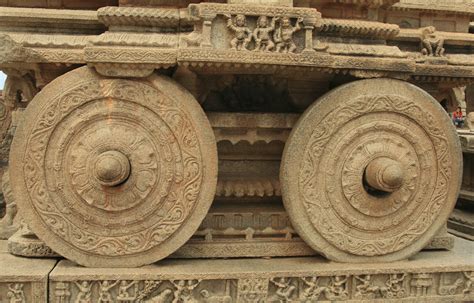
One of the most fundamental inventions in human history, the wheel was first developed in Mesopotamia around 3500 BCE. Initially used in pottery-making as the potter's wheel, the wheel's application soon expanded to transportation. The introduction of wheeled vehicles revolutionized trade, agriculture, and warfare by enabling the movement of goods and people over greater distances with increased efficiency. The wheel also facilitated the development of machinery, contributing to advancements in technology and industry. Its simplicity and versatility made it an indispensable tool, and the wheel remains a cornerstone of modern engineering and transportation systems. The invention of the wheel exemplifies how a single innovation can have profound and lasting impacts on society and civilization.
Conclusion
The coolest ancient inventions highlight the extraordinary creativity and problem-solving abilities of early civilizations. From the architectural marvels made possible by Roman concrete and aqueducts to the scientific breakthroughs embodied in the Antikythera Mechanism and Zhang Heng’s seismoscope, these inventions demonstrate a deep understanding of engineering, astronomy, and natural phenomena. Technological innovations like the Baghdad Battery and the compass showcase early experimentation with electrical principles and navigational tools that would shape the course of exploration and technological development. Everyday innovations such as papyrus and the wheel underline the foundational role these inventions played in advancing written communication and transportation. The enduring legacy of these ancient inventions is a testament to humanity's relentless pursuit of knowledge and improvement, laying the groundwork for the complex technologies and systems that define our modern world.
References
Last updated January 13, 2025