
Pigments from Microorganisms: A Sustainable Alternative for Synthetic Food Coloring
Exploring Detailed Examples and Applications in Food Industry
Key Insights
- Diverse Sources: Microbial pigments are derived from bacteria, fungi, and algae, offering alternatives from natural processes.
- Wide-Ranging Applications: They are used not only for food coloration but also in animal husbandry, nutritional supplementation, and as antioxidants.
- Sustainability & Health Benefits: Their production is environmentally friendly, ensuring biodegradability and additional functional benefits such as antioxidant and antimicrobial properties.
Detailed Examples of Microbial Pigment Uses in the Food Industry
The use of pigments obtained from microorganisms represents a shift towards sustainable and environmentally responsible practices in the food industry. Microbial pigments stand as a robust alternative to synthetic colorants, which often involve environmentally harmful manufacturing processes along with issues related to chemical stability, potential toxicity, and consumer health concerns. Adopting microbial pigments provides avenues not only for natural food coloration but also introduces additional health-promoting properties, such as antioxidant and antimicrobial benefits.
1. Specific Microbial Pigments and Their Sources
Many microorganisms produce pigments that can be directly incorporated into food formulations. These include:
a. Carotenoids
Carotenoids such as β-carotene, lycopene, astaxanthin, and canthaxanthin are produced by various microorganisms. For example, β-carotene is frequently produced by species like Blakeslea trispora and Dunaliella salina. These pigments imbue foods with rich yellow to orange colors and are trusted for their vitamin A precursor qualities. Astaxanthin, produced by Xanthophyllomyces dendrorhous or algae like Haematococcus lacustris, is a potent antioxidant that offers a reddish hue to food products.
b. Anthocyanins
Anthocyanins extracted from certain bacterial strains, like those from some Bacillus species, provide red, purple, and blue hues suitable for a variety of foods including beverages, candies, and dairy products. The natural variance in their absorption spectra enables these pigments to offer diverse color ranges that can be tailored according to product requirements.
c. Riboflavin (Vitamin B2)
Riboflavin, commonly produced by Bacillus subtilis and Ashbya gossypii, serves dual roles as both a nutritional supplement and a natural colorant. Its yellow hue imparts a distinctive appeal to dairy products, sauces, and even energy beverages, while also contributing to essential dietary vitamin intake.
d. Phycocyanin
Derived from cyanobacteria such as Spirulina, phycocyanin delivers a natural blue pigment that is not only visually appealing but also carries anti-inflammatory and antioxidant properties. It is utilized in yogurts, ice creams, and various confectioneries, adding both color and nutritional benefits.
e. Additional Pigments
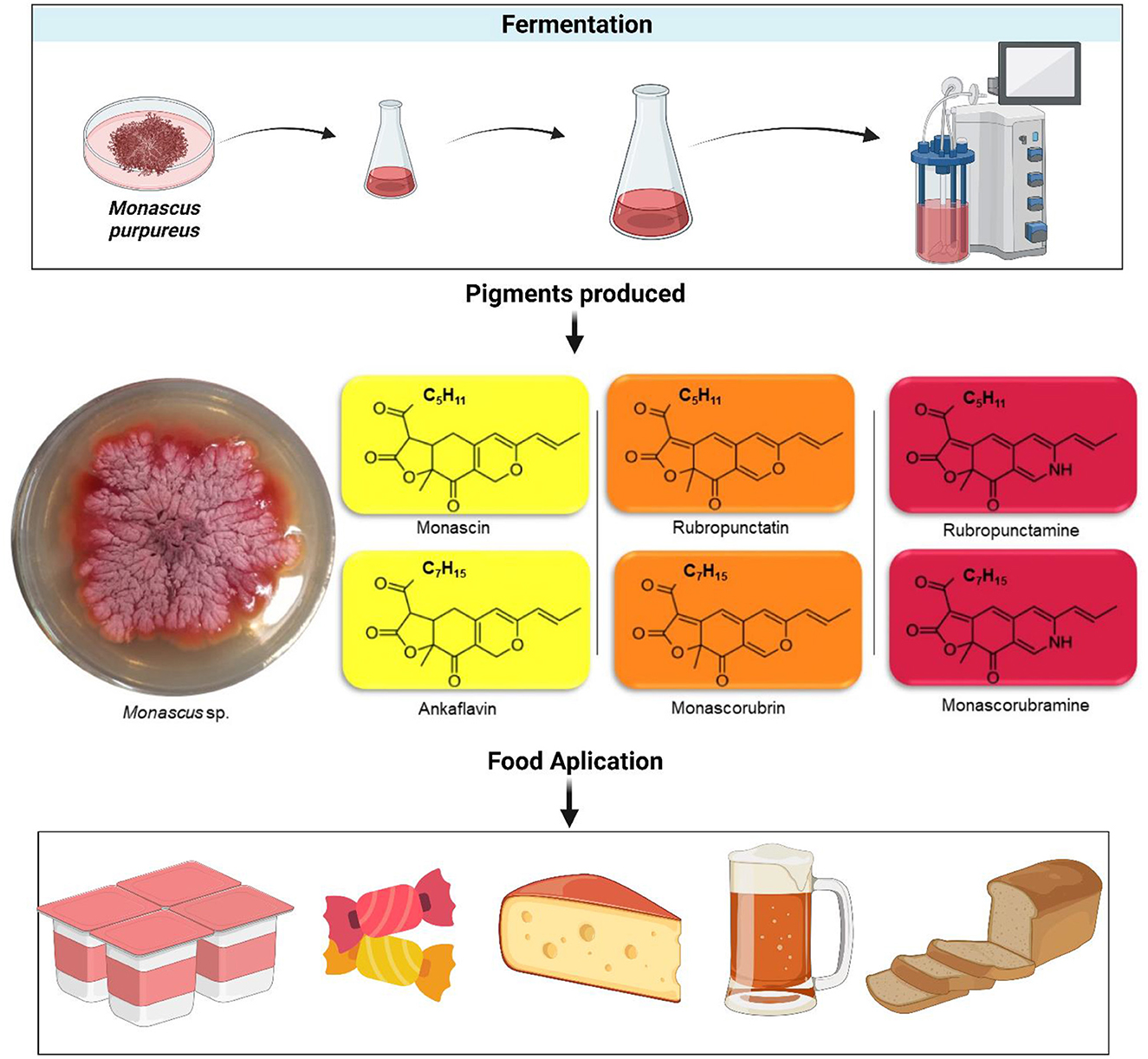
Other microbial pigments include Arpink Red (from Penicillium oxalicum), Monascus pigments derived from Monascus purpureus, and the less common pigments such as prodigiosin from Serratia marcescens and violacein from Chromobacterium violaceum. Each pigment presents unique color properties and functional benefits such as antimicrobial or anticancer properties, thereby meeting consumer demands for natural and health-promoting food additives.
2. Applications in Food and Beverage Products
Microbial pigments are incorporated within the food industry for a variety of purposes. Their applications range from enhancing the aesthetic appeal of food products to contributing additional health attributes. Some of the applications include:
a. Food Coloration
One of the most straightforward applications is the use of these pigments as natural colorants in food products. They are employed in:
- Soft drinks, fruit juices, and flavored waters
- Dairy products such as yogurts, cheeses, and ice creams
- Baked goods and confectioneries including candies and chocolates
- Sauces, dressings, and fermented products like rice wine and soy sauce
The vibrant colors delivered by microbial pigments enhance the overall visual appeal, thereby attracting consumer interest while simultaneously addressing safety concerns related to synthetic dyes.
b. Nutritional and Functional Enhancement
Beyond simple coloration, microbial pigments often contribute additional health benefits. For instance, carotenoids are known for their antioxidant properties and can assist in reducing oxidative stress. Phycocyanin, on the other hand, is noted for its anti-inflammatory actions, contributing to the development of functional foods that go beyond basic nutrition. Such pigments can be integral to constructing functional beverages and nutritional supplements that are appealing both in terms of appearance and health benefits.
c. Applications in Animal Husbandry and Feed
In the realm of animal husbandry, microbial pigments play a crucial role in enhancing the quality and appearance of animal products. Pigmented feeds for fish, poultry, and livestock can improve:
- Skin and flesh coloration in fish and poultry
- Quality maintenance in meat products by delaying oxidative deterioration
- Aesthetic enhancements in eggs and ornamental fish, which are critical for markets such as aquaculture and ornamental fish breeding
For example, canthaxanthin is incorporated into salmon feed to enhance the characteristic pink coloration of the flesh, while maintaining the nutritional profile of the feed.
3. Economic and Environmental Advantages
The transition to microbial pigments over synthetic dyes is underpinned by both economic and environmental motivations. Traditional synthetic dyes are derived from petroleum-based products and entail complex and often environmentally hazardous synthesis processes. In contrast, microbial pigments are produced through fermentation processes that utilize renewable resources. This makes them more sustainable and less resource-intensive. Moreover, many microbial pigments are biodegradable, which minimizes long-term environmental impacts.
a. Cost-Effectiveness and Scalability
One of the most compelling arguments for microbial pigments is their potential for cost-effective production at industrial scales. The fermentation-based production methods allow for:
- High yields through controlled bioreactor conditions
- Lower energy consumption compared to chemical synthesis
- Reduced reliance on scarce or toxic raw materials
This economic viability is further enhanced when integrated with process optimizations in microbial cultivation, thereby ensuring that the cost per unit pigment is competitive with or even favorable against synthetic alternatives.
b. Sustainability and Environmental Protection
The environmental benefits of microbial pigments extend to reduced pollution and lower carbon footprints. The by-products of fermentation processes are generally less hazardous, contributing to safer disposal and reduced ecological damage. The biodegradability of these pigments ensures that in the event of waste release, the environmental impact is minimized, aligning with global trends towards greener industrial practices.
4. Regulatory Compliance and Safety Considerations
Regulatory bodies such as the U.S. Food and Drug Administration (FDA) and the European Food Safety Authority (EFSA) have started evaluating and approving several microbial pigments for use in food. The stringent processes for approval include evaluating toxicity, allergenicity, and impact on human health. For instance, pigments like riboflavin and phycocyanin have undergone rigorous testing and are now recognized as safe for use, thereby providing manufacturers with a reliable alternative to synthetic additives.
Compliance with regulatory standards not only assures consumers of the safety of these pigments but also boosts the marketability of products that incorporate them. Manufacturers are increasingly leveraging this aspect to market their products as “clean label” and environmentally responsible, catering to an audience that is well-informed about sustainable and healthy consumption.
Comparative Overview: Microbial versus Synthetic Food Colorants
| Aspect | Microbial Pigments | Synthetic Food Colorants |
|---|---|---|
| Source | Biologically derived from bacteria, fungi, algae | Chemically synthesized from petroleum-based or chemical compounds |
| Production Process | Fermentation and bioprocessing with renewable resources | Complex chemical synthesis with potential toxic by-products |
| Environmental Impact | Biodegradable; lower carbon footprint and reduced pollution | Non-biodegradable; may contribute to environmental pollution |
| Health Benefits | Additional nutritional and antioxidant benefits | Primarily color-enhancing without inherent health benefits |
| Regulatory Status | Increasingly meeting FDA/EFSA safety standards for use | Well-established but facing consumer concern over chemicals |
| Economic Feasibility | Scalable fermentation processes lower production costs | Established manufacturing processes but environmentally costlier |
The table above summarizes the advantages of microbial pigments, highlighting the clear benefits in sustainability, functionality, and health aspects over their synthetic counterparts.
5. Addressing Reviewer Comments with Detailed Examples
To satisfy the reviewer's request for expanded detail regarding the examples of microbial pigment applications, it is essential to integrate both qualitative and quantitative perspectives. Incorporate case studies from companies that have successfully transitioned to microbial pigments in their product lines, and discuss the impact on both product quality and consumer health. For instance, studies indicate that the use of carotenoids in food not only improves the product’s visual appeal but also contributes to the supplementation of essential vitamins. Similarly, the utilization of phycocyanin in dairy products has demonstrated improved shelf-life stability, alongside enhancing the product’s nutritional profile.
Furthermore, pinpointing the cost-effectiveness of these pigments during fermentation, along with their scalability potential, provides a strong economic argument. Include specific examples such as the use of canthaxanthin in salmon feed to maintain vibrant flesh coloration and the use of riboflavin in energy drinks to combine nutritional value with appealing visual effects. By highlighting these integrated benefits, your manuscript will not only detail the examples of microbial pigment usage but also underscore the sustainability and regulatory compliance that set them apart from traditional synthetic food colorants.
6. Extended Perspectives
The research on microbial pigments is continually evolving. Innovations in fermentation technology and genetic engineering have led researchers to improve the yield and color stability of microbial-derived pigments. This progress opens up further opportunities to optimize production processes and effectively replace synthetic colorants across various food segments.
In addition to the direct health benefits of microbial pigments, their stability during processing has been improved through novel extraction and encapsulation techniques. These innovations ensure that the pigments maintain their vibrant hues even under the rigorous thermal and pH conditions often encountered in industrial food processing. A critical factor worth mentioning is the enhanced consumer acceptance of products that are marketed as “natural” and “clean label”, where microbial pigments play a pivotal role. Their diverse color profiles and additional benefits create a marketing advantage in a consumer landscape that increasingly values transparency and sustainability.
Lastly, the role of microbial pigments in interdisciplinary applications cannot be understated. They are finding new uses not only in food technology but also in cosmetics, textiles, and pharmaceuticals. This cross-industry applicability further promotes the investigation into microbial pigments as they are positioned at the nexus of industrial innovation and sustainable development.
References
- Frontiers in Nutrition - Microbial Pigments in the Food Industry
-
PMC - Microbial Pigments: Major Groups and Industrial Applications
- Frontiers in Sustainable Food Systems - The Realm of Microbial Pigments
- MDPI - Microbial Pigments: Applications and Prospects
- IJPCBS - Microbial Pigments and Their Industrial Applications
Recommended Queries
Last updated March 9, 2025