
Unlocking Your Car's Secrets: A Deep Dive into Modern Vehicle Systems & Maintenance
Your comprehensive guide to understanding how your car works, what keeps it running smoothly, and how to ensure its longevity.
Essential Insights: Key Takeaways
- Interconnected Systems: A modern vehicle is a complex network of interdependent systems, where the health of one directly impacts others. Understanding these connections is vital for effective maintenance.
- Preventive Maintenance is Paramount: Adhering to a regular maintenance schedule is the most effective way to prevent costly repairs, ensure safety, and extend the lifespan of your vehicle.
- Informed Ownership Saves Money: Knowledge about your car's components, common issues, and maintenance needs empowers you to make better decisions, avoid unnecessary expenses, and communicate effectively with mechanics.
A modern internal combustion engine (ICE) passenger vehicle is a marvel of engineering, composed of numerous intricate systems working in harmony to provide reliable transportation. From the powerhouse engine to the critical safety systems, each component plays a vital role. This guide will delve into the structure, subsystems, operational principles, and essential maintenance practices that every car owner should understand.
The Symphony of Systems: Major Components of Your Vehicle
A typical modern passenger vehicle integrates several major systems. While categorizations can vary slightly, the core systems fundamental to a car's operation include:
- Engine System
- Fuel System
- Ignition System
- Electrical System
- Transmission System
- Cooling System
- Lubrication System
- Exhaust System
- Braking System
- Suspension System
- Steering System
- Body and Chassis
- Accessory Systems (including Climate Control and Safety Restraint Systems)
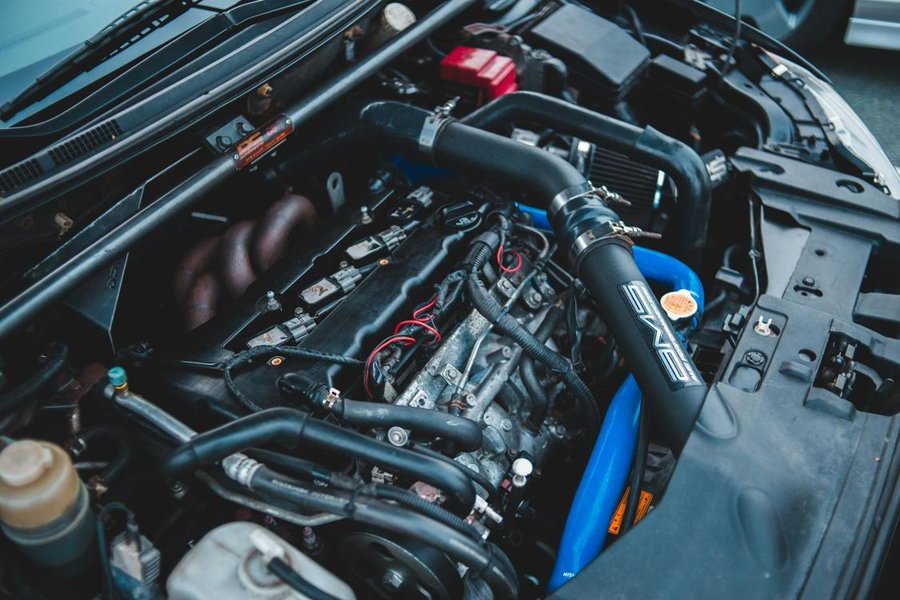
A view of a modern car engine bay, showcasing the complexity of its components.
Deconstructing the Machine: A Closer Look at Each System
1. Engine System: The Heart of Your Car
Major Components:
Engine block, cylinders, pistons, crankshaft, camshaft, valves (intake and exhaust), spark plugs (for gasoline engines), connecting rods, timing belt/chain.
Functions:
The engine is responsible for converting chemical energy from fuel into mechanical energy to power the vehicle. It's where internal combustion occurs.
Interconnections & Workings:
The engine operates on a cycle (typically four-stroke: intake, compression, power, exhaust). During the intake stroke, the piston moves down, drawing a fuel-air mixture into the cylinder through an open intake valve. In the compression stroke, both valves close, and the piston moves up, compressing the mixture. During the power stroke, the spark plug ignites the compressed mixture (in gasoline engines; diesel engines use compression ignition), forcing the piston down. This linear motion is converted into rotational motion by the connecting rod and crankshaft. Finally, in the exhaust stroke, the exhaust valve opens, and the piston moves up, expelling the burnt gases. The camshaft, driven by the crankshaft via a timing belt or chain, controls the opening and closing of the intake and exhaust valves in precise synchronization with the pistons.
2. Fuel System: Delivering the Power
Major Components:
Fuel tank, fuel pump, fuel lines, fuel filter, fuel injectors (or carburetor in older vehicles).
Functions:
This system stores fuel and delivers it to the engine in the correct quantity and pressure for combustion.
Interconnections & Workings:
The fuel pump draws fuel from the tank, sending it through fuel lines and a filter (to remove impurities) to the fuel injectors. Modern fuel injectors are electronically controlled and spray a fine mist of fuel into the engine's cylinders or intake manifold, where it mixes with air. The Engine Control Unit (ECU) manages the timing and amount of fuel injected based on various sensor inputs to optimize performance and efficiency.
3. Ignition System: The Spark of Life
Major Components:
Battery, ignition coil(s), spark plugs (for gasoline engines), Engine Control Unit (ECU).
Functions:
In gasoline engines, this system generates and delivers a high-voltage spark to the spark plugs at precisely the right moment to ignite the air-fuel mixture in each cylinder.
Interconnections & Workings:
The battery provides initial power. The ignition coil transforms the battery's low voltage into the high voltage required by the spark plugs. The ECU controls the timing of the spark, ensuring it occurs when the air-fuel mixture is optimally compressed. This precise timing is crucial for engine performance, fuel efficiency, and emissions control.
4. Electrical System: Powering It All
Major Components:
Battery, alternator, starter motor, wiring harness, fuses, relays, Electronic Control Units (ECUs), sensors, lights.
Functions:
Provides electrical energy for starting the engine, recharging the battery, and operating all electrical components, including lights, infotainment, power windows, and the various ECUs that manage vehicle functions.
Interconnections & Workings:
The battery supplies power to the starter motor to crank the engine. Once the engine is running, the alternator, driven by an engine belt, generates electricity to power the vehicle's systems and recharge the battery. The wiring harness acts as the vehicle's nervous system, distributing power and signals. Fuses protect circuits from overloads. ECUs (e.g., for engine, transmission, brakes) receive input from sensors and control actuators to manage vehicle operations.
5. Transmission System: Transferring Power to the Wheels
Major Components:
Gearbox (manual or automatic), clutch (manual), torque converter (automatic), driveshaft(s), differential, axles.
Functions:
Transmits engine power to the drive wheels, allowing the vehicle to move. It also allows the engine-to-wheel speed ratio to be changed, optimizing torque for different driving conditions (e.g., starting, cruising, climbing hills).
Interconnections & Workings:
The transmission receives rotational power from the engine's crankshaft. In a manual transmission, the driver uses a clutch pedal to disengage the engine from the gearbox, allowing gears to be shifted manually. In an automatic transmission, a torque converter (a fluid coupling) and planetary gearsets automatically select the appropriate gear ratio. Power then flows through the driveshaft to the differential. The differential allows the drive wheels to rotate at different speeds when the vehicle is turning. Finally, axles connect the differential to the wheels.
6. Cooling System: Preventing Overheating
Major Components:
Radiator, coolant (antifreeze), water pump, thermostat, hoses, cooling fan.
Functions:
Manages the immense heat generated by the engine during combustion, maintaining an optimal operating temperature to prevent damage and ensure efficiency.
Interconnections & Workings:
The water pump, typically driven by an engine belt, circulates coolant through passages in the engine block and cylinder head. The coolant absorbs heat from the engine. It then flows to the radiator, where heat is dissipated into the surrounding air, often assisted by a cooling fan (especially at low speeds or idle). The thermostat regulates coolant flow, ensuring the engine warms up quickly and then maintains its ideal temperature.
7. Lubrication System: Reducing Friction
Major Components:
Engine oil, oil pan (sump), oil pump, oil filter, oil galleries (passages).
Functions:
Reduces friction between moving engine parts, prevents wear, helps cool engine components, and cleans by carrying away contaminants.
Interconnections & Workings:
The oil pump draws oil from the oil pan and circulates it under pressure through the oil filter (to remove debris) and then through oil galleries to lubricate critical engine components like the crankshaft, camshaft, pistons, and bearings. The oil forms a protective film between moving surfaces, minimizing metal-to-metal contact.
8. Exhaust System: Managing Byproducts
Major Components:
Exhaust manifold, oxygen sensors, catalytic converter, muffler, exhaust pipes, tailpipe.
Functions:
Channels hot, toxic exhaust gases away from the engine and vehicle occupants, reduces harmful emissions, and silences engine noise.
Interconnections & Workings:
Exhaust gases from the engine's cylinders are collected by the exhaust manifold. They then pass by oxygen sensors, which provide feedback to the ECU to optimize the air-fuel mixture. Next, the gases flow through the catalytic converter, which uses catalysts to convert harmful pollutants (like carbon monoxide, hydrocarbons, and nitrogen oxides) into less harmful substances (like carbon dioxide, water, and nitrogen). The muffler then reduces the noise before the gases are expelled through the tailpipe.
9. Braking System: Safe Stopping Power
Major Components:
Brake pedal, master cylinder, brake lines, brake fluid, calipers, brake pads, rotors (disc brakes); or wheel cylinders, brake shoes, drums (drum brakes). Many modern cars have disc brakes on all four wheels.
Functions:
Slows down or stops the vehicle by converting its kinetic energy into heat through friction.
Interconnections & Workings:
When the driver presses the brake pedal, it activates the master cylinder, which pressurizes hydraulic brake fluid. This pressure is transmitted through brake lines to the wheels. In disc brakes, the hydraulic pressure forces calipers to squeeze brake pads against a spinning rotor (disc) attached to the wheel hub. In drum brakes, pressure pushes brake shoes outward against the inside of a spinning drum. The friction created generates heat and slows the wheel's rotation. Modern vehicles also feature Anti-lock Braking Systems (ABS), which prevent wheel lock-up during hard braking, allowing the driver to maintain steering control.
10. Suspension System: Smooth Riding and Handling
Major Components:
Springs (coil, leaf, or torsion bar), shock absorbers (dampers) or struts (which combine a spring and damper), control arms, bushings, ball joints, anti-roll/sway bars.
Functions:
Supports the vehicle's weight, absorbs shocks and vibrations from uneven road surfaces, maintains tire contact with the road for optimal traction and handling, and contributes to passenger comfort.
Interconnections & Workings:
Springs bear the vehicle's weight and allow the wheels to move up and down relative to the body. Shock absorbers or struts dampen the oscillations of the springs, preventing excessive bouncing and ensuring stability. Control arms and linkages connect the wheels to the vehicle's chassis, guiding their movement. Bushings (rubber or polyurethane) provide cushioning and allow for controlled movement at pivot points. Anti-roll bars connect opposite wheels to reduce body roll during cornering.
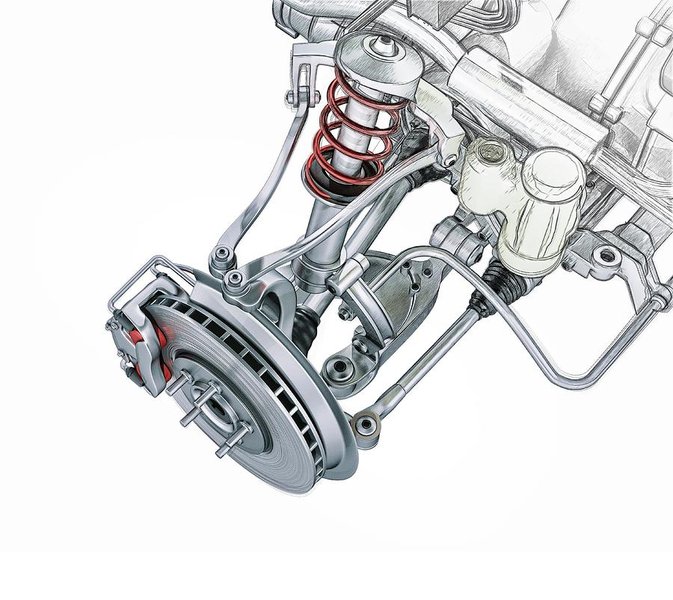
Detailed view of a vehicle's suspension components, highlighting springs and shock absorbers.
11. Steering System: Directing Your Path
Major Components:
Steering wheel, steering column, steering rack (in rack-and-pinion systems) or steering gearbox, tie rods, power steering pump (hydraulic) or electric motor (electric power steering - EPS).
Functions:
Allows the driver to control the direction of the vehicle's front wheels.
Interconnections & Workings:
Turning the steering wheel rotates the steering column. In a rack-and-pinion system (common in modern cars), this rotation moves a pinion gear, which in turn moves a toothed steering rack linearly. The ends of the steering rack are connected to the wheels via tie rods, causing the wheels to pivot. Power steering systems (hydraulic or electric) assist the driver by reducing the effort required to turn the steering wheel, especially at low speeds or when parking.
12. Body and Chassis: The Framework
Major Components:
Frame (in body-on-frame vehicles) or unibody structure, body panels (doors, hood, trunk, fenders), windows, bumpers.
Functions:
The chassis provides the structural backbone of the vehicle, supporting all other systems and components. The body encloses and protects passengers and cargo, contributes to aerodynamics, and defines the vehicle's appearance.
Interconnections & Workings:
In modern passenger cars, a unibody construction is common, where the body and frame are a single, integrated structure. This provides strength and rigidity while saving weight. All other systems are mounted to this structure. Body panels are designed for aesthetics, aerodynamics, and impact absorption in case of a collision (crumple zones).
13. Accessory Systems: Comfort, Convenience, and Safety
Major Components:
Climate Control (HVAC): Compressor, condenser, evaporator, heater core, blower motor, ducting. Supplementary Restraint System (SRS): Airbags, seat belts (including pre-tensioners), impact sensors, control module. Sound System: Head unit (radio/infotainment), amplifier, speakers.
Functions:
Climate Control: Provides heating, ventilation, and air conditioning for passenger comfort. SRS: Enhances occupant protection in the event of a collision. Sound System: Provides audio entertainment.
Interconnections & Workings:
Climate Control: The A/C system uses a refrigerant cycle (compressor, condenser, evaporator) to cool cabin air. The heater core uses hot engine coolant to warm cabin air. The blower motor circulates air through vents. SRS: Impact sensors detect a collision and send signals to the SRS control module, which can deploy airbags and activate seat belt pre-tensioners within milliseconds to restrain occupants and minimize injury. Sound System: The head unit processes audio signals (radio, Bluetooth, USB) and sends them to the amplifier (if present), which boosts the signal to power the speakers.
Visualizing Vehicle Systems: A Mindmap Overview
The following mindmap illustrates the primary systems of a modern passenger vehicle and their core functions, providing a visual representation of their interconnectedness.
(Power Generation)"] Pistons["Pistons & Cylinders"] Crankshaft["Crankshaft"] Valvetrain["Valvetrain"] Combustion["Internal Combustion"] Fuel["Fuel System
(Fuel Delivery)"] Tank["Fuel Tank"] Pump["Fuel Pump"] Injectors["Fuel Injectors"] Ignition["Ignition System
(Spark Generation)"] Coils["Ignition Coils"] SparkPlugs["Spark Plugs"] Electrical["Electrical System
(Power Supply & Control)"] Battery["Battery"] Alternator["Alternator"] ECU["ECUs"] Transmission["Transmission System
(Power Transfer)"] Gearbox["Gearbox"] ClutchTorqueConverter["Clutch/Torque Converter"] Driveshaft["Driveshaft"] Differential["Differential"] Cooling["Cooling System
(Temperature Regulation)"] Radiator["Radiator"] WaterPump["Water Pump"] Thermostat["Thermostat"] Lubrication["Lubrication System
(Friction Reduction)"] OilPump["Oil Pump"] OilFilter["Oil Filter"] Exhaust["Exhaust System
(Emissions & Noise Control)"] CatalyticConverter["Catalytic Converter"] Muffler["Muffler"] Braking["Braking System
(Stopping Power)"] PadsRotors["Pads & Rotors/Drums"] MasterCylinder["Master Cylinder"] ABS["ABS"] Suspension["Suspension System
(Ride Comfort & Handling)"] Springs["Springs"] ShocksStruts["Shocks/Struts"] Steering["Steering System
(Directional Control)"] SteeringWheel["Steering Wheel"] RackPinion["Rack & Pinion"] BodyChassis["Body & Chassis
(Structure & Protection)"] Accessory["Accessory Systems
(Comfort & Safety)"] HVAC["Climate Control (HVAC)"] SRS["SRS (Airbags, Seatbelts)"]
Keeping Your Car Healthy: Periodic Maintenance Essentials
Regular maintenance is the cornerstone of vehicle longevity, reliability, and safety. Neglecting these tasks can lead to decreased performance, poor fuel economy, costly breakdowns, and compromised safety. Always consult your vehicle's owner's manual for manufacturer-specific recommendations, as intervals can vary.
| Maintenance Task | Typical Recommended Frequency | Consequences of Neglect |
|---|---|---|
| Oil and Oil Filter Change | Every 5,000 - 10,000 miles or 6-12 months (refer to owner's manual, synthetic oils often have longer intervals) | Increased engine wear due to contaminated or insufficient oil, reduced lubrication, overheating, potential for severe engine damage or failure. |
| Tire Rotation & Pressure Check | Rotation: Every 5,000 - 7,500 miles. Pressure Check: Monthly. | Uneven tire wear, reduced tire lifespan, poor handling, decreased fuel efficiency, increased risk of blowouts. |
| Air Filter Replacement (Engine) | Every 15,000 - 30,000 miles (or as per manual, sooner in dusty conditions) | Reduced engine performance and fuel efficiency, increased engine wear from contaminants. |
| Cabin Air Filter Replacement | Every 15,000 - 30,000 miles (or as per manual) | Reduced airflow from HVAC system, poor air quality inside the cabin, unpleasant odors. |
| Brake System Inspection (Pads, Rotors, Fluid) | Inspection every 10,000 - 15,000 miles or annually. Replacement as needed. Fluid flush per manual (e.g., every 2-3 years). | Reduced braking performance, increased stopping distances, squealing or grinding noises, damage to rotors/calipers, potential brake failure. |
| Fluid Checks & Replacements (Coolant, Transmission, Power Steering, Brake) | Check levels regularly. Replacement intervals vary greatly by fluid and vehicle (refer to owner's manual). | Overheating (coolant), transmission damage/failure (transmission fluid), steering difficulties (power steering fluid), compromised braking (brake fluid). |
| Spark Plug Replacement | Every 30,000 - 100,000 miles (varies significantly by plug type - copper, platinum, iridium) | Engine misfires, reduced fuel efficiency, poor acceleration, hard starting, potential damage to catalytic converter. |
| Timing Belt Replacement | Interval varies widely (e.g., 60,000 - 100,000 miles or 5-7 years - critical to check manual). Not all cars have timing belts (some have timing chains, which are generally more durable but still require inspection). | If a timing belt breaks, it can cause catastrophic engine damage (e.g., bent valves, damaged pistons), leading to very expensive repairs. |
| Battery Inspection & Cleaning | Inspect terminals regularly for corrosion. Test battery annually, especially after 3 years. | Difficulty starting, no-start situations, damage to electrical components due to voltage irregularities. |
| Accessory Belt(s) Inspection/Replacement (Serpentine/Alternator Belt) | Inspect regularly for cracks and wear. Replacement as needed (e.g., 50,000 - 100,000 miles). | Loss of power to critical accessories like the alternator (battery won't charge), power steering pump (hard steering), water pump (engine overheating), and A/C compressor. |
The March of Time: Parts Requiring Replacement with Age
Even with diligent maintenance, certain parts have a finite lifespan due to wear and tear or material degradation. Knowing these can help you anticipate future maintenance needs. Lifespans are approximate and depend heavily on driving conditions, maintenance history, and part quality.
- Tires: 3-6 years or 25,000 - 50,000 miles (check tread depth and date codes).
- Brake Pads: 20,000 - 70,000 miles (highly dependent on driving style and pad material).
- Brake Rotors/Drums: Often last 2-3 sets of pads, but can warp or wear thin sooner.
- Battery: 3-5 years.
- Spark Plugs: 30,000 - 100,000+ miles (long-life plugs like iridium last longer).
- Accessory Belts (Serpentine): 50,000 - 100,000 miles.
- Timing Belt (if equipped): 60,000 - 100,000 miles or a specific time interval (e.g., 5-7 years). Critical to replace proactively.
- Shocks and Struts: 50,000 - 100,000 miles (performance degrades gradually).
- Water Pump: Often replaced with the timing belt, or around 60,000 - 100,000 miles.
- Alternator: 100,000 - 150,000+ miles.
- Starter Motor: 100,000 - 150,000+ miles.
- Fuel Pump: 100,000 - 150,000+ miles.
- Catalytic Converter: Can last 100,000 - 150,000+ miles, but failure can be caused by other engine issues (e.g., misfires).
- Muffler/Exhaust Pipes: Lifespan varies greatly (5-10+ years) depending on climate (salt exposure accelerates rust).
- Oxygen Sensors: 60,000 - 100,000+ miles.
- Clutch (manual transmission): 50,000 - 150,000+ miles (highly dependent on driving style).
Vehicle Maintenance Focus Areas: A Comparative Look
Effective vehicle maintenance requires attention to various systems. The radar chart below provides a qualitative comparison of the typical importance and frequency of attention needed for key maintenance areas for ensuring overall vehicle health and safety. "Importance" here refers to the potential impact on safety and operational integrity if neglected. "Frequency of Attention" refers to how often these areas typically require checks or service.
This chart highlights that while all areas are important, systems like brakes have high criticality, and aspects like tire pressure require frequent checks. Understanding these nuances helps prioritize maintenance efforts.
This video, "Сar anatomy: The Basics / How cars work? (3D animation)," provides an excellent visual overview of how a vehicle's various parts and systems function and interact. It animates complex mechanical processes, making it easier to understand the core principles of automotive operation, from the engine's combustion cycle to the transmission's role in delivering power.
Empowering Car Owners: Knowledge and Best Practices
Important Concepts and Facts About Maintenance & Repair
- The Owner's Manual is Your Bible: It contains manufacturer-specific maintenance schedules, fluid types, and other critical information for your exact vehicle model. Always refer to it first.
- Preventive vs. Corrective Maintenance: Preventive maintenance (scheduled services) is far cheaper and less disruptive than corrective maintenance (fixing things after they break).
- Fluids are Lifeblood: Regularly checking and maintaining proper levels of engine oil, coolant, brake fluid, transmission fluid, and power steering fluid is vital. Using the correct type of fluid is equally important.
- Listen and Observe Your Car: Unusual noises (clunking, whining, grinding), smells (burning, sweet, fuel), warning lights on the dashboard, or changes in performance (hesitation, rough idling, pulling) are often early indicators of problems. Don't ignore them.
- Find a Trusted Mechanic: Building a relationship with a reputable, certified mechanic or dealership is invaluable. Don't hesitate to get a second opinion for major repairs.
- Keep Detailed Records: Maintain a log of all maintenance and repairs, including dates, mileage, services performed, and parts replaced. This helps track service history and can increase resale value.
- Understand Dashboard Warning Lights: Familiarize yourself with what each warning light means. A "Check Engine" light, for example, can indicate a wide range of issues, some minor, some serious. Get it diagnosed promptly.
- Tire Pressure and Condition are Crucial: Properly inflated tires ensure optimal handling, fuel efficiency, and tire longevity. Regularly inspect tires for wear and damage.
- The Braking System is a Top Safety Priority: Any suspected issue with brakes (spongy pedal, strange noises, increased stopping distance) requires immediate attention.
- Vehicle Recalls are Important: If your vehicle is subject to a manufacturer recall, have the issue addressed by an authorized dealer as soon as possible. Recalls are typically for safety or emissions-related defects.
Practices to Extend the Life of Your Vehicle
- Follow the Recommended Maintenance Schedule: This is the single most impactful practice.
- Drive Gently: Avoid aggressive acceleration, hard braking, and excessive high-speed driving. Smooth driving reduces stress on the engine, transmission, brakes, and suspension.
- Allow Engine Warm-Up (Briefly): Especially in cold weather, allow the engine to idle for 30 seconds to a minute before driving to ensure oil circulates properly. Avoid high RPMs until the engine reaches normal operating temperature.
- Keep Fluids Clean and Topped Off: Use high-quality fluids that meet or exceed manufacturer specifications.
- Keep Your Vehicle Clean: Regularly wash and wax the exterior to protect the paint and prevent rust. Clean the interior to maintain its condition. Undercarriage washes are important in areas where road salt is used.
- Address Small Problems Promptly: A minor issue (e.g., a small oil leak, a strange noise) can escalate into a major, expensive problem if ignored.
- Park Smart: If possible, park in a garage or shaded area to protect the paint, interior, and rubber components from sun damage and extreme temperatures.
- Use Quality Parts: When replacements are needed, opt for high-quality OEM (Original Equipment Manufacturer) or reputable aftermarket parts.
- Avoid Excessive Idling: Prolonged idling wastes fuel, can contribute to carbon buildup, and puts unnecessary hours on the engine.
- Don't Overload Your Vehicle: Adhere to the manufacturer's recommended load capacity to avoid undue stress on the engine, transmission, brakes, and suspension.
Common Mistakes and Misconceptions About Automobile Maintenance
- Mistake: "My car is new, it doesn't need maintenance yet."
Reality: Even new cars require initial services like oil changes and inspections as per the manufacturer's schedule to ensure proper break-in and identify potential early issues. - Misconception: "I only need to change the oil when the dashboard light comes on."
Reality: The oil pressure light usually indicates a critically low oil pressure, by which point damage may have already begun. Follow mileage or time-based oil change intervals from your owner's manual. - Mistake: Ignoring warning lights or unusual symptoms.
Reality: Warning lights are there for a reason. Ignoring them can lead to more severe and costly damage, or even safety hazards. - Misconception: "All mechanics and repair shops are the same."
Reality: The quality of service, expertise, and honesty can vary significantly. Research and choose ASE-certified mechanics or reputable shops, especially those specializing in your vehicle's make. - Mistake: "Flushing all fluids (transmission, coolant, power steering, brake) is always necessary at arbitrary intervals or when up-sold."
Reality: While fluid changes are important, "flushes" are not always required or beneficial for every system and can sometimes be an unnecessary upsell. Follow your owner's manual for specific fluid service requirements and intervals. Some systems benefit from a drain-and-fill rather than a high-pressure flush. - Misconception: "Using stop-leak products is a permanent fix for leaks."
Reality: Stop-leak additives are generally temporary fixes at best and can sometimes cause more harm by clogging narrow passages in systems like the radiator or heater core. Proper diagnosis and repair of the leak source is the best approach. - Mistake: "My tires look fine, so the pressure must be okay."
Reality: Tires can be significantly underinflated before they appear visibly flat. Use a reliable tire pressure gauge to check pressure monthly and before long trips. - Misconception: "Using the cheapest available parts and fluids is a good way to save money."
Reality: Substandard parts and fluids may not meet your vehicle's specifications, leading to premature wear, component failure, or even voiding your warranty. It's often more cost-effective in the long run to use quality products. - Mistake: "I can wait until something breaks before I fix it (reactive maintenance)."
Reality: This "fix it when it's broken" approach is almost always more expensive and can lead to inconvenient breakdowns or safety issues. Proactive, preventive maintenance is key. - Misconception: "Premium fuel will always improve my car’s performance and fuel economy, even if it doesn't require it."
Reality: If your car is designed for regular unleaded gasoline, using premium fuel typically offers no significant benefit and just costs more. Use the fuel grade recommended in your owner's manual. Only high-compression or performance engines truly require and benefit from higher-octane fuel.
Frequently Asked Questions (FAQ)
Why is a regular oil change so important for my engine?
Engine oil serves multiple crucial functions: it lubricates moving parts to reduce friction and wear, helps cool engine components by carrying heat away, cleans the engine by suspending dirt and metal particles, and inhibits corrosion. Over time, oil breaks down due to heat and contamination, losing its effectiveness. Regular oil and filter changes remove old, dirty oil and replace it with fresh oil, ensuring your engine is properly protected, runs efficiently, and lasts longer. Neglecting oil changes can lead to sludge buildup, increased friction, overheating, and ultimately, catastrophic engine failure.
What's the difference between a timing belt and a timing chain, and why are they important?
Both timing belts (made of reinforced rubber) and timing chains (metal chains similar to a bicycle chain) synchronize the rotation of the engine's crankshaft and camshaft. This ensures that the engine's valves open and close at the precise moment in relation to the pistons' movement. This timing is critical for the engine to run. Timing belts are quieter and less expensive but have a limited lifespan and require replacement at specific mileage or time intervals. If a timing belt breaks in an "interference engine" (most modern engines), pistons and valves can collide, causing severe and costly internal engine damage. Timing chains are generally designed to last the life of the engine and are lubricated by engine oil. However, they can stretch or their tensioners can fail over time, requiring eventual replacement, though typically at much higher mileages than belts. It's crucial to follow the manufacturer's replacement schedule for timing belts to avoid catastrophic engine failure.
Can I use any type of coolant (antifreeze) in my car?
No, you should not use just any type of coolant. Vehicle manufacturers specify particular types of coolant based on the materials used in the engine and cooling system (e.g., aluminum alloys). Coolants have different chemical compositions (e.g., IAT, OAT, HOAT) and colors (green, orange, pink, blue, yellow) that often indicate their type and compatibility. Using the wrong coolant can lead to corrosion, clogged passages, damage to seals and water pump, and reduced cooling efficiency, potentially causing engine overheating. Always consult your owner's manual or a trusted mechanic to ensure you use the correct coolant formulation for your specific vehicle.
How do I know if my brakes need servicing?
There are several signs that your brakes may need servicing:
- Squealing or screeching noises: Often indicates worn brake pads; many pads have a built-in wear indicator that makes this noise.
- Grinding noises: This can mean the brake pads are completely worn through, and metal is grinding against metal (pad backing plate against rotor), causing severe damage.
- Vibrations or pulsations: Feeling a pulsation in the brake pedal or steering wheel when braking can indicate warped brake rotors.
- Spongy or soft brake pedal: Could indicate air in the brake lines, low brake fluid, or a problem with the master cylinder.
- Vehicle pulling to one side when braking: May indicate a stuck caliper, unevenly worn pads, or a hydraulic issue.
- Brake warning light on: This dashboard light signals a problem detected by the braking system's sensors.
- Increased stopping distance: If your car takes longer to stop than usual.
Is "premium" fuel always better for my car?
Not necessarily. "Premium" fuel has a higher octane rating, which indicates its resistance to pre-ignition or "knocking" in high-compression engines. If your vehicle's owner's manual specifies regular unleaded gasoline, using premium fuel will typically offer no noticeable benefit in terms of performance or fuel economy and will just cost you more money. However, if your car's manufacturer *requires* or *recommends* premium fuel (often for turbocharged or high-performance engines), then using it is important to prevent engine knock, maintain performance, and avoid potential long-term engine damage. Always use the fuel grade specified in your owner's manual.
Recommended Further Exploration
- How does an electric power steering (EPS) system differ from a hydraulic power steering system in modern cars?
- What are the common signs of a failing catalytic converter and what causes it to fail?
- Explain the detailed workings of an Anti-lock Braking System (ABS) and Electronic Stability Control (ESC).
- What are the long-term effects of consistently using E10 or E15 ethanol-blend fuels in older vehicles not designed for them?
References
Last updated May 7, 2025