
Understanding the Moon's Distance from Earth
A Comprehensive Analysis of the Moon's Journey Around Our Planet
Key Takeaways
- The Moon's orbit around Earth is elliptical, causing significant variations in distance.
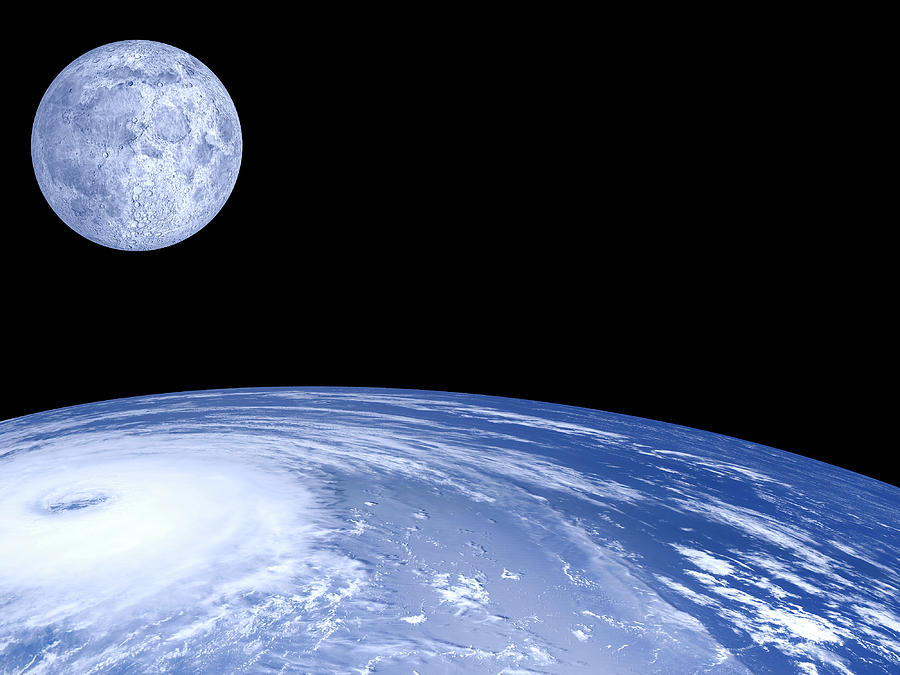
- On average, the Moon is approximately 238,855 miles (384,400 kilometers) away from Earth.
- The Moon is gradually moving away from Earth at a rate of about 3.8 centimeters per year.
Introduction
The Moon, Earth's only natural satellite, has been a subject of fascination and study for millennia. Understanding the Moon's distance from Earth is fundamental not only for astronomical purposes but also for comprehending its effects on our planet, such as tides and gravitational interactions. This comprehensive analysis delves into the intricacies of the Moon's orbital mechanics, factors influencing its distance from Earth, and the implications of these variations.
Orbital Mechanics of the Moon
Elliptical Orbit and its Implications
The Moon does not orbit Earth in a perfect circle but rather in an elliptical (oval-shaped) path. This elliptical orbit is characterized by two primary points: perigee and apogee. The elliptical nature of the Moon's orbit means that its distance from Earth varies continuously, leading to observable phenomena such as apparent size changes and tidal variations.
Key Orbital Parameters
| Orbital Parameter | Description | Distance |
|---|---|---|
| Average Distance | The mean distance between the centers of Earth and the Moon over an orbital period. | 238,855 miles (384,400 kilometers) |
| Perigee | The closest point in the Moon's orbit to Earth. | 221,500 miles (356,470 kilometers) - 226,000 miles (363,300 kilometers) |
| Apogee | The farthest point in the Moon's orbit from Earth. | 251,000 miles (405,500 kilometers) - 252,000 miles (405,600 kilometers) |
The variations between perigee and apogee result in a difference of approximately 30,500 miles (49,132 kilometers) between the closest and farthest points. This fluctuation affects various Earthly phenomena, including the Moon's apparent size in the sky and the magnitude of ocean tides.
Current Distance and Real-Time Tracking
As of January 21, 2025, the Moon is positioned near its apogee, with a recorded distance of approximately 404,064 kilometers (251,070 miles) from Earth. Real-time tracking tools, such as those provided by TheSkyLive, offer precise measurements of the Moon's current distance, allowing astronomers and enthusiasts alike to monitor its position and distance dynamically.
Measurement Techniques
Accurate determination of the Moon's distance relies on several advanced techniques:
- Laser Ranging: This method involves measuring the time it takes for laser beams to travel from Earth to the Moon and back. Mirrors placed on the Moon's surface by Apollo astronauts and Soviet lunar rovers reflect the beams, allowing for precise distance calculations.
- Telemetry Data: Tracking the Moon's motion through space using telemetry data from satellites and space probes contributes to our understanding of its orbit and distance variations.
- Radar Measurements: Radar waves can be bounced off the Moon to determine its distance based on the time taken for the waves to return.
Impact of the Moon's Distance on Earth
Tidal Forces and Ocean Tides
The gravitational pull of the Moon is the primary driver of Earth's ocean tides. When the Moon is at perigee, its closer proximity results in higher high tides and lower low tides, known as "perigean spring tides." Conversely, when the Moon is at apogee, the tidal forces are slightly weaker, leading to less extreme tides.
Apparent Size and Lunar Visual Perception
The Moon's apparent size in the Earth's sky varies with its distance. At perigee, the Moon appears larger, sometimes leading to what is popularly known as a "supermoon." At apogee, the Moon looks smaller, often referred to as a "micromoon." These variations enhance the visual dynamics of lunar events, including eclipses and lunar eclipses.
Eclipses and Their Characteristics
The Moon's distance plays a crucial role in the occurrence and nature of eclipses:
- Lunar Eclipses: During a lunar eclipse, if the Moon is closer to Earth (perigee), it may pass through Earth's shadow more thoroughly, resulting in a longer and potentially more dramatic eclipse.
- Solar Eclipses: The Moon's distance affects its apparent size relative to the Sun. When the Moon is near perigee, it can completely cover the Sun, resulting in a total solar eclipse. When near apogee, it may only partially cover the Sun, leading to an annular eclipse.
The Moon's Recession from Earth
Over extended periods, the Moon is gradually moving away from Earth. This recession is primarily due to tidal interactions between the Earth and the Moon, which transfer angular momentum from the Earth's rotation to the Moon's orbit.
Mechanism Behind the Recession
The gravitational interaction causes tidal bulges on Earth. As Earth rotates, these bulges attempt to align with the Moon's position, but due to Earth's rotational inertia, they are slightly ahead. This misalignment exerts a gravitational pull on the Moon, accelerating it in its orbit and causing it to move away from Earth at a rate of approximately 3.8 centimeters per year.
Long-Term Astronomical Implications
The gradual distance increase has several long-term implications:
- Earth's Rotation Slowdown: As angular momentum is transferred to the Moon, Earth's rotation gradually slows, leading to longer days over geological timescales.
- Moon's Orbital Period: The Moon's orbital period is increasing, meaning it takes longer to orbit Earth as it moves farther away.
- Stability of Earth's Axial Tilt: The Moon plays a role in stabilizing Earth's axial tilt, which is crucial for maintaining a relatively stable climate. Changes in the Moon's distance could influence this stability over extreme timescales.
Historical and Future Perspectives
Historical Measurements and Discoveries
Historically, measuring the Moon's distance was a significant challenge. Early methods included:
- Parallax Method: Observing the Moon from different locations on Earth to calculate its distance based on the apparent shift in position.
- Lunar Laser Ranging: Since the Apollo missions, precise measurements have been possible using retroreflectors left on the Moon's surface.
Future Missions and Research
Future space missions aim to further refine our understanding of the Moon's distance and its orbital dynamics. Potential areas of research include:
- Extended Lunar Laser Ranging: Enhancing the precision and frequency of laser ranging experiments.
- Automated Tracking Stations: Deploying more ground-based and space-based tracking stations to monitor the Moon's movement continuously.
- Studying Tidal Interactions: Investigating the complex tidal interactions between Earth and the Moon to better understand their long-term evolution.
Technological Advances in Measuring Celestial Distances
Laser Ranging Technologies
Laser ranging has revolutionized our ability to measure celestial distances with unprecedented accuracy. By emitting short pulses of laser light and measuring the time it takes for the light to reflect off a target and return, scientists can calculate distances with millimeter precision.
Advancements in Satellite Technology
Modern satellites equipped with sophisticated sensors and communication systems provide continuous monitoring of the Moon's position and distance. These satellites contribute valuable data that enhances our understanding of lunar orbital mechanics.
Impact of Computational Models
Advanced computational models simulate the Moon's orbit considering various gravitational influences, including those from other celestial bodies. These models are essential for predicting future positions and understanding the subtle nuances of the Moon's movement.
Effects on Earth’s Natural Systems
Climate and Weather Patterns
The Moon's gravitational influence extends beyond tidal forces, subtly affecting Earth's climate and weather patterns. While the primary driver of climate variability is the Sun, the Moon contributes to stabilizing Earth's axial tilt, which in turn stabilizes climate over long periods.
Biological Rhythms and Ecology
Many marine and coastal organisms have evolved to synchronize their behaviors with the Moon's cycles. Tidal rhythms influence feeding, breeding, and migration patterns, highlighting the Moon's integral role in Earth's ecosystems.
Human Activities and Cultural Impact
The Moon's distance and phases have profound implications for human activities and cultural practices:
-
Navigation: Historically, the Moon has been a critical reference point for navigation, especially in maritime contexts.
-
Cultural Significance: The Moon features prominently in various cultures' myths, calendars, and artistic expressions.
-
Space Exploration: Understanding the Moon's distance is essential for planning space missions, including potential lunar bases and resource extraction endeavors.
Future Implications and Considerations
Long-Term Orbital Dynamics
As the Moon continues to recede, the dynamics of its orbit will gradually shift. Predictive models suggest that over millions of years, the Moon will be significantly farther from Earth, leading to noticeable changes in tides, day length, and even Earth's axial stability.
Potential for Human Expansion
The gradual increase in distance presents both challenges and opportunities for future human expansion into space. Understanding the precise mechanics of lunar distance changes is crucial for sustaining long-term lunar habitation and resource utilization.
Gravitational Interactions with Other Celestial Bodies
The Moon's orbit is influenced not only by Earth but also by gravitational interactions with other celestial bodies, including the Sun and other planets. These interactions can lead to complex orbital perturbations, which are essential considerations for accurate long-term predictions of the Moon's position.
Conclusion
The Moon's distance from Earth is a dynamic parameter influenced by its elliptical orbit, gravitational interactions, and tidal forces. With an average distance of approximately 238,855 miles (384,400 kilometers), the Moon plays an indispensable role in Earth's natural systems and human culture. Continuous advancements in measurement technologies and computational models enhance our understanding of this celestial relationship, unveiling the intricate balance that sustains the Earth-Moon system. As the Moon gradually moves away from Earth, the long-term implications beckon both scientific inquiry and thoughtful consideration for future human endeavors in space.
References
Last updated January 21, 2025