
Understanding the Motor Principle
A comprehensive exploration of how electric motors convert electrical energy into motion
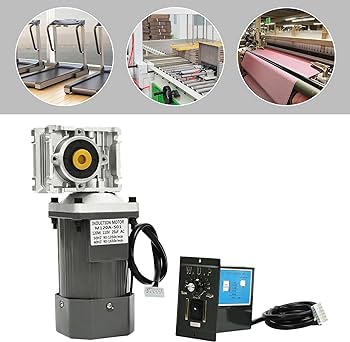
Highlights
- Fundamental Electromagnetic Interaction: Electric motors operate by exploiting the interaction between magnetic fields and electric currents.
- Key Components: The two main parts—stator (stationary) and rotor (moving)—work in tandem with commutators, brushes, or electronic controllers.
- Energy Conversion Mechanism: Motor principles rely on forces, especially the Lorentz force, to generate rotational motion and mechanical work.
Introduction to Electric Motors
An electric motor is a device that converts electrical energy into mechanical energy using electromagnetic interactions. Primarily, it makes use of the forces generated when an electric current passes through conductors placed within a magnetic field. This fundamental principle is the basis not only for industrial machinery but also for everyday household appliances and transportation systems.
Understanding the motor principle requires a deep dive into concepts from electromagnetism, such as the Lorentz force, magnetic field generation, and the interplay between stationary and rotating elements within the motor. The operation of these devices is underpinned by precise engineering designs that ensure continuous and controlled motion.
Fundamental Principles of Electric Motors
Electromagnetic Interaction
At the core of any electric motor is the interaction between magnetic fields and electric currents. When a conductor (usually in the form of a coil) is energized with an electric current, it creates its own magnetic field. This phenomenon can be explained by Ampère's Circuital Law, which states that the magnetic field around a current-carrying conductor is proportional to the current flowing through the conductor.
If the conductor is placed in an already existing magnetic field—created by permanent magnets or other electromagnets—the two fields interact. This interaction applies a force on the conductor according to the Lorentz force law, which is mathematically expressed as:
$$ \mathbf{F} = I (\mathbf{L} \times \mathbf{B}) $$
In this equation, I represents the current, L is the length of the conductor (considered as a vector in the direction of the current), and B is the magnetic field. The resulting force F is perpendicular to both the current direction and the magnetic field, following the right-hand rule.
Generation of Magnetic Fields
Magnetic fields in electric motors are created in two main ways:
Permanent Magnets
In motors that use permanent magnets, the magnets produce a stable and enduring magnetic field. These magnets are made from ferromagnetic materials and provide a constant source of magnetic influence that interacts with the energized conductors in the rotor.
Electromagnets
Instead of using permanent magnets, some electric motors employ electromagnets. These consist of coils through which electric current is passed, generating a magnetic field that can be switched on or off or even modulated in strength. Electromagnets offer flexibility in controlling the magnetic field’s intensity, which can be critical in various applications.
Interaction of Currents and Magnetic Fields
The engine that drives an electric motor is the interaction between the magnetic field produced by the stator (or external magnets) and the magnetic field generated by the electric current in the rotor windings. When current flows through the rotor windings, it creates a secondary magnetic field. According to the Lorentz force explained above, the interface between these two fields generates a force that causes the rotor to experience a torque, leading to rotation.
Components and Their Roles
Stator and Rotor
The two most important parts of an electric motor are the stator and the rotor:
Stator
The stator is the stationary part of the motor that houses either permanent magnets or electromagnets to generate a constant magnetic field. It provides the environment in which the rotor's conductors interact with the magnetic field, resulting in movement. In many designs, the stator also contains windings that might be energized in sync with the rotor’s movement, especially in AC motors.
Rotor
The rotor is the rotating component that carries the windings or coils through which the electric current flows. When these windings interact with the magnetic field from the stator, forces acting on the individual segments of the rotor build up a torque. This torque ultimately causes the rotor to turn. Maintaining consistent rotation is achievable through mechanisms that ensure the continuous reversal or proper switching of current direction in the coils.
Commutation and Control Mechanisms
To achieve a continuous and unidirectional rotation of the rotor, electric motors require a systematic commutation process. This ensures that the forces acting on the rotor do not cancel out but, instead, add up to create a consistent torque.
Mechanical Commutation
In many DC motors, mechanical commutation is carried out using a commutator and brushes. The commutator is a rotary switch that periodically reverses the current direction in the rotor windings. This reversal is critical at the moment when the force direction would otherwise counteract the rotational movement, ensuring that the motor maintains consistent rotation.
Electronic Commutation
In brushless DC motors (BLDC) and some AC motors, electronic commutation is employed instead of mechanical switches. Electronic controllers detect the rotor position and adjust the current flow through the motor windings accordingly. This method not only reduces wear and tear associated with mechanical brushes but also allows for greater control over motor speed and efficiency.
Types of Electric Motors
Electric motors come in various forms, each designed to meet specific performance criteria required by different applications. Here is an overview of the most common types:
| Type | Current Type | Key Features | Common Applications |
|---|---|---|---|
| DC Motors | Direct Current | Simpler control circuitry, use of commutators and brushes | Automotive start-stop systems, toy motors, robotics |
| AC Motors | Alternating Current | Synchronous or asynchronous operation, high efficiency | Household appliances, industrial machinery, HVAC systems |
| Brushless DC Motors (BLDC) | Direct Current | Electronic commutation, reduced maintenance, high reliability | Drones, computer peripherals, electric vehicles |
| Stepper Motors | Usually DC | Precise position control, discrete step rotation | Printers, CNC machines, robotics |
The choice between these motor types depends on factors such as the desired speed, torque, efficiency, and specific application requirements.
Detailed Analysis of the Motor Operation
Energy Transformation
The core function of the motor is to transform electrical energy into mechanical energy. The process begins with the flow of electric current through the motor's windings, generating a magnetic field. By placing these windings within an external magnetic field produced by the stator, forces are exerted on the conductors according to the Lorentz force. The resulting mechanical force creates torque, which causes the rotor to rotate.
A detailed understanding of this transformation is critical. The efficiency of the process is largely determined by the motor's design, which includes how well the magnetic fields are managed, minimized electrical losses, and optimized for thermal performance.
The Role of the Lorentz Force
The Lorentz force is essential in understanding motor function. It is the force that a current-carrying conductor experiences when placed in a magnetic field. Given the relationship:
$$ \mathbf{F} = I (\mathbf{L} \times \mathbf{B}) $$
Each segment of the conductor in the rotor contributes a small force. However, when arranged in a coil configuration, these forces add up collectively to produce a substantial torque. The efficiency with which this torque is generated depends on:
- the magnitude of the current,
- the length or number of turns in the conductor, and
- the strength of the external magnetic field.
These parameters are optimized in motor design to achieve the desired performance for different applications.
Torque Production and Control
Torque is what causes a motor to perform work. It is generated by the cumulative effect of individual forces acting on the rotor’s conductors. The motor’s design often incorporates feedback mechanisms to control and modulate this torque depending on load requirements. Whether through mechanical commutators in DC motors or advanced electronic controllers in brushless motors, maintaining effective torque is pivotal for smooth operation.
Mathematical Representation of Torque
In many designs, the torque τ is directly proportional to the current and magnetic flux:
$$ \tau \propto I \Phi $$
where Φ represents the magnetic flux. This equation provides a broad understanding of how increasing the current or the magnetic strength can lead to higher torque production.
Variations in Motor Design
The design and function of electric motors can differ significantly across various applications. Here we explore some important variations:
DC Motors
Direct Current (DC) motors are among the simplest types of electric motors. In these motors, the current flows in one direction through the rotor windings, and mechanical or electronic commutators are used to reverse the current periodically. This ensures that the rotational force, or torque, remains unidirectional, allowing continuous rotation. Their simplicity and ease of control make them suitable for applications where precise speed regulation is required.
AC Motors
Alternating Current (AC) motors differ from DC types mainly in the fact that the current periodically reverses direction naturally. In induction motors, for instance, the rotor does not receive power directly; instead, the alternating magnetic field in the stator induces a current in the rotor. This induced current creates a magnetic field that interacts with the stator field to produce rotation. AC motors are highly favored in industrial applications because of their durability and efficiency.
Brushless Motors
Brushless motors eliminate the need for brushes and mechanical commutators by using electronic controllers to manage the switching of current through the windings. The absence of brushes reduces friction, minimizes wear and tear, and results in quieter operation. These motors are particularly popular in applications that demand high reliability and low maintenance, such as in aerospace, robotics, and precision instruments.
Operational Considerations and Efficiency
Thermal Management and Losses
One of the critical aspects of motor design is managing losses, both electrical and thermal. Electrical losses occur due to resistance in the windings, while thermal losses emerge as heat due to the inherent inefficiencies in energy conversion. Effective cooling systems, such as heat sinks or forced air cooling, are paramount for maintaining performance, especially in high-power applications. The design and material selection play a significant role in mitigating these losses.
Control Systems and Feedback
Modern motors often incorporate advanced control systems that ensure consistent performance. Sensors monitor various parameters such as speed, current, and temperature. Microcontrollers and digital signal processors (DSPs) interpret this data in real-time, adjusting the flow of current to maintain desired performance levels. This feedback loop is essential for applications requiring high precision, such as in robotics or automated manufacturing.
Speed Regulation
Controlling the speed of a motor is achieved by modulating the input current or by varying the frequency of the alternating current in AC motors. Techniques such as pulse-width modulation (PWM) in DC circuits allow fine-tuned control over how much power is delivered to the motor, directly influencing its speed and torque output.
Application Areas of Electric Motors
Electric motors are ubiquitous in modern technology, serving roles in various sectors:
Industrial Applications
In industries ranging from manufacturing to transportation, electric motors are indispensable. They drive conveyors, robotic arms, and machining tools. Their efficiency and durability make them ideal for continuous operation in environments where precision and reliability are crucial.
Household Appliances
Everyday appliances like washing machines, refrigerators, fans, and vacuum cleaners depend on electric motors for operation. In these applications, the motor not only provides motion but also ensures energy efficiency and quiet operation. The design considerations for household motors often prioritize lower noise levels and extended durability.
Transportation
Electric motors play a major role in modern transportation. They power not just electric cars and scooters but are also used in public transportation systems. The trend towards sustainable energy has accelerated developments in high-efficiency electric motors that offer lower emissions and better energy utilization.
Robotics and Automation
Precision control offered by motors, particularly stepper and brushless motors, makes them ideal for robotics and automated systems. They allow for exact positioning and smooth transitions, which are indispensable in tasks requiring high degrees of accuracy.
Comparative Analysis of Motor Technologies
A comparative overview helps illustrate the distinctions between different motor types, along with their unique advantages and challenges:
| Attribute | DC Motor | AC Motor | Brushless DC Motor | Stepper Motor |
|---|---|---|---|---|
| Control Mechanism | Mechanical commutation (commutator & brushes) or electronic control | Synchronous/asynchronous operation with induction | Electronic commutation | Discrete step control via pulses |
| Efficiency | High with proper design but friction losses due to brushes | Generally high in industrial applications | Very high due to absence of brushes | High positional accuracy but lower speed |
| Maintenance | Requires periodic brush replacement | Low maintenance due to robust design | Minimal maintenance required | Requires precision tuning |
| Common Use Cases | Automotive, small appliances | Industrial and household appliances | Drones, electric vehicles | 3D printers, CNC machines |
This table emphasizes the diversity in motor technologies, drawing a clear comparison based on control methods, efficiency, maintenance requirements, and typical applications.
Advanced Motor Design Considerations
Material Selections
The efficiency and durability of an electric motor are heavily influenced by the materials used in its construction. Conductive materials for windings, such as copper or aluminum, are chosen based on their electrical conductivity, thermal properties, and mechanical resilience. In addition, magnetic materials used for both the stator and rotor must offer high magnetic permeability while minimizing energy losses due to hysteresis or eddy currents.
Thermal and Mechanical Performance
High-performance motors often have integrated cooling systems and innovative designs that dissipate heat effectively. This enables the motor to run efficiently under heavy loads and at higher speeds. Vibroacoustic properties are also important in ensuring that the motor operates with minimal noise and vibration, which can be critical in precision applications.
Critical Analysis and Future Directions
Emerging Trends in Motor Technology
Electric motor technology is continually evolving. Recent innovations include the development of high-efficiency, lightweight designs aimed at reducing energy consumption. Integration with advanced digital control systems and smart sensors has made motors more adaptive and capable of running optimally in a variety of conditions. Advances in materials science are also contributing to motors that are not only more powerful but also more durable.
The push for renewable energy and the electrification of transportation are among the primary drivers of innovation in this field. Future developments are likely to focus on even greater efficiency, further reduction in maintenance requirements, and improved integration with digital control networks.
Challenges in Motor Design
Despite technological advancements, several challenges remain in the design and implementation of electric motors. Achieving high efficiency while balancing thermal management remains a key engineering problem. Additionally, reducing the size and weight of motors without compromising performance is vital, particularly in automotive and aerospace applications. Continuous research into better materials and more advanced control algorithms is needed to overcome these challenges.
Conclusion
In summary, the motor principle is a brilliant application of electromagnetic theory that transforms electrical energy into mechanical energy, driving countless applications across various industries. From household appliances to industrial machinery and transportation systems, the ability to harness electromagnetic forces forms the backbone of electric motors.
The interplay between magnetic fields and current, articulated through the Lorentz force law, results in forces that generate torque and produce rotation. Key components, including the rotor and stator, are designed to optimize this interaction, supported by mechanisms such as mechanical or electronic commutation to ensure sustained and controlled rotation.
By incorporating advanced materials, efficient cooling systems, and digital control, modern motor designs are continually improving in terms of efficiency, durability, and performance. As innovations continue to drive the field forward, the motor principle remains a cornerstone of our modern electrified world.
References
- What is Motor, Definition, Types, Working Principle, & Applications - The Engineering Knowledge
- Electric Motor - Introduction, Working, Parts, and Uses - Vedantu
- Working of Electric Motor - Electrical4U
- How Electric Motors Work - HowStuffWorks
Recommended
Last updated February 20, 2025