
Comprehensive Analysis of Electrical Energy Transfer in a Motor
In-depth Breakdown of Energy Calculation from Voltage, Current, and Time Parameters
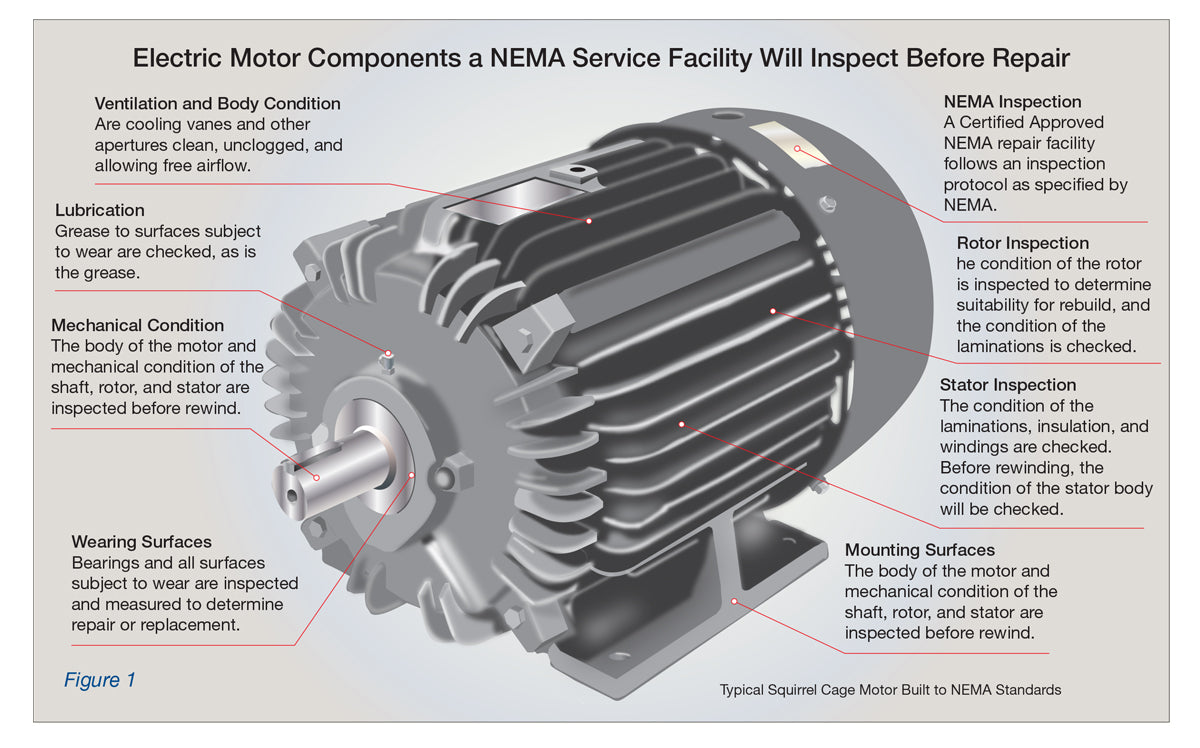
Essential Insights
- Calculation Basis: The electrical energy is calculated using the product of voltage, current, and time, providing a direct measure of energy consumed.
- Formula Consistency: The standard formula E = V × I × t, where power is computed as P = V × I, leads to a clear energy transfer calculation.
- Standard Units: With voltage in volts (V), current in amperes (A), and time in seconds (s), the resulting energy is expressed in joules (J).
Detailed Explanation and Step-by-Step Derivation
Background and Theoretical Overview
In electrical circuits, the energy transferred to a load—such as a motor in this case—is determined by the relationship between voltage, current, and time. When a current flows through a device at a given voltage, power is being utilized by that device. This power, which is the rate of energy usage, is first calculated using the formula:
Calculating Power (P)
The formula for power in an electrical circuit is given by:
\( P = I \times V \)
where:
- \( I \) is the current measured in amperes (A).
- \( V \) is the potential difference measured in volts (V).
For our problem, the motor draws a current of 2.1 A at a voltage of 12 V:
\( P = 2.1 \, \text{A} \times 12 \, \text{V} = 25.2 \, \text{W} \)
This result, 25.2 watts (W), represents the power consumed by the motor.
Linking Power to Energy
Energy, in an electrical context, represents the total work done or energy transferred over a specified time period. The energy (E) transferred can be computed by multiplying power (P) by the time (t) during which the power is applied, as represented by the following relationship:
Calculating Electrical Energy (E)
The formula for electrical energy is:
\( E = P \times t \)
where:
- \( P \) is the power in watts (W).
- \( t \) is the time interval in seconds (s).
Given that the motor operates for 1.5 seconds, by substituting the power value we calculated earlier:
\( E = 25.2 \, \text{W} \times 1.5 \, \text{s} = 37.8 \, \text{J} \)
The product is 37.8 joules (J), which represents the electrical energy transferred to the motor during the lifting process.
Rounding the Result for Precision
In applications like these, it is common practice to present results with a limited number of significant figures. In this case, rounding to two significant figures ensures our energy measurement is succinct and conforms to standard engineering practices.
When rounding 37.8 J to two significant figures, the appropriate rounded value is:
38 J
This is the final answer for the electrical energy transferred to the motor as it lifts the mass.
Additional Context: Mass and Mechanical Work
Although the mass of 130 g (0.13 kg) is provided in the problem statement, it is not directly used in calculating the electrical energy transferred. The mass is relevant when evaluating the efficiency or comparing the energy transfer to the mechanical work performed (i.e., gravitational potential energy) during the lift. The gravitational potential energy (U) change, which the motor must overcome, can be expressed as:
Formula for Gravitational Potential Energy
\( U = m \times g \times h \)
where:
- \( m \) is the mass in kilograms.
- \( g \) is the gravitational acceleration (approximately \( 9.81 \, \text{m/s}^2 \) on Earth).
- \( h \) is the height climbed in meters.
This calculation is relevant for assessing the motor’s efficiency, as you would compare the electrical energy input (38 J) to the mechanical energy output given by the gravitational potential energy.
However, since the problem is focused solely on the calculation of electrical energy transferred, the mass parameter primarily sets the context of the scenario rather than directly influencing the calculation.
Considerations in Practical Scenarios
It is worth noting that while the theoretical calculations assume ideal conditions, practical circuits often experience losses. This discrepancy can arise due to the inherent resistance of the motor windings, friction, and other inefficiencies. In this theoretical scenario, though, we assume that all the electrical energy is translated directly into work for lifting the mass.
The method we used is standard across many electromagnetism and power electronics problems, establishing a universal approach to calculating energy transfer using basic electrical principles.
Summary Table of Calculations
The following table summarizes the key steps and results involved in the energy calculation:
| Parameter | Symbol | Value | Unit |
|---|---|---|---|
| Voltage | \( V \) | 12 | V |
| Current | \( I \) | 2.1 | A |
| Time | \( t \) | 1.5 | s |
| Power | \( P = V \times I \) | 25.2 | W |
| Energy | \( E = P \times t \) | 37.8 | J |
| Rounded Energy | 38 | J |
Expanded Discussion on Underlying Physics Principles
Understanding Energy Conversion in Motors
Motors convert electrical energy into mechanical work using electromagnetic processes. When electrical energy is supplied to the motor, a magnetic field is generated within its internal windings, which interacts with permanent magnets or additional coils to produce torque. This rotational force allows the motor to perform mechanical work such as lifting loads.
In our example, the motor’s performance in lifting a 130 g mass is rooted in its ability to convert 38 J (rounded energy) of electrical energy into mechanical work. Although the energy lost in overcoming friction and inefficiencies isn’t quantified here, the theoretical calculation forms the basis for evaluating system performance.
Practical Implications in Engineering
Engineers often use energy calculations to estimate power consumption and to design electrical systems that optimize performance while reducing energy losses. In practical applications, understanding the precise energy transfer allows designers to appropriately size power sources, ensure components are rated for the electrical load, and improve energy efficiency by minimizing resistive losses.
Several techniques exist to measure actual energy transfer in real systems, including the use of wattmeters or energy loggers. These provide empirical data to compare with theoretical calculations. While our calculation of 38 J is idealized, it is representative of the methodology used across various electromechanical applications.
Educational Impact and Study Applications
The approach used for this problem is common in physics and engineering education. By understanding how to compute electrical energy with simple multiplication of fundamental electrical quantities, students learn key concepts that can be extrapolated to more complex systems. This exercise not only reinforces the basic relationships between voltage, current, and energy but also serves as a stepping stone towards more advanced studies in motor control, power electronics, and energy management.
In academic settings, practicing these kinds of calculations develops strong analytical skills and offers insight into the interplay between theoretical data and practical energy applications. The clarity and simplicity of the formulas ensure that students can readily grasp the critical balance of the energy transformation process.
Numerical Analysis and Rounding Techniques
In many practical computations, it is crucial to ensure that measurements are precise yet not overly detailed for the scope of the analysis. Rounding to an appropriate number of significant figures is necessary to communicate results efficiently. Here, starting with a precise calculation of 37.8 J and rounding to two significant figures results in 38 J.
These rounding techniques are ubiquitous in both academic and industrial environments to streamline communication while preserving essential accuracy.
Conclusion and Final Thoughts
To summarize, the electrical energy transferred to the motor as it lifts a 130 g mass is calculated using a straightforward application of the formula \( E = V \times I \times t \). With the voltage set at 12 V, the current at 2.1 A, and time spanning 1.5 seconds, the initial energy computed is 37.8 joules. After rounding to two significant figures, the final value is 38 joules. This calculation not only encapsulates the basic principles of energy conversion in motors but also serves as a practical example of applying electrical formulas in everyday scenarios.
Understanding these fundamentals is critical in many engineering and physics applications. The explanation provided highlights the importance of theoretical concepts, practical implications, and educational significance. It demonstrates how simple arithmetic and scientific formulas contribute to a deeper understanding of energy management in electromechanical systems.
References
- Current To Energy Calculator - Calculator Academy
- Voltage to Energy Calculator - Calculator Academy
- Relationship between Energy, Voltage, Current and Time - Fizik Nota
Recommended Further Queries
 fiziknota.blogspot.com
Last updated February 22, 2025