
Unlocking Quantum Potential: A Comprehensive Guide to Growing NV Center Nanodiamonds via MPCVD
Master the intricacies of Microwave Plasma Chemical Vapor Deposition for synthesizing nanodiamonds with precisely embedded Nitrogen-Vacancy centers.
Key Insights at a Glance
- Precision Doping is Crucial: Controlled introduction of nitrogen gas (\(\text{N}_2\)) during the Microwave Plasma Chemical Vapor Deposition (MPCVD) process is fundamental for creating Nitrogen-Vacancy (NV) centers, with concentrations typically managed carefully, often in the range of 0.04% to 1.5% of the total gas flow, or even lower ppm levels for specific applications.
- Optimized Growth Conditions: Achieving high-quality nanodiamonds and efficient NV center formation hinges on meticulous control of substrate temperatures (generally 700-1000°C), specific gas mixtures (primarily methane (\(\text{CH}_4\)) as the carbon source and hydrogen (\(\text{H}_2\)) as the carrier gas), and precise regulation of microwave power and chamber pressure.
- Seeding and Substrate Dictate Growth: The process begins with appropriate substrate materials (like silicon, silicon carbide, or existing diamond surfaces) that are "seeded" with nanodiamond particles or advanced diamondoid molecules. This seeding step is critical for initiating and guiding the growth of nanodiamonds amenable to NV center incorporation.
Introduction: The Convergence of Nanotechnology and Quantum Science
The relentless pursuit of advanced quantum technologies has brought materials with extraordinary quantum properties to the forefront of scientific research. Among these, nanodiamonds hosting Nitrogen-Vacancy (NV) centers have garnered significant attention. An NV center is a fascinating point defect within the diamond's rigid crystal lattice, consisting of a nitrogen atom that has replaced a carbon atom, positioned directly adjacent to a vacant carbon site (a missing carbon atom). The negatively charged state of this defect, denoted as \(\text{NV}^-\), is particularly prized for its unique spin properties. These spins can be readily initialized to a known state, coherently manipulated using microwave fields, and their final state can be read out optically by observing their fluorescence. These remarkable characteristics make \(\text{NV}^-\) center nanodiamonds exceptionally promising candidates for a diverse range of applications, including ultra-sensitive quantum sensing (for magnetometry, thermometry, and electrometry), building blocks for quantum computing, and as robust, non-toxic probes for biomedical imaging and drug delivery, largely due to their exceptional photostability and inherent biocompatibility.
Microwave Plasma Chemical Vapor Deposition (MPCVD) has distinguished itself as a premier and highly versatile technique for synthesizing these sophisticated nanomaterials. MPCVD provides an unparalleled level of precise control over the complex growth environment. This control is instrumental in enabling the production of diamond films and particles of exceptionally high purity, with finely tunable properties. Crucially, this includes the deliberate and controlled incorporation of NV centers during the diamond growth process. This comprehensive guide aims to elucidate the detailed, step-by-step process of cultivating NV center nanodiamonds utilizing the MPCVD technique, systematically covering all critical aspects from initial substrate preparation and seeding, through the intricacies of gas mixture and plasma control, to the final characterization and potential optimization of the synthesized nanomaterials.
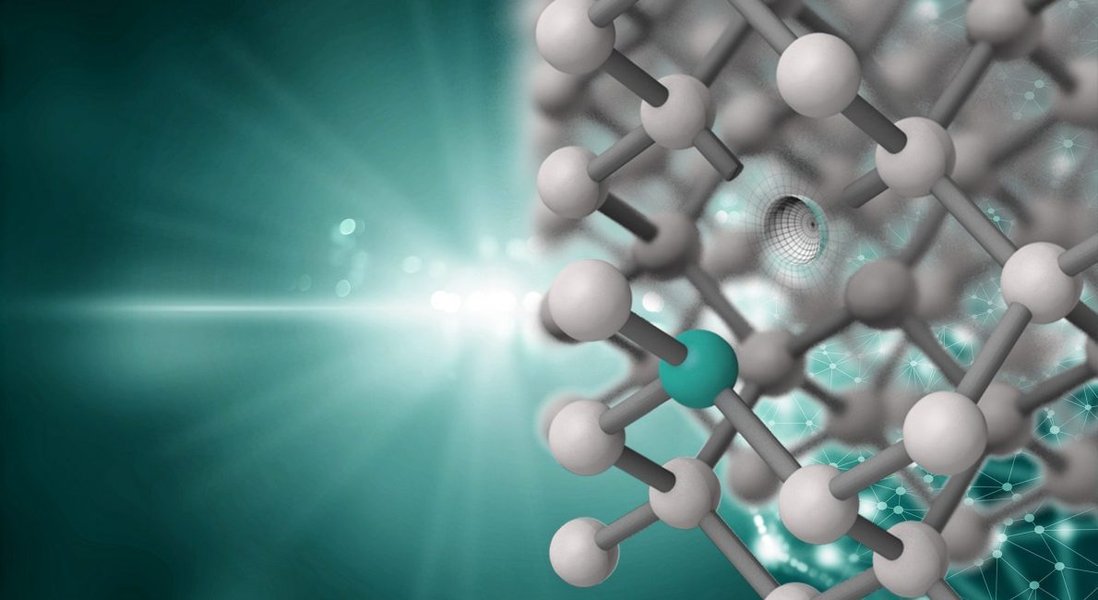
Illustration of a Nitrogen-Vacancy (NV) center within the diamond crystal lattice, depicting a substitutional nitrogen atom (N) next to a carbon vacancy (V).
The MPCVD Pathway to NV Nanodiamonds: A Detailed Walkthrough
Growing NV-center nanodiamonds via MPCVD is a multi-stage process requiring careful attention to detail at each step. Success depends on understanding how each parameter influences the final material properties.
Step 1: Substrate Preparation and Seeding – Laying the Foundation
The initial phase of MPCVD growth is critical, as the substrate and its preparation dictate the nucleation and quality of the resulting nanodiamonds.
Choosing the Right Substrate
Commonly used substrates include silicon (\(\text{Si}\)) wafers, silicon carbide (\(\text{SiC}\)), or even existing diamond surfaces (e.g., High-Pressure High-Temperature, HPHT, diamond plates for homoepitaxial growth). The choice depends on the desired application, thermal compatibility, and potential for interaction with the plasma. For instance, silicon substrates are widely used due to their availability and cost-effectiveness, but care must be taken to avoid the unintentional formation of Silicon-Vacancy (Si-V) centers if only NV centers are desired. Substrates must be meticulously cleaned to remove any organic or particulate contaminants that could interfere with diamond nucleation or introduce impurities.
The Art of Seeding
Diamond does not readily nucleate on non-diamond surfaces. Therefore, a "seeding" step is almost always necessary to provide nucleation sites for diamond growth. Several methods exist:
- Nanodiamond Suspension: Substrates can be immersed in a colloidal solution of ultra-fine diamond nanoparticles (often detonation nanodiamonds or HPHT-milled nanodiamonds). Ultrasonication is frequently employed during this process to break up agglomerates and ensure a uniform dispersion of seeds on the substrate surface.
- Diamondoid Seeding: An advanced technique involves using diamondoids – molecular-sized diamond cages like adamantane or pentamantane. These can be chemically bound to an oxidized substrate surface, providing highly uniform, high-density nucleation sites, which can lead to higher quality nanodiamond films.
- Mechanical Scratching: Though less common for precise nanodiamond synthesis, lightly scratching the substrate with diamond paste can also create nucleation sites.
Some advanced MPCVD setups utilize a vertical substrate configuration. By rotating the substrate 90 degrees from the conventional horizontal setup, it is exposed to a gradient of plasma density and temperature. This can facilitate rapid optimization of growth conditions and enhance dopant incorporation for NV center formation.
Step 2: Crafting the Ideal Gas Atmosphere – The Role of Precursors and Dopants
The composition of the gas mixture fed into the MPCVD chamber is paramount, as it provides the elemental building blocks for diamond and the necessary dopants for NV centers.
Primary Gas Composition
- Carbon Source (\(\text{CH}_4\)): Methane is the most common carbon precursor. Its concentration is typically low, ranging from 0.5% to 3% relative to the total gas flow. Too high a methane concentration can lead to the formation of graphitic or \(\text{sp}^2\)-rich carbon phases, degrading diamond quality.
- Hydrogen (\(\text{H}_2\)): Hydrogen usually constitutes the vast majority of the gas mixture (>90%). It plays multiple crucial roles: it selectively etches away non-diamond carbon phases, stabilizes the diamond surface, and generates atomic hydrogen, which is vital for the plasma chemistry that breaks down methane.
- Argon (\(\text{Ar}\)): Argon is sometimes added in small quantities. It can help stabilize the plasma, particularly at lower pressures, and can influence the plasma density and electron temperature, potentially affecting growth kinetics and defect incorporation.
Nitrogen Doping: The Key to NV Centers
To form NV centers, nitrogen must be incorporated into the diamond lattice. This is achieved by introducing a controlled amount of nitrogen gas (\(\text{N}_2\)) into the MPCVD chamber along with the other precursor gases.
- Concentration: The \(\text{N}_2\) concentration is critical and typically ranges from a few parts per million (ppm) to about 1.5% of the total gas flow. The exact concentration depends on the desired NV density. Too little nitrogen results in sparse NV centers, while too much can lead to nitrogen aggregation (e.g., A-centers, which are pairs of substitutional nitrogen atoms), increased lattice strain, yellow discoloration of the diamond, and quenching of NV fluorescence.
- Gas Purity: The purity of all source gases, especially hydrogen and methane, is extremely important. Residual nitrogen or oxygen impurities in these gases can lead to unintentional doping or defect formation, making it difficult to control the NV center properties. Gas purifiers are often used to achieve ultra-high purity gas streams.

Inside an MPCVD reactor chamber, where microwave-generated plasma facilitates diamond deposition.
Step 3: Igniting the Plasma – MPCVD Reactor Conditions
Once the substrate is prepared and the gas flow established, microwaves are introduced into the reactor chamber to generate a plasma—a high-energy, ionized gas where the diamond growth chemistry occurs.
Microwave Power and Plasma Density
Microwave power, typically in the range of 800 Watts to several kilowatts (depending on reactor size and design), is used to energize the gas mixture. This creates a dense plasma above the substrate. High plasma power density can lead to higher growth rates and influence the incorporation efficiency of nitrogen and the formation of vacancies, which are both essential for NV centers.
Chamber Pressure Control
The pressure inside the MPCVD chamber is another critical parameter, typically maintained between 20 and 600 Torr (though 100-300 Torr is a common range for high-quality single-crystal growth). Pressure affects the plasma's mean free path, species concentration, and temperature distribution, thereby influencing the growth rate and diamond quality.
Substrate Temperature Management
The substrate temperature must be carefully controlled, usually maintained between 700°C and 1000°C for general diamond growth. For nanodiamonds, temperatures might be optimized within this range, or sometimes lower temperatures (e.g., 400-900°C) are explored, especially with pulsed plasma techniques. Temperature influences the surface mobility of adatoms, the diamond phase stability (preventing graphitization), and the incorporation and diffusion of defects. An infrared pyrometer is commonly used for non-contact temperature monitoring.
Growth Duration for Nanoscale Crystals
The duration of the MPCVD process directly impacts the size of the grown diamonds. For nanodiamonds, growth times are relatively short, ranging from tens of minutes to a few hours, depending on the desired particle size (typically 10 nm to a few hundred nanometers) and the growth rate achieved under the specific conditions.
Step 4: NV Center Formation and Optimization – In-Situ and Post-Growth Strategies
The creation of optically active NV centers requires both a nitrogen atom and an adjacent vacancy in the diamond lattice.
In-Situ NV Center Incorporation
During MPCVD growth with nitrogen in the gas phase, nitrogen atoms are incorporated substitutionally into the diamond lattice. Vacancies can also be formed intrinsically during the high-energy plasma deposition process. When a nitrogen atom and a vacancy are in close proximity, they can form an NV center. The efficiency of this in-situ formation depends heavily on the growth conditions (temperature, plasma density, nitrogen concentration).
Post-Growth Treatments for Enhanced NV Properties (Optional)
In many cases, the as-grown concentration of NV centers might be low, or their properties suboptimal. Post-growth treatments can be employed:
- Irradiation: To increase the vacancy concentration, the grown diamonds can be irradiated with high-energy particles such as electrons, protons, or ions. This displaces carbon atoms from their lattice sites, creating vacancies.
- Annealing: Following irradiation (or sometimes even for as-grown samples), the diamonds are annealed at high temperatures (typically 800°C - 1000°C) in a vacuum or inert atmosphere. Annealing provides thermal energy that allows the created vacancies to migrate through the diamond lattice. When a mobile vacancy encounters a substitutional nitrogen atom, they can combine to form a stable NV center. Annealing also helps to repair some of the lattice damage caused by irradiation.
- Surface Chemistry Tuning: The charge state of the NV center (neutral \(\text{NV}^0\) or desired negatively charged \(\text{NV}^-\)) and its photostability can be influenced by the diamond's surface termination (e.g., hydrogen, oxygen). Post-growth chemical treatments or plasma treatments can modify the surface chemistry to optimize NV center performance.
Achieving Desired NV Characteristics
The goal is often to create isolated \(\text{NV}^-\) centers for quantum applications, which requires low nitrogen concentrations and careful control over vacancy formation. For applications requiring bright ensembles, higher NV densities might be targeted. Step-flow growth mode, often achieved on specific crystallographic orientations like (111) diamond substrates under high plasma power density, can lead to preferentially aligned NV centers, enhancing their collective emission and utility in sensing.
Step 5: Verification and Analysis – Characterizing Your NV Nanodiamonds
After growth and any post-treatments, thorough characterization is essential to confirm the presence, concentration, and quality of the NV centers and the nanodiamonds themselves.
Optical Confirmation
Photoluminescence (PL) Spectroscopy: This is the primary technique for identifying NV centers. \(\text{NV}^-\) centers exhibit a characteristic zero-phonon line (ZPL) emission at ~637 nm and a broad phonon sideband extending to ~800 nm when excited with green or yellow light. \(\text{NV}^0\) centers have a ZPL at ~575 nm. PL mapping can reveal the spatial distribution of NV centers.
Spin Property Measurement
- Optically Detected Magnetic Resonance (ODMR): This technique measures the spin state of NV centers by monitoring changes in their fluorescence intensity while applying microwaves. It confirms the presence of the spin-active \(\text{NV}^-\) state and can be used to determine spin coherence times (T2, T2*).
- Electron Spin Resonance (ESR) / Electron Paramagnetic Resonance (EPR): Provides similar information to ODMR but is a more direct magnetic resonance technique.
Structural and Morphological Assessment
- Raman Spectroscopy: Confirms the diamond phase (sharp peak at ~1332 cm-1 for \(\text{sp}^3\) carbon) and can provide information about crystal quality, stress, and the presence of graphitic (\(\text{sp}^2\)) carbon.
- X-ray Diffraction (XRD): Used to assess crystal structure and phase purity.
- Electron Microscopy (SEM, TEM): Scanning Electron Microscopy (SEM) and Transmission Electron Microscopy (TEM) are used to visualize the morphology, size, and size distribution of the nanodiamonds, and TEM can reveal lattice structure and individual defects.
Key MPCVD Growth Parameters for NV-Center Nanodiamonds
Successful synthesis of NV-center nanodiamonds hinges on the meticulous control of various parameters within the MPCVD reactor. The following table summarizes critical parameters and their typical ranges or considerations, drawing from established research. Optimizing these is key to achieving desired nanodiamond size, purity, and NV center characteristics.
| Parameter | Typical Range / Value | Importance & Notes |
|---|---|---|
| Substrate Material | Silicon (Si), Silicon Carbide (SiC), Diamond (single crystal, HPHT) | Choice affects nucleation, thermal conductivity, and potential for unwanted Si-V centers. Must be compatible with high temperatures and plasma environment. |
| Seeding Method | Nanodiamond suspension (ultrasonication), Diamondoid monolayer, Spin-coating | Essential for initiating nanodiamond growth on non-diamond substrates. Uniformity and density of seeds are key for homogeneous films. Diamondoids can offer higher quality nucleation. |
| Methane (\(\text{CH}_4\)) Concentration | 0.5% - 3% of total gas flow | Primary carbon source. Concentration affects growth rate and diamond quality (\(\text{sp}^3/\text{sp}^2\) ratio). Higher concentrations can increase growth rate but may reduce quality. |
| Hydrogen (\(\text{H}_2\)) Concentration | Balance of gas flow (typically >90%) | Crucial for plasma chemistry, etches graphitic carbon, stabilizes diamond surface, and generates atomic hydrogen radicals essential for the decomposition of \(\text{CH}_4\). |
| Nitrogen (\(\text{N}_2\)) Concentration | 0.04% - 1.5% of total gas flow (or specific ppm levels, e.g., 1-100 ppm) | Dopant for NV centers. Concentration is critical: too low gives few NVs, too high leads to N aggregation and poor diamond quality. Precise control is paramount. |
| Argon (Ar) | Optional, typically 0% - 10% | Can be used to stabilize plasma, increase plasma density, or modify growth kinetics. Its effect is system-dependent. |
| Gas Purity | High purity gases (e.g., 99.999% or 6N purity) | Minimizes unintentional impurities (especially residual nitrogen and oxygen) which can affect NV formation, charge state, and overall diamond quality. Gas purifiers are recommended. |
| Microwave Power | 800 W - few kW (dependent on reactor volume and design) | Determines plasma density, electron temperature, and dissociation of precursor gases. Higher power generally increases growth rate and can influence NV incorporation. |
| Chamber Pressure | 20 - 600 Torr (common range: 100-300 Torr for quality) | Affects plasma characteristics, mean free path of species, species concentration at the substrate, and growth mode. Higher pressures can increase growth rates. |
| Substrate Temperature | 700°C - 1000°C (can be 400-900°C for nanodiamonds, or higher for bulk) | Critical for diamond phase stability, surface mobility of adatoms, defect incorporation, and dopant activation. Monitored usually by an infrared pyrometer. |
| Growth Duration | Minutes to several hours | Directly determines nanodiamond size or film thickness. Shorter durations (e.g., 30 min to 2 hours) are typical for achieving nanometer-scale crystals. |
| Post-Growth Annealing Temp. | ~800°C - 1000°C (if irradiation is performed or to activate NVs) | Mobilizes vacancies (created by irradiation or intrinsically) to combine with incorporated nitrogen atoms, forming NV centers. Also helps repair lattice damage. |
Critical Factors Influencing NV Nanodiamond Quality
The quality of NV-center nanodiamonds, particularly for demanding quantum applications, depends on a complex interplay of several growth factors. The radar chart below visualizes the relative importance and required control level of key parameters in achieving high-performance NV nanodiamonds. Each axis represents a factor, and the plotted data (on a conceptual scale where a higher value indicates greater impact or need for tighter control, with data points ranging from 5 to 10) reflects its significance in determining characteristics like NV concentration, spin coherence times, and photostability. This is an illustrative representation based on a synthetic analysis of research findings; optimal values are highly system-dependent.
Visualizing the NV Nanodiamond Synthesis Process
To better understand the multifaceted process of growing NV-center nanodiamonds via MPCVD, the following mindmap outlines the key stages and considerations. It starts from the foundational elements like substrate and gases, moves through the core MPCVD process parameters, details NV center formation mechanisms, and concludes with essential characterization steps and their ultimate applications. This provides a holistic overview of the journey from raw materials to functional quantum nanomaterials.
(Si, SiC, Diamond)"] id1_2["Cleaning Procedures"] id1_3["Seeding Techniques
(Nanodiamond Particles, Diamondoid Molecules)"] id1_4["Optional: Vertical Configuration"] id2["2. Gas Mixture & Doping Control"] id2_1["Carbon Source Gas (CH₄)"] id2_2["Primary Diluent Gas (H₂)"] id2_3["Nitrogen Dopant Gas (N₂)
for NV Center Precursors"] id2_4["Optional Carrier/Plasma Modifying Gases (Ar)"] id2_5["Strict Gas Purity Assurance"] id3["3. MPCVD Process Parameters"] id3_1["Microwave Power Input"] id3_2["Chamber Operating Pressure"] id3_3["Substrate Growth Temperature"] id3_4["Diamond Growth Duration"] id4["4. NV Center Formation Mechanisms"] id4_1["In-Situ Nitrogen Incorporation"] id4_2["Intrinsic Vacancy Generation (Plasma-Induced)"] id4_3["Optional: Post-Growth Irradiation
(e-, p+, ions) for Vacancy Creation"] id4_4["Optional: Post-Growth Annealing
(Vacancy Mobilization & NV Formation)"] id4_5["Surface Chemistry Tuning
(for Charge State Control)"] id5["5. Characterization & Analysis"] id5_1["Optical Properties (Photoluminescence Spectroscopy - PL)"] id5_2["Spin Properties (ODMR, ESR/EPR)"] id5_3["Structural Integrity (Raman Spectroscopy)"] id5_4["Crystallinity (XRD)"] id5_5["Morphology & Size (SEM, TEM)"] id6["6. Target Applications"] id6_1["Quantum Sensing (Magnetometry, Thermometry)"] id6_2["Biomedical Imaging & Tracking"] id6_3["Quantum Information Processing"]
Visualizing the MPCVD Diamond Growth Process
To further illustrate the practical aspects of diamond synthesis, the following video provides an overview of the Microwave Plasma Chemical Vapor Deposition (MPCVD) process. While not exclusively focused on NV-center nanodiamonds, it showcases the fundamental principles and equipment involved in growing high-quality diamond films. This understanding of the general MPCVD setup and operation is valuable for appreciating the specific controls and nuances discussed for nanodiamond growth and the intricate task of NV center formation within these tiny crystals.
Advantages of Using MPCVD for NV Nanodiamond Synthesis
- High Purity and Crystal Quality: MPCVD is renowned for its ability to grow diamond with very low levels of impurities (apart from intentionally added dopants like nitrogen). The electrodeless plasma minimizes contamination, leading to higher crystal quality, which is essential for good NV center properties.
- Precise Dopant Control: The gas-phase nature of MPCVD allows for fine control over the concentration of nitrogen introduced into the reactor, enabling targeted NV center densities from isolated single centers to dense ensembles.
- Tunable Nanodiamond Size and Morphology: By carefully adjusting growth parameters such as duration, temperature, and gas composition, the size and shape of the nanodiamonds can be reasonably controlled.
- Scalability and Reproducibility: Modern MPCVD systems offer good reproducibility once parameters are optimized. The technology also has pathways for scaling up production, which is important for practical applications.
- Versatility in Substrate and Material Growth: MPCVD can be adapted for growth on various substrates and can be modified to incorporate other types of color centers (e.g., Si-V, Ge-V) by introducing different dopant gases.
- In-situ Formation Potential: MPCVD offers the possibility of forming NV centers directly during growth, potentially simplifying the overall fabrication process compared to methods requiring extensive post-growth irradiation and high-temperature annealing.
Navigating Challenges in NV Nanodiamond Growth
Despite its advantages, synthesizing high-quality NV nanodiamonds via MPCVD is not without its challenges:
- Uniformity: Achieving highly uniform nanodiamond size, NV center distribution, and consistent NV properties (like orientation and charge state) across a large substrate area or between batches can be demanding.
- Controlling NV Charge State: The desired \(\text{NV}^-\) state is often in competition with the neutral \(\text{NV}^0\) state. Maintaining a high proportion of \(\text{NV}^-\) requires careful management of nitrogen concentration, residual impurities, surface chemistry, and potentially post-growth treatments.
- Efficient Vacancy Creation and Pairing: Ensuring an adequate supply of vacancies in close proximity to incorporated nitrogen atoms for efficient NV pairing is a complex kinetic and thermodynamic challenge, especially for in-situ formation.
- Minimizing Competing Defects and Phases: The growth conditions must be finely tuned to suppress the formation of other undesirable defects (e.g., nitrogen aggregates, other point defects) or non-diamond carbon phases (\(\text{sp}^2\) carbon) that can quench NV fluorescence or degrade spin coherence.
- Reproducibility and Process Control: The MPCVD process involves many interdependent parameters. Slight, uncontrolled variations in any of these can lead to significant differences in the final product, necessitating very stringent process monitoring and control.
- Yield of Small, High-Quality Nanodiamonds: Growing very small (e.g., < 20 nm) nanodiamonds with good crystallinity and well-defined NV centers can be particularly challenging.
Frequently Asked Questions (FAQ)
What is the typical size range for nanodiamonds grown for NV center applications via MPCVD?
Is post-growth annealing always necessary for NV center formation in MPCVD-grown nanodiamonds?
How does the concentration of nitrogen in the gas mixture affect the properties of the resulting NV centers?
Why is gas purity particularly important in the MPCVD process for creating high-quality NV nanodiamonds?
Conclusion
The synthesis of NV-center nanodiamonds via Microwave Plasma Chemical Vapor Deposition is a sophisticated yet highly rewarding endeavor, bridging materials science, plasma physics, and quantum engineering. The ability to precisely control growth parameters allows for the tailoring of nanodiamond properties, embedding one of nature's most robust quantum systems into versatile nanoparticles. While challenges in uniformity, defect control, and yield persist, ongoing research continues to refine the MPCVD process, pushing the boundaries of what is achievable. These efforts are paving the way for the widespread application of NV nanodiamonds in transformative technologies, from next-generation medical diagnostics and ultra-sensitive sensors to the building blocks of future quantum computers. Mastering this growth technique is key to unlocking the full potential of these remarkable quantum materials.
Recommended Further Exploration
- Explore the differences in NV center properties: MPCVD vs. HPHT synthesis and irradiation methods.
- Investigate techniques for controlling the charge state (NV- vs NV0) of NV centers in nanodiamonds.
- Learn about advancements in scaling up MPCVD production of NV nanodiamonds for industrial and commercial use.
- Discover the MPCVD growth of other diamond color centers (e.g., SiV, GeV) and their comparative advantages for specific quantum applications.
References
Last updated May 22, 2025