
Unveiling the Complexities: Can MS Idiotypes Provoke MS-like Disease in Mice?
Exploring the nuances of using specific antibody components to model Multiple Sclerosis in experimental settings.
Multiple Sclerosis (MS) is a complex autoimmune disorder of the central nervous system (CNS), characterized by inflammation, demyelination (damage to the protective myelin sheath around nerve fibers), and subsequent neurodegeneration. To understand its mechanisms and develop effective treatments, researchers rely on animal models. A key question in this field is whether injecting "MS idiotypes"—unique components of antibodies found in MS patients—can replicate the disease in mice.
Key Insights: Modeling MS with Idiotypes
- Partial Mimicry: Injecting MS-related idiotypic material (such as antibodies from MS patient cerebrospinal fluid or anti-idiotypic antibodies) into mice can partially replicate certain autoimmune aspects of MS, including T-cell and B-cell activation and, in some instances, demyelination.
- EAE as the Standard: The most widely utilized animal model for MS is Experimental Autoimmune Encephalomyelitis (EAE), typically induced by immunizing mice with myelin-derived proteins or peptides. Idiotype-based approaches are generally considered supplementary to EAE.
- Understanding Antibody Roles: Idiotype-based experiments offer a more focused lens to investigate the specific roles of pathogenic antibodies and the complex network of immune regulation in MS, rather than aiming to reproduce the full spectrum of the human disease.
Decoding Idiotypes and Their Link to Multiple Sclerosis
Before delving into experimental models, it's crucial to understand what an idiotype is. An idiotype refers to the unique set of antigenic determinants located in the variable region of an antibody molecule, specifically its antigen-binding site (paratope). These regions are unique to each specific antibody clone. In the context of autoimmune diseases like MS, certain idiotypes may be associated with autoantibodies that mistakenly target the body's own tissues, such as myelin in the CNS.
Studies have shown that the cerebrospinal fluid (CSF) and serum of individuals with MS can contain distinctive idiotypic IgG antibodies. These are thought to reflect the specific autoimmune activity occurring within the patient, potentially directed against myelin or other CNS components. The presence of these unique idiotypes has spurred research into their pathogenic role and their potential use in modeling the disease.

Illustration of different routes of administration for substances in rodent models, crucial for experimental studies.
The Idiotype Network Theory
The idiotype network theory, proposed by Niels Kaj Jerne, suggests that the immune system is a regulated network of antibodies and lymphocytes that recognize each other's idiotypes. Anti-idiotypic antibodies can be generated against the idiotypes of other antibodies. These anti-idiotypic antibodies can sometimes mimic the original antigen or play a role in regulating the immune response. This concept provides a theoretical framework for how idiotypes might be involved in the perpetuation or modulation of autoimmune diseases like MS.
Injecting MS Idiotypes in Mice: Experimental Approaches and Outcomes
While not the standard method for inducing an MS-like disease, researchers have explored the injection of MS-related idiotypic material into mice. These experiments aim to understand if such components can trigger or exacerbate autoimmune responses similar to those seen in MS.
Methods of Investigation
Using Patient-Derived Material
Some studies have involved the use of cerebrospinal fluid (CSF) from MS patients, which contains these unique idiotypic antibodies. For example, research has demonstrated that CSF from patients with primary progressive MS, when introduced into mice, can induce motor disability and CNS pathology. This suggests that antibodies, presumably including specific idiotypes, present in the CSF play a pathogenic role.
Anti-Idiotypic Antibodies
Another approach involves generating anti-idiotypic antibodies against the MS-specific idiotypes. These anti-idiotypic antibodies can then be administered to mice. Some experiments, dating back to the 1980s, prepared anti-idiotypic antibodies in mouse ascites fluid against IgG from MS patient CSF. The administration of these reagents has, in some cases, induced immune activation in mice that mirrors certain aspects of MS pathology, such as T and B cell activation or even oligodendrocyte damage.
Observed Outcomes and Mechanisms
The injection of MS-related idiotypes or anti-idiotypic antibodies is thought to work, in part, through the "idiotype connection." This refers to the hypothesis that chronic idiotype-driven T-B cell collaboration can cause or perpetuate autoimmune disease. In this scenario:
- B cells present idiotopes (the antigenic determinants of an idiotype) from their B cell receptors to idiotype-specific CD4+ T cells.
- This interaction can lead to the activation and proliferation of these immune cells.
- Such activated cells could potentially initiate or sustain inflammatory foci within the CNS, contributing to demyelination and neurological symptoms.
Studies have reported that mice receiving such injections can develop clinical signs like motor disability, spastic paralysis, and hind limb atrophy, alongside histological evidence of inflammation and demyelination. However, it's important to note that these models often replicate only certain facets of MS.
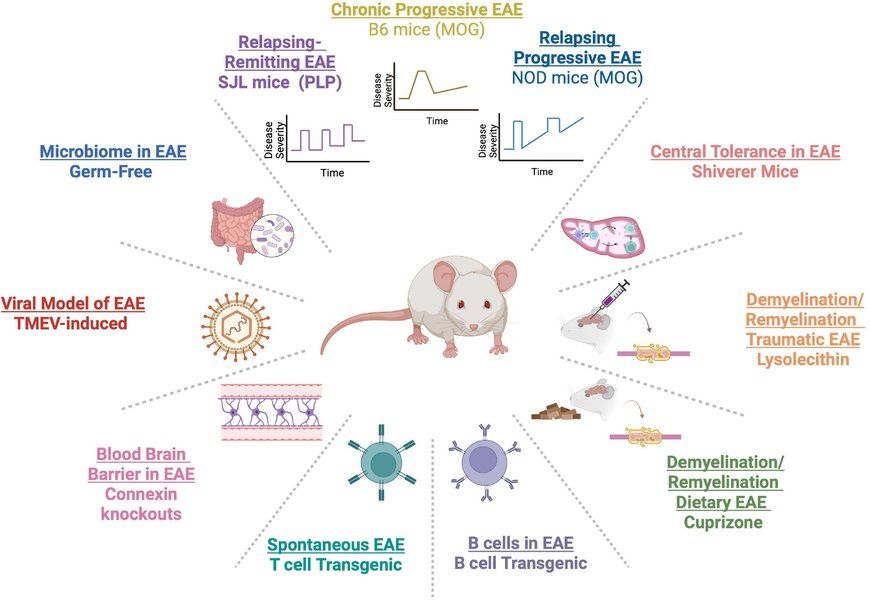
Graphical representation of typical EAE disease course and associated pathological changes in the spinal cord of a mouse model.
Limitations and Complexities
Inducing an MS-like state purely through idiotype injection is complex and comes with significant limitations:
- Incomplete Replication: Human MS is a multifactorial disease influenced by genetic predisposition, environmental factors, and a complex interplay of various immune cells and pathways. Idiotype injection alone is generally insufficient to fully replicate this complex pathology and clinical course.
- Variability: The outcomes can be variable depending on the specific idiotypes used, the preparation of the antibodies, the mouse strain (e.g., C57BL/6 or SJL/J mice show different susceptibilities), and the route and protocol of injection.
- Supplementary Role: Idiotype-based models are often considered supplementary to more established models like EAE. They can provide valuable insights into antibody-mediated mechanisms but may not serve as comprehensive standalone models of MS.
Dominant Animal Models for Multiple Sclerosis Research
To contextualize idiotype-based approaches, it's useful to compare them with other widely used animal models for MS. Each model offers unique advantages for studying specific aspects of the disease.
Professor Gavin Giovannoni discusses various animal models used in multiple sclerosis research, providing expert insights into their applications and limitations.
The following table provides a comparative overview of common MS animal models:
| Feature | Experimental Autoimmune Encephalomyelitis (EAE) | Toxin-Induced Demyelination (e.g., Cuprizone, LPC) | Theiler's Murine Encephalomyelitis Virus (TMEV) Model | Idiotype-Related Approaches |
|---|---|---|---|---|
| Induction Method | Immunization with myelin antigens/peptides (e.g., MOG, MBP, PLP) in adjuvant, sometimes with pertussis toxin. Adoptive transfer of myelin-specific T cells. | Administration of toxins like cuprizone (in diet) or focal injection of lysophosphatidyl choline (LPC) into white matter. | Intracerebral injection of TMEV in susceptible mouse strains. | Injection of MS patient-derived idiotypic antibodies, CSF, or anti-idiotypic antibodies. |
| Primary Pathological Mimicry | CNS inflammation, demyelination, axonal damage, T-cell mediated autoimmunity. Various clinical forms (acute, relapsing-remitting, chronic). | Primarily demyelination and subsequent spontaneous or induced remyelination. Oligodendrocyte pathology, astrogliosis, microgliosis. | Biphasic disease: acute encephalitis followed by chronic, progressive demyelination and axonal injury. Epitope spread. | Specific antibody-mediated mechanisms, immune dysregulation, potential for T-B cell collaboration leading to inflammation. |
| Key Immune Component Focus | Primarily CD4+ T-cell driven, with significant roles for CD8+ T cells, B cells, and macrophages. | Oligodendrocyte death, microglial activation, and astrocytic responses. Less emphasis on adaptive immunity initially. | Persistent viral infection triggers an ongoing immune response, leading to immune-mediated demyelination. | Focus on the role of B cells and antibodies (idiotypes) in initiating or perpetuating autoimmune responses, often involving T-cell help. |
| Typical Clinical Signs | Ascending flaccid paralysis (tail, hind limbs), weight loss, incontinence. Clinical scores quantify severity. | Motor deficits (e.g., ataxia, tremor), behavioral changes. Demyelination is assessed histologically. | Early seizures/encephalitis, followed by spastic paralysis and progressive motor decline. | Variable; can include motor deficits, neurological impairments, depending on the specific protocol and material used. |
| Main Research Applications | Studying autoimmune pathogenesis, T-cell biology, neuroinflammation, and testing immunomodulatory therapies. | Investigating mechanisms of demyelination, oligodendrocyte biology, and remyelination strategies. | Modeling viral triggers of autoimmunity, chronic progressive MS, axonal damage, and epitope spread. | Elucidating the role of specific autoantibodies and idiotype networks in MS pathogenesis and exploring targeted therapies. |
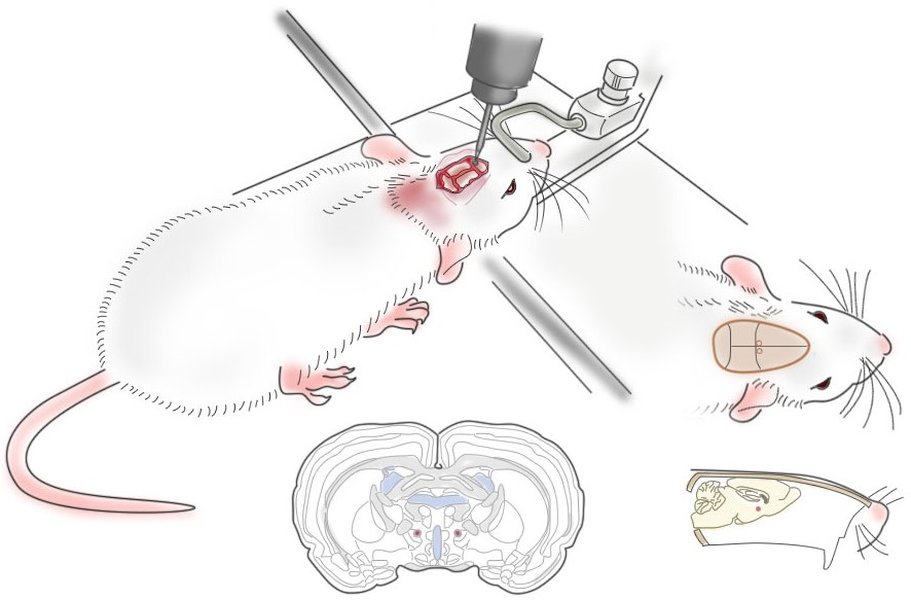
Stereotaxic injection allows precise delivery of substances to specific brain regions, a technique used in some MS models, including focal LPC injections.
Comparing Features of MS Animal Models
To visualize the different strengths and characteristics of these MS models, a radar chart can be helpful. This chart provides a qualitative comparison based on common research focuses. The values are illustrative, representing general tendencies rather than precise quantitative data.
This radar chart illustrates how different MS models excel in representing various aspects of the disease. For instance, EAE is strong in modeling autoimmunity and inflammation, while toxin-induced models are paramount for studying demyelination and remyelination directly. TMEV offers insights into progressive disease and axonal loss. Idiotype-related approaches, while perhaps less comprehensive across all features, provide a unique focus on the role of specific antibody populations and autoimmune mechanisms driven by them.
Conceptualizing MS Modeling Approaches
A mindmap can help visualize the different categories of animal models used in MS research and their key characteristics, including where idiotype-related studies fit in.
Encephalomyelitis (EAE)"] id1a["Immunization with
Myelin Antigens (MOG, PLP, MBP)"] id1b["Models Autoimmune Attack on CNS"] id1c["Various Clinical Courses:
Acute, Relapsing-Remitting, Chronic"] id1d["Focus on T-cell and B-cell
mediated pathology"] id2["Toxin-Induced Demyelination"] id2a["Cuprizone Model
(dietary administration)"] id2b["Lysophosphatidyl Choline (LPC)
(focal injection)"] id2c["Studies Demyelination &
Remyelination Processes"] id2d["Investigates Oligodendrocyte
Pathology & Gliosis"] id3["Viral Models"] id3a["Theiler's Murine
Encephalomyelitis Virus (TMEV)"] id3b["Models Chronic Progressive
Demyelination"] id3c["Investigates Viral Triggers &
Epitope Spread"] id4["Idiotype-Related Models"] id4a["Use of MS Patient CSF or
Purified Antibodies"] id4b["Generation of Anti-Idiotypic
Antibodies"] id4c["Focus on Antibody-Mediated
Pathogenesis"] id4d["Explores T-B Cell Collaboration
Driven by Idiotypes"] id4e["Investigates Role of Specific
Humoral Responses"]
This mindmap illustrates that idiotype-related models represent a specialized approach within the broader landscape of MS research tools, focusing specifically on the contribution of antibody variable regions and the immune networks they form.
Frequently Asked Questions (FAQ)
What exactly is an "idiotype" in the context of antibodies?
An idiotype refers to the unique set of antigenic determinants (epitopes) found on the variable region of an antibody molecule. This variable region, particularly the antigen-binding site (paratope), is what gives an antibody its specificity for a particular antigen. Essentially, the idiotype is like a unique "fingerprint" for a specific antibody or a family of closely related antibodies produced by a clone of B cells.
What is Experimental Autoimmune Encephalomyelitis (EAE)?
Experimental Autoimmune Encephalomyelitis (EAE) is the most commonly studied animal model of multiple sclerosis. It is an inflammatory demyelinating disease of the central nervous system that is typically induced in susceptible laboratory animals by immunization with myelin-derived proteins or peptides (such as Myelin Oligodendrocyte Glycoprotein - MOG, Myelin Basic Protein - MBP, or Proteolipid Protein - PLP) emulsified in an adjuvant. EAE models various aspects of MS, including inflammation, demyelination, axonal damage, and neurological deficits like paralysis.
Why are animal models necessary for MS research?
Animal models are crucial for MS research because they allow scientists to study disease mechanisms, identify potential therapeutic targets, and test new treatments in a living system before human clinical trials. MS is a complex disease, and direct experimentation on human patients is often limited ethically and practically. Animal models, while not perfect replicas, can mimic key pathological and clinical features of MS, providing invaluable insights into its development and progression.
Can idiotype-based models fully replicate human MS?
No, idiotype-based models generally cannot fully replicate the entire spectrum of human MS. MS is a highly heterogeneous and multifactorial disease. While injecting MS-related idiotypes or anti-idiotypic antibodies can mimic certain autoimmune aspects and antibody-mediated pathology, these models often do not capture the full complexity, including the diverse genetic and environmental contributions seen in human MS. They are more useful for studying specific hypotheses related to humoral immunity and idiotype networks.
What are the main advantages of using idiotype-related approaches in MS research?
The main advantages of using idiotype-related approaches lie in their ability to dissect the specific roles of B cells and antibodies in MS pathogenesis. They allow researchers to:
- Investigate how particular antibody specificities (idiotypes) contribute to disease.
- Study the concept of the idiotype network and its regulatory potential in autoimmunity.
- Explore mechanisms of T-B cell collaboration driven by idiotypic interactions.
- Potentially identify biomarkers or develop highly targeted therapies aimed at pathogenic idiotypes or anti-idiotypic regulation.
Recommended Queries
- How does Experimental Autoimmune Encephalomyelitis model Multiple Sclerosis?
- What are the latest advancements in toxin-induced demyelination models for MS?
- Explore the role of T-cells and B-cells in the pathogenesis of Multiple Sclerosis.
- What are the challenges in translating findings from MS animal models to human patients?
References
Last updated May 11, 2025