
Contributions of Three Muslim Scholars to Mathematics and Statistics
An in-depth exploration of groundbreaking innovations from the Islamic Golden Age
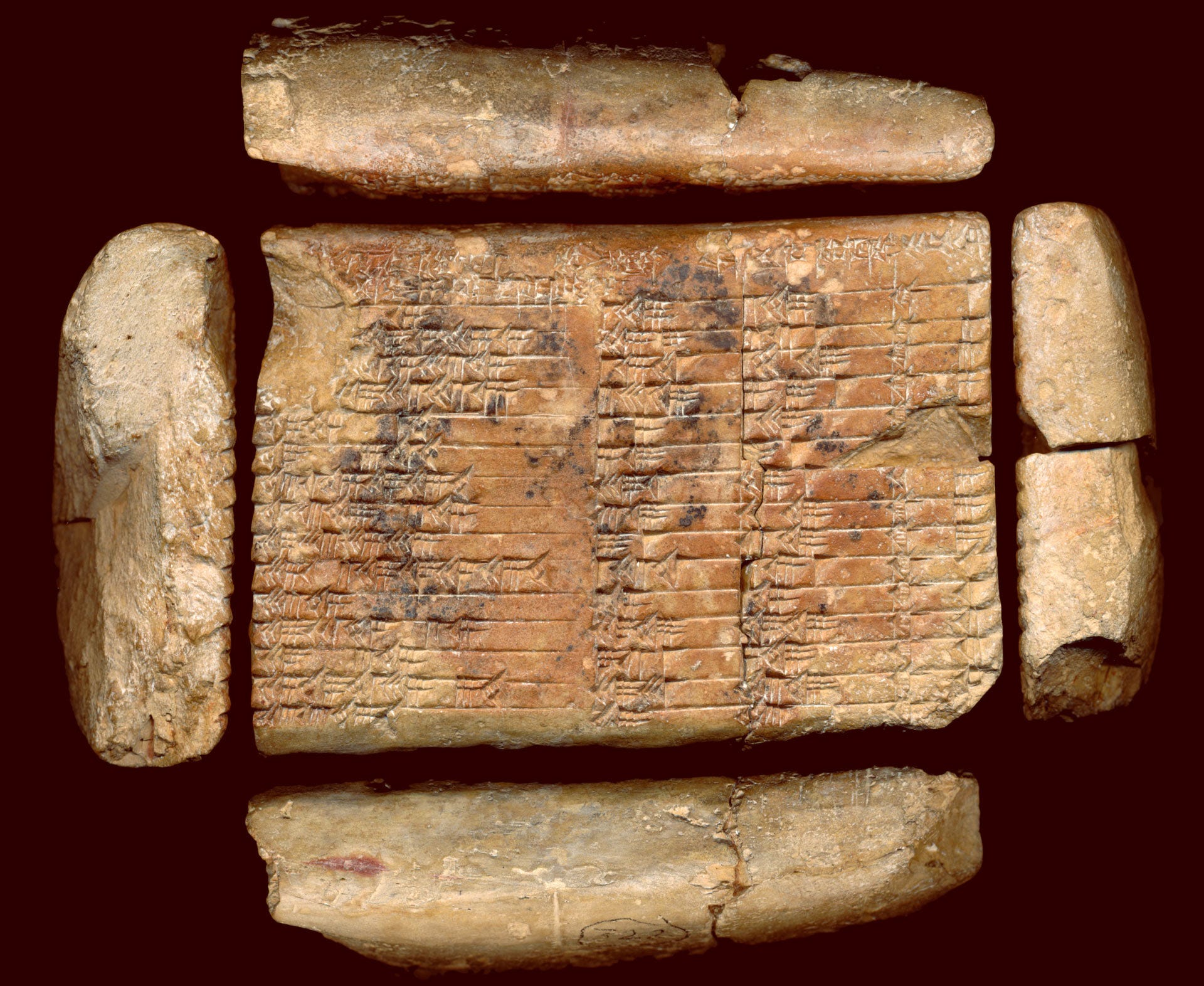
Highlights
- Foundational Contributions: The pioneers discussed here laid the groundwork for algebra, trigonometry, and statistics.
- Innovative Methods: Their work not only formalized mathematical principles but also introduced novel techniques still in use today.
- Historical Influence: Their discoveries and writings impacted both Eastern and Western scientific traditions.
Introduction
The Islamic Golden Age, spanning from the 8th to the 14th centuries, represents a time of significant scholarly achievement. Muslim scholars made groundbreaking contributions across various fields of knowledge, particularly in mathematics and statistics. This assignment delves into the contributions of three eminent scholars: Muhammad ibn Musa al-Khwarizmi, Omar Khayyam, and Abu Wafa al-Buzjani. Each of these scholars developed innovative mathematical methods, introduced key concepts that continue to influence modern mathematics, and enriched the scientific heritage of their cultures.
Scholar 1: Muhammad ibn Musa al-Khwarizmi
Life and Background
Muhammad ibn Musa al-Khwarizmi, born circa 780 CE in Kath, Khwarazm (located in today’s Uzbekistan), is arguably one of the most influential mathematicians of the Islamic Golden Age. His seminal work contributed extensively to the fields of algebra and arithmetic, and his methodologies laid the basis for future mathematical inquiry.
Early Life and Place of Birth
Al-Khwarizmi’s origins can be traced back to the region of Khwarazm, a culturally rich area that straddled the boundaries of Iran and Central Asia. His upbringing in this vibrant and intellectually stimulating environment played a crucial role in shaping his scholarly pursuits. Though exact details about his early life are scant, his later writings indicate a strong foundation in both the Greek and Indian traditions of mathematics.
Mathematical Contributions
Al-Khwarizmi's seminal work, al-Kitāb al-mukhtaṣar fī ḥisāb al-jabr wa’l-muqābala (The Compendious Book on Calculation by Completion and Balancing), revolutionized the field of mathematics by introducing a systematic approach to solving linear and quadratic equations. He is credited with the systematic development of algebra—a term derived from the Arabic word “al-jabr,” meaning the reunion of broken parts.
Aside from algebra, al-Khwarizmi was instrumental in popularizing the Hindu-Arabic numeral system in the Islamic world. This system, which included the revolutionary concept of zero, replaced the more cumbersome methods of calculation that had previously been in use. His works disseminated numerical concepts and established the basis for arithmetic, significantly influencing subsequent developments in both the Islamic world and medieval Europe.
Astronomy and Geography
In addition to his contributions to algebra and arithmetic, al-Khwarizmi also made essential contributions to astronomy and geography. His work in constructing trigonometric tables, notably sine and cosine tables, greatly improved the precision of astronomical calculations. This, in turn, played a critical role in the development of both navigational methods and the broader application of mathematical astronomy.
Scholar 2: Omar Khayyam
Life and Background
Omar Khayyam, born in 1048 CE in Nishapur, Persia (modern-day Iran), is renowned not only for his contributions to mathematics but also for his literary prowess. While he is widely celebrated today for his poetry, his mathematical achievements, particularly in the realm of algebra and geometry, remain profoundly influential.
Early Life and Place of Birth
Born in the culturally rich city of Nishapur, Omar Khayyam was exposed early on to the intellectual currents of the Islamic world. Nishapur was a thriving center of learning that actively promoted scientific inquiry and scholarly exchange. These early influences spurred Khayyam’s development as a mathematician and philosopher. The intellectual environment of Nishapur provided him with the tools and the inspiration needed to pursue complex mathematical problems that had stumped his contemporaries.
Mathematical Contributions
Perhaps Khayyam’s most celebrated mathematical contribution is his extensive work on cubic equations. In his treatise, Treatise on the Demonstration of Problems of Algebra, Khayyam presented innovative geometric methods for solving cubic equations by intersecting conic sections. This method represented a significant advance over earlier, more rudimentary approaches to solving polynomial equations.
His work paved the way for later developments in algebra and played a vital role in laying the groundwork for what would eventually evolve into modern algebraic geometry. Additionally, Khayyam's studies included contributions to the understanding of the parallel postulate and further clarifications regarding Euclidean geometry. Through his analytical approaches, he was able to provide alternative perspectives on classical problems, bridging abstract algebraic theories with tangible geometric constructions.
Interdisciplinary Impact
Omar Khayyam’s achievements were not confined solely to the realm of mathematics. His work at the intersection of astronomy and geometry contributed significantly to the establishment of more accurate astronomical models. By applying mathematical rigor to astronomical phenomena, Khayyam helped improve the accuracy of celestial observations and predictions, thereby enhancing navigational techniques and furthering the scientific understanding of the cosmos.
Scholar 3: Abu Wafa al-Buzjani
Life and Background
Abu Wafa al-Buzjani, born in 940 CE in Buzjan, near Nishapur, Persia (modern-day Iran), is noted as one of the foremost pioneers in the development of trigonometry. His scholarly work spanned a wide range of disciplines including mathematics, astronomy, and geometry.
Early Life and Place of Birth
Originating from the region of Buzjan, Abu Wafa’s early life was enriched by the intellectual tradition of Greater Persia. The region was known for its strong emphasis on scientific scholarship, which undoubtedly provided him with a fertile environment for his early education. His formative years in this stimulating culture helped shape his multifaceted interests in the mathematical sciences.
Mathematical Contributions
Abu Wafa is most celebrated for his systematic development of trigonometry. He is credited with the introduction of the trigonometric functions—tangent and cotangent—and for the formulation of numerous trigonometric theorems which remain central to the study of trigonometry today. His work not only established a strong foundation in theoretical trigonometry but also extended its application to practical fields, such as astronomy.
One of his most significant achievements was the construction of detailed and accurate trigonometric tables for sine, cosine, and tangent. These tables were crucial for astronomers to determine celestial positions and for navigators to make accurate measurements. Through rigorous proof techniques, he was also able to demonstrate the properties of spherical triangles, thereby expanding the horizons of both pure mathematics and its pragmatic applications in astronomy.
Contributions to Geometry and Statistics
In addition to his work in trigonometry, Abu Wafa contributed to several aspects of geometry and early statistical reasoning. His methods for determining the properties of geometric figures were innovative and laid the groundwork for subsequent refinements in geometrical analysis. While his direct contributions to statistics may not be highlighted as frequently as his work in algebra and trigonometry, his methods in measurement and data arrangement provided preliminary approaches that would later influence statistical techniques.
Comparative Overview
To provide an organized comparison of the contributions and backgrounds of these influential scholars, the table below summarizes their key details including age (birth year) and place of birth, along with their distinctive contributions. This comparison highlights how each scholar’s unique background and intellectual pursuits converged to shape distinct aspects of mathematics and early statistics.
| Scholar | Birth Year & Age | Place of Birth | Major Contributions |
|---|---|---|---|
| Muhammad ibn Musa al-Khwarizmi | Circa 780 CE | Kath, Khwarazm (Modern-day Uzbekistan) |
|
| Omar Khayyam | 1048 CE | Nishapur, Persia (Modern-day Iran) |
|
| Abu Wafa al-Buzjani | 940 CE | Buzjan, near Nishapur, Persia (Modern-day Iran) |
|
Detailed Analysis of Their Contributions
Mathematics and Algebra
The foundational work in algebra remains one of the most significant contributions made by these scholars. Muhammad ibn Musa al-Khwarizmi’s treatise on algebra not only provided systematic procedures for solving linear and quadratic equations but also introduced the concept of balancing equations—methods that continue to inform algebraic education today. The term “algebra” itself is derived from his seminal work, demonstrating the profound and lasting influence of his scholarship.
Omar Khayyam expanded the landscape of algebra by applying geometric methods to solve complex cubic equations—an approach that linked algebraic theory with geometric construction. His utilization of intersecting conic sections not only provided solutions to previously unsolvable equations but also showcased an innovative way of looking at algebra from a geometric perspective. These methods foreshadowed further developments in the field, influencing the later emergence of algebraic geometry.
Trigonometry and Geometric Innovations
Another major area of impact is trigonometry, where Abu Wafa al-Buzjani truly distinguished himself. His methodical approach to establishing and proving trigonometric theorems helped transition trigonometry into a systematic science. By introducing functions such as tangent and cotangent and computing accurate trigonometric tables, his work facilitated improved astronomical computations and navigation techniques.
This development in trigonometry not only enhanced mathematical models in astronomy, but it also provided a clear example of how abstract theoretical work can have practical applications. The collaboration of geometric insights with trigonometric principles led to accurate representations of spherical shapes and the properties of celestial bodies—a significant leap forward in both theoretical mathematics and observational astronomy.
Influence on Statistics and Data Analysis
While the scholarship of these mathematicians is predominantly associated with algebra and trigonometry, their work also laid early foundations that would influence statistical methods. The systematic collection and analysis of numerical data for astronomical observations required innovations in data handling and measurement.
For instance, the construction of detailed trigonometric tables and the precise calculation of angles and distances embody early statistical thinking—organizing numerical data into coherent sets that could be systematically analyzed. Such approaches presaged later developments in probability and statistical methods. Although these scholars were primarily mathematicians and astronomers, their methodologies reflect an inherent statistical rigor, demonstrating an early form of data-driven scientific inquiry.
Interdisciplinary Collaboration and Cultural Influence
The contributions of these three scholars were not isolated achievements; they blossomed within a broader context of intellectual collaboration across cultures. By synthesizing and building upon knowledge from various traditions—Greek, Indian, Persian, and others—they were able to produce works that were not only innovative in their technical details but also symbiotic with the cultural ethos of scholarly inquiry.
For instance, al-Khwarizmi’s advocacy of the Hindu-Arabic numeral system revolutionized the way numbers were used both in arithmetic and in more advanced realms of mathematics. His work set forth a unified numerical language that would bridge the gap between different civilizations and ultimately shape the progression of scientific inquiry in medieval Europe.
Similarly, Omar Khayyam’s dual identity as both a mathematician and a poet symbolizes the interplay between scientific rationality and artistic expression during the Islamic Golden Age. His diverse contributions underscore that precision in mathematics can coexist with deep philosophical and poetic insights, thereby enriching the intellectual tapestry of his time.
Abu Wafa's rigorous work in trigonometry, on the other hand, provided a model for systematic scientific inquiry that not only advanced academy but also served practical needs in navigation and astronomy. His innovative analytical techniques continue to be relevant as foundational standards in modern trigonometry.
Impact on Subsequent Generations
Transmission of Knowledge
The legacy of these Muslim scholars is evident in how their methodologies and insights were transmitted to later generations. Their works were translated into several languages, including Latin, during the medieval period, providing European scholars the opportunity to study and further develop mathematical concepts originally developed in the Islamic world.
These translations catalyzed a scientific revolution in medieval Europe, contributing to the renaissance of mathematical thought. For example, al-Khwarizmi’s algebra became a cornerstone in European curricula, influencing subsequent theorists and educators. His detailed documentation of numerical systems and calculations spread globally, setting standards that influenced modern industrial and technological societies.
Advancements in Mathematical Tools and Techniques
The innovative tools and techniques introduced by these scholars have had enduring effects on mathematical education and research. Techniques such as geometric proofs, the method of balancing equations, and the systematic tabulation of trigonometric values form the bedrock of contemporary mathematical disciplines. These approaches not only facilitated advanced research during their own eras but also provided a robust framework for future discoveries in numerous branches of science, including calculus, numerical analysis, and statistical modeling.
More recently, modern statisticians and mathematicians continue to draw upon the refinements these scholars introduced. Whether through the evolution of algebraic theory or the precise calculations necessary for modern engineering and technology, the contributions of al-Khwarizmi, Khayyam, and Abu Wafa have proven timeless. Their methodologies remain embedded in educational curricula and advanced research, continuing to illustrate the power of cross-cultural scholarly endeavors.
Educational Contributions
Influence on Modern Curricula
Today, educators around the globe reference the works of these mathematicians not only as historical artifacts but also as active teaching tools to illustrate the evolution of mathematical thought. The problem-solving techniques and methods of logical reasoning that these scholars pioneered are regularly incorporated into modern textbooks and higher education syllabi.
Their work emphasizes the importance of cross-disciplinary learning. For example, the combination of literary and scientific insights—exemplified by Omar Khayyam’s dual contributions—encourages an integrated approach to learning. This holistic view helps students understand that scientific inquiry is not isolated; rather, it evolves through cultural exchange and intellectual diversity.
Integration of Culture and Science
These scholars exemplify the integration of cultural heritage and scientific exploration. Their efforts in compiling and systematizing knowledge provided a model for scholarly rigor that transcended geographical and cultural boundaries. The contributions of scholars from this period continue to inspire the modern scientific community to adopt a comprehensive, integrative approach to learning and inquiry.
Their legacy serves as a reminder that scientific and mathematical advances are often the product of diverse cultural influences merging to create a unified body of knowledge. This integrated approach not only broadens the scope of understanding but also fosters collaborative innovations that propel society forward.
Conclusion
In conclusion, the contributions of Muhammad ibn Musa al-Khwarizmi, Omar Khayyam, and Abu Wafa al-Buzjani have had a profound and lasting impact on the disciplines of mathematics and statistics. From the formulation of algebra and innovative geometric methods to the systematization of trigonometry and early applications of statistical reasoning, their legacies continue to serve as a foundation for modern scientific inquiry.
Their work transcended the boundaries of their time, influencing not only subsequent generations of mathematicians and scientists but also establishing methods that form the backbone of contemporary mathematical thinking. Through their meticulous documentation of methods, innovative problem-solving techniques, and contributions to interdisciplinary knowledge, these scholars exemplified the essence of the Islamic Golden Age’s rich intellectual tradition.
The enduring relevance of their contributions is reflected in the continued use of their mathematical principles in modern education and research. Their achievements remind us that the cross-cultural flow of ideas is a critical driver of progress, and their work will forever remain a testament to the enduring spirit of discovery and innovation.
References
- Muslim Scientists Who Contributed to the Development of Mathematics - Islamic Bridge
- Famous Mathematicians - Islamic Mathematics
- Algebra: Islamic Contributions - Britannica
- Muslim Founders of Mathematics - Muslim Heritage
- Muslim Contributions to Mathematics - The Fountain Magazine
- Significant Contributions of Muslim Mathematicians - Medium
Recommended
Last updated February 23, 2025